
Living on less money sounds simple until you actually try it. You cut a few things, feel good for a week, then real life shows up. Bills still come in, groceries still feel expensive, and convenience starts winning again.
That’s probably why a lot of “frugal living” advice doesn’t last. It’s either too extreme or too vague. It tells you to spend less, but not how to do that in a way that still feels comfortable.
Learning how to live cheaply and comfortably ended up being less about strict budgeting and more about changing a few everyday habits.
Not dramatic ones. Just enough to make life cost less without making it feel smaller.
The biggest mistake people make when trying to live cheaply is cutting comfort first. That usually does not last.
A better approach is to understand which parts of comfort actually matter to you.
Sometimes comfort comes from a quiet home, simple meals, fewer bills, less clutter, more time, or knowing you are not constantly behind.
Living cheaply and comfortably works best when you lower the cost of your daily life without removing the things that help you feel stable.
You are not trying to make life feel bare. You are trying to make normal life easier to afford.
What It Really Means to Live Cheaply and Comfortably
Living cheaply and comfortably means lowering your regular expenses while keeping the parts of life that actually matter to you. It isn’t about choosing the absolute cheapest option every time.
It’s about spending with intention, cutting what adds stress instead of value, and making your default lifestyle a little lighter.
Living costs have been rising in recent years, especially food prices, which are tracked globally through indicators like the FAO Food Price Index.
That distinction matters. Cheap living without comfort usually turns into burnout. Comfortable living without awareness usually turns into overspending. The balance sits somewhere in the middle.
The key is to live frugally the easy way so you don’t feel overwhelmed by big changes.
Define Your Comfort Baseline
Before you cut expenses, define what comfort means in your real life. Comfort is not always expensive.
For some people, comfort means having simple food at home, clean sheets, reliable transportation, and a calm evening routine. For others, it means keeping one hobby, one weekly treat, or a small amount of personal spending.
A comfort baseline is the minimum version of life that still feels stable, decent, and manageable. It helps you avoid cutting too deeply. If your plan saves money but makes your daily life feel stressful, cold, chaotic, or joyless, it may not be sustainable.
Start by asking: What do I need to feel okay at home? What makes my week easier? What small comforts help me avoid bigger spending later?
These answers matter because living cheaply should not mean removing every source of relief. It should mean finding cheaper ways to keep the comfort that actually supports your life.
Why Living on Less Money Feels Harder Than It Sounds
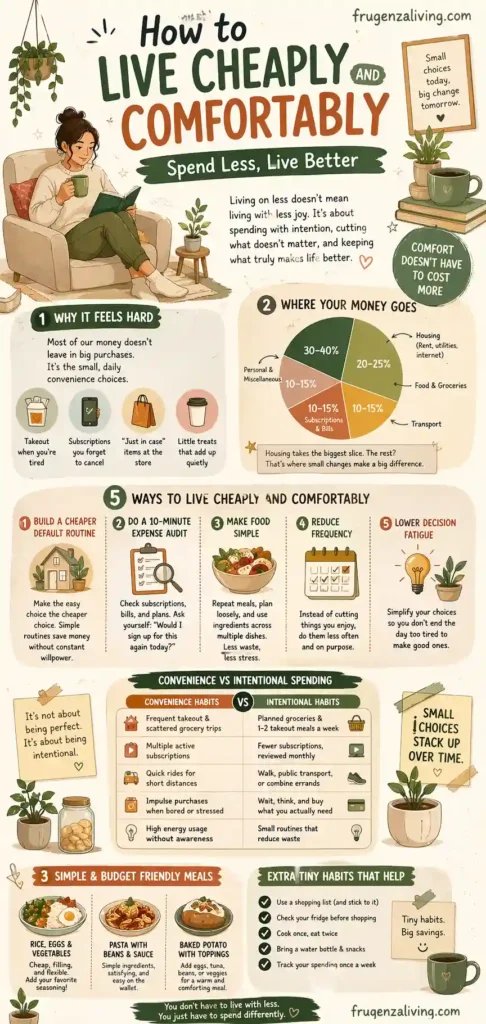
A lot of monthly expenses don’t feel serious in the moment. That’s what makes them tricky. Housing usually takes the biggest share of a budget, often around a third or more, so there’s already less room to work with.
After that, food, transport, subscriptions, and daily convenience spending start filling the gaps.
At some point, I noticed I wasn’t overspending on one big thing. It was small decisions stacked on top of each other.
Ordering food because I was tired. Buying extra groceries “just in case.” Keeping subscriptions because canceling them felt like work. None of that looked dramatic. Together, it was enough.
If you’re new to this, this frugal living guide for beginners shows how to balance comfort and saving money.
Where Most Monthly Expenses Quietly Grow
When people try to reduce living expenses, they often look at the obvious bills first. That makes sense, but some of the most flexible categories are the ones that quietly expand.
Housing and fixed bills
Rent, utilities, internet, and insurance usually form the core of monthly spending. Some of these are hard to change quickly, but not all of them are untouchable. Internet plans, phone plans, and insurance renewals are often left on autopilot for too long.
Food and groceries
Food is one of the easiest places to improve because it’s both essential and flexible. Grocery spending rises when shopping is unplanned, meals are too ambitious, or takeout fills the gap on low-energy days.
Food spending is often one of the most flexible parts of a budget, and global data like the consumer food price index shows how food prices change over time across different countries.
Subscriptions and recurring charges
These are easy to ignore because they’re small individually. Streaming, apps, cloud storage, memberships, delivery perks—it adds up faster than most people expect.
Daily convenience spending
This is the category that feels harmless. Coffee out, snacks, transport shortcuts, “I’m too tired” purchases, quick online orders. It’s usually not one bad habit. It’s repetition.
Over time, you’ll learn how to live with less money while still enjoying your daily life.
How to Live Cheaply and Comfortably in Real Life
This is the part that usually gets skipped. General advice is easy. What helps more is having a few practical moves you can actually do this week.
1. Build a cheaper default routine
The goal isn’t to make every decision cheaper. It’s to make your normal routine cost less.
That might mean eating similar breakfasts during the week, shopping at one store instead of three, or having a few backup meals always available at home. The easier your default is, the less often you’ll pay for convenience.
A lot changed for me once I stopped relying on motivation. I didn’t suddenly become disciplined. I just made the easy option less expensive.
This becomes easier when you build frugal habits that actually work in your daily routine.
2. Do a 10-minute recurring expense audit
Set a timer and check:
- bank statement
- card statement
- app subscriptions
- streaming services
- delivery memberships
- phone and internet plan
Ask one question: would I sign up for this again today?
That one question is better than overthinking. If the answer is no, cut it, downgrade it, or review it later with a deadline. This is one of the fastest ways to reduce monthly bills without changing daily comfort much at all.
You can also create a budget-friendly lifestyle without sacrificing comfort.
3. Make food simpler, not cheaper-looking
Trying to eat “as cheaply as possible” usually fails because it feels restrictive. A better approach is to make food simple, repeatable, and lower waste.
A few things that help:
- buy ingredients that overlap across meals
- keep two or three low-effort dinners ready
- repeat meals without feeling guilty about it
- check the fridge before shopping
I used to buy food based on what sounded good in the store. Later, I started thinking in terms of two or three actual meals. That small shift cut waste more than any budget rule.
You can still reduce your living costs without giving up comfort.
4. Reduce frequency instead of cutting completely
This works better than total restriction.
Instead of:
- no takeout
- no coffee out
- no treats
- no convenience spending
Try:
- takeout once a week instead of three times
- coffee out twice a week instead of daily
- one planned treat instead of random spending
That still feels human. And because it feels reasonable, it lasts. Small changes can help you lower your daily expenses without sacrificing comfort.
5. Lower decision fatigue
A weird amount of spending comes from not wanting to think.
The more decisions you make in a day, the more likely you are to choose convenience at night. That’s why simple routines matter so much.
Things that reduce decision fatigue:
- repeating core groceries
- using one shopping list template
- meal planning loosely, not perfectly
- setting one weekly money check-in
Comfort often comes from simplicity, not spending.
Lower the Cost of Your Home First
If you want to live cheaply and comfortably, start with your home environment. A comfortable home can reduce the need to spend money outside the house.
When your home feels calm, usable, and pleasant, you are less likely to escape boredom, stress, or inconvenience through spending.
This does not mean buying more home items. It often means using what you already have better. Keep simple meals available.
Make one corner of your home feel relaxing. Reduce clutter that makes daily life harder. Improve lighting. Keep basic supplies organized. Make your evenings easier so takeout, shopping, or paid entertainment do not become the default solution.
A low-cost home routine can quietly save money because it reduces friction. When home feels easier, cheaper choices become more natural.
Make Comfort Cheaper, Not Smaller
The goal is not always to remove a comfort. Sometimes the better move is to change how you get it.
If eating out makes your week feel easier, you might keep a simple restaurant-style meal at home instead of ordering delivery.
If coffee feels like a daily comfort, you might make better coffee at home and save cafe visits for certain days.
If your home feels uncomfortable, you might improve lighting, cleaning routines, bedding, or organization before spending money on new decor.
This mindset is different from extreme frugality. You are not asking, “How can I remove this?” You are asking, “Is there a lower-cost way to get the same feeling?”
That question can change the way you spend. Many expenses are not really about the item itself. They are about the feeling behind the item: ease, rest, pleasure, control, or comfort. When you understand the feeling, you can often find a cheaper way to meet the same need.
A Simple “Convenience vs Intentional” Spending Comparison
Here’s the kind of difference that tends to happen over a normal month.
| Category | Convenience Habit | Intentional Habit |
|---|---|---|
| Food | Frequent takeout and scattered grocery shopping | Planned groceries with one or two takeout meals |
| Subscriptions | Multiple active services, rarely reviewed | Fewer services, reviewed monthly or quarterly |
| Transport | Frequent rides for short trips | Walking, public transit, or combining errands |
| Shopping | Impulse purchases during boredom or stress | Delayed purchases and list-based shopping |
| Energy use | Little awareness of usage patterns | Small routines that reduce waste |
The point isn’t perfection. It’s that intentional living usually costs less without feeling dramatically different.
3 Low-Effort Dinners That Help You Live on Less
Adding practical meals gives the article more value, and honestly, this is the kind of thing people can use right away.
Rice, eggs, and vegetables
Cheap, filling, and flexible. Frozen vegetables work fine here. Add soy sauce, chili flakes, or garlic and it stops feeling boring.
Pasta with beans and tomato sauce
Not fancy, but it’s reliable and surprisingly satisfying. Good for nights when you want something warm without spending much.
Baked potatoes with toppings
Potatoes, eggs, tuna, beans, or leftover vegetables can turn into a real meal fast. It’s one of those low-cost comfort foods people forget about.
These aren’t “frugal meals” in a dramatic way. They’re just normal dinners that happen to cost less.
Choose Cheap Habits That Do Not Create Hidden Costs
Not every cheap choice is actually comfortable or sustainable. Some cheap choices create hidden costs later. Buying the lowest-quality item may lead to replacement costs. Eating meals you dislike may lead t
o takeout. Cutting every enjoyable expense may lead to burnout spending. Ignoring maintenance may create bigger repairs later.
A better rule is to choose low-cost habits that still protect your energy, health, time, and stability. Sometimes spending a little more on something useful is cheaper than repeatedly buying the lowest-cost option that fails.
Living cheaply and comfortably is not about always choosing the cheapest price. It is about choosing the lowest-cost option that still works well enough for your real life.
A Soft Monthly Scenario That Feels More Realistic
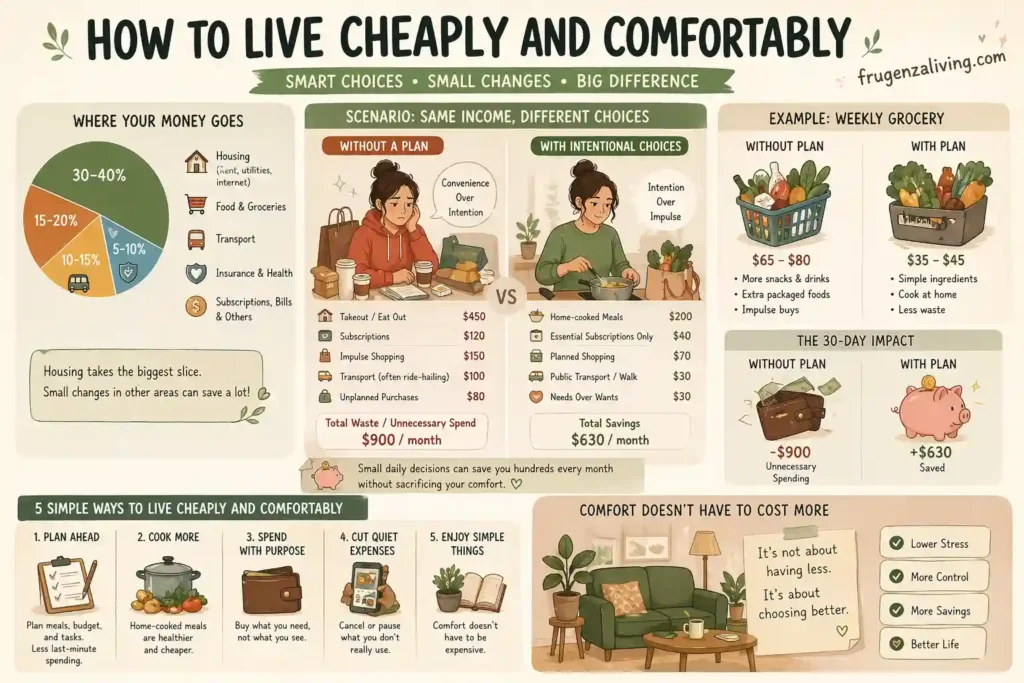
No perfect savings math here, just the kind of shift that happens when habits change a little.
Say someone:
- orders food less often
- wastes fewer groceries
- cuts two unused subscriptions
- shops with a basic list
- stops making random mini purchases during the week
That person probably won’t feel rich overnight. But month to month, their expenses stop feeling so slippery. The difference is less panic, fewer leaks, and more predictability. That matters more than flashy numbers.
Common Mistakes That Make Frugal Living Feel Worse
Trying to do everything at once is the big one. That usually leads to a strict week, then a rebound week.
Another mistake is confusing discomfort with progress. Living cheaply and comfortably doesn’t mean proving how little you can survive on. It means removing the costs that don’t improve your life.
And then there’s copying someone else’s system too literally. What works for a minimalist single person in a small apartment may not work for a parent, commuter, or someone with irregular work hours.
Final Thoughts
Learning how to live cheaply and comfortably is not about making life feel smaller. It is about lowering the cost of your everyday routines while protecting the comfort that actually matters.
Start with your comfort baseline. Notice what helps you feel stable. Then look for cheaper ways to keep those things in your life. Make home easier. Plan small comforts. Avoid cheap choices that create bigger problems later. Replace expensive habits with lower-cost versions you can actually accept.
A comfortable life does not have to be expensive. When your spending supports your real needs instead of automatic habits, living cheaply becomes less about restriction and more about peace, stability, and control.

The ideas shared here come from real-life experience and practical habits that actually work.
→ Read more about Jeffi
- No Spend Month Challenge for Beginners: A 30-Day Plan - September 24, 2026
- Low Buy Month Challenge: Realistic Rules for 30 Days - September 23, 2026
- How to Stop Buying Groceries You Already Have - September 20, 2026