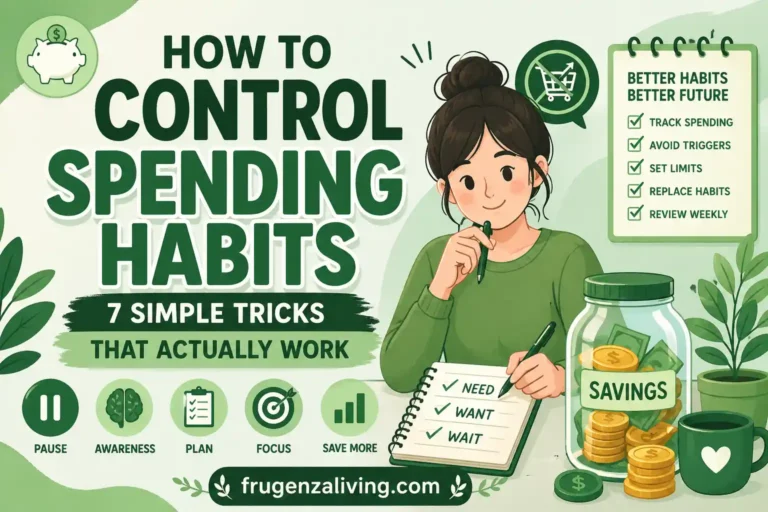
This is especially useful when you keep ordering delivery after work, browsing stores when bored, or buying sale items you never planned to purchase. The goal is to make those decisions more deliberate while leaving room for purchases you genuinely value.
Start with one habit this week: Choose a repeated purchase, write down its usual trigger, and prepare one alternative. Record the amount you actually spend and review the pattern after seven days. Treat this as a short test, not a promise that a habit will disappear in a week.
Is the Problem a Spending Habit or a Budget Shortfall?
Look at recent transactions before deciding that you lack self-control. A repeated purchase you did not intend to make is different from rent, groceries, transportation, and other necessities costing more than your income.
- A habit to investigate: You open a shopping app every evening and regularly buy things you later leave unused.
- A planning gap: You order dinner because there is no realistic meal available after work.
- A budget shortfall: Essential costs and required payments already exceed the money coming in.
These problems can overlap. If necessities leave little or nothing available, start with a plan for managing money on a low income. A waiting rule for shopping cannot close an essential-expense shortfall by itself.
7 Practical Steps to Control Spending Habits
1. Choose One Repeated Purchase to Work On
Review the last two to four weeks of bank and card transactions, plus cash purchases you remember. Pick one category that repeatedly surprises you, such as delivery fees, convenience snacks, or unplanned clothing.
Record its actual total for the period. Avoid starting with “spend less on everything,” which gives you no specific decision to change. If you need help collecting the transactions, use this guide to tracking expenses, then return to the category you selected.
2. Record the Moment Before You Spend
For each urge in that category, note the time, situation, intended purchase, and what you did. Include occasions when you decided against buying. You are looking for a repeated situation, not trying to diagnose every emotion.
Tuesday, 7 p.m. — arrived home tired, opened the delivery app, considered a $24 meal, ordered because nothing was ready.
That entry suggests a practical change: prepare a convenient dinner option. “I need more discipline” does not tell you what to do when the same situation happens tomorrow.
3. Write an If–Then Rule You Can Actually Follow
Connect the situation to a specific response: “If I open a shopping app while bored at night, then I will save the item in a note and close the app before checking out.”
A short phrase can help you remember the rule: “I can decide later.” Pair it with an action, such as leaving the checkout page. Choose a response that fits your circumstances; a walk may be useful for one person, while calling a friend or doing a short indoor activity may suit another.
4. Add a Pause for Optional, Unplanned Purchases
Try waiting until the next day before buying a nonessential item you had not planned for. For a larger purchase, allow enough time to compare options and check upcoming bills. Twenty-four hours is a starting rule you can test, not a scientifically fixed requirement.
When you return to the decision, ask: Will I use it? Do I already own an alternative? Does the full cost fit my available spending money? A purchase can still be worthwhile after the pause. Do not delay urgent medical care, essential food, or necessary repairs just to follow a shopping rule.
5. Set a Limit Based on Available Money
Before choosing a weekly limit, account for bills due before your next income payment, essential purchases, existing commitments, and money reserved for upcoming costs. Your account balance alone is not your spending allowance.
If that check leaves $35 for optional purchases this week, decide how you want to use it. For example, a $15 outing leaves $20 for other optional spending. This is an illustration, not a recommended allowance for every household.
Write purchases against the remaining amount as you make them. If you need a broader structure for that calculation, compare these simple budgeting methods.
6. Make Your Alternative Easier to Use
Change the part of your environment that repeatedly leads to spending. Turn off retail promotions, remove saved checkout details, or move a shopping app off your home screen. Keep order confirmations, payment reminders, and security alerts enabled.
Prepare the replacement too. Keep a realistic backup meal available, put your reusable coffee cup by the door, or arrange an affordable social plan before the weekend. Removing a shortcut without addressing the need behind it may leave the original problem unresolved.
7. Review the Result Before Adding Another Rule
After seven days, compare your notes with your transactions. How often did the situation arise? Did you use your planned response? What did you spend in the chosen category, including any replacement purchases?
Keep the change that helped and adjust one that was impractical. Repeat the test across several weeks before drawing conclusions about your usual spending. For an optional recording template, the CFPB’s Your Money, Your Goals toolkit includes a spending tracker and bill calendar.
Choose a Response for Your Spending Trigger
Open the situation that fits you and adapt its rule. Choose just one to test first.
I shop when I am bored or stressed
Try this rule: If I start browsing without a planned purchase, I will save the item outside the store’s app and do one short activity before deciding whether to return.
Prepare: Choose the activity in advance, such as listening to music, stretching, or messaging a friend. Record whether you returned to buy; simply moving a purchase to later does not necessarily reduce spending.
I order food because I am tired
Try this rule: Before opening the delivery app, I will check the backup meal I chose for busy evenings.
Prepare: Pick something that fits your energy, dietary needs, and cooking facilities. Allow for its cost. If delivery still makes sense, check the total including fees and tips against your food budget.
I buy because a sale is ending
Try this rule: I will check my existing shopping list and available money before responding to a sale countdown.
Prepare: Keep a list of items you already intended to buy. Compare the final price, delivery charge, and return terms. Buying an unneeded item at a discount still uses money.
I spend more than planned with friends
Try this rule: Before agreeing to an outing, I will check the full likely cost and suggest an option that fits my allowance.
Prepare: Include transportation and other extras. Try: “I can join for coffee, but dinner is outside my budget this week.” If you share finances, agree on the spending boundary together.
Copy this sentence into a note: “When ______ happens, I will ______ before buying. My spending limit for ______ is ______. I will review this on ______.”
A Seven-Day Spending Habit Test: Worked Example
This is an illustrative example, not a personal spending record or a promised result. The person chooses unplanned online shopping and tests a next-day waiting rule.
| Day and trigger | Purchase considered | What happened | Actual spending |
|---|---|---|---|
| Monday: bored after dinner | A $28 decorative item | Saved it to a note; decided against buying on Tuesday. | $0 |
| Wednesday: sale email | A $40 sweater | Waited; checked existing clothes; did not buy. | $0 |
| Friday: late-night browsing | A $16 accessory | Bought immediately; noted that saved checkout made it easy. | $16 |
| Sunday: product recommendation | A $22 book | Saved it to a note; decision still pending at the weekly review. | $0 so far |
The person paused on three of four occasions and spent $16 in this category during the test. The pending book is not counted as a permanent avoided purchase. Next week, they will remove saved checkout details and check whether the book is still wanted and affordable.
Do not add up the prices of everything left unpurchased and call that money saved. Compare actual category spending with a comparable earlier period, account for purchases shifted into the following week, and check whether spending increased elsewhere. One week is useful feedback, but an unusually quiet week can distort the comparison.
What to Change When You Still Overspend
If a rule fails, identify the point where it broke. Did you miss the trigger, forget the response, or find the alternative unrealistic? Change that part before adding stricter limits.
- You forgot to pause: Put a reminder where the purchase begins, such as your shopping list or phone lock screen.
- The alternative was too demanding: Replace an elaborate cooking plan with a manageable backup meal.
- You moved spending elsewhere: Include replacement purchases when reviewing the total.
- The allowance missed a necessary cost: Correct the plan; do not classify an essential purchase as a personal failure.
After an overspend, update the amount available for the rest of the period. Avoid compensating by skipping necessities. Set a regular review time; this guide to building everyday money habits offers ideas for fitting money tasks into your routine.
Frequently Asked Questions
Can I control spending without a budgeting app?
Yes. A paper note or phone note can record the trigger, your response, and the amount spent. Use your transactions to check the totals. Choose a method you can access at the moment you need it.
Should I stop all nonessential spending?
Not necessarily. When your finances allow it, a defined allowance lets you make intentional purchases. Start by changing a pattern you regret rather than assuming every optional expense is a problem.
How long does it take to change spending habits?
There is no single timeline for everyone. A seven-day test helps you notice obstacles; it does not establish that a habit has changed permanently. Review several weeks, including different situations such as weekends and payday.
Your First Step Today
Choose one recent purchase you regret and write down what happened immediately before it. Prepare a specific response for the next time that situation occurs. Put a review date in your calendar and judge the experiment using your notes and actual spending.

Read about Jeffi and Frugenza Living
- Shop Your Closet Challenge: A Week of Wearable Outfits - October 5, 2026
- 7 Cheap Things to Do Alone on a Weekend - October 4, 2026
- 8 Cheap Girls’ Night Ideas at Home Without a Big Shopping List - October 4, 2026