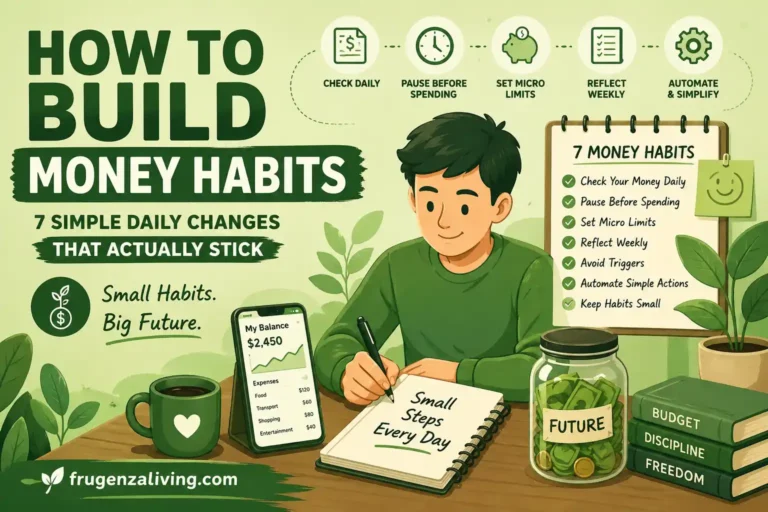
If you’ve ever tried to “get better with money” and failed after a few days—no matter how hard you tried—you’re not alone.
I’ve been there too.
I used to rely on motivation. I’d tell myself, “Starting tomorrow, I’ll be more disciplined.” And for a few days, it worked. I spent less, paid more attention, and felt in control.
Then life happened.
I got busy. I forgot. And slowly, I slipped back into old habits.
That’s when I realized something that changed everything:
It’s not about being motivated.
It’s about building habits.
Once I stopped trying to “force discipline” and started focusing on small, repeatable actions, things became easier. Over time, I started noticing the same spending patterns repeating—and more importantly, I was finally aware of them. That awareness alone changed how I made decisions.
Key Takeaways
- Small habits shape your financial results over time
- Consistency beats motivation every time
- Simple actions repeated daily create real change
Why Most People Struggle to Build Money Habits
Most people don’t fail because they don’t care about money.
They fail because they approach it the wrong way.
First, they rely too much on motivation. Motivation comes and goes. It’s not stable enough to build long-term habits.
Second, there’s a lack of consistency. Doing something once or twice doesn’t create change. Habits require repetition.
Another reason is unconscious behavior. Many financial decisions happen automatically, without awareness.
And finally, short-term thinking. People want quick results, but habits are built over time—not overnight.
Many people struggle with this not because they lack knowledge, but because their daily behavior runs on autopilot.
Building habits becomes easier when you also learn how to control your spending habits in daily situations.
What Building Money Habits Actually Means
Building money habits means creating small, repeatable financial behaviors that become automatic over time through consistent repetition.
It’s not about making big changes.
It’s about making small actions easier to repeat.
Instead of trying to fix everything, you focus on one simple behavior—and keep doing it until it feels natural.
Many people struggle not because of effort, but because of common budgeting mistakes they don’t notice early on.
That’s how habits are built.
The Simplest Way to Start Building Money Habits
If you want something that works immediately, start small.
Reduce friction.
Attach habits to something you already do.
For example, you don’t need a complicated system. You can simply check your money once a day—after dinner or before bed.
Or pause briefly before spending anything.
These actions take less than a minute, but they create awareness.
And awareness is where every habit begins.
These habits only work if you manage your money effectively in real-life situations.
7 Simple Money Habits to Build (That Actually Work)
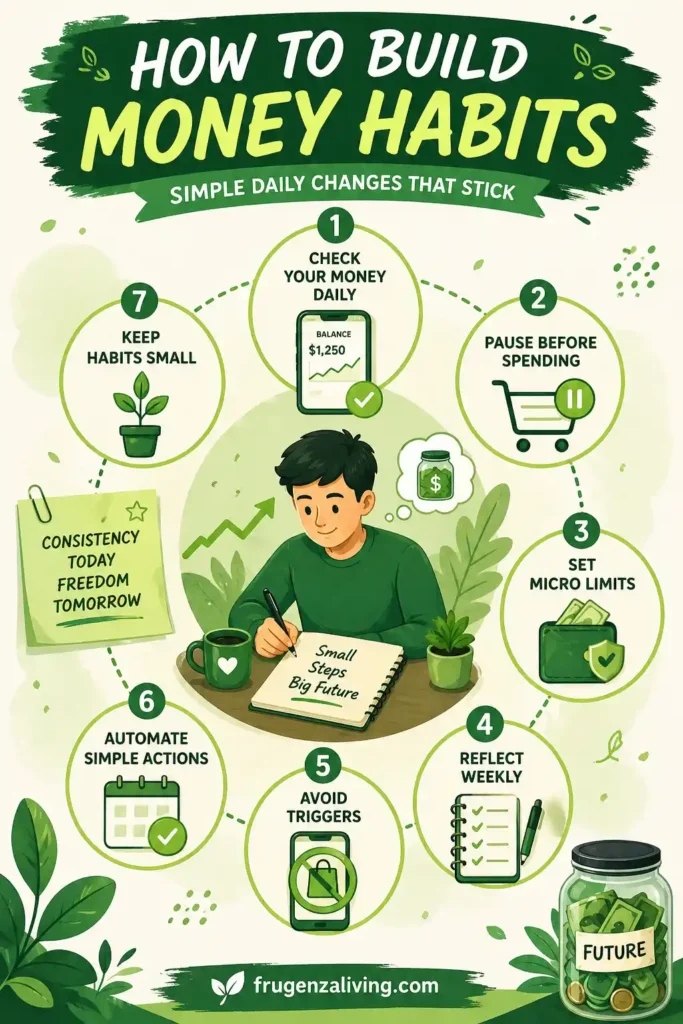
1. Check Your Money Daily
Spend one minute reviewing your balance or transactions.
Example:
After dinner, open your banking app and take a quick look.
Why it works:
It builds awareness with almost no effort.
2. Pause Before Spending
Don’t react instantly.
Example:
Wait 30 seconds before confirming a purchase.
Why it works:
It slows down emotional decisions.
3. Set Micro Limits
Keep things flexible, not strict.
Example:
Limit takeout to a few times per week.
Why it works:
Small limits are easier to follow consistently.
4. Reflect Weekly
Take a few minutes to review your behavior.
Example:
Ask: “Where did I spend without thinking?”
Why it works:
Reflection creates improvement.
It’s easier to stay consistent when you track your spending and notice your patterns over time.
5. Avoid Triggers
Reduce exposure to things that make you spend.
Example:
Avoid browsing shopping apps without purpose.
Why it works:
Fewer triggers mean fewer impulses.
6. Automate Simple Actions
Remove the need to think.
Example:
Set bill reminders or automatic payments.
Why it works:
Automation reduces friction.
7. Keep Habits Small
Start with one habit.
Example:
Just check your balance daily.
Why it works:
Small habits stick longer.
A Real-Life Example of Building Money Habits
| Day | Habit | Action | Time Taken | Result |
|---|---|---|---|---|
| Monday | Check money | Opened banking app | < 1 min | More awareness |
| Tuesday | Pause spending | Waited before buying | < 30 sec | Avoided impulse |
| Wednesday | Avoid trigger | Did not open shopping app | 0 min | No unnecessary spending |
| Thursday | Reflect | Reviewed habits | 3 min | Better decisions |
| Friday | Micro limit | Skipped takeout | 0 min | Stayed consistent |
Notice how little time each habit takes. Habits become more effective when supported by simple budgeting methods.
That’s the point.
Low effort makes consistency possible.
What I Noticed After Building Better Money Habits
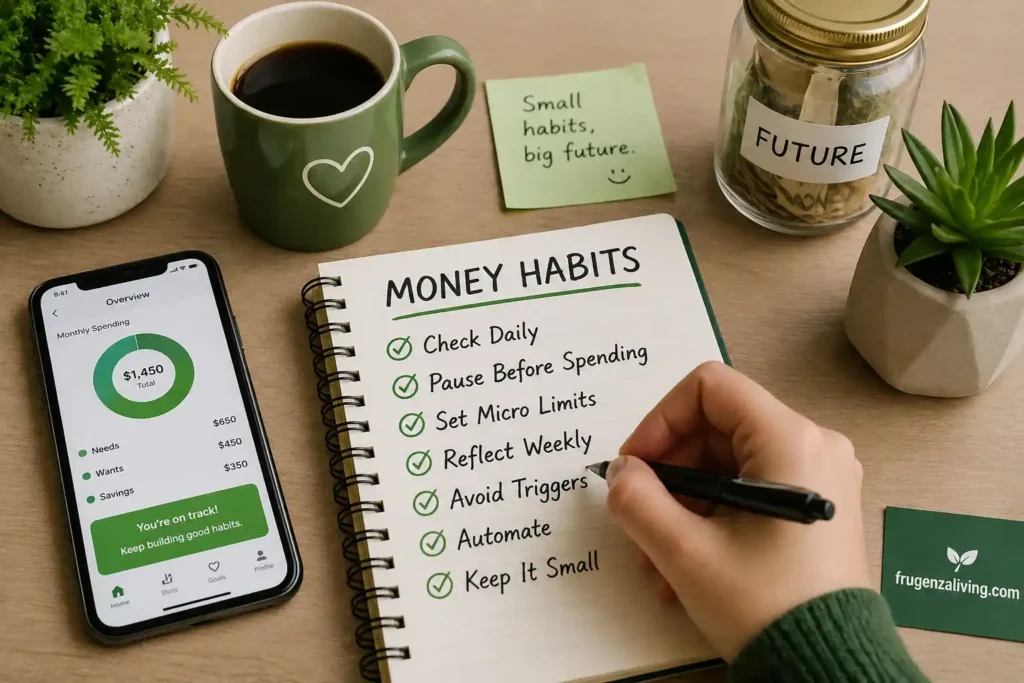
This is where things became real.
After a few weeks, I didn’t need to remind myself anymore. The habits started to feel automatic.
I noticed I was thinking before spending—not after.
I also saw the same patterns repeating less often. The small, unnecessary purchases started to disappear on their own.
Over time, I felt less stressed about money. I wasn’t reacting anymore—I was deciding.
And the biggest shift?
Consistency became automatic. That small shift in habit is exactly what allowed me to save over $15,000 in a single year without feeling deprived. I didn’t need motivation anymore.
Know When a Money Habit Is Ready to Grow
Do not add another financial habit simply because the first one feels too small. Add one when the existing habit has become stable enough that it no longer requires constant reminders.
A habit may be ready to grow when you have repeated it for several weeks, remember it during normal routines, recover quickly after missing it, and can complete it without creating stress.
For example, checking your balance regularly may be the first habit. Once that feels natural, the next step might be reviewing upcoming bills. After that becomes consistent, you could add a small automatic savings transfer.
This creates a simple progression:
Awareness → protection → improvement
Awareness means knowing what is happening with your money. Protection means making sure upcoming bills and essentials are covered. Improvement means using the remaining information to save, reduce debt, or change a spending pattern.
Move forward one layer at a time. If the new habit causes you to stop doing the earlier one, the system may have grown too quickly. Return to the previous level, simplify the new action, and try again when the foundation feels stable.
The goal is not to collect as many habits as possible. The goal is to build a small chain of behaviors that supports your financial life without becoming another complicated system.
Why Most Money Habits Fail (Even If You Try)
Here’s the truth:
Knowing what to do is not enough.
Most people already know they should manage their money better.
But they still struggle.
Why?
Because habits fail when they are:
- too complicated
- too big
- too inconsistent
There’s also friction. If something feels difficult, you won’t repeat it.
And unrealistic expectations make it worse.
You’re not bad with money.
You’ve just been repeating patterns you never questioned.
Best Tools to Build Money Habits Easily
You don’t need advanced tools.
You need simple ones.
Notes apps like Apple Notes or Google Keep are perfect for quick reminders or tracking behavior.
Notion works well if you prefer a simple structure.
Google Sheets helps you see patterns over time.
Banking apps help you stay aware of your activity.
Use tools that reduce effort—not add to it.
Common Mistakes When Building Money Habits
Starting too big is one of the biggest mistakes.
Trying to change everything at once creates overwhelm.
Relying on motivation doesn’t work long-term.
Lack of repetition prevents habits from forming.
And inconsistency resets progress.
You don’t need perfection.
You need repetition.
Over time, you’ll need to build frugal habits at home to make these changes stick.
How to Stay Consistent With Money Habits
Consistency comes from simplicity.
Use habit stacking—attach habits to routines you already have.
Keep everything low effort.
And stay realistic.
You will miss days. That’s normal.
What matters is continuing.
Give Every Money Habit a Minimum Version
Build One Habit That Can Survive a Busy Week
Write a normal version and a minimum version, then mark each day you keep the habit alive.
A money habit becomes more durable when it has two versions: a normal version and a minimum version.
The normal version is what you do when life is going well. You might review several transactions, update your spending notes, transfer money to savings, or complete a short weekly check-in.
The minimum version is what you do when you are tired, busy, traveling, or dealing with an unusually difficult day. It should take less than one minute and still keep the habit alive.
For example:
- Normal version: review this week’s transactions and write down one spending pattern.
- Minimum version: open your bank account and check the current balance.
- Normal version: transfer the full amount planned for savings.
- Minimum version: transfer a small amount that keeps the routine active.
- Normal version: complete a five-minute weekly money review.
- Minimum version: answer one question—“Is there anything due before my next paycheck?”
The minimum version is not a permanent replacement for the full habit. It is a bridge that helps you continue when the normal version is unrealistic.
This matters because financial habits often disappear during difficult weeks. Once the routine is broken, restarting can feel harder than continuing. A minimum version removes the pressure to perform perfectly while preserving the identity of someone who still pays attention to money.
On better days, return to the normal version. On difficult days, protect the repetition.
How Money Habits Improve Your Financial Life
Once your habits improve, everything else becomes easier.
You become more aware of your behavior.
You naturally start to control your spending habits without forcing it.
If you want more clarity, learning how to track expenses easily can help you understand your patterns better.
And when you’re ready, simple budgeting for beginners becomes much easier to follow.
Habits are the foundation.
Everything else builds on top of them.
FAQ
How to build better money habits?
Building better money habits starts with small, consistent actions like checking your balance daily or pausing before spending. Over time, these repeated behaviors become automatic and improve your financial decisions.
How long does it take to build money habits?
It takes a few weeks of consistent repetition to build money habits. The more often you repeat a behavior, the faster it becomes automatic.
Why is it hard to manage money habits?
It is hard to manage money habits because most financial behavior is driven by automatic patterns and emotional triggers. Without awareness, these habits continue without change.
How to stay consistent with money habits?
Staying consistent with money habits requires keeping them simple and attaching them to daily routines. Low-effort habits are easier to repeat and maintain over time.
What are the easiest money habits to start?
The easiest money habits to start are checking your money daily, pausing before spending, and reflecting weekly. These habits are simple but powerful for building awareness.
Conclusion
You don’t need a perfect system to improve your money.
You don’t need more motivation.
You need better habits.
Start small.
Stay consistent.
Keep it simple.
Because in the end…
It’s not what you do once that matters.
It’s what you repeat every day.

The ideas shared here come from real-life experience and practical habits that actually work.
→ Read more about Jeffi
- No Spend Month Challenge for Beginners: A 30-Day Plan - September 24, 2026
- Low Buy Month Challenge: Realistic Rules for 30 Days - September 23, 2026
- How to Stop Buying Groceries You Already Have - September 20, 2026