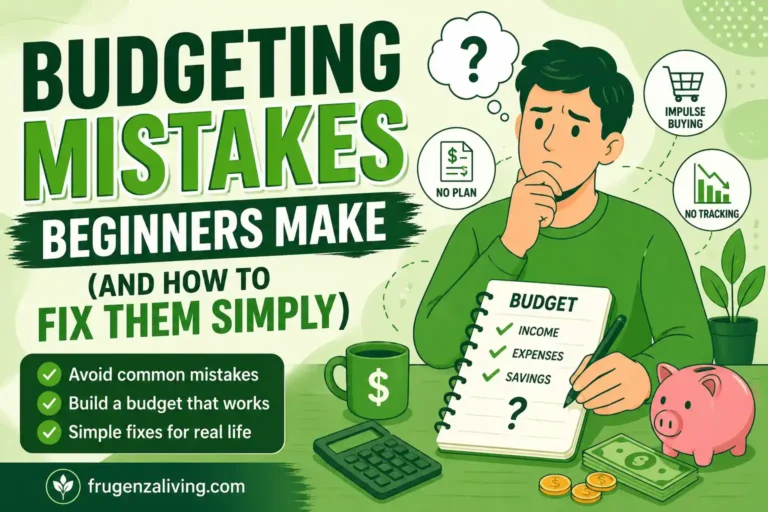
When I first tried budgeting, I thought the hardest part would be sticking to the numbers.
Turns out, I was wrong.
Budgeting looks simple on paper.
But real life is where it breaks.
Most beginners don’t fail at budgeting because they spend too much. They fail because they’re trying to follow a system that doesn’t match real life.
I learned that the hard way.
I created a detailed plan, tracked everything perfectly, and tried to control every dollar. For a few days, it worked. Then real life happened—unexpected expenses, low energy, small decisions—and everything broke.
I almost gave up.
But when I stopped chasing a perfect system and started fixing small mistakes instead, everything changed. Over time, those small adjustments helped me stay consistent—and eventually, I managed to save more than $15,000 in a year.
That’s why this matters.
Budgeting mistakes beginners make usually involve overcomplicating the system, setting unrealistic expectations, and ignoring real-life spending behavior. These mistakes make budgeting feel stressful and difficult to maintain, which is why many people give up within the first few weeks.
Key Takeaways
- Most budgeting failures come from behavior mistakes, not lack of discipline
- Simple and flexible systems outperform strict and detailed ones
- Fixing small mistakes consistently leads to real financial progress
Why Most Beginners Struggle With Budgeting
Budgeting looks simple on paper.
Track your income. Control your spending. Save what’s left.
But real life doesn’t follow clean formulas.
You get tired. You get busy. You make decisions quickly. And suddenly, the “perfect plan” doesn’t feel realistic anymore.
Imagine this: it’s the end of the day, you’re tired, and you just want something easy. That’s exactly when your budget gets tested—and often, that’s when it breaks.
Most beginners try to control everything at once. They build strict systems and expect immediate results. When reality doesn’t match the plan, frustration builds—and the system gets abandoned.
The problem isn’t budgeting.
It’s expecting perfection in an imperfect routine.
What Beginner Budgeting Mistakes Actually Look Like
Budgeting mistakes are small, repeated behaviors that make your system feel difficult, unrealistic, or impossible to maintain over time.
They don’t always look like big financial problems.
More often, they show up as:
- overcomplicating simple things
- expecting fast results
- ignoring behavior patterns
And those patterns are what slowly break your system.
Many of these mistakes happen when people skip the basic budgeting tips that make everything easier.
The Real Reason Budgeting Fails (The 3 Hidden Triggers)
Most advice focuses on numbers.
But budgeting actually fails because of behavior.
Here are the 3 triggers most people miss:
1. Mental Fatigue
You make better decisions when you have energy.
At night, after a long day, you’re more likely to spend impulsively.
This is why many budgets don’t fail during planning—they fail during execution.
2. Emotional Spending
Spending is often tied to feelings.
Stress, boredom, or reward-based habits can lead to unnecessary purchases.
You’re not just managing money—you’re managing emotions.
3. Timing Mismatch
Most budgets are built monthly.
But spending decisions happen daily.
This mismatch is where many budgets quietly break.
Once you understand these triggers, budgeting becomes easier.
Because now you’re not just fixing numbers.
You’re fixing patterns.
10 Budgeting Mistakes Beginners Make
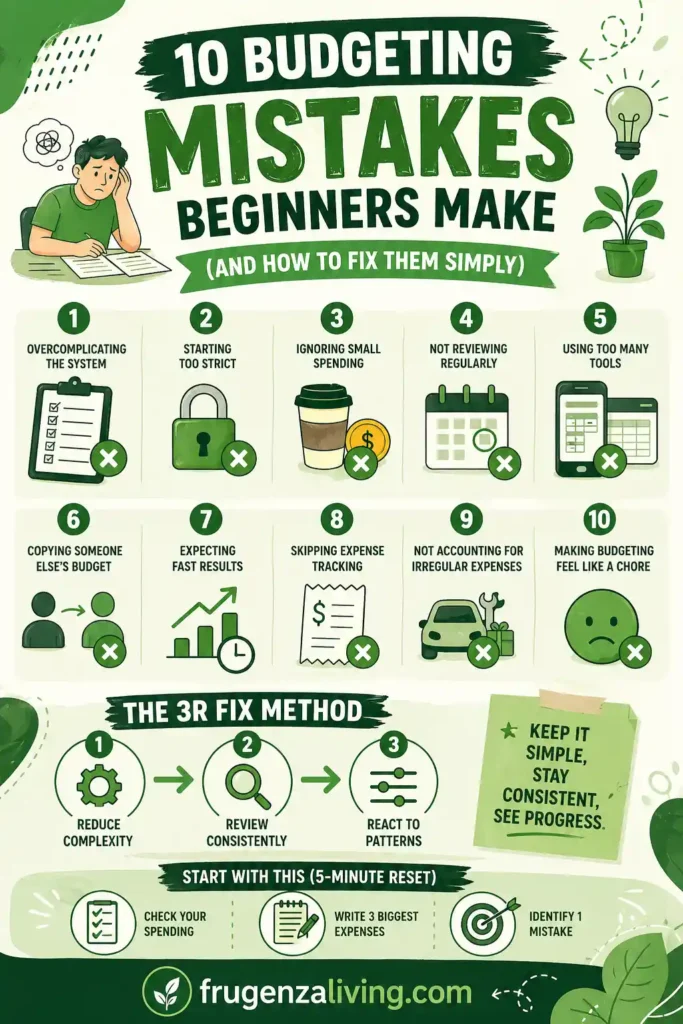
1. Overcomplicating the System
Trying to track everything and build a perfect system creates friction.
I used to track every detail. It felt productive—but within days, it became exhausting.
A complex system doesn’t fail immediately.
It slowly becomes something you avoid.
Fix: Keep it simple. A system you can repeat is more powerful than a perfect one.
Many mistakes repeat because people don’t develop consistent money habits over time.
2. Starting Too Strict
Cutting all non-essential spending sounds smart.
But it creates pressure.
One unexpected expense—and everything breaks.
Fix: Build flexibility into your budget.
3. Ignoring Small Spending
Small purchases don’t feel dangerous.
But they are.
Small purchases don’t feel risky.
But they are the easiest way to lose control of your money.
For example:
- $5 coffee × 20 days = $100/month
- $10 snacks × 15 times = $150/month
That’s $250 gone without noticing.
Fix: Pay attention to repeated habits.
4. Not Reviewing Regularly
A budget that isn’t reviewed becomes outdated.
Without awareness, nothing improves.
Fix: Do a simple weekly check-in.
5. Using Too Many Tools
Switching between apps, spreadsheets, and systems creates confusion.
Instead of helping, it slows you down.
Fix: Stick to one simple method.
6. Copying Someone Else’s Budget
Different people have different lifestyles.
What works for them might not work for you.
Fix: Build your own system based on your reality.
7. Expecting Fast Results
Budgeting is not instant.
Many people quit because they expect quick results.
Fix: Focus on consistency over time.
8. Skipping Expense Tracking
Without tracking, your budget becomes a guess.
You can’t improve what you don’t see.
That’s why learning how to track expenses easily is often the first step before any budget actually works.
Fix: Start simple. Even checking your spending daily is enough.
9. Not Accounting for Irregular Expenses
This is where most budgets break.
Examples:
- car repairs
- subscriptions ($9.99 × 5 = ~$50/month)
- birthdays and events
I once thought I was doing well—until one unexpected expense wiped out my entire month’s plan.
Fix: Expect irregular costs, even roughly.
10. Making Budgeting Feel Like a Chore
If it feels like work, you won’t stick with it.
This happens when the system is too rigid.
Fix: Keep it light and easy.
A Simple Example: Bad vs Better Budgeting
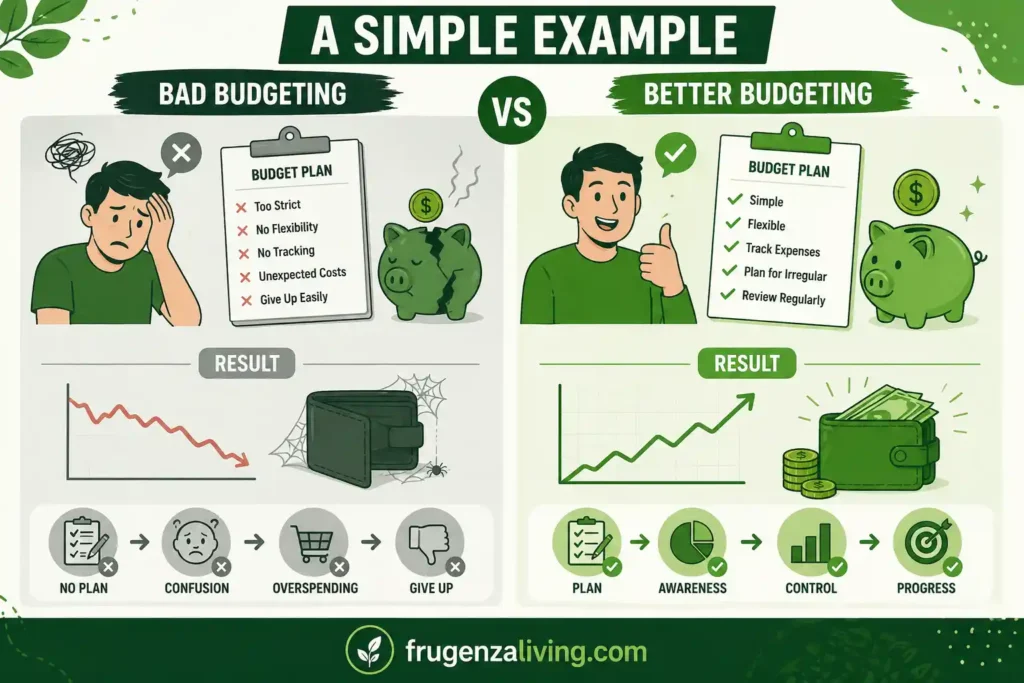
| Approach | What It Looks Like |
|---|---|
| Too strict | No flexibility, breaks easily with unexpected costs |
| Too complex | Too many tools and categories |
| No tracking | Guessing spending without awareness |
| Better approach | Simple system, flexible, consistent tracking |
Simple Budgeting Reality (What Actually Happens)
Most plans look good on paper.
But real life looks different.
- Plan: cook at home every day
- Reality: order food when tired
- Plan: no unnecessary spending
- Reality: small impulse purchases
- Plan: track everything perfectly
- Reality: forget after a few days
Budgeting isn’t about forcing the plan.
It’s about adapting to reality.
Diagnose the Budget Failure Before You Fix It
Not every budget problem needs the same solution. Before changing categories, cutting spending, or starting over, identify what actually caused the plan to fail.
Start with these four possibilities.
1. The Estimate Was Wrong
This happens when the amount you planned was lower than the amount real life required. Groceries may regularly cost $260 even though you keep budgeting $200. Transportation, utilities, or household expenses may also change more than expected.
If the same category goes over budget month after month, the problem may not be a lack of discipline. The original estimate may simply be unrealistic.
The fix is to use recent spending as evidence. Review the last few weeks, choose a more honest number, and adjust another flexible category if needed.
2. The Timing Was Wrong
A monthly budget can look balanced while the timing still creates problems. Several bills may be due before the next paycheck, leaving too little money for food or transportation during the gap.
In this case, reducing every category may not solve the real issue. The better fix may be dividing money by pay period, setting aside bills earlier, or asking whether a due date can be changed.
A timing problem often looks like overspending, but the real issue is that income and expenses arrive on different schedules.
3. The Plan Did Not Match Your Behavior
Sometimes the numbers are reasonable, but the plan ignores what usually happens. You may budget for cooking every night even though two evenings are consistently exhausting.
You may set no personal spending even though that restriction always leads to an unplanned purchase later.
The solution is not to remove every imperfect habit. Build the predictable behavior into the plan. Allow one convenience meal, create a realistic personal spending amount, or add a backup option for the moments when the original plan usually breaks.
4. The Income Cannot Cover the Essentials
If housing, basic food, utilities, medication, transportation, and required payments cost more than the available income, the issue is not a beginner budgeting mistake. It is a real financial shortfall.
A budget can reveal this gap, but it cannot remove it through better organization alone. In that situation, protect essential expenses, communicate with service providers before missed payments when possible, explore available assistance, and avoid making the shortfall worse with high-cost borrowing.
Before fixing a budget, ask:
Was my estimate inaccurate, was the timing difficult, did the plan ignore real behavior, or is there simply not enough income to cover essentials?
Once you identify the correct problem, the solution becomes clearer. You stop rebuilding the entire budget every time something goes wrong and start fixing the specific part that failed.
The 3R Fix Method (Simple Way to Fix Budgeting Mistakes)
If you want a simple way to improve your budget, use this:
1. Reduce Complexity
Simplify your system. Fewer categories, fewer tools.
2. Review Consistently
Check your spending regularly. Awareness builds control.
3. React to Patterns
Adjust based on what actually happens—not what you planned.
If you remember only one thing from this article, remember this:
simplify your system, review it often, and adjust based on real behavior.
Budgeting doesn’t fail because you’re bad with money.
It fails because your system doesn’t match your real life.
Start With This (Simple 5-Minute Reset)
If you don’t know where to begin, start here:
- Check your spending today
- Write down your 3 biggest expenses
- Identify 1 mistake you made
That’s it.
You don’t need a full system to get started.
You just need awareness.
How to Avoid These Mistakes (Without Overthinking)
You don’t need to rebuild everything.
Start small.
Simplify your system. Focus on what matters. Remove anything that feels difficult to maintain.
If something feels hard, it’s usually too complicated.
How Mistakes Affect Your Budget Long-Term
Small mistakes don’t feel important at first.
But they create patterns.
If budgeting feels stressful, you’ll avoid it.
If it feels complicated, you’ll stop.
And once you stop, everything goes back to guesswork.
That’s why fixing small mistakes early is so powerful.
How to Improve Your Budget Step by Step
Start with awareness.
Understand your spending first.
Then simplify your system.
Finally, build something that fits your routine.
If you want a structured system, you can explore a simple budgeting for beginners guide to organize your money more clearly, or learn how to manage money on a low income to make your system more realistic.
FAQ: Budgeting Mistakes Beginners Make
What is the most common budgeting mistake?
The most common mistake is overcomplicating the system. Many beginners try to track everything perfectly, which makes budgeting difficult to maintain over time.
Why does my budget not work?
Most budgets fail because they are too strict or unrealistic. When your system doesn’t match your lifestyle, it becomes hard to follow consistently.
How can I fix budgeting mistakes quickly?
Simplify your system. Reduce categories, use one method, and focus on consistency.
Do I need to track every expense?
No. It’s more effective to focus on patterns rather than tracking every detail perfectly.
How long does it take to improve budgeting?
You may see small improvements within weeks, but real progress takes consistent effort over time.
Why do most budgets fail after a few weeks?
Most budgets fail after a few weeks because they are too strict and don’t match real-life behavior. As motivation drops and unexpected expenses appear, the system becomes harder to follow, causing many beginners to abandon it.
Ending
Budgeting doesn’t fail because it’s difficult.
It fails because it’s done the wrong way.
Once you simplify your system and focus on behavior instead of perfection, everything becomes easier.
Most people don’t fail because they’re bad with money.
They fail because they give up too early.
If you fix just one mistake today, you’re already ahead of where you were yesterday.
I used to think budgeting was about control.
Now I know it’s about understanding.
You don’t need a perfect plan.
You just need one that works—and one you’ll actually stick with.

The ideas shared here come from real-life experience and practical habits that actually work.
→ Read more about Jeffi
- No Spend Month Challenge for Beginners: A 30-Day Plan - September 24, 2026
- Low Buy Month Challenge: Realistic Rules for 30 Days - September 23, 2026
- How to Stop Buying Groceries You Already Have - September 20, 2026