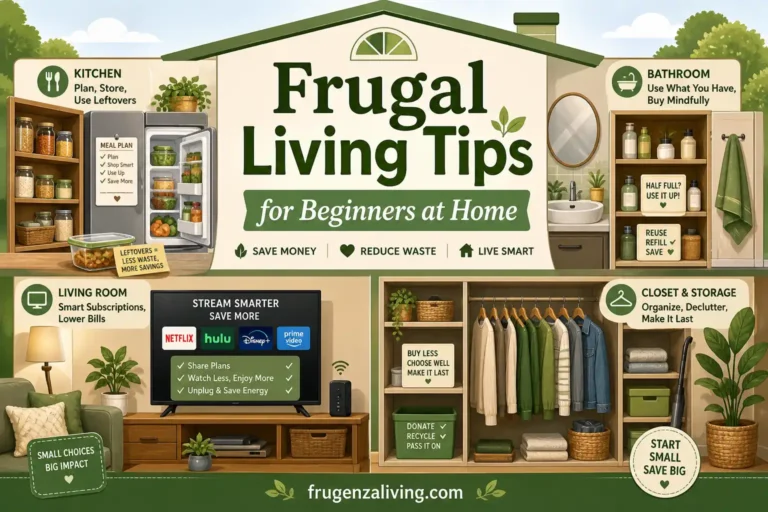
If you want to start frugal living at home, the easiest way is not to change your whole lifestyle overnight.
It is to walk through your home and notice where money quietly leaks.
That was the shift that helped me most.
At first, I thought being frugal meant making a long list of rules: spend less, buy less, waste less. But that felt vague. I didn’t know where to start.
Then I began looking at my home room by room.
The kitchen showed me food waste.
The bathroom showed me duplicate products.
The living room showed me subscriptions and energy use.
The closet showed me impulse purchases I barely wore.
That made frugal living feel much more practical.
This article is not a broad guide to frugal living for beginners. It is a room-by-room frugal living guide for beginners who want to practice frugal living at home in a simple, realistic way.
What Are Frugal Living Tips for Beginners at Home?
Frugal living tips for beginners at home are simple room-by-room changes that help you reduce waste, use what you already own, and lower unnecessary household spending. Instead of following strict rules, you improve how your kitchen, bathroom, living room, closet, and storage areas support everyday money decisions.
Key Takeaways
- Frugal living at home becomes easier when you look room by room
- The goal is not to buy less of everything, but to waste less of what you already have
- Kitchens, bathrooms, closets, and storage areas often hide small money leaks
- A frugal home should feel organized, practical, and easier to manage
Quick Room-by-Room Summary
Here is the simplest way to think about frugal living at home:
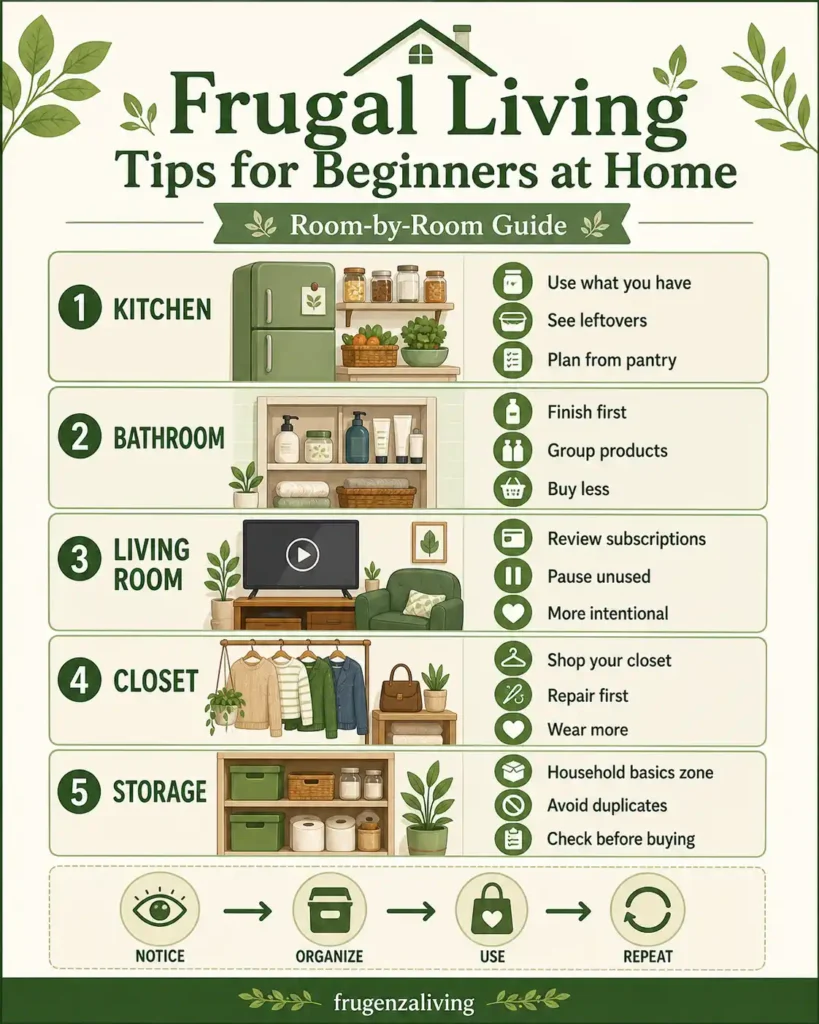
- Kitchen: reduce food waste and use ingredients before buying more
- Bathroom: finish products before replacing them
- Living room: review subscriptions, devices, and entertainment habits
- Closet: use what you already own before shopping again
- Storage: organize household basics to avoid duplicate purchases
These frugal home organization tips make it easier to use what you already have before spending more money.
Why a Room-by-Room Frugal Guide Works Better for Beginners
Many beginners fail because frugal living feels too broad.
They hear advice like “spend less” or “be intentional,” but they don’t know what to do first.
A room-by-room approach makes it easier.
Instead of trying to fix your entire financial life, you ask:
“What is this room costing me?”
That question changes how you see your home.
Your kitchen is not just a place to cook. It is where food waste happens.
Your bathroom is not just where you get ready. It is where half-used products pile up.
Your living room is not just for relaxing. It is where subscriptions, devices, and entertainment spending quietly repeat.
This room-by-room frugal living guide helps beginners focus on one area instead of trying to fix everything at once.
This approach creates a different kind of frugal living at home. It is visual, practical, and easy to start.
If you’re new, it helps to understand frugal living for beginners before applying these ideas at home.
Your Home Is Already Making Spending Decisions for You
Before you change anything, it helps to understand something most frugal guides skip.
Your home is not a neutral space.
The way your kitchen is arranged, how visible your pantry is, where your phone charger sits, what you see first when you open the fridge — all of these quietly shape spending decisions before your brain fully registers them.
This is not about willpower.
It is about environment design.
Researchers at Cornell University have studied how kitchen layout and food visibility affect eating and purchasing behavior. Their findings consistently show that people eat — and therefore buy — what is most visible and easiest to reach, regardless of intention or discipline.
The same principle applies to every room.
When your closet is packed and hard to search, you feel like you have nothing to wear — even when you have plenty. That feeling leads to purchases, not the actual shortage.
When cleaning supplies are scattered across three locations, you buy another bottle because it feels like you are running low — even when you already have enough.
When subscriptions are buried in bank statements and never shown together, the total becomes invisible. You never decide to keep all of them. You just never decide to stop.
The point is not that you make bad choices.
The point is that a disorganized home makes it harder to make good ones.
This is why the room-by-room approach is more effective than a general spending plan. It addresses the environment where those decisions form, not just the decisions themselves.
When you reorganize a room with frugality in mind, you are not just tidying up. You are removing small triggers that quietly push you toward spending throughout the day.
The Room-by-Room Frugal Home Audit
Use this simple audit before changing anything.
| Room / Area | Common Money Leak | Frugal Question to Ask |
|---|---|---|
| Kitchen | Food waste, duplicate groceries, forgotten leftovers | What food do I already have? |
| Bathroom | Too many half-used products | What should I finish before buying more? |
| Living Room | Subscriptions, devices, impulse browsing | What am I paying for but not using? |
| Bedroom / Closet | Clothes rarely worn | What do I already own that still works? |
| Laundry Area | Overuse of products, replacing clothes too soon | How can I make things last longer? |
| Storage | Forgotten tools, supplies, duplicate purchases | What can I reuse before buying again? |
This turns frugal living from an abstract idea into something you can actually see.
If you need simple frugal living ideas for beginners at home, start with the room where waste is easiest to see.
The Kitchen: Stop Food Waste Before It Starts
The kitchen is usually the best place to begin.
Not because you need to become a perfect meal planner, but because food waste is one of the easiest household leaks to spot.
Start with your fridge.
Move older food to the front. Put leftovers where you can see them. Keep ingredients that need to be used soon in one clear area.
This small change matters because most people don’t waste food on purpose. They waste food because they forget it exists.
One of the easiest ways to start is to reduce grocery spending with a simple plan.
Next, check your pantry before grocery shopping.
If you already have rice, pasta, oats, beans, canned food, eggs, or frozen vegetables, you may already have the base for several meals.
A beginner-friendly kitchen rule is simple:
Build meals from what you already have first.
That one rule can reduce duplicate grocery purchases and make frugal living at home feel natural.
The Frugal Fridge Setup
A simple fridge layout can prevent food from disappearing in the back.
| Fridge Area | What to Put There | Why It Helps |
|---|---|---|
| Front Shelf | Food that needs to be eaten soon | Keeps older food visible |
| Clear Container | Leftovers | Makes quick meals easier |
| Door | Sauces, drinks, condiments | Prevents clutter in main space |
| Freezer | Bread, meat, vegetables, extra meals | Gives food more time |
| Small Basket | Snacks or lunch items | Reduces random food spending |
This is not about having a perfect fridge.
It is about making food easier to use before it goes bad.
The Pantry: Build Meals Before Buying More
A frugal pantry does not need to be huge.
It just needs to be useful.
For beginners, focus on basic items that can become simple meals:
- rice
- pasta
- oats
- beans
- canned tomatoes
- eggs
- frozen vegetables
- soup ingredients
Before shopping, look at what you already have and ask:
“What meal can I make from this?”
That question can prevent unnecessary grocery trips and reduce daily expenses at home without making your meals feel boring.
You can also keep a small “use this week” list on your phone or fridge. It doesn’t need to be fancy. Just write down food that should be used soon.
This is one of the most practical frugal home habits for beginners because it saves money without requiring a complicated system.
It helps to see real frugal living examples before trying to apply these ideas.
The Bathroom: Finish Products Before Buying More
The bathroom is another quiet money leak.
Shampoo, soap, skincare, toothpaste, razors, cleaning products, and personal care items can pile up quickly.
Many people buy replacements before finishing what they already have.
A simple bathroom reset helps.
Take everything out of one drawer or shelf. Group similar items together. You may find two half-used bottles of lotion, extra toothpaste, or cleaning supplies you forgot about.
The frugal rule here is:
Finish first, then replace.
This does not mean never buying better products. It simply means you stop letting half-used items turn into wasted money.
For a beginner, this is an easy win because it does not require sacrifice. It only requires visibility.
These ideas become even easier when you focus on simple ways to save money at home every day.
The Laundry Area: Make Clothes Last Longer
Frugal living at home is not only about spending less today.
It is also about making things last longer.
Laundry habits can affect how often you replace clothes, towels, and bedding.
Use the right amount of detergent. Avoid washing items more aggressively than needed. Air dry some clothes when possible. Repair small issues before they become reasons to replace something.
Even simple actions help:
- sew a loose button
- remove small stains early
- fold clothes properly
- separate delicate items
- avoid buying new basics before checking your closet
The goal is not to become extreme.
It is to extend the life of things you already paid for.
The Living Room: Control Entertainment and Energy Costs
The living room often hides two types of spending: entertainment and energy.
Start with subscriptions.
Look at streaming services, apps, memberships, and paid tools. If you are paying for several at the same time, ask which ones you actually use this month.
You don’t always need to cancel everything.
Sometimes rotating subscriptions works better.
Use one or two, pause the rest, and switch later when you want something different.
This keeps entertainment flexible without letting automatic payments pile up.
Energy use matters too, but this section should stay practical. You don’t need to obsess over every light switch. Just notice what runs for hours without purpose: TVs, consoles, chargers, extra lamps, or devices left on standby.
A frugal living room is not uncomfortable.
It is simply more intentional.
The Bedroom and Closet: Shop From Your Own Closet First
Clothing spending often comes from feeling like you have nothing to wear.
But sometimes the real issue is that your closet is hard to use.
Before buying new clothes, try a closet reset.
Pull out what you actually wear. Set aside items that need repair. Notice duplicates. Find pieces you forgot you owned.
Then create a few simple outfits from what is already there.
This is not about becoming minimalist.
It is about making your current clothes easier to use.
A helpful beginner rule:
Shop your closet before shopping online.
This supports how to control spending habits because it slows the impulse to buy something new just because you feel bored with what you have.
The Entryway and Storage Area: Stop Duplicate Purchases
Storage areas often hide things you buy again by accident.
Batteries. Tape. Light bulbs. Tools. Cleaning supplies. Gift wrap. Extra toiletries. School or office supplies.
If these items are scattered everywhere, you may not realize you already own them.
Create one small “household basics” zone.
It can be a drawer, basket, shelf, or box.
Keep common items together so you can check before buying again.
This is one of the easiest ways to make frugal living at home more automatic. When your home is organized, you naturally buy fewer duplicates.
A Realistic Room-by-Room Frugal Example
Here is how a beginner might start without changing everything at once:
| Week | Room Focus | Small Frugal Action |
|---|---|---|
| Week 1 | Kitchen | Use older food before buying more |
| Week 2 | Bathroom | Finish half-used products first |
| Week 3 | Living Room | Review subscriptions and pause one |
| Week 4 | Closet / Storage | Check what you own before shopping |
This is what makes the room-by-room method useful.
You are not trying to become perfectly frugal in one weekend.
You are improving one area at a time.
To make things more structured, you can follow a simple monthly budget plan designed for one person.
What I Noticed After Practicing Frugal Living Room by Room
When I stopped thinking about frugal living as one big lifestyle change, everything became easier.
I started noticing small patterns.
Food was not being wasted because I didn’t care. It was being wasted because I couldn’t see it.
Products were not piling up because I needed them. They were piling up because I bought replacements too early.
Impulse purchases were not always about needing more. Sometimes my home was simply disorganized enough to make me think I lacked something.
The biggest change wasn’t that I suddenly became extremely frugal.
It was that my home stopped creating so many small reasons to spend money.
Over time, this kind of household awareness became one of the foundations that helped me save over $15,000 in a year, along with simple budgeting and better spending control.
It was not from one big trick, but from stacking small home habits with simple budgeting and better spending control.
That is why frugal living at home can be powerful.
It changes the environment where many spending decisions begin.
Common Mistakes Beginners Make With Frugal Living at Home
The first mistake is trying to fix every room at once.
That creates overwhelm.
Start with the room where money leaks the most. For many people, that is the kitchen.
The second mistake is buying too many “frugal” products. You don’t need special containers, planners, or tools before you start. Use what you already have first.
Another mistake is being too strict. If your home starts to feel uncomfortable, the habit probably will not last.
Beginners also ignore storage. When you don’t know what you own, you buy duplicates.
The final mistake is treating frugal living like deprivation.
A frugal home should not feel empty.
It should feel easier to use.
How to Make Frugal Living at Home Feel Natural
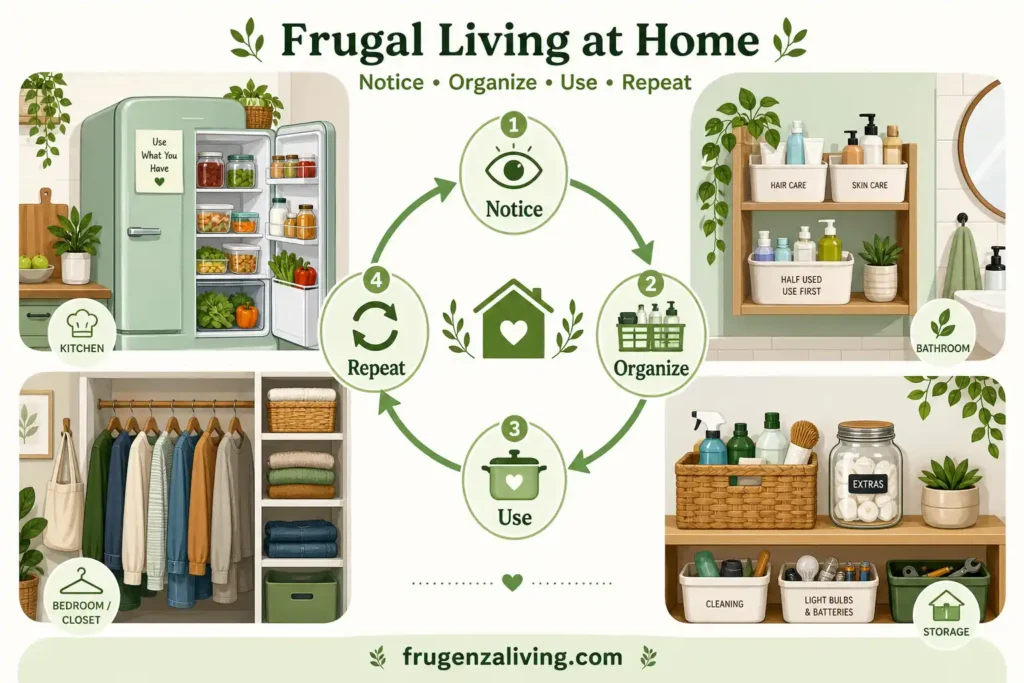
Use this simple loop:
Notice → Organize → Use → Repeat
Notice what each room is costing you.
Organize what you already own.
Use what is available before buying more.
Repeat the process room by room.
This works because it does not depend on motivation. Your home slowly becomes easier to manage, and better choices become more visible.
That is the real power of frugal living at home.
How This Fits Into Your Frugal Living System
This article focuses on the room-by-room side of frugal living.
If you want the broader foundation, your main guide on frugal living for beginners can explain the bigger mindset.
If your main problem is household spending, you can also reduce daily expenses at home by improving the rooms where money leaks most.
If you want more predictable progress, realistic ways to save money every month can help connect these home changes to a bigger savings pattern.
And if impulse shopping is still difficult, learning how to control spending habits can help protect the progress you build at home.
Everything connects, but this article starts with your environment.
FAQ
What are the best frugal living tips for beginners at home?
The best frugal living tips for beginners at home are checking each room for money leaks, using what you already own, reducing food waste, finishing products before replacing them, and organizing storage to avoid duplicate purchases. A room-by-room approach makes frugal living easier to start.
How can I start frugal living at home?
You can start frugal living at home by choosing one room and looking for waste. Begin with the kitchen, bathroom, closet, or subscriptions. Use what you already have before buying more, then repeat the process in another area next week.
How do I live frugally at home without feeling restricted?
To live frugally at home without feeling restricted, focus on reducing waste instead of cutting everything. Organize your home, use what you already own, rotate subscriptions, and delay unnecessary purchases. The goal is to make your home easier to manage, not less enjoyable.
Which room should I start with for frugal living at home?
The kitchen is usually the best room to start with because food waste and grocery spending repeat often. Checking your fridge, freezer, and pantry before shopping can quickly reduce waste and help you build simple frugal habits.
Is frugal living at home worth it?
Frugal living at home is worth it because many small spending decisions begin inside your home. When your rooms are organized and waste is lower, you naturally buy fewer duplicates, waste less food, and feel more in control of daily spending.
Conclusion
Frugal living at home does not have to mean changing everything.
You don’t need to become extreme.
You don’t need to follow a perfect system.
Start with one room.
Look for waste.
Use what you already have.
Make the space easier to manage.
Then repeat.
Because frugal living at home is not about having less.
It is about wasting less.

The ideas shared here come from real-life experience and practical habits that actually work.
→ Read more about Jeffi
- No Spend Month Challenge for Beginners: A 30-Day Plan - September 24, 2026
- Low Buy Month Challenge: Realistic Rules for 30 Days - September 23, 2026
- How to Stop Buying Groceries You Already Have - September 20, 2026