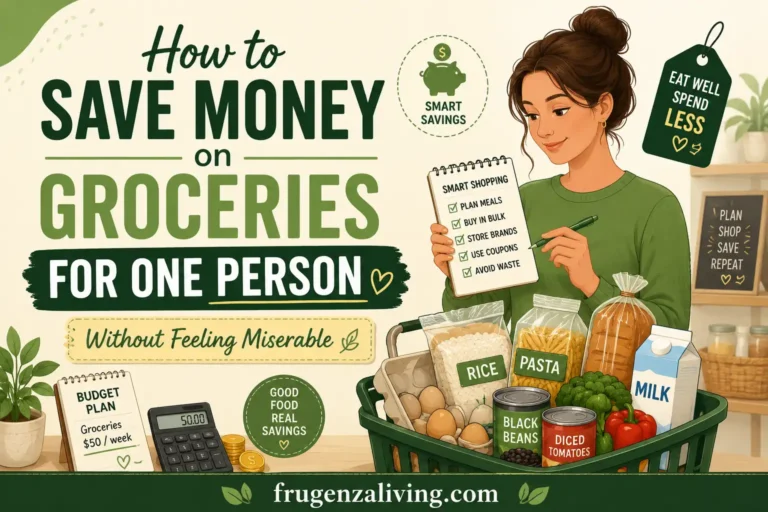
If you’ve been wondering how to save money on groceries for one person, you’re not alone. Living solo sounds like it should be cheaper… until you check your receipts and realize you just spent $80 on what feels like “nothing.”
I’ve been there. When I first started shopping for myself, I’d buy too much, waste food, and somehow still feel like I had nothing to eat. It took a bit of trial and error (and a few painful grocery bills) to figure out what actually works.
This guide is specifically for anyone looking for a realistic grocery budget for one person and simple ways to reduce weekly spending without overcomplicating things.
The good news? You don’t need extreme budgeting or boring meals. Just a few smarter habits can cut your grocery bill in a noticeable way.
Why Grocery Shopping for One Is Tricky
Here’s the thing—most grocery stores are built for families, not solo shoppers.
So you end up dealing with:
- Large package sizes you can’t finish
- “Deals” that only make sense if you’re feeding multiple people
- Fresh food going bad before you use it
- Random impulse buys (we’ve all grabbed snacks we didn’t plan for)
In the U.S., a single person typically spends around $60–$100 per week on groceries. In parts of Europe, it’s about €40–€80 per week, depending on the country and lifestyle.
A big chunk of that? Food waste.
The One-Person Grocery Rule
One-Person Grocery Budget Builder
Grocery shopping for one person gets easier when every item has a clear purpose. Use this simple builder to create a budget-friendly grocery list that reduces waste, keeps meals flexible, and helps you avoid random purchases.
Pick 1–2 Proteins
Choose affordable proteins you can use in more than one meal, such as eggs, chicken, tuna, beans, tofu, or Greek yogurt.
Choose 2 Base Foods
Keep meals cheap and filling with simple bases like rice, pasta, oats, potatoes, tortillas, or bread.
Add Flexible Produce
Pick vegetables or fruit that work in several meals. Frozen vegetables are often easier for one person because they last longer.
| Grocery Category | Budget-Friendly Examples | Why It Works for One Person | Waste Risk |
|---|---|---|---|
| Protein | Eggs, canned tuna, beans, chicken, tofu, Greek yogurt | Can be used for breakfast, lunch, dinner, and leftovers | Low to medium |
| Carbs / Base Foods | Rice, pasta, oats, potatoes, tortillas, bread | Cheap, filling, and easy to combine with different meals | Low |
| Vegetables | Frozen broccoli, spinach, carrots, cabbage, mixed vegetables | Frozen or long-lasting vegetables help prevent spoilage | Low if frozen |
| Flavor Boosters | Salsa, soy sauce, spices, cheese, garlic, hot sauce | Make repeat meals feel different without buying many ingredients | Low |
| Emergency Meals | Soup, frozen meals, pasta, rice bowls, eggs, canned beans | Helps avoid takeout when you are tired or busy | Low |
| Best Rule | Buy items that work in at least two meals | Reduces food waste and makes your grocery budget stretch further | Lowest |
Before buying groceries as one person, use a simple rule: every fresh item should have at least two possible uses. If you buy spinach, it should work for eggs, pasta, sandwiches, or rice bowls.
If you buy chicken, it should work for dinner, lunch leftovers, and maybe a freezer meal. This matters because grocery shopping for one person becomes expensive when ingredients only fit one recipe and then sit unused in the fridge.
A good one-person grocery rule is to ask four questions before buying anything fresh: Can I use this in more than one meal? Can I freeze it if I do not finish it? Do I already have a base, protein, or sauce to pair with it? Will I realistically cook it this week? If the answer is no, the item may not be a good deal even if the price looks low.
This is where solo grocery shopping is different from family grocery shopping. A large package or bulk deal is only cheaper if you can actually use it before it spoils.
For one person, the smartest grocery choices are not always the biggest or cheapest items. They are the flexible items you can repeat, freeze, and combine without getting bored
How Much Should One Person Spend on Groceries?
A realistic grocery budget for one person usually falls between $200 and $400 per month in the U.S., depending on location, eating habits, and food choices.
If you’re trying to stay on the lower end, focusing on simple meals, buying store brands, and avoiding food waste can make a big difference.
In many cases, it’s not about how much you earn—but how you shop and plan your meals.
A Simple Grocery List Framework for One Person
Instead of building a grocery list around random recipes, build it around simple food categories.
A one-person grocery list should include one or two affordable proteins, two flexible carbs, two vegetables, one fruit, one easy breakfast option, and a few flavor boosters like sauces, spices, or cheese. This keeps your list simple without making your meals feel repetitive.
For example, you might buy eggs and chicken as proteins, rice and pasta as carbs, frozen broccoli and salad greens as vegetables, bananas as fruit, oats for breakfast, and salsa or soy sauce for flavor.
With only a few ingredients, you can make rice bowls, pasta meals, eggs with vegetables, simple lunches, and quick dinners without buying too many separate items.
This kind of grocery list helps you save money because every item has a job. You are not buying food just because it looks useful.
You are buying ingredients that connect with each other. That reduces waste, prevents impulse purchases, and makes it easier to eat at home when you are tired or busy.
My Wake-Up Call (A Quick Personal Story)
At one point, I tracked my spending for a month. Nothing fancy, just notes on my phone.
Here’s what I found:
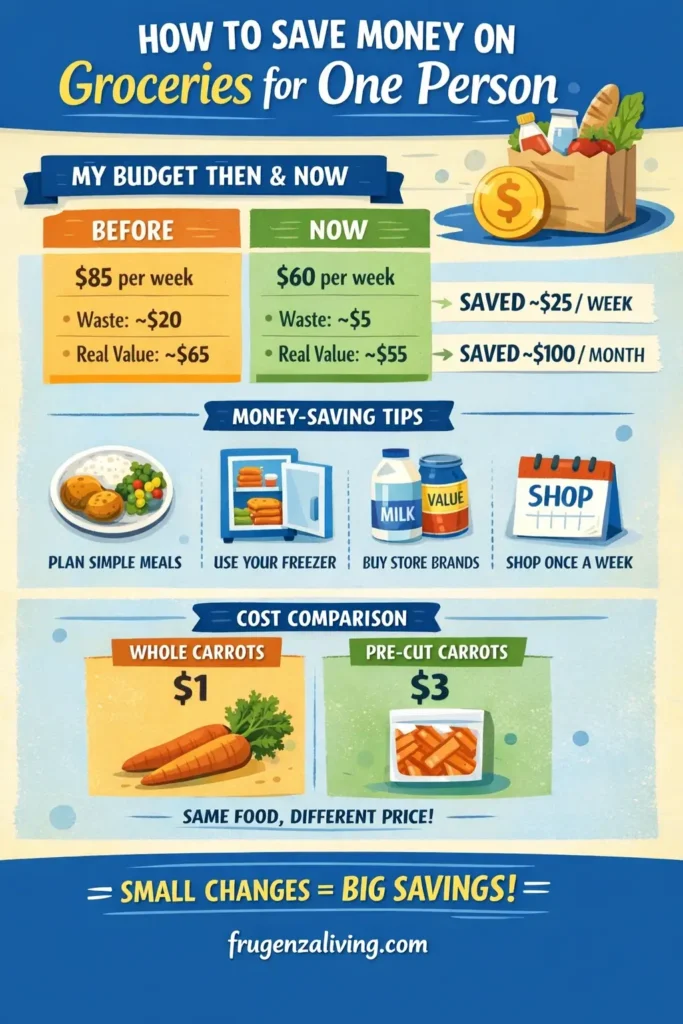
- Weekly grocery spend: ~$85
- Food I threw away: roughly 25%
- Actual useful food: closer to ~$60
That stung a bit.
So I made a few changes—nothing extreme—and within a few weeks, I brought it down to about $55–$60 per week. Same meals, less waste.
This is just one part of a complete frugal living for beginners guide that focuses on reducing everyday expenses.
Plan Your Meals (But Keep It Realistic)
Don’t Overplan—Just Outline Your Week
You don’t need a perfect meal plan. Just pick a few meals you’re okay eating more than once.
For example:
- Chicken + rice + veggies (2–3 meals)
- Pasta (2 meals)
- Eggs or quick meals (flex days)
That’s already enough structure. This is one of the easiest ways to follow a grocery budget for one person without feeling restricted.
Why This Helps You Save
When you plan even a little:
- You stop buying random stuff
- You use ingredients fully
- You waste less food
And honestly, eating similar meals a few days in a row? It’s not that bad. Planning cheap meals for one person is one of the easiest ways to cut your grocery bill.
Shop Smarter, Not Bigger
Skip Bulk Deals (Most of the Time)
Bulk buying sounds smart—but for one person, it can backfire.
Avoid buying large amounts of:
- Fresh vegetables
- Dairy
- Bread (unless you freeze it)
Instead, bulk-buy items that last:
- Rice
- Pasta
- Oats
- Frozen foods
This becomes easier when you learn how to eat well on a budget without overspending.
Realistic Grocery Budget for One Person
Here’s a simple breakdown of what a realistic grocery budget for one person may look like:
| Budget Type | Weekly Cost | Monthly Cost | Best For |
|---|---|---|---|
| Low Budget | $40–$60 | $160–$240 | Simple meals, strict planning |
| Average | $60–$80 | $240–$320 | Balanced solo grocery shopping |
| Flexible | $80–$100 | $320–$400 | More variety, less restriction |
Check the Price Per Unit
In U.S. and European stores, you’ll usually see:
- Price per ounce (U.S.)
- Price per kg/liter (Europe)
This is where the real value shows.
A cheaper-looking item isn’t always cheaper long-term.
Use Your Freezer (Seriously, This Is a Game-Changer)
If I had to pick one habit that saves the most money, it’s this.
Freezing food helps you:
- Avoid waste
- Cook in batches
- Always have something ready
What You Can Freeze Easily:
- Meat and chicken
- Bread
- Cooked meals
- Chopped vegetables
I usually cook 2–3 portions, eat one, and freeze the rest. It’s like making your own budget-friendly meal prep. This is also part of a bigger strategy to reduce daily expenses and manage your budget better.
Keep Your Meals Simple
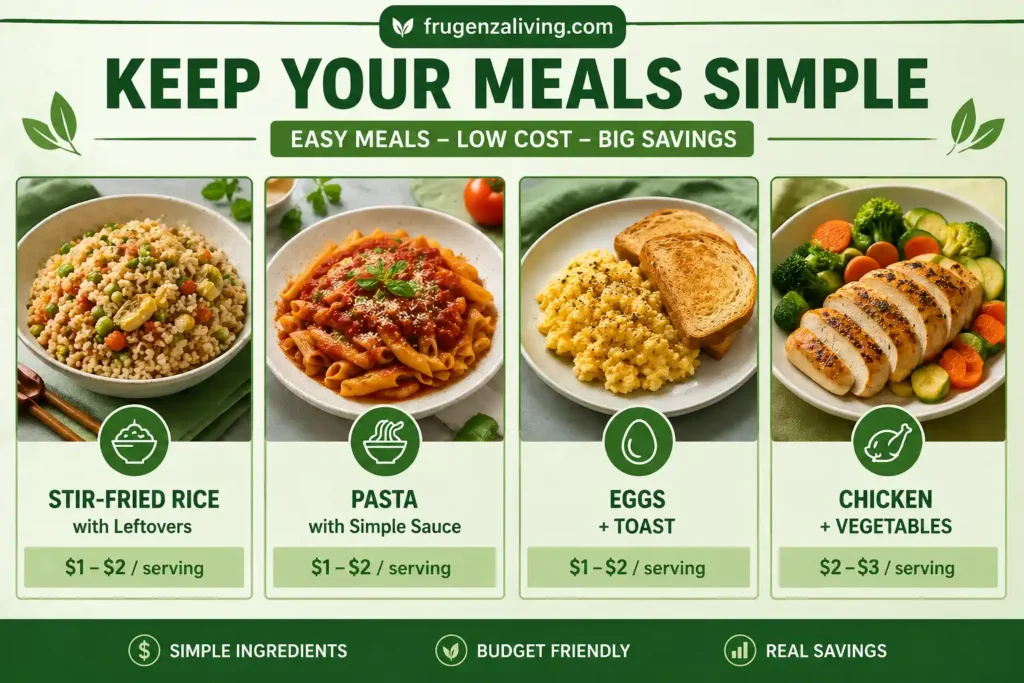
You don’t need fancy recipes to eat well.
Some of the cheapest meals are also the easiest:
- Stir-fried rice with leftovers
- Pasta with simple sauce
- Eggs + toast
- Chicken + vegetables
In many U.S. or European cities, a homemade meal like this costs around:
- $2–$4 per serving
Compare that to takeout at $10–$15, and the savings become obvious. This becomes easier when you learn how to save money on food easily.
Shop Once a Week (Not Every Other Day)
I used to shop multiple times a week, thinking it kept things “fresh.”
In reality, it just meant:
- More impulse buys
- Higher spending
- Less control
Switching to once-a-week shopping made a big difference. You become more intentional with what you buy and use.
Be Careful with Convenience Foods
Pre-cut veggies, ready meals, snack packs—they’re convenient, no doubt.
But they’re also more expensive.
Quick example:
- Whole potatoes: $2
- Pre-cut potatoes: $5
Same food, very different price.
You don’t have to avoid them completely, but don’t rely on them too much.
Store Brands Are Underrated
In stores like Aldi, Lidl, Tesco, or Walmart:
- Store brands are often 20–40% cheaper
And honestly? Most of the time, they taste just as good.
Try switching basics like:
- Milk
- Pasta
- Rice
- Canned goods
It’s an easy win.
A Real Weekly Budget Comparison
Let’s break it down simply.
Before (No Strategy)
- Groceries: $85/week
- Waste: ~$20
- Real value: ~$65
After (With Smarter Habits)
- Groceries: $60/week
- Waste: ~$5
- Real value: ~$55
👉 Weekly savings: ~$25
👉 Monthly savings: ~$100
That’s not small. That’s a bill paid, or money saved.
How This Fits Into Bigger Money Habits
Saving on groceries isn’t just about food—it’s part of a bigger picture.
When you consistently lower daily expenses:
- You free up money for savings
- You reduce financial stress
- You build better spending habits
This connects directly to topics like:
- Budgeting
- Frugal living
- Personal finance basics
If your blog focuses on these areas, this kind of content helps build strong topical authority over time.
Realistic Grocery Savings Example for One Person
Here is a realistic example of how one person could lower grocery spending without eating less or feeling miserable. If you reduce one takeout meal per week, that alone could save a meaningful amount over a month.
If you replace a few name-brand staples with store brands, plan three repeat meals, freeze leftovers, and stop buying fresh ingredients without a plan, your grocery budget becomes easier to control.
For example, someone spending $85 per week on groceries might reduce that to around $60–$70 by cutting food waste, buying fewer single-use ingredients, and keeping emergency meals at home.
That difference may not look huge in one week, but over a month it can create real savings. Over a year, even small weekly savings can become a noticeable amount.
The key is not to chase the lowest grocery bill possible. The key is to spend less on food you waste, meals you do not cook, and ingredients that do not fit your real routine.
When your grocery budget matches how you actually eat, saving money becomes much easier to maintain.
FAQ About Saving Money on Groceries for One Person
How much should one person spend on groceries per week?
A realistic grocery budget for one person is usually around $60 to $100 per week in the U.S., depending on location, eating habits, and how often you cook at home. If you plan simple meals, buy store brands, and reduce food waste, you may be able to keep it closer to $40 to $60 per week.
Is $200 a month enough for groceries for one person?
Yes, $200 a month can be enough for groceries for one person, but it typically requires a more intentional approach. You’ll need to focus on basic ingredients, cook at home more often, and avoid buying too many convenience or snack items that increase your total spending.
What is the cheapest way to grocery shop for one person?
The cheapest way to grocery shop for one person is to keep things simple. Plan a few repeat meals, buy only what you can realistically use, choose store brands when possible, and avoid bulk deals on fresh food that may go to waste before you finish it.
How can I save money on groceries if I live alone?
If you live alone, saving money on groceries comes down to reducing waste and being more intentional. Shopping once a week, freezing extra portions, and keeping meals simple can make a noticeable difference in how much you spend.
How do I grocery shop for one without wasting food?
To avoid food waste, it helps to choose flexible ingredients that can be used in multiple meals. Foods like rice, eggs, frozen vegetables, pasta, and chicken can be combined in different ways throughout the week, so you don’t end up throwing things away.
Are store brands really cheaper?
In most cases, yes. Store brands are often significantly cheaper than name brands, especially for basic items like pasta, rice, milk, canned goods, and frozen vegetables. The quality is usually similar enough that switching can reduce your grocery bill without affecting your meals.
Should one person buy groceries in bulk?
Bulk buying can work for one person, but only for the right items. It makes sense for shelf-stable foods like rice, oats, pasta, and canned goods, but it can lead to waste if you buy too much fresh produce, dairy, or bread that spoils quickly.
How can I reduce impulse buying at the grocery store?
Impulse buying often happens when you shop without a plan. Creating a simple list, sticking to your usual meals, and shopping once a week instead of multiple times can help you stay focused and avoid unnecessary purchases.
Final Thoughts
Learning how to save money on groceries for one person doesn’t mean cutting everything you enjoy.
It’s really about:
- Planning just enough
- Buying what you’ll actually use
- Keeping meals simple
- Avoiding waste
You don’t have to do everything perfectly. Even saving $10–$20 a week adds up faster than you think.
Start small, adjust as you go, and find what works for your routine.

The ideas shared here come from real-life experience and practical habits that actually work.
→ Read more about Jeffi
- No Spend Month Challenge for Beginners: A 30-Day Plan - September 24, 2026
- Low Buy Month Challenge: Realistic Rules for 30 Days - September 23, 2026
- How to Stop Buying Groceries You Already Have - September 20, 2026