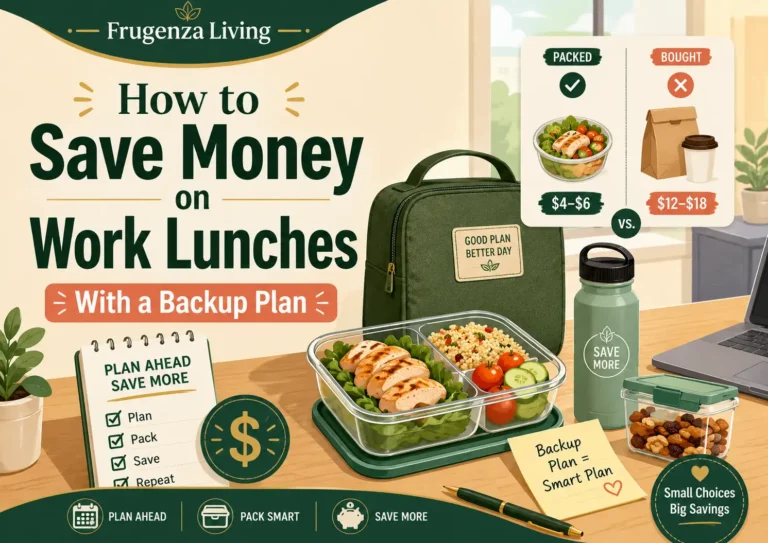
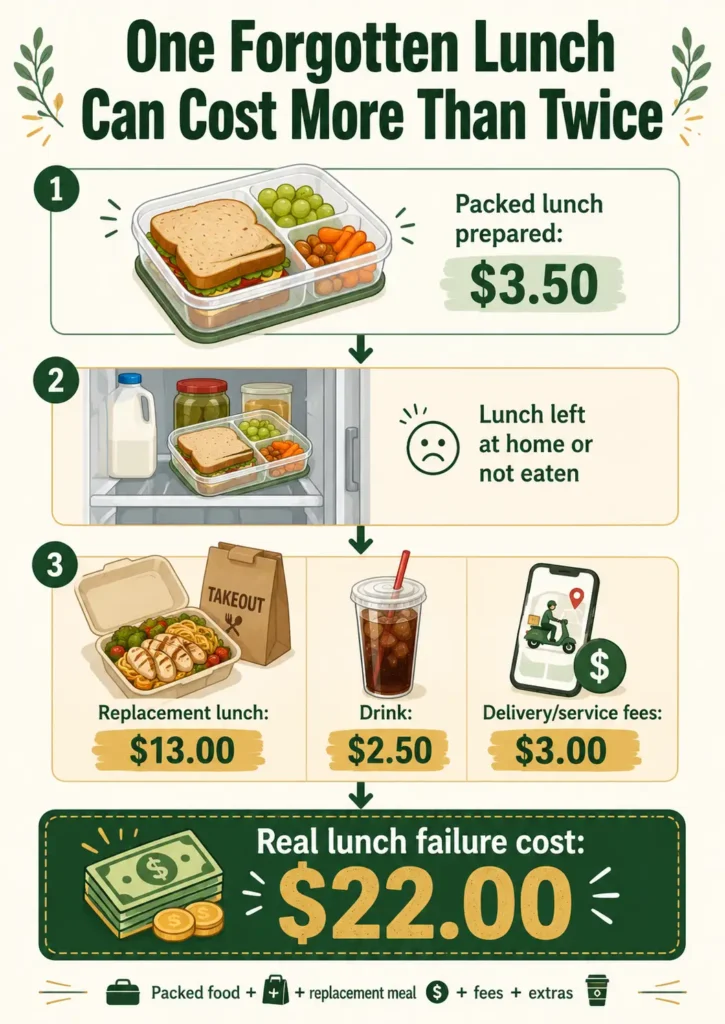
You prepare lunch the night before, leave it in the refrigerator, and notice only after arriving at work. By noon, you order food, add a drink, pay the fees, and later throw away the meal you packed.
That lunch was paid for twice.
Learning how to save money on work lunches is not about producing five perfect containers every Sunday. It is about covering workdays disrupted by meetings, short breaks, forgotten bags, limited appliances, and coworker invitations.
Quick answer: Measure the cost of packed lunches that are actually eaten, not just prepared. Then cover each workday with one of three options: a dependable packed lunch, a suitable office backup, or a purchased lunch planned in advance. This reduces wasted food, delivery fees, and emergency spending without requiring daily meal prep.
This article focuses on the system behind an affordable workweek. For more menu inspiration, use these cheap lunch ideas for one person without turning every Sunday into a large cooking project.
Calculate the Cost of Lunches You Actually Eat
A restaurant receipt gives one obvious total. A packed lunch is harder to judge because ingredients may also serve dinner, portions may be wasted, and an undersized meal may lead to another purchase.
Two measurements are especially useful.
Effective cost per eaten lunch = cost allocated to work-lunch portions, including discarded portions ÷ packed lunches actually eaten
Suppose five work-lunch portions cost $20 to prepare, but only four are eaten:
$20 ÷ 4 = $5 per eaten lunch
The containers appeared to cost $4 each, but the discarded portion increased the effective cost.
Next, calculate the cost of a lunch plan that fails:
Lunch failure cost = replacement meal + ordering fees + unplanned extras + cost of uneaten food
Your full weekly number should use dollars in every category:
Weekly work-lunch cost = cost of packed lunches eaten + cost of prepared food wasted + purchased lunches + ordering fees + lunch-related drinks and snacks
Record purchased lunches at their full checkout cost, including sales tax and any planned tip. List delivery or service fees separately only when they are not already included in that amount.
Consider this illustrative comparison.
Unplanned week
- Four purchased lunches at $13 each: $52
- One packed lunch: $3.50
- Weekly total: $55.50
Covered week
- Three packed lunches at $3.50 each: $10.50
- One office backup: $2.50
- One planned purchased lunch: $13
- Weekly total: $26
The illustrative difference is $29.50 per week. The lower-cost week does not depend on five packed lunches succeeding. It needs only three packed meals, one backup, and one purchase that was already planned. Actual results will depend on local prices, work schedules, and the grocery portions used for lunch.
Work Lunch Cost Reality Check
Review one workweek. Record these amounts in a notebook, or save a screenshot and mark it up.
Packed food eaten
Only the ingredient cost of portions actually eaten at work.
Amount to record: $_____
Prepared food wasted
Lunch portions discarded instead of eaten or reused.
Amount to record: $_____
Purchased lunches
Full checkout cost for restaurant, café, cafeteria, or group-order meals.
Amount to record: $_____
Ordering fees
Delivery, service, or small-order charges not already counted.
Amount to record: $_____
Drinks and snacks
Extras bought because lunch was missing or insufficient.
Amount to record: $_____
Weekly total
Add every category instead of counting only restaurant meals.
Total to record: $_____
Failure cost: replacement meal + ordering fees + unplanned extras + uneaten food
Diagnose the Point Where Your Lunch Plan Breaks
A packed lunch usually fails because it does not fit the workday, not because you lack discipline.
The problem may be time: preparation, reheating, or assembly takes longer than your break allows. It may be transport: the container leaks, feels bulky, or requires several pieces. A meal can also fail because the workplace lacks the refrigerator or microwave it needs.
Other failures appear later: the food loses its appeal, the portion is insufficient, a meeting changes the schedule, or a coworker invitation makes the meal unnecessary. Too many identical portions can also create waste.
Review the last two lunches you prepared but did not eat. Identify the first point of friction before searching for another recipe. A different container will not solve boredom, and a cheaper ingredient will not solve a ten-minute lunch break.
Use a Three-Lane Work Lunch Safety Net
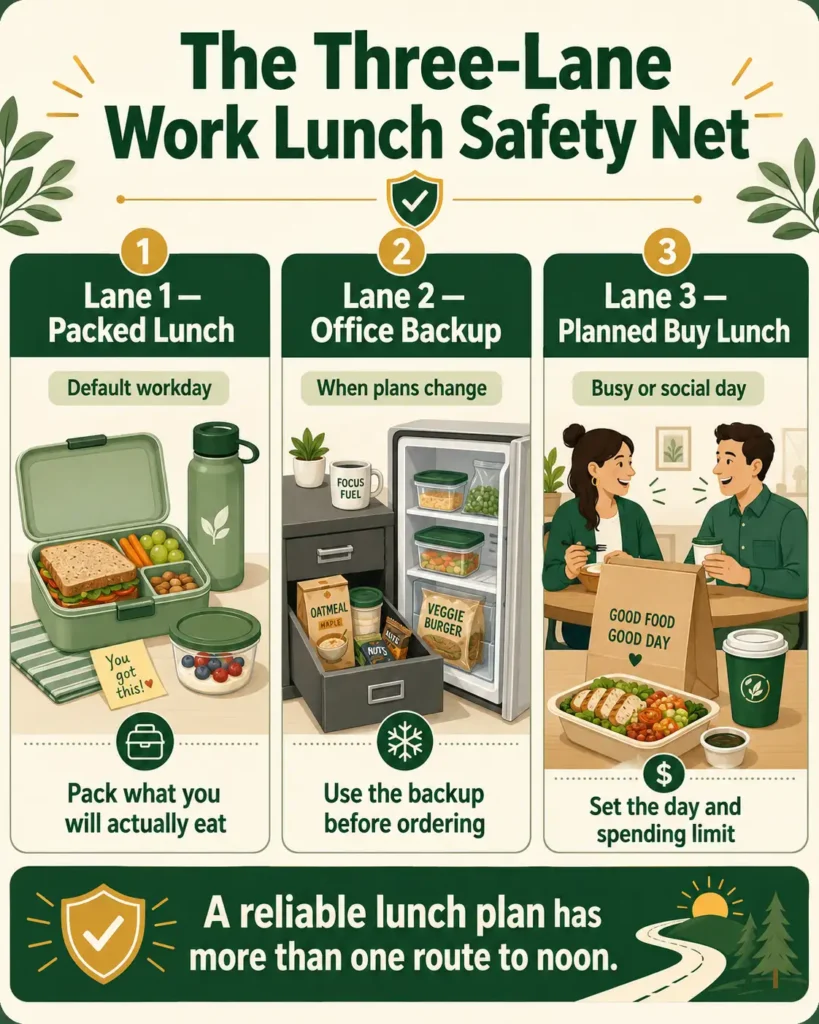
A reliable lunch plan needs more than one route to noon.
Lane 1: A Dependable Packed Lunch
This is the default for an ordinary workday. It should suit your commute, storage, break length, and appetite. It needs to be easy enough to bring and satisfying enough to eat.
Repeat two or three formats you trust instead of forcing daily variety. Reliability usually saves more than ambitious recipes that lose their appeal later in the week.
If grab-and-go lunches are becoming a habit, learning how to avoid convenience food at work can reduce recurring weekday spending.
Lane 2: A Real Office Backup
A backup replaces a purchased lunch; it should not merely delay hunger until you buy one.
Choose it according to the storage available:
- Desk storage: One substantial shelf-stable option, not a drawer full of random snacks.
- Freezer access: One labeled portion that reheats well.
- Refrigerator access: One backup with a clear date by which it will be used.
- Hot water only: A suitable format that can be prepared with hot water and meets your needs.
Keep one or two options you would willingly eat. Use the oldest first and restock only after use. Buying ten emergency products creates another grocery haul, not a safety net.
Lane 3: A Planned Purchased Lunch
A purchased lunch can fit a frugal workweek. It may cover a team lunch, client meeting, travel day, or a day when convenience has real value.
Assign it a purpose and spending limit before the week starts. That makes it different from ordering because every other plan failed. When delivery and takeout are a broader pattern, use a separate strategy to save money on takeout rather than expecting meal prep to solve every purchase.
Five-Day Work Lunch Coverage
You do not need five perfect lunches. You need five covered workdays. Rename the days to match your shifts or hybrid schedule.
Monday
Lane: Packed
Risk: Low
Rule: Pack a drink
Tuesday
Lane: Packed
Risk: Short break
Rule: Ready to eat
Wednesday
Lane: Backup
Risk: Meetings
Rule: Use the backup before ordering
Thursday
Lane: Packed
Risk: Boredom
Rule: Second format
Friday
Lane: Planned buy
Risk: Social plans
Rule: Set a limit
Match the System to Your Workplace
Avoid duplicating a recipe guide by starting with one operational question: what must the lunch be able to do at noon?
Refrigerator and microwave: A packed meal or labeled freezer portion can work.
Refrigerator only: Choose a meal intended to be eaten cold.
No appliances: Use an appropriate shelf-stable option or safe insulated storage.
Very short break: Pack something ready to open and eat.
Hybrid schedule: Prepare only for confirmed office days.
According to the USDA’s packed-lunch safety guidance, perishable lunches should be carried in an insulated bag with at least two cold sources. Hot food should be carried in a suitable insulated container. Follow current food-safety instructions rather than leaving perishable food at room temperature until lunch.
Specific menu combinations belong in the lunch-ideas article. Here, the important point is that a meal requiring unavailable equipment is not a reliable money-saving plan.
Prepare Less Food, but Cover More Days
Five identical containers are not automatically efficient. Start with two or three packed lunches, then cover the remaining days with a backup and a planned purchase.
A 2 + 2 + 1 week might use two lunches in one format, two in another, and one backup or social-lunch day. This creates variety without requiring five separate recipes.
Preparing components can reduce boredom. Use ingredients across lunch and dinner, charge only the work-lunch portion to the calculation, and freeze a suitable portion early.
Convenience ingredients are not automatically poor value. A ready-to-use component may cost more per ounce but still prevent a much more expensive lunch purchase. Compare the price difference with the likelihood that the meal will actually be packed and eaten.
For broader storage and visibility systems, learn how to make groceries last longer rather than forcing every food-waste solution into the work-lunch routine.
Close the Spending Gaps Around Lunch
Prevent the Second Purchase
A $4 packed lunch is not really a $4 workday if it leads to a drink and vending-machine snack.
Track extras that happen because lunch is absent, too small, or difficult to eat. Packing a drink, including a planned side, or keeping one preferred snack at work may cost slightly more at the grocery store while reducing repeated individual purchases.
When workplace snacks have become a separate spending pattern, use a focused system to stop spending money on snacks rather than making every lunch unnecessarily large.
Keep Social Lunches Planned
Saving money does not require avoiding coworkers. Budget for meaningful social lunches and bring food on other days.
You can still sit with the group, join the walk, or say, “I brought lunch today, but I’ll come with you.” Group orders should count at their full checkout cost, including drinks and fees. Social value can justify a purchase, but it should not make the price invisible.
Measure Whether the System Is Becoming More Reliable
At the end of each week, count how many packed lunches were both prepared and eaten.
Packed-lunch reliability rate = packed lunches prepared and eaten ÷ packed lunches prepared × 100
If you prepared five and ate four:
4 ÷ 5 × 100 = 80%
Use the reliability rate alongside your weekly cost. A high rate shows that packed lunches are being eaten, but it does not automatically mean the system is inexpensive.
Then calculate the effective cost per eaten lunch. A rising reliability rate and falling weekly cost show improvement. A low rate means ingredient price is not the only problem. Prepare fewer portions, change the format, or use the backup earlier.
How to Calculate Your Own Work-Lunch Cost
Use recent receipts and record only the groceries allocated to work-lunch portions. Separate packed food eaten, discarded portions, purchased meals, fees, drinks, and lunch-related snacks. These figures are illustrative, not national averages.
The Bottom Line
The most practical way to learn how to save money on work lunches is to build coverage rather than chase perfect meal prep. Measure lunches actually eaten, identify why previous plans failed, and give each workday a packed meal, office backup, or planned purchase.
For next week, choose one dependable packed-lunch format, one backup substantial enough to replace lunch, and one clear rule for purchased meals.
Frequently Asked Questions
How much can I save by bringing lunch to work?
Calculate current weekly work-lunch cost − new covered-week cost. Include purchased meals, packed-food costs, waste, ordering fees, drinks, and lunch-related snacks on both sides. In the illustrative example, the difference was $29.50, but your result will depend on local prices and how reliably packed lunches are eaten.
What are good work lunches if I do not have a microwave?
Choose a sandwich or wrap designed to stay cold, a refrigerated cold bowl, food carried in a suitable insulated hot-food container, or an appropriate shelf-stable combination. Match the option to available storage and follow current food-safety guidance for perishable ingredients rather than relying on room-temperature storage.
What emergency lunches can I keep at work?
Choose something substantial enough to replace lunch, compatible with your desk, refrigerator, freezer, or hot-water access, and likely to be eaten before it expires. Keep only one or two backups, label dated items, use the oldest first, and restock after use rather than building a large emergency-food collection.
How do I save money when coworkers go out for lunch?
Plan which social lunches are worth buying and set an allowance for them. On other days, bring lunch and still join the walk or conversation. Count group-order drinks and fees in the total so convenience and social pressure do not make the real cost disappear.
Is meal prepping work lunches always cheaper?
No. Meal prep can cost more when portions are wasted, require specialty ingredients, or are replaced by takeout. Compare total preparation cost with the number of packed lunches actually eaten. A smaller batch, convenient ingredient, office backup, and planned purchased lunch may produce a lower real weekly cost.

The ideas shared here come from real-life experience and practical habits that actually work.
→ Read more about Jeffi
- No Spend Month Challenge for Beginners: A 30-Day Plan - September 24, 2026
- Low Buy Month Challenge: Realistic Rules for 30 Days - September 23, 2026
- How to Stop Buying Groceries You Already Have - September 20, 2026