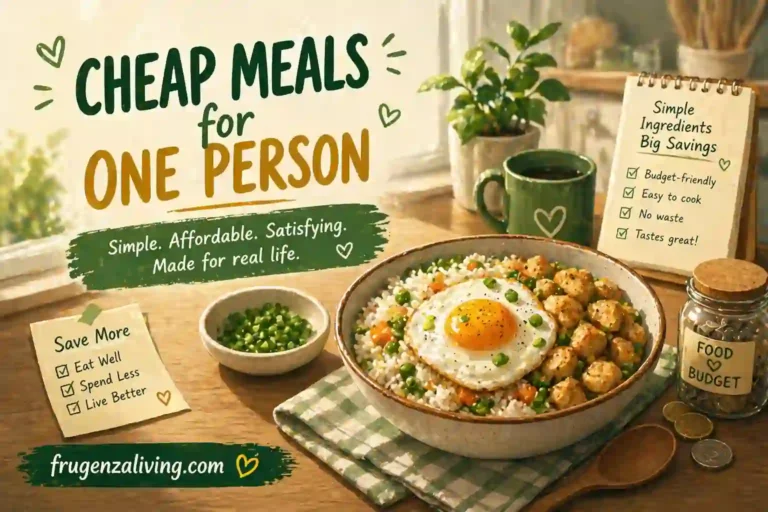
Cooking for one sounds simple… until you’re staring at a fridge full of random ingredients that don’t quite make a meal. Then you either order takeout or let food go bad. I’ve done both more times than I’d like to admit.
I used to overbuy groceries without realizing it. I’d think, “This is a good deal,” then half of it expired before I used it. That’s when I started figuring out cheap meals for one person that are actually realistic—meals you can cook fast, repeat often, and not waste money on.
What Are Cheap Meals for One Person?
Cheap meals for one person are simple, low-cost meals made with minimal ingredients that are easy to cook, store, and repeat without creating food waste.
The goal isn’t fancy cooking. It’s:
- Spending less on groceries
- Using what you already have
- Avoiding takeout when you’re tired
Basically, meals that fit real life. Planning cheap meals becomes much easier when you keep your spending simple and consistent.
Why Cooking for One Gets Expensive Fast
To be honest, cooking for one can feel annoying sometimes.
You either:
- Buy too much and waste food
- Get bored eating the same thing
- Or give up and order food
And with grocery prices going up, those small mistakes add up quickly.
You’ve probably had food go to waste before. That’s usually where the real money loss happens—not the price of food, but what you don’t eat.
The Real Trick: Build Meals From the Same Ingredients
The easiest cheap meals for one person usually come from the same few ingredients used in different ways. That sounds boring at first, but it actually makes cooking less stressful.
For example, rice, eggs, frozen vegetables, and canned tuna can become fried rice, a rice bowl, a quick egg plate, or a simple lunch wrap. Pasta, beans, tomato sauce, and frozen vegetables can turn into two or three different meals without buying completely new ingredients.
This matters because cooking for one gets expensive when every meal needs its own special ingredients. A better approach is to buy simple foods that can overlap. You spend less, waste less, and still have enough variety to avoid giving up and ordering takeout.
1. Keep Your Meals Simple (Really Simple)
One of the biggest mistakes is trying to cook like you’re feeding a family.
You don’t need that.
Stick to meals with:
- 3–5 ingredients
- Easy cooking steps
- Flexible portions
Examples of easy cheap meals:
- Fried rice with leftover veggies
- Pasta with garlic, oil, and eggs
- Rice + canned tuna + soy sauce
- Scrambled eggs + toast
- Instant noodles + added egg or veggies
These are the kind of easy cheap meals you can repeat without thinking too much.
This is especially effective if you’re trying to eat well on a budget while reducing daily expenses
2. Build 5–6 “Go-To” Meals
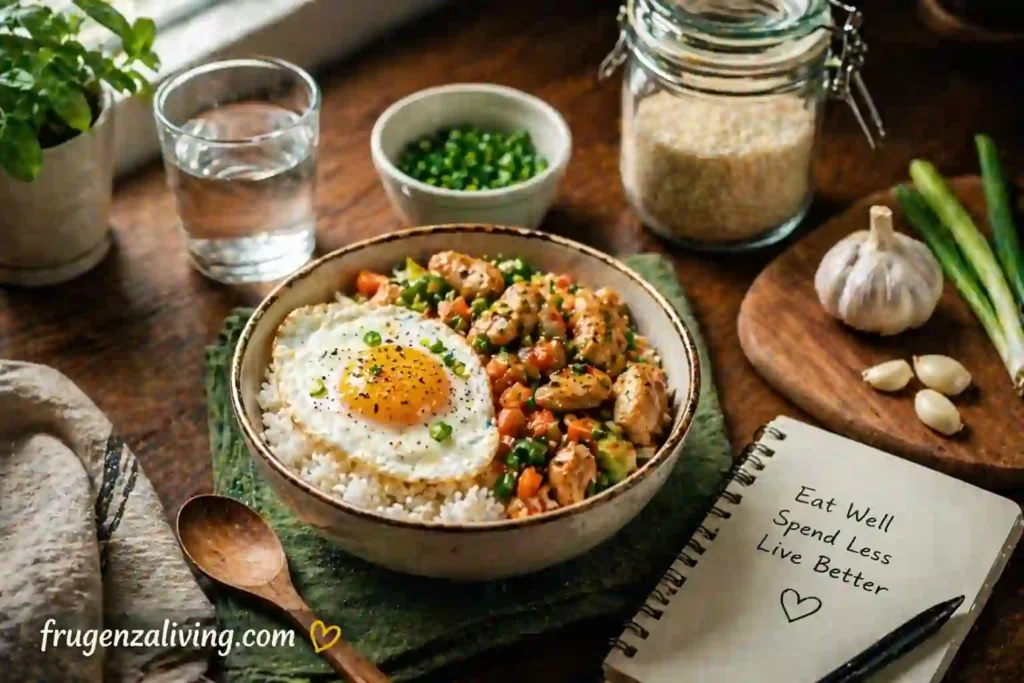
Instead of trying new recipes every day, create a small rotation.
This makes life easier and cheaper.
Example weekly rotation:
- Monday: Fried rice
- Tuesday: Pasta
- Wednesday: Eggs & toast
- Thursday: Stir-fry
- Friday: Leftovers or simple wrap
You don’t have to decide every day—and that reduces spending.
This is basically meal prep for one, but without the pressure.
These ideas will help you save money on groceries without sacrificing nutrition.
3. Buy Ingredients That Work for Multiple Meals
The easiest way to keep cheap meals realistic is to reuse the same ingredients in different ways. This keeps your grocery list simple without making every meal feel exactly the same.
| Main Ingredient | Meal Ideas | Why It Helps |
|---|---|---|
| Rice | Fried rice, rice bowl, egg rice, tuna rice | Cheap, filling, and easy to turn into several meals without much planning. |
| Eggs | Egg toast, fried rice, omelet, noodle topping | Works for breakfast, lunch, or dinner and cooks quickly when you are tired. |
| Pasta | Garlic pasta, tomato pasta, pasta with beans, leftover pasta | Affordable, shelf-stable, and useful when you need a fast meal. |
| Frozen vegetables | Stir-fry, soup, pasta add-on, rice bowl topping | Reduces food waste because you only use what you need. |
| Canned tuna or beans | Wraps, rice bowls, pasta, toast topping | Adds protein without needing to cook meat every day. |
This is where most people waste money.
They buy ingredients for one specific meal… and the rest goes unused.
Better approach:
Buy flexible ingredients like:
- Eggs
- Rice
- Pasta
- Frozen vegetables
- Chicken or canned protein
These can be reused across multiple meals.
Example:
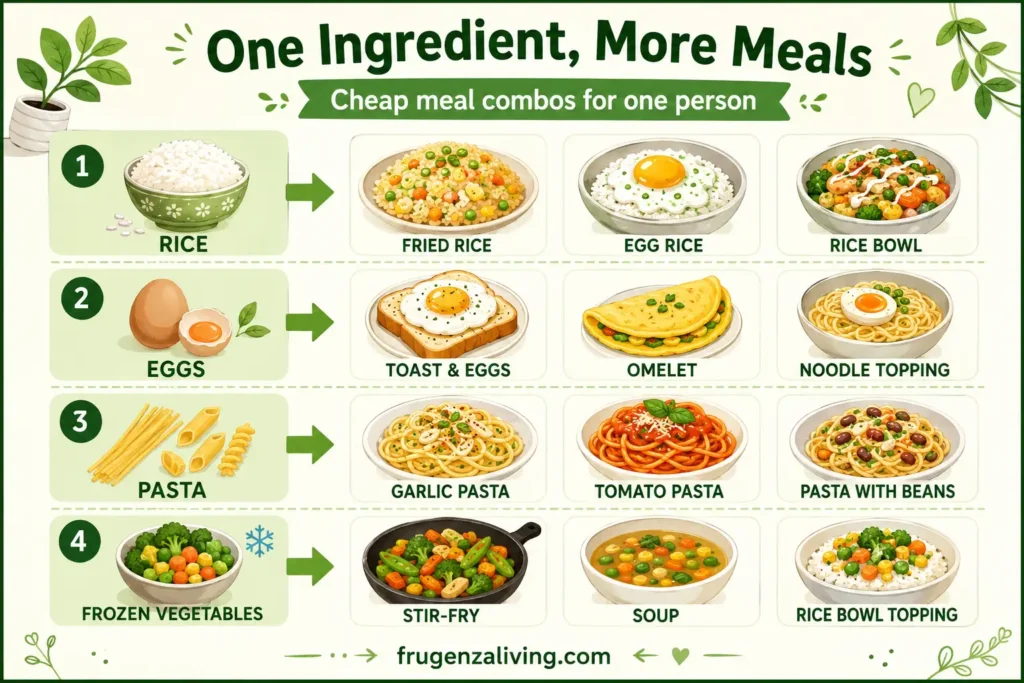
- Rice → fried rice, rice bowl, leftovers
- Eggs → breakfast, fried rice, quick dinner
That’s how you start to save money on groceries without overthinking it.
These ideas are also included in this complete frugal living for beginners guide.
4. Use Frozen and Pantry Foods (No Shame)
I used to think frozen food meant “low quality.” Not true.
It’s actually one of the easiest ways to avoid waste.
Smart options:
- Frozen vegetables
- Frozen chicken
- Canned beans or tuna
- Instant noodles (upgrade them)
These last longer and make quick meals possible when you’re tired.
Which is exactly when you’d normally order takeout. It’s also one of the easiest ways to live frugally in your daily routine.
5. Make “Lazy Meals” Your Backup Plan
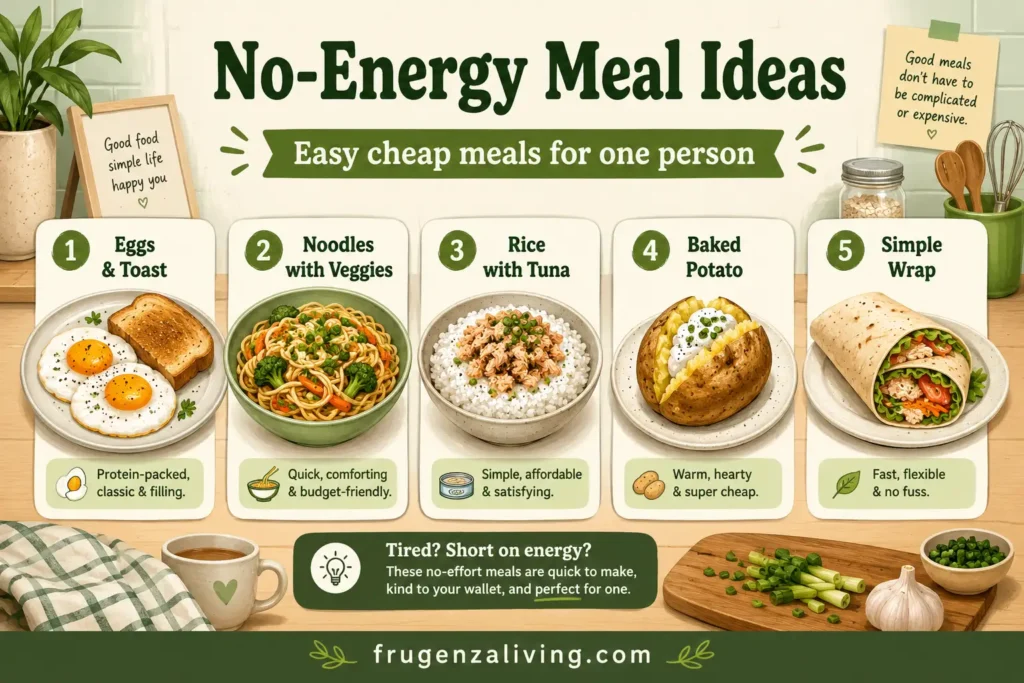
Let’s be real—some days you just don’t want to cook.
That’s when most people overspend.
So instead of relying on motivation, prepare for those days.
Keep these ready:
- Eggs + bread
- Instant noodles + toppings
- Frozen meals you actually like
- Simple wraps or sandwiches
This is what prevents you from spending $15–$25 on food delivery. These ideas are part of a strategy to save money on food without stress.
Keep a “No-Energy Meal” List
A no-energy meal is something you can make when you are tired, busy, or not in the mood to cook. This matters more than people think, because most takeout spending happens when cooking feels like too much effort.
Your no-energy meal list does not need to be impressive. It can be eggs and toast, rice with tuna, noodles with vegetables, a baked potato, or a simple wrap. The only rule is that the meal should be faster and easier than ordering delivery.
I like this approach because it is honest. You are not pretending that every day will be organized. You are preparing for the days when you do not feel like cooking at all.
6. A Realistic Weekly Cost Example
Let’s break it down.
Grocery list (approximate):
- Rice: $5
- Eggs: $4
- Frozen veggies: $6
- Chicken or tuna: $10
- Pasta: $3
- Bread: $4
👉 Total: ~$32/week
Now compare that to takeout:
- $15 × 5 meals = $75
👉 You save ~$40/week
👉 ~$160/month
And that’s with very basic meals.
A More Flexible Weekly Meal Plan for One Person
You do not need a perfect meal plan to make cheap meals work. A loose plan is usually enough.
For example, one simple week could look like this:
- 2 rice-based meals
- 2 egg-based meals
- 2 pasta or potato meals
- 1 leftover or lazy meal
This gives you structure without making the week feel too strict. You still have options, but you are not starting from zero every day.
That is usually the sweet spot when cooking for one: enough planning to avoid waste, but enough flexibility that you do not feel trapped by your own meal plan.
7. Cook Once, Eat Twice (or Three Times)
Cooking every day is tiring. That’s why people quit.
So don’t.
Try this:
- Cook 2 portions instead of 1
- Eat the same meal twice
- Or turn leftovers into something new
Example:
- Cook chicken → use it for rice + wrap
- Cook pasta → eat half today, half tomorrow
It saves time and reduces food waste.
8. Avoid “Aspirational Grocery Shopping”
This one took me a while to realize.
You buy food thinking:
👉 “I’ll cook this later”
But you don’t.
Then it goes bad.
Fix it:
- Only buy what you’ll actually cook
- Stick to your go-to meals
- Keep it boring (it works)
This is a core part of simple meal planning.
Ask This Before Buying Ingredients
Before buying an ingredient, ask one simple question:
“Can I use this in at least two meals?”
If the answer is no, it does not mean you can never buy it. But for everyday cheap meals, ingredients that only work once are easier to waste.
This small question helps you avoid the “random fridge” problem, where you have food at home but nothing that fits together. For one person, that is often what leads to takeout.
The best cheap ingredients are not always the cheapest on the shelf. They are the ones you actually use before they go bad.
9. Don’t Try to Be Perfect
You don’t need to:
- Cook every meal
- Eat perfectly healthy
- Follow a strict plan
Some days you’ll still order food. That’s fine.
The goal is:
👉 Spend less most of the time
That’s what makes it sustainable.
FAQ: Cheap Meals for One Person
What are the cheapest meals for one person?
Simple meals like rice, eggs, pasta, and frozen vegetables are among the cheapest and easiest to prepare.
How can I avoid wasting food when cooking for one?
Buy flexible ingredients, cook smaller portions, and use leftovers for the next meal.
Is meal prep worth it for one person?
Yes, but keep it simple. Cooking once and eating twice is usually enough.
How much can I save by cooking at home?
Most people can save $100–$200 per month compared to regular takeout.
What should I always have at home for cheap meals?
Eggs, rice, pasta, frozen vegetables, and a basic protein source.
Final Thoughts
Cooking for one doesn’t have to be complicated or expensive.
Honestly, the simpler you make it, the better it works.
You don’t need a perfect system.
You just need a few meals that you actually enjoy—and will keep making.
Start small. Repeat what works.
That’s how you make cheap meals feel easy.

The ideas shared here come from real-life experience and practical habits that actually work.
→ Read more about Jeffi
- No Spend Month Challenge for Beginners: A 30-Day Plan - September 24, 2026
- Low Buy Month Challenge: Realistic Rules for 30 Days - September 23, 2026
- How to Stop Buying Groceries You Already Have - September 20, 2026