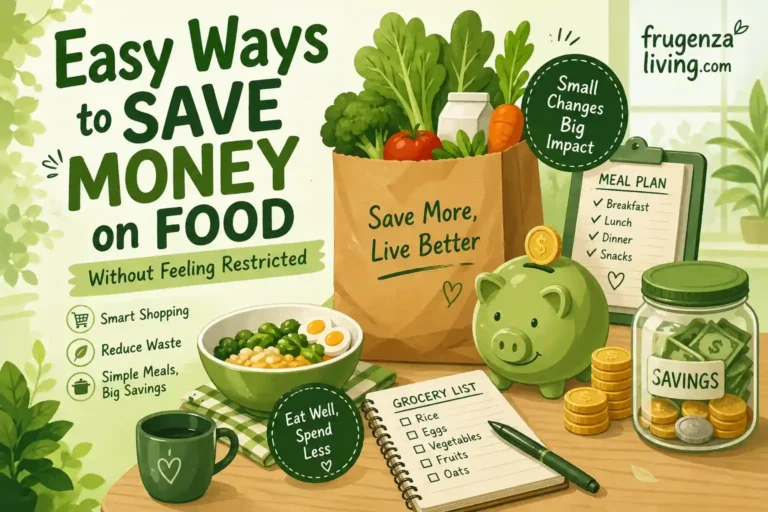
Saving money on food sounds simple. Cook more, eat out less, stop buying snacks.
But that advice usually fails after a few days.
Not because it’s wrong, but because it doesn’t match how people actually make decisions in real life. After a long day, cooking feels like effort, ordering food feels like relief, and those small “it’s just $5” purchases don’t feel important in the moment.
The problem isn’t knowledge. It’s timing, energy, and habits.
That is why saving money on food becomes easier when you stop expecting every food decision to happen at your best moment.
Most people do not overspend on food because they do not know cooking is cheaper. They overspend because the cheaper option feels too hard at the exact moment they need food.
A better approach is to prepare for different energy levels. Some days you can cook. Some days you can only reheat something.
Some days you need the fastest option possible. If your food plan only works on high-energy days, takeout will keep coming back.
But if you have options for tired days, busy days, and normal days, saving money on food becomes much more realistic.
The Psychology of Impulse Food Spending (Why It Keeps Happening)
Food spending isn’t just about hunger. It’s closely tied to mental energy.
Most expensive food decisions happen at predictable times: late evenings, busy afternoons, or right after work. That’s when decision fatigue starts to take over. Research in consumer behavior, including studies from universities like Stanford and the University of Chicago, shows that when people are mentally tired, they default to convenience.
In simple terms, the brain chooses “easy” over “optimal.”
That’s why a $9.40 takeout order can feel completely reasonable—even when groceries are already at home. It’s not a lack of discipline, it’s a pattern that repeats itself without being noticed.
Where Food Money Actually Goes (A More Honest Look)
Food overspending rarely comes from one big purchase.
It usually builds from patterns that feel harmless: opening a delivery app without thinking, adding snacks “just in case,” or buying groceries with good intentions and then not using them.
There was one moment that made this clear. Opening the fridge and realizing there were two bags of vegetables, bought on different days, both forgotten. One had already started to go bad.
That single mistake cost around $8–$10. Not much on its own. But repeated every week, it quietly becomes $30–$40 a month.
This is where most grocery budgets break down—not from eating too much, but from wasting what’s already been bought.
The Food Effort Ladder
Food Effort Ladder
Saving money on food becomes easier when you prepare options for different energy levels. Use this ladder so takeout does not become the only choice when you are tired, busy, or hungry.
Cook a Full Meal
Use this option when you have time and energy to cook something fresh or prepare extra food for later.
- Simple dinner recipe
- Batch-cooked rice or pasta
- Soup, stir-fry, or sheet-pan meal
Make a Simple Meal
Use this when you want something cheap and easy without cooking from scratch.
- Eggs and toast
- Rice bowl with leftovers
- Pasta with sauce
- Sandwich or soup
Use an Emergency Meal
Use this before ordering takeout. It does not need to be perfect; it only needs to be faster and cheaper.
- Frozen meal
- Canned soup
- Instant rice with eggs
- Beans and tortillas
The “Before Takeout” Rule
Before ordering food, eat one small backup option first: toast, yogurt, fruit, soup, leftovers, or eggs. If you still want takeout afterward, it becomes a choice instead of a hunger reaction.
One of the easiest ways to save money on food is to create a food effort ladder. This means having food options for different levels of energy instead of expecting yourself to cook from scratch every time.
At the top of the ladder are meals that take more effort, such as cooking a full dinner or trying a new recipe.
These are useful when you have time and energy. In the middle are simple meals, such as eggs and toast, rice bowls, pasta, sandwiches, soup, or leftovers. These are the meals that save money on normal busy days.
At the bottom are emergency meals. These are not perfect meals. They are cheaper-than-takeout options for tired days. Examples include frozen meals, canned soup, instant rice with eggs, pasta with jar sauce, beans and tortillas, or anything you can make faster than delivery.
This ladder matters because the goal is not to cook perfectly. The goal is to stop expensive food decisions before they become the easiest option.
When you have a low-effort backup, you do not need discipline at the worst moment of the day.
9 Practical Ways to Save Money on Food (That Actually Work)
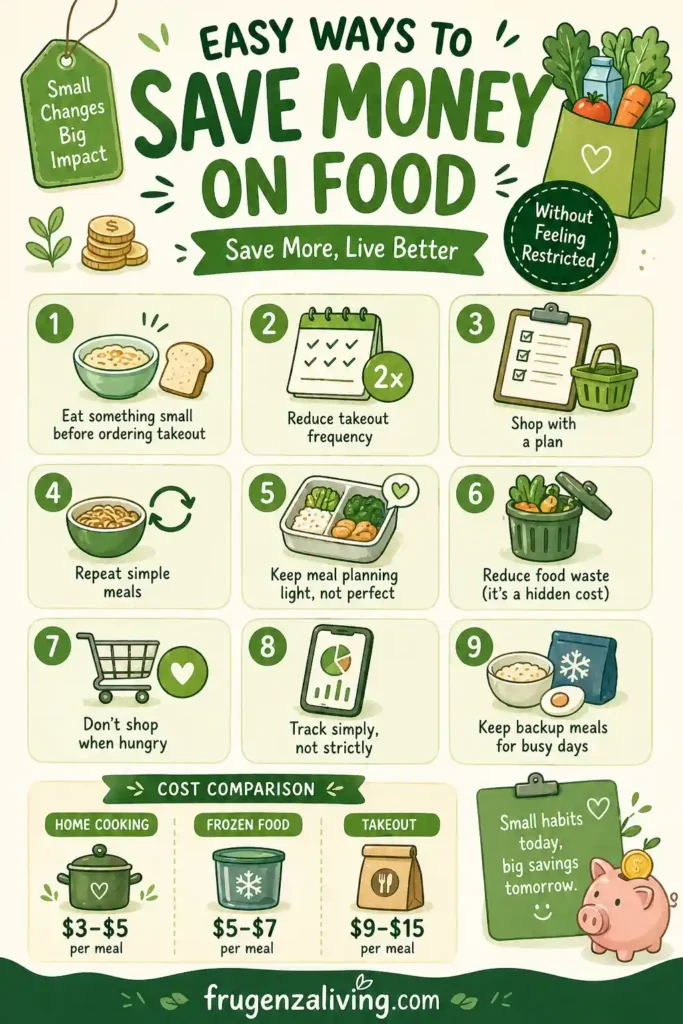
1. Eat Something Small Before Ordering Takeout
This sounds simple, but it works.
Eating a slice of bread or leftover rice before opening a food app creates a pause. That pause changes the decision. In one month, this habit alone reduced takeout spending by around $120.
A small $1 snack prevented a $12 order.
If you’re just starting out, this frugal living guide for beginners explains how saving money on food fits into a bigger strategy.
2. Reduce Takeout Frequency Instead of Eliminating It
Trying to cut takeout completely often backfires. Reducing it works better.
Going from five orders a week to two doesn’t feel extreme, but it cuts a large portion of the cost of eating out while still keeping flexibility.
3. Why Cooking More Doesn’t Always Save Money
This is where most advice gets it wrong.
Cooking more should save money, but it doesn’t always. If groceries are wasted, the cost cancels out.
Sometimes, spending $10 on takeout is actually cheaper than buying $15 of groceries that never get used. The real goal isn’t cooking more—it’s wasting less.
4. Stop Grocery Shopping Without a Clear Plan
Walking into a store without a plan almost guarantees overspending.
Not because of bad decisions, but because of exposure. A simple list—even just five items—reduces impulse buying significantly.
The easiest way to start is learning how to save money on groceries with simple planning.
5. Repeat Meals to Reduce Food Waste
Variety sounds ideal, but it often leads to unused ingredients.
Repeating simple meals like eggs, rice, or pasta makes grocery shopping easier and reduces waste without adding complexity.
You can also rely on budget-friendly meals that are simple and affordable.
6. The Meal Prep Mistake That Backfires
Meal prep often fails for one simple reason: it assumes consistency.
Real life isn’t consistent. Plans change, mood changes, appetite changes. After a few days, prepared meals feel repetitive, and takeout comes back.
A lighter approach works better. Plan loosely, not perfectly.
7. Food Waste Is the Real Hidden Expense
According to data from the USDA, a significant portion of household food is wasted each year.
Even small reductions in food waste can lower monthly expenses more effectively than cutting takeout.
It’s still possible to eat well on a budget without sacrificing nutrition.
8. Avoid Grocery Shopping When You’re Hungry
Shopping while hungry increases spending, not just on snacks, but across the entire cart.
Eating first leads to better decisions without requiring extra effort.
9. Use Simple Tracking Instead of Strict Budgets
Strict budgets feel restrictive. Tracking feels different.
Using tools like PocketGuard, YNAB, or even basic banking apps creates awareness without pressure. And awareness often changes behavior naturally.
These strategies also help you reduce daily expenses over time.
Build a “Before Takeout” Option
A “before takeout” option is a small meal or snack you eat before deciding whether to order food. It does not need to replace dinner completely. Its job is to lower the urgency.
When you are hungry and tired, takeout feels like the only reasonable choice. But after eating something small—toast, fruit, yogurt, eggs, leftovers, soup, rice, or a simple snack—the decision becomes calmer. You may still order food sometimes, but it becomes a choice instead of a reaction.
This works because many food orders happen during a short window of low energy. If you can get through that window with a cheaper option, you often avoid the full order. The goal is not to ban takeout. The goal is to stop hunger from making the decision for you.
Cooking vs Takeout vs Frozen Food (Real Cost Comparison)
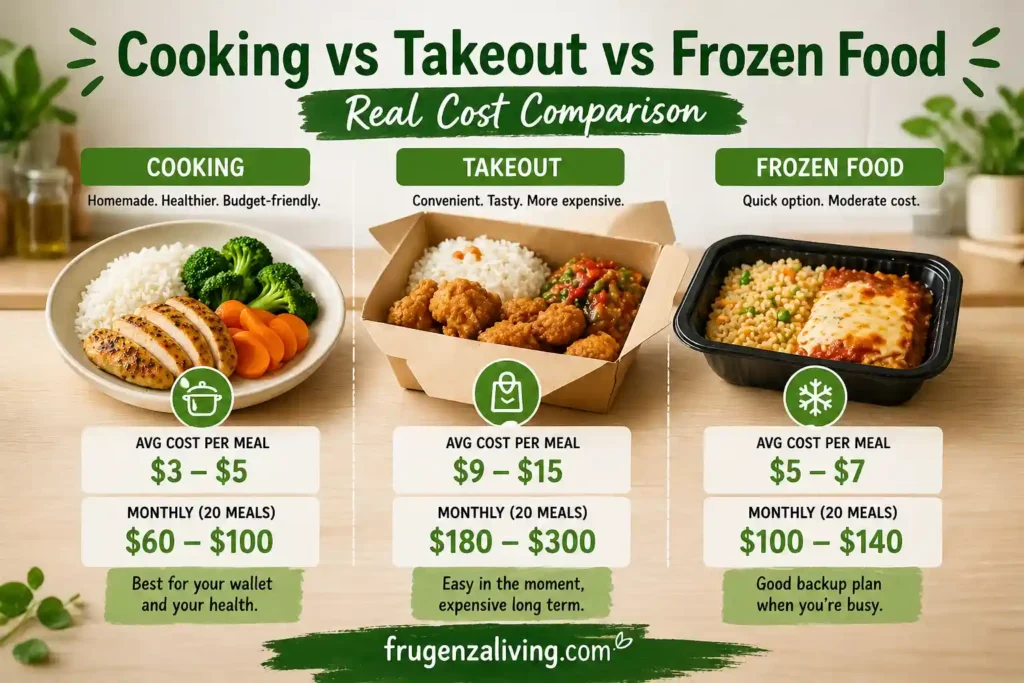
| Option | Avg Cost per Meal | Monthly (20 meals) |
|---|---|---|
| Home Cooking | $3–$5 | $60–$100 |
| Frozen Food | $5–$7 | $100–$140 |
| Takeout | $9–$15 | $180–$300 |
This doesn’t mean one option is always better. It shows how frequency affects total cost over time.
One Mistake That Quietly Costs More Than Takeout
A common pattern is buying groceries “for later.”
There was a period where vegetables were always bought with the intention to cook something healthier. But by the time evening came, cooking felt like too much effort. Food was ordered instead, and the groceries stayed untouched.
A few days later, they were thrown away.
This cycle repeated multiple times. Individually, it didn’t feel significant. But over a month, it added up to around $40–$60 in wasted food.
What Changed After 30 Days
Week one felt restrictive.
Week two started revealing patterns.
Week three reduced impulse decisions naturally.
Week four made the habits feel automatic.
The biggest change wasn’t saving money.
It was awareness. Once spending patterns became visible, decisions started changing without being forced.
A Simple System That Makes Food Spending Easier
Strict rules rarely last.
A simple system works better: repeat a few meals, plan lightly, and reduce decision fatigue.
That’s enough.
If the goal is to reduce living costs, food is one of the easiest areas to improve. And small daily money saving habits here often create noticeable results over time.
FAQ: Easy Ways to Save Money on Food
What is the easiest way to save money on food?
Reducing takeout frequency and avoiding food waste are the fastest ways to see results.
How can I lower my grocery bill quickly?
Plan simple meals, shop with a list, and avoid impulse purchases.
Is cooking always cheaper than eating out?
Not always. If groceries are wasted, the total cost can be higher than takeout.
How do I stop impulse food spending?
Create small delays before ordering, avoid shopping when tired, and keep simple meals available.
How much can I realistically save?
Most people can save around $100–$300 per month by adjusting daily habits.
Ending
Saving money on food isn’t about perfect discipline.
It’s about noticing patterns that were easy to ignore.
A late-night order here. A forgotten grocery item there.
Individually, they don’t matter much. But together, they shape your spending more than you think.
And once you start seeing them clearly, changing them becomes much easier.

The ideas shared here come from real-life experience and practical habits that actually work.
→ Read more about Jeffi
- No Spend Month Challenge for Beginners: A 30-Day Plan - September 24, 2026
- Low Buy Month Challenge: Realistic Rules for 30 Days - September 23, 2026
- How to Stop Buying Groceries You Already Have - September 20, 2026