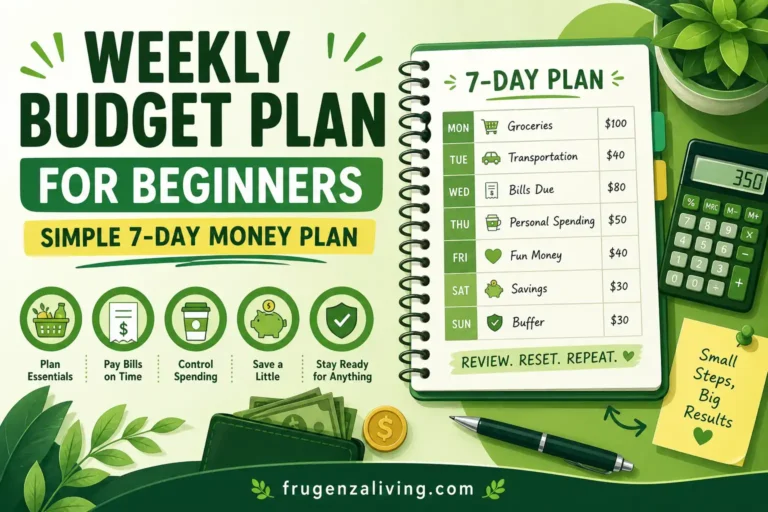
If a monthly budget feels too hard to follow, you are not alone.
A full month can feel difficult to predict. You may plan everything at the beginning, but by the second or third week, groceries cost more than expected, a bill appears, or weekend spending gets out of control.
That is why a weekly budget plan for beginners can feel easier.
Instead of trying to manage the whole month at once, you focus on the next 7 days. Many money decisions already happen weekly anyway: groceries, transportation, small bills, personal spending, and weekend plans.
This is not a full monthly budgeting system. It is a simple weekly money plan for beginners who want something practical, short-term, and easy to reset.
What Is a Weekly Budget Plan for Beginners?
A weekly budget plan for beginners is a simple money plan for the next 7 days. It helps you organize groceries, transportation, bills due this week, personal spending, small savings, and a buffer without planning the entire month at once. Weekly budgeting feels easier because the time frame is shorter and easier to adjust.
What This Weekly Budget Plan Helps You Do
A simple weekly budget helps you:
- know what you can spend this week
- avoid running out of money before payday
- make groceries and flexible spending clearer
- reset quickly if one week goes wrong
The goal is not perfection.
The goal is to stay aware for the next 7 days.
If you’re just starting, it’s important to understand basic budgeting setup before planning weekly expenses.
The 3-Number Weekly Budget Rule
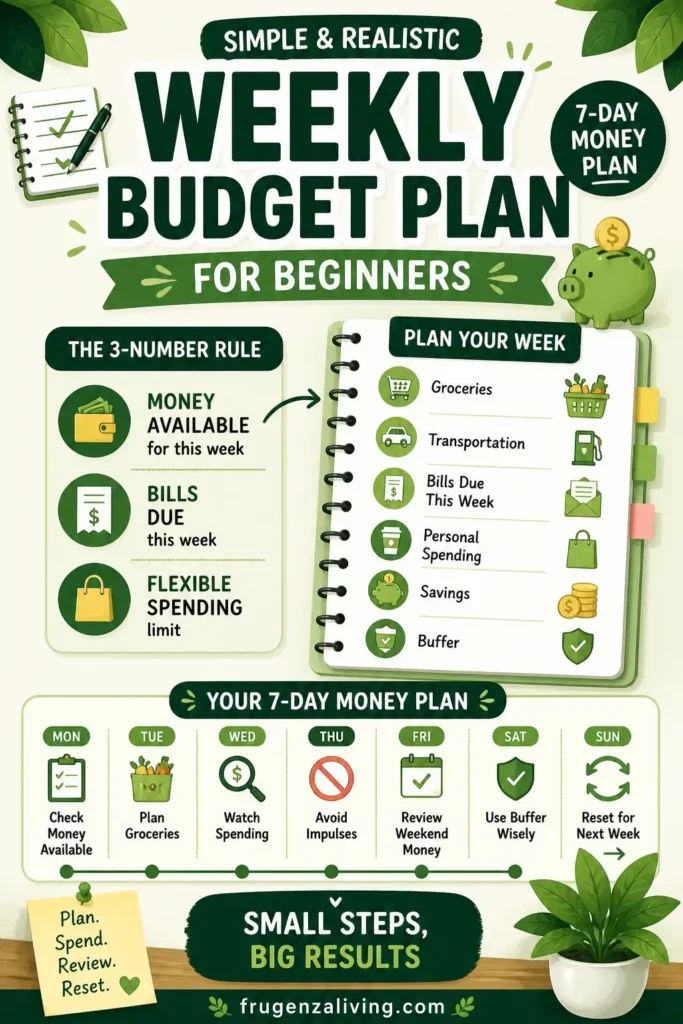
If you want to keep weekly budgeting simple, focus on three numbers:
- money available this week
- bills due this week
- flexible spending limit
That is enough to create a simple weekly spending plan without making the process feel heavy.
For example, if you have $300 available for the week, $80 in bills due, and $120 planned for groceries and transportation, you can quickly see what is left for personal spending, savings, and buffer.
You do not need to predict the whole month.
You just need to know what this week can safely handle.
If your income comes every week, it helps to learn how to budget when paid weekly so each paycheck has a clear job.
Weekly Budgeting Works Because the Time Frame Is Smaller
Weekly budgeting works because money decisions feel closer.
A monthly budget can feel too far ahead. You may plan for four weeks, but real life changes quickly.
A weekly budget asks a simpler question:
“What do I need to handle this week?”
That question is easier to answer.
If one week goes badly, the whole month is not ruined. You can adjust next week. That is the main advantage of weekly budgeting for beginners: it reduces overwhelm because the plan is short, realistic, and easier to fix.
A weekly plan works better when combined with the structured budgeting approach.
Monthly Budget vs Weekly Budget: What’s the Difference?
Both monthly and weekly budgets can be useful, but they serve different purposes.
| Budget Type | Best For | Main Benefit |
|---|---|---|
| Monthly Budget | Rent, big bills, savings, full income planning | Gives the big picture |
| Weekly Budget | Groceries, gas, flexible spending, short-term control | Makes money easier to manage week by week |
| Daily Spending Check | Small purchases and quick awareness | Helps you stay on track during the week |
A monthly budget shows the bigger structure.
A weekly budget helps you manage the money you are actually using right now.
A Simple Weekly Budget Plan for Beginners
Here is a weekly budget template for beginners you can copy and adjust:
| Weekly Area | What to Plan | Example |
|---|---|---|
| Groceries | Food needed for the next 7 days | $70–$120 |
| Transportation | Gas, public transit, rideshare, parking | $30–$60 |
| Bills Due This Week | Any bill that must be paid before the week ends | Phone bill, subscription, utility payment |
| Personal Spending | Small wants, coffee, dining out, hobbies | $30–$80 |
| Small Savings | A small amount set aside if possible | $10–$50 |
| Buffer | Extra money for small surprises | $20–$40 |
These numbers are only examples.
The point is to plan the week before the week spends itself.
You can also split your income weekly to make budgeting easier to manage.
How to Create a Weekly Budget in 5 Simple Steps
1. Check How Much Money Is Available for the Week
Start with the money you actually have available.
Do not use your total monthly income if most of it is already assigned to rent, bills, debt, or savings.
Ask:
“How much money can I safely use this week?”
That number becomes your weekly starting point.
2. List Bills Due This Week
Next, check if any bills are due in the next 7 days.
This may include:
- phone bill
- internet
- utilities
- insurance
- subscriptions
- loan payments
Bills due this week should come before flexible spending so you do not accidentally spend bill money on groceries, takeout, or weekend plans.
Your weekly plan should support realistic ways to save money every month.
3. Set Grocery and Transportation Limits
Groceries and transportation are usually the most important weekly categories.
Choose realistic numbers for food and getting around.
Do not make the limits too tight just to feel disciplined. If your grocery limit is unrealistic, you will likely break it and feel frustrated.
A weekly budget works better when it reflects real life.
4. Choose a Personal Spending Amount
Personal spending is where many weekly budgets fall apart.
This category can include coffee, snacks, eating out, small shopping, hobbies, and weekend plans.
Give yourself a clear amount. Even a small personal spending category can help you avoid guilt and prevent random purchases from quietly draining your money.
If you are not sure what usually causes your spending to slip, learning how to track expenses easily can help you notice patterns without turning this into a complicated system.
5. Leave a Small Buffer
A beginner weekly budget should include a buffer.
Even $10, $20, or $30 can help.
A buffer protects your budget from small surprises like a higher grocery bill, extra transport cost, or last-minute household item.
Without a buffer, one small change can make the whole week feel like a failure.
To stay consistent, it’s helpful to follow a simple monthly budget example alongside your weekly plan.
A Realistic 7-Day Budget Example
Here is how a simple weekly money rhythm might look:
| Day | Budget Focus | Simple Action |
|---|---|---|
| Monday | Check money available | Decide what you can safely spend this week |
| Tuesday | Plan groceries | Buy food for simple meals |
| Wednesday | Watch flexible spending | Notice coffee, snacks, or small purchases |
| Thursday | Avoid impulse spending | Pause before buying non-essential items |
| Friday | Review weekend money | Set a clear amount for weekend spending |
| Saturday | Use buffer wisely | Cover small surprises without panic |
| Sunday | Reset for next week | Review what worked and adjust |
This is not a strict schedule.
It is a rhythm you can adjust based on payday, work schedule, or when you usually shop.
The Weekly Budget Reset
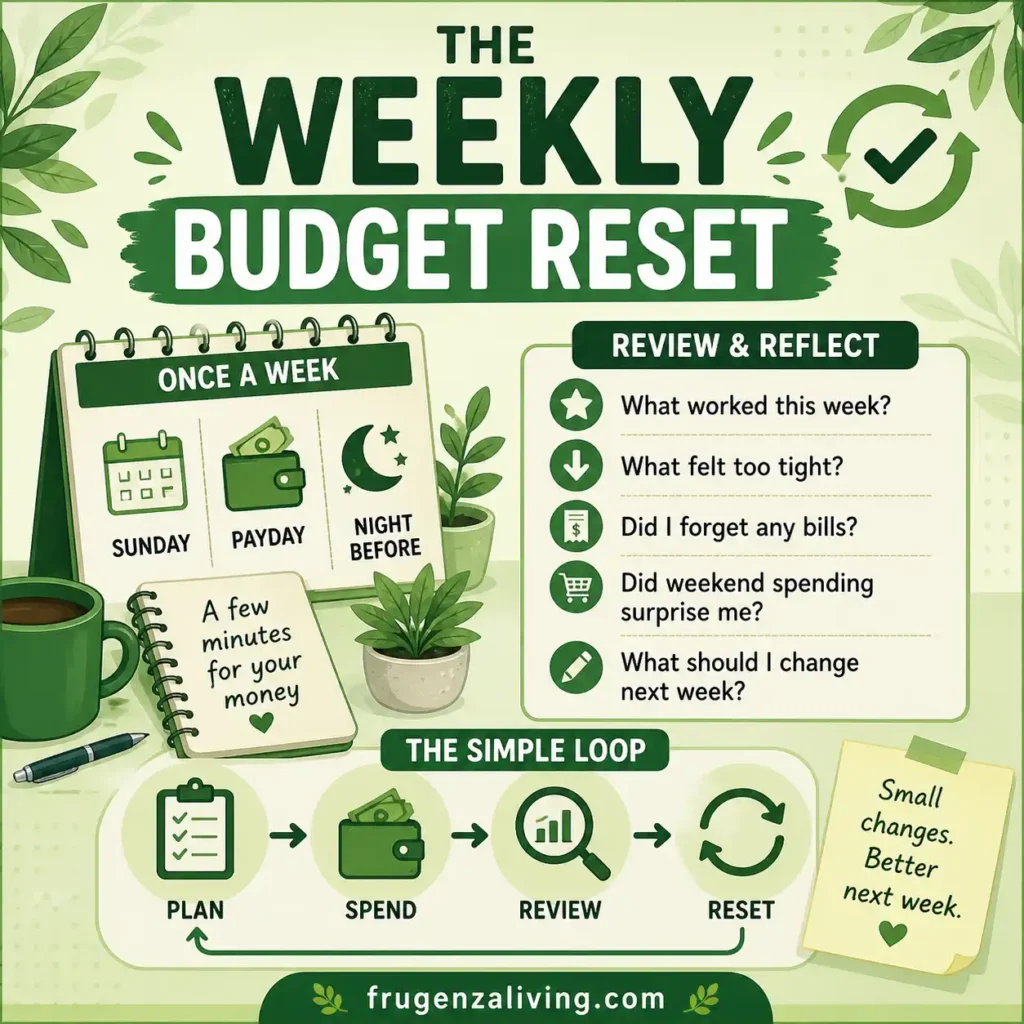
The weekly reset is what makes this system useful.
Once a week, take a few minutes to review your money. You can do this on Sunday, payday, or the night before your week starts.
Ask:
- What worked this week?
- What felt too tight?
- Did I forget any bills?
- Did weekend spending surprise me?
- What should I change next week?
Use this simple loop:
Plan → Spend → Review → Reset
This keeps budgeting from feeling like one big monthly failure. One difficult week simply gives you information for the next week.
What I Noticed After Budgeting Weekly
When I started budgeting weekly, it felt less intimidating than trying to control the whole month at once.
I could see problems sooner.
If groceries went over budget, I noticed it that week. If weekend spending was too loose, I could adjust the next week instead of waiting until the end of the month.
The biggest shift was that I stopped waiting until the end of the month to notice problems.
I could correct them the next week.
That made budgeting feel less stressful and more practical.
Over time, this weekly rhythm became one of the small systems that helped me save over $15,000 in a year. The weekly budget did not do everything by itself, but it helped me catch small problems earlier.
It was not one perfect budget that changed everything.
It was the habit of noticing problems sooner and adjusting before they became bigger.
Common Weekly Budget Mistakes Beginners Make
Planning Too Tightly
A weekly budget should not feel impossible.
If you set groceries, transportation, or personal spending too low, the plan may fail quickly.
Start realistic, then improve slowly.
Forgetting Weekend Spending
Many people do well Monday through Thursday, then lose control on the weekend.
Plan weekend money before Friday.
That one step can prevent a lot of stress.
Ignoring Small Bills Due This Week
A weekly budget is not only about groceries and spending.
Check small bills too.
Subscriptions, phone bills, and automatic payments can surprise you if you forget them.
Not Leaving a Buffer
A budget without a buffer is fragile.
Even a small surprise can break it.
A small buffer gives your weekly plan breathing room.
Quitting After One Bad Week
One bad week does not mean weekly budgeting failed.
It means your next plan needs adjustment.
Budgeting gets easier when you treat mistakes as feedback.
How to Keep Your Weekly Budget Simple
Keep your weekly budget broad.
For most beginners, these categories are enough:
- groceries
- transportation
- bills due this week
- personal spending
- savings
- buffer
Use rounded numbers.
Review once per week.
Do not track every cent unless that actually helps you.
A simple weekly spending plan works best when it gives you limits without making the week feel too tight.
The goal is to make next week slightly better than this week, not to build a perfect budget.
If you are unsure what categories to include, a simple budget categories list can help you choose the basics without overcomplicating your plan.
How This Fits Into Your Budgeting System
A weekly budget plan works best as a short-term money rhythm.
If you need a bigger monthly structure, a monthly budget example for single person can help you understand how the full month fits together.
If you want a more detailed method, zero-based budgeting for beginners can help you assign every dollar more intentionally.
If you do not know where your money is going, simple expense tracking can give you clearer numbers.
A weekly budget does not replace every budgeting method.
It simply helps you manage the next 7 days.
FAQ
What is a weekly budget plan?
A weekly budget plan is a simple plan for how you will use your money over the next 7 days. It usually includes groceries, transportation, bills due that week, personal spending, small savings, and a buffer for small surprises.
Is weekly budgeting good for beginners?
Weekly budgeting is good for beginners because the time frame is shorter and easier to manage. Instead of planning an entire month, you focus on one week at a time. This makes mistakes easier to notice and fix.
How do I make a weekly budget plan?
To make a weekly budget plan, check how much money is available, list bills due this week, set limits for groceries and transportation, choose a personal spending amount, and leave a small buffer. Review and reset the plan each week.
What should I include in a weekly budget?
A weekly budget should include groceries, transportation, bills due this week, personal spending, small savings, and a buffer. Keep the categories simple so the plan is easy to follow and adjust.
Is it better to budget weekly or monthly?
Weekly budgeting is better if monthly budgeting feels too overwhelming or hard to follow. Monthly budgeting gives the big picture, while weekly budgeting helps manage short-term spending. Many people use both together.
Conclusion
Weekly budgeting does not need to be complicated.
You only need to understand what your money needs to do over the next 7 days.
Plan the week. Spend with awareness. Review what happened. Reset without guilt.
Small weekly improvements can make your money feel easier to manage.
You do not need to fix your whole month today.
You just need a plan for this week.

The ideas shared here come from real-life experience and practical habits that actually work.
→ Read more about Jeffi
- No Spend Month Challenge for Beginners: A 30-Day Plan - September 24, 2026
- Low Buy Month Challenge: Realistic Rules for 30 Days - September 23, 2026
- How to Stop Buying Groceries You Already Have - September 20, 2026