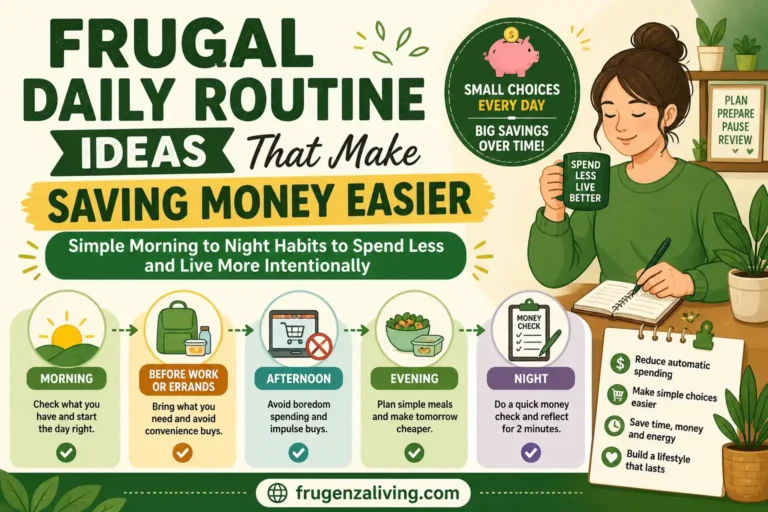
Useful frugal daily routine ideas include choosing a meal before you get hungry, checking what you can bring before leaving, pausing an unplanned purchase, and preparing one thing for tomorrow. Put these actions at the moments when spending decisions actually happen in your day.
A packed lunch helps only when you bring it and can keep it safe. A cheaper dinner helps only when you have the ingredients, equipment, and energy to make it. This guide connects each part of the day to a practical action and an alternative when the original plan is unavailable.
Start with the part of your day that regularly becomes expensive. Use the sequence below as a menu, then follow your results. You can keep a planned coffee, a necessary ride, or an occasional purchased meal while reducing purchases you would rather avoid.
A Daily Frugal Routine You Can Adapt
Follow the order that matches your day. Each action links to its explanation. You do not need to complete every row, and a night shift can start with the same checks after waking.
| When | Action | Alternative |
|---|---|---|
| After waking | Choose your next meal | Pick an affordable ready-to-eat option |
| Before leaving | Check what you can carry | Plan a purchase where packing is impractical |
| Before checkout | Check the item and total | Put an optional item on a dated list |
| Before dinner | Use a low-effort meal | Choose a planned convenience meal |
| After a meal | Prepare one thing for tomorrow | Write down one affordable option |
| At day’s end | Record one useful detail | Save the receipt for a later review |
1. Start the Day With One Food Decision
Look at your next meal and the time available to prepare it. Choose something you already have, or decide what you will buy and where. Knowing that lunch will be a sandwich at home or a planned cafeteria meal is more useful than a vague promise to spend less.
Check one shelf or container that holds food you need to use soon. You do not need to inventory the whole kitchen every morning. If forgotten groceries are a recurring problem, create a simple pantry inventory separately, then use it for this quick check.
For breakfast, use the option that fits your appetite and schedule. Making coffee at home can replace a purchase, but buying new equipment just to start the routine creates an upfront expense. Test the choice with what you own before investing in a different setup.
2. Before Leaving, Check What You Can Carry
Look at how long you will be away, whether food storage is available, and what you usually buy during that period. Bring the item that addresses that purchase: a refillable water bottle, a snack you enjoy, or lunch in a container you already own.
Perishable food needs safe storage during the trip and until you eat it. USDA’s packed-lunch guidance recommends an insulated bag with at least two cold sources for perishable lunches, with refrigeration on arrival when available. If that setup is impractical, choose foods suitable for your conditions and follow their storage labels, or plan an affordable purchased meal.
For errands, take a specific list and check whether combining stops changes the total trip cost. A distant discount store may add fuel, fares, parking, or extra purchases. Group stops when convenient; avoid creating another journey just to feel prepared.
3. Before Buying, Check the Item and the Total
At the moment you open a store or reach checkout, ask whether the item was planned, whether something you own already does the job, and what the complete purchase will cost. Include delivery charges and any extra item added to reach a shipping threshold.
For an optional purchase, write the item, total price, and a date to reconsider it. Tomorrow can be a useful starting point, but urgent necessities should not be delayed to satisfy a rule. If you later buy the same item, the pause created thinking time; it did not automatically save its price.
Match this check to your own shopping moments, whether they occur on a lunch break or late at night. If browsing repeatedly leads to unwanted purchases, the guide to slowing down online checkout covers app notifications, saved payment details, and other setup changes.
4. Before Dinner, Use Your Low-Effort Option
Decide what is feasible before comparing delivery menus. Keep one meal you can make on an ordinary day and one option for a day when cooking feels difficult. A simple pasta meal might be the first choice; a suitable ready meal might be the second.
Choose options around your dietary needs, available equipment, and actual portion requirements. These single-serving meal ideas with ingredient amounts can help you identify a manageable dish. Keep only the ingredients you expect to use, rather than buying supplies for every recipe.
Compare a convenience meal with the alternative you would realistically choose that evening. A ready meal can cost more than cooking from basic ingredients yet less than your usual delivery order. If purchasing dinner is necessary, make that decision deliberately and return to the next checkpoint without trying to compensate by skipping food.
5. After Dinner, Prepare One Thing for Tomorrow
Check tomorrow’s schedule before deciding what to prepare. A day with an early appointment may need a portable breakfast; a day at home may need only a lunch idea. Prepare the item that would be hardest to arrange when you are rushed.
That could mean setting a clean container beside your bag, putting a shopping list near your keys, or identifying food already safely stored in the fridge. Keep perishables refrigerated until packing, and follow safe storage instructions. A visible reminder should not mean leaving food on the counter overnight.
If preparation would cut into needed rest, write down an affordable alternative and stop. The next day’s plan should fit the energy you expect to have. Agree with other household members about shared food before relying on it for your lunch.
6. At the End of the Day, Record One Useful Detail
Record the purchase or routine you are trying to change, its cost, and what happened. A useful note is: “Packed lunch stayed at home; bought lunch for $12; place the bag beside my keys tomorrow.” That identifies something you can change.
Use a note, receipt folder, or existing spending app. You do not need a new subscription. If daily account checks increase stress, save the receipts and review them at a time you can manage. CFPB’s spending tracker guidance suggests tracking for at least two weeks, or a month, to understand patterns.
This daily note concerns the purchase you are testing. For reviewing bills, balances, payday allocations, and longer-term plans, use a separate financial check-in routine.
Fit the Routine to Your Actual Day
Working outside the home: Choose lunch after checking your schedule, pack it before departure, and decide whether the return trip needs a grocery stop. The useful sequence ends with tomorrow’s container or reminder, rather than a late-night cooking task you keep avoiding.
Working from home: Choose lunch before your work block begins. Keep an accessible meal option and schedule a real meal break where possible. Being near a kitchen does not guarantee time or energy to cook, so include an alternative that works during meetings or caregiving.
Shift work or changing hours: Use “after waking,” “before leaving,” and “after my main meal” instead of fixed clock times. Plan around access to shops, refrigeration, and public transport during your actual shift.
On a difficult day, choose only your next manageable action: eat an available meal, decide the affordable option you will buy, or save today’s receipt. Resume the usual sequence at the next useful moment. You do not need to complete missed steps or build a new shopping list to restart.
Check Whether Your Routine Reduced Costs
Count what happened, including the times a plan did not work. Here is a hypothetical five-day lunch example in US dollars, using assumed costs rather than current store prices. The person normally buys five $12 lunches and plans to replace four with packed lunches.
Planned lunches versus completed lunches
| Cost | Usual week | Trial week |
|---|---|---|
| Purchased lunches | 5 × $12 = $60 | 3 × $12 = $36 |
| Ingredients actually eaten | $0 | 2 × $4 = $8 |
| Extra ingredients discarded | $0 | $4 |
| Food costs counted | $60 | $48 |
Only two packed lunches were eaten, so the counted food-cost difference is $12. Claiming four replacements at $8 each would incorrectly report $32. The $4 of discarded ingredients is separate from the $8 actually eaten. Containers were already owned; the example assumes no extra travel, equipment, or energy expense.
In your comparison, include those additional costs when they apply. Full grocery packages can also require more cash upfront than the portions counted here. This calculation compares food used and discarded; it does not establish the change in your bank balance. Do not count an existing savings transfer as another spending reduction.
The next adjustment is practical: discover why the other lunches were missed before buying more ingredients. Compare similar days again, allowing for changes in work hours or prices. Keep the routine when its results and effort justify it; revise it when they do not.
What to Change When a Checkpoint Fails
If you regularly miss a step, change the arrangement before adding more rules. The useful question is what made the intended action unavailable at that moment.
- You leave without lunch: Decide the meal earlier, attach a reminder to the item you always carry, or use a planned purchased option on early-start days.
- You buy ingredients but do not cook: Reduce the planned meals and use a simpler dish. Buy another package only after checking what remains.
- You keep buying an item after pausing: Decide whether it belongs in your normal spending plan. A repeated necessary purchase needs realistic funding.
- The routine makes you feel punished: Protect a small enjoyment you value and reduce the tasks. Necessary food, healthcare, and safe transportation take priority over completing the checklist.
Frequently Asked Questions
Do I need to follow all six routine ideas every day?
No. Choose the checkpoints relevant to your schedule and spending. If you stay home, the packing check may be unnecessary. Start with one recurring purchase problem and add another step only when it helps.
What if I have no energy to cook after work?
Choose a meal that fits that level of energy before the situation occurs. It can be a suitable ready meal or a planned purchased option. Compare its complete cost with what you would otherwise eat.
Can a frugal routine work with irregular hours?
Yes. Attach actions to events such as waking, leaving home, and finishing a meal. Adjust them when storage access, transport, or breaks change. A fixed morning-to-night timetable is optional.
Does delaying a purchase count as saving money?
Not automatically. If you later buy the same item at the same total cost, you delayed the expense. Count a reduction only when you avoid the purchase or choose a suitable lower-cost alternative, allowing for any added costs.
Choose Tomorrow’s First Checkpoint
Pick one moment that repeatedly leads to a purchase you want to change. Decide what you will do before it, what you will choose if that plan is unavailable, and how you will record the result. Use what you already own, then adjust the routine around the day you actually have.

Read about Jeffi and Frugenza Living
- Shop Your Closet Challenge: A Week of Wearable Outfits - October 5, 2026
- 7 Cheap Things to Do Alone on a Weekend - October 4, 2026
- 8 Cheap Girls’ Night Ideas at Home Without a Big Shopping List - October 4, 2026