
Start with your home. Leave with one change to test.
Staying at home does not automatically mean spending less. Food that goes unused, unnecessary energy use, delivery orders, and automatic renewals can all add to household costs.
Look for one repeated expense you can change while keeping your needs covered. This walkthrough helps you find it, choose a small adjustment, and compare the result over seven days.
Quick Answer: Ways to Save Money at Home Easily
Check food and supplies before buying more, switch off unnecessary usage, review paid services, and make simple meals practical. Choose changes that suit your schedule and compare what you actually spend, including the cost of any replacement.
If your income is limited, these tips can also support quick ways to save money with low income without feeling restrictive.
Do a 15-Minute Home Cost Walkthrough
Generic saving tips are useful, but your biggest opportunity may be hidden inside a routine that is specific to your home. A short walkthrough can help you find it without tracking every appliance, purchase, or household expense.
Open a note on your phone and walk through the areas you use most. In each space, look for evidence—not guesses.
Kitchen
Look for: Food that may expire, duplicate ingredients, appliances left running unnecessarily, and groceries that take more effort to prepare than you have available.
One possible change: Create a visible “eat first” spot or identify two low-effort meals using suitable food you already have.
Laundry and bathroom
Look for: Notice half-used products, unnecessary loads, leaks, and supplies you keep replacing because they are difficult to find.
One possible change: Bring duplicate supplies together and use one suitable product before opening another. Record a leak for an appropriate repair rather than guessing its cost.
Living area
Look for: Check lights, screens, chargers, heating, cooling, and paid entertainment that continue when no one needs them.
One possible change: Switch off an unused light or screen. Keep refrigeration, necessary climate control, medical equipment, and other essential systems operating.
Digital home
Look for: Review subscriptions, delivery memberships, shopping notifications, automatic renewals, and saved payment methods.
One possible change: Confirm an unused service’s cancellation terms or turn off a shopping prompt. A postponed purchase is not a lasting saving if you buy it later.
Checkmarks show areas reviewed, not money saved. Checkmarks and trial notes are not saved by this page and may clear when you leave or reload; keep a copy in your own notes.
Do not try to fix every room at once. Choose the one repeated problem that costs money most often or feels easiest to prevent. Test one change for seven days, then check whether the waste, purchase, or unnecessary usage happened less often.
How Small Habits Turn Into Real Savings
Label the period before comparing numbers. The examples below are illustrative USD spending totals, not guaranteed savings or personal results.
10 Easy Ways to Save Money at Home
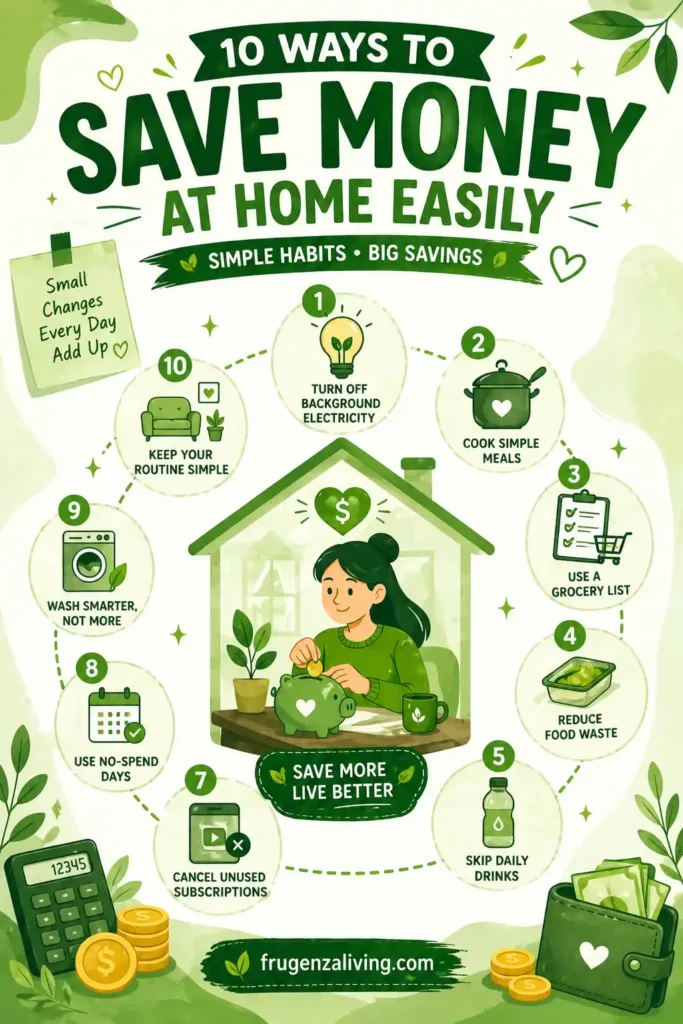
1. Turn Off Background Electricity
Switch off lights and screens when they are not needed, and unplug suitable unused devices. Keep essential equipment running. Check your actual usage and tariff before assigning a dollar saving; a utility bill can also include fixed charges.
2. Replace Takeout with Simple Meals
You do not need complicated cooking. Choose a suitable meal that fits the time, equipment, and ingredients available. Compare the full takeout price with the replacement meal rather than treating the whole avoided order as savings.
The illustrative $5 per meal includes ingredients used and an allowance for cooking energy. Assume suitable equivalent meals, no additional travel, setup purchases, or wasted ingredients. Replace these figures with local prices. Four comparable weeks would reduce spending by $80, not establish an $80 calendar-month saving.
This is a meal-cost comparison. If you must buy larger packages, the full checkout amount is due now; unused ingredients remain stock. Include additional waste or purchases when checking actual cash spending.
3. Use a Grocery List and Stick to It
Check existing stock, write a list for meals you can realistically prepare, and avoid buying duplicate ingredients.
One of the easiest ways to save at home is to follow a grocery budget for one person that fits your routine.
4. Fix Food Waste Before Cutting Food Budget
Check leftovers and food that needs using, prepare suitable portions, and follow safe storage guidance. Avoid buying food you cannot use just to reach a lower unit price. Food already purchased is not a new cash saving until future spending actually changes.
5. Replace Daily Purchased Drinks When Practical
A $3 drink every day costs $90 over 30 days. If a suitable replacement costs an illustrative $0.20 per day, its 30-day cost is $6 and the net reduction is $84. Safe drinking water, filters, utilities, or ingredients may have a cost; do not automatically treat the replacement as free.
6. Control Online Shopping Triggers
Remove shopping apps from your home screen, turn off optional sales notifications, or wait before an unplanned nonessential purchase. Track whether the purchase is avoided or simply moved to a later day.
7. Cancel or Pause Subscriptions Regularly
Check statements and renewal dates for services you do not use. Confirm the cancellation or pause terms, effective date, fees, and any replacement cost before counting a reduction.
8. Use No-Spend Days and What You Already Have
Try one or two days with no optional purchases, using suitable food and supplies already available. Keep essential food, medication, transport, bills, and other necessary payments covered. Check the whole week for purchases merely shifted to another day.
These small changes become powerful when turned into simple monthly saving habits.
9. Wash Smarter, Not More Often
Use full loads within the machine’s capacity, and use an appropriate water setting for smaller loads. Choose cooler water where suitable for the care label and cleaning need. Do not delay necessary hygiene to meet a savings target.
The U.S. Department of Energy’s Energy Saver guide (PDF) recommends full loads and appropriate water settings, with warm or cold water generally sufficient for laundry.
10. Keep Your Routine Simple
Morning: check available food. During the day: avoid unnecessary usage and optional shopping prompts. At night: review the spending or usage you are testing. A short routine is easier to evaluate than several simultaneous changes.
Choose a Change for the Next Seven Days
Write what repeats, why it happens here, and the smallest feasible change. Use a comparable period and check that a lower purchase total still covers the same needs.
These fields are temporary notes, not a calculator or saved record. Copy them elsewhere before leaving. Fewer purchases alone do not establish a net saving if replacement costs increased.
A Simple Daily Routine That Saves Money at Home
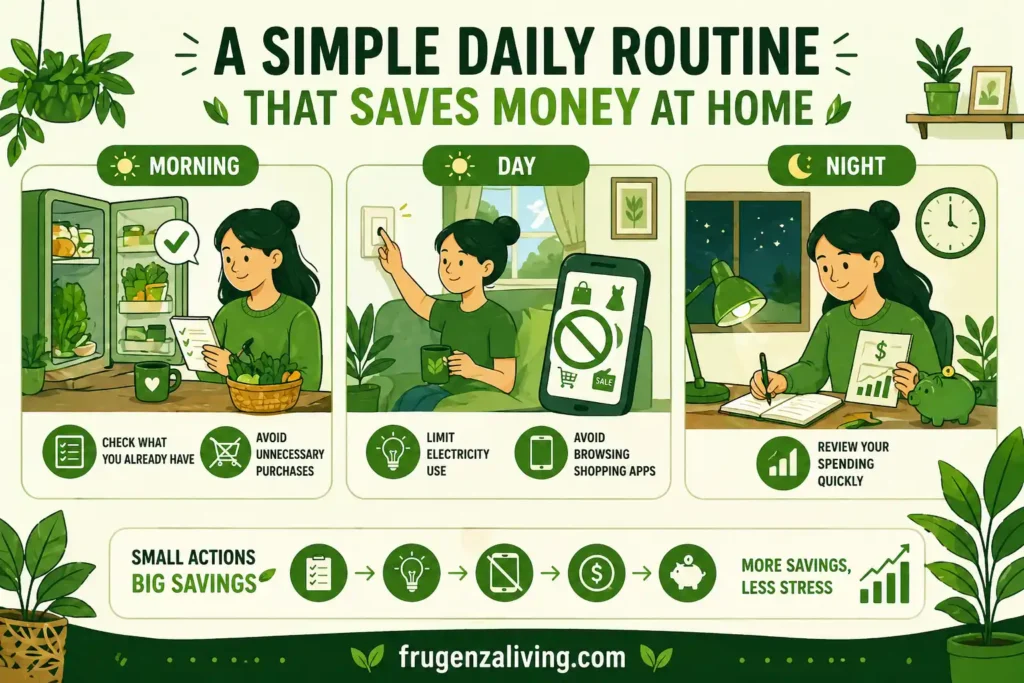
Morning: check food and supplies before planning a purchase.
Day: avoid unnecessary usage while keeping needs covered.
Night: make one short note about the change you are testing.
Review What Changed Before Adding Another Habit
Use receipts, purchase records, or measured usage where available. A single lower utility bill may also reflect weather, billing days, rates, or other changes, so avoid attributing the whole difference to one habit.
Choose the next change from what your walkthrough found. Recurring food, subscriptions, and optional purchases may offer opportunities, but compare the amount and effort rather than assuming small repeated expenses always matter most.
Saving money at home becomes much easier when you keep your spending consistent over time.
Common Mistakes When Trying to Save Money at Home
- Changing several rooms at once and losing track of which adjustment helped.
- Counting an avoided purchase without subtracting its replacement cost.
- Using four weeks and a calendar month interchangeably.
- Moving purchases to another day and treating the delay as a lasting saving.
- Cutting necessary food, hygiene, comfort, or care to force a result.
You can combine this with simple budgeting for beginners or use it to lower daily costs more effectively.
FAQ: Ways to Save Money at Home Easily
What are the easiest ways to save money at home?
Start with a walkthrough of food, supplies, unnecessary usage, and paid services. Choose one feasible adjustment from evidence in your own home.
How can I save money at home every day?
Use what you already have, avoid unnecessary usage, and make a short note about the habit you are testing. Check net costs over a relevant period; you do not need a new saving every day.
Does staying at home really save money?
It can reduce some costs, but delivery, utilities, online shopping, and subscriptions can offset the difference. Compare actual totals with the alternatives you would have used.
How do I reduce household expenses quickly?
Review an upcoming optional purchase or renewal and check existing supplies before shopping. The amount and timing of any reduction depend on your costs and contract terms.
Do I need a budget to save money at home?
You can start with one household change, while keeping track of the cash needed for essentials and existing commitments. A budget can help you see whether a lower expense leaves money available.
Start With One Area
Walk through your home, choose one repeated issue, and test the smallest useful change. Keep the period clear and count replacement costs. The useful result is a change that fits your household and reduces actual spending or waste.

Read about Jeffi and Frugenza Living
- How to Save for a Car Insurance Deductible - November 9, 2026
- How to Rebuild an Emergency Fund After Using It - November 4, 2026
- How to Budget a 10-Month Salary Over 12 Months - October 16, 2026