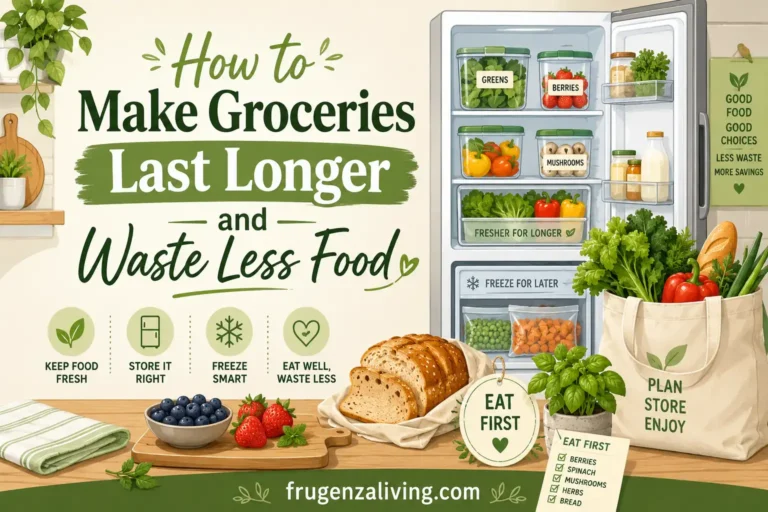
You buy groceries with good intentions.
Then the lettuce wilts. The berries mold. Bread gets stale. Leftovers disappear behind a container you forgot about. A few days later, you throw food away and think, “I just bought this.”
That is why learning how to make groceries last longer can save more money than people realize.
The solution is not always buying less food. It is storing groceries better, keeping food visible, and using what you already bought before it spoils.
Groceries last longer when storage, visibility, and timing work together.
How Do You Make Groceries Last Longer?
You make groceries last longer by storing food properly, separating fast-spoiling items, keeping leftovers visible, using a use-it-up box, freezing food before it goes bad, and checking your fridge once a week.
The goal is not to create a perfect kitchen system.
The goal is to make food easier to see, easier to use, and easier to rescue.
If you want to make groceries last longer, start with the food you waste most often. For many people, that is produce, bread, leftovers, herbs, or opened packages that get pushed to the back of the fridge.
If you are wondering how to keep food fresh longer, start by fixing the foods that usually spoil first in your kitchen.
Making food last longer is one of the easiest ways to save money on groceries without buying less than you need.
Why Groceries Go Bad Before You Use Them
Most grocery waste does not happen because you are careless.
It happens because food gets hidden, stored wrong, forgotten, bought without a plan, or not frozen soon enough.
A bag of spinach can disappear behind containers. Leftovers can look less appealing after two days. Herbs can wilt because they were tossed loosely into the fridge. Bread can go stale because it was left exposed.
That is why food storage tips alone are not enough.
You also need a visibility system.
If you can see what needs to be used first, you are more likely to use it.
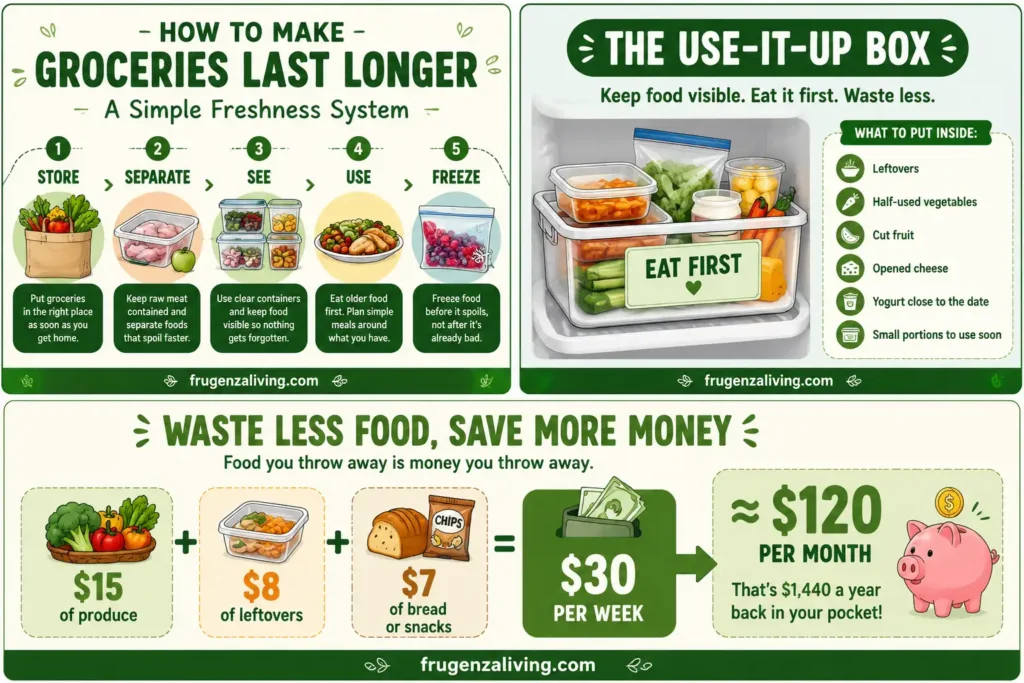
The Grocery Freshness System
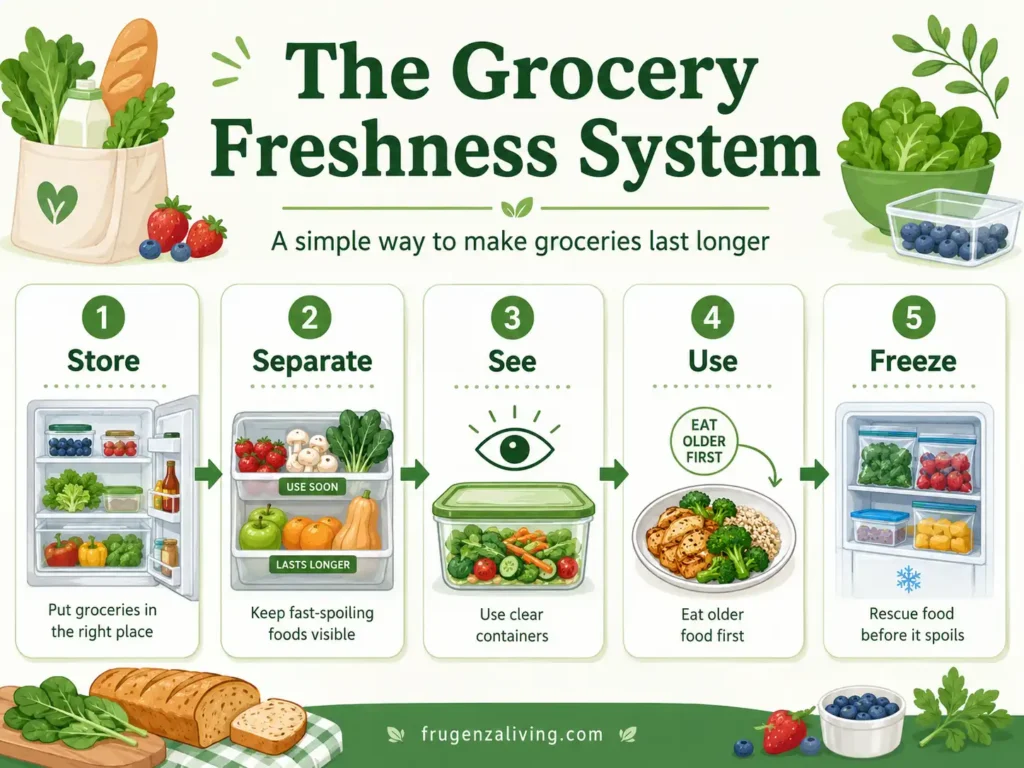
Use this simple freshness system:
Store → Separate → See → Use → Freeze
This system works because it does not rely on memory alone.
It helps you organize groceries before they become forgotten food.
Groceries last longer when you use them in a simple weekly meal plan for one instead of buying random ingredients.
Build a 3-Zone Fridge System
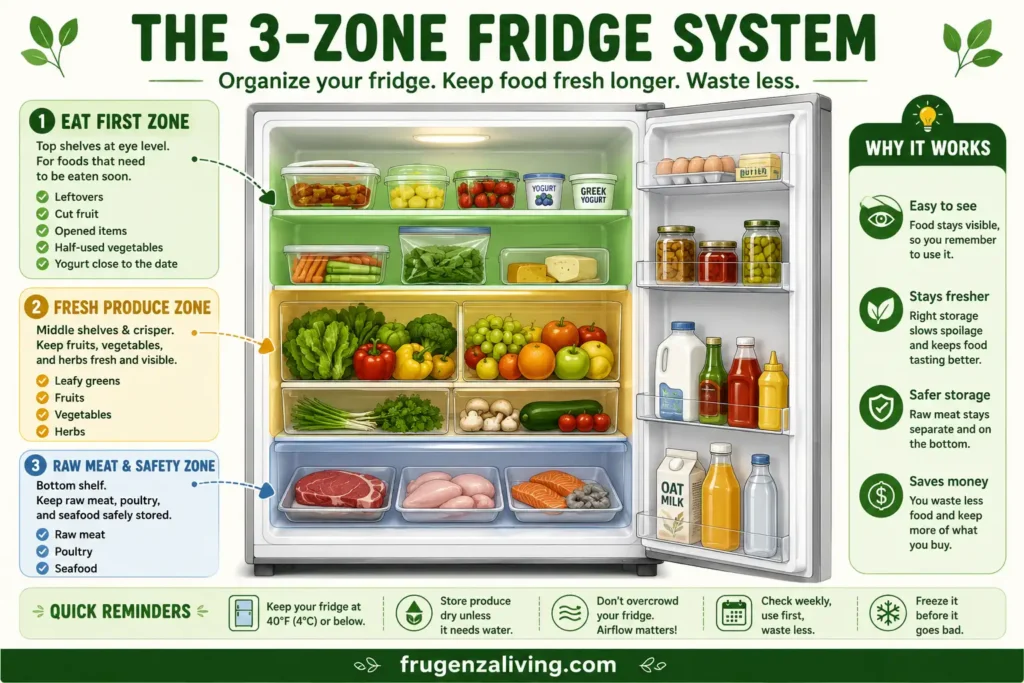
A messy fridge makes food easier to forget.
Create three simple zones.
Zone 1: Eat First Zone
Use this area for leftovers, cut fruit, opened items, half-used vegetables, and food close to spoiling.
Zone 2: Fresh Produce Zone
Use this area for fruits, vegetables, herbs, and leafy greens. Keep produce where you can see it, not buried under newer groceries.
Zone 3: Raw Meat and Safety Zone
Keep raw meat, poultry, and seafood on the lowest shelf or in a separate container to help prevent leaks and cross-contamination.
This does not need to look perfect.
It just needs to make the food easier to use.
If you want groceries to last longer, start with long-lasting pantry staples that do not spoil quickly.
Use a “Use-It-Up Box”
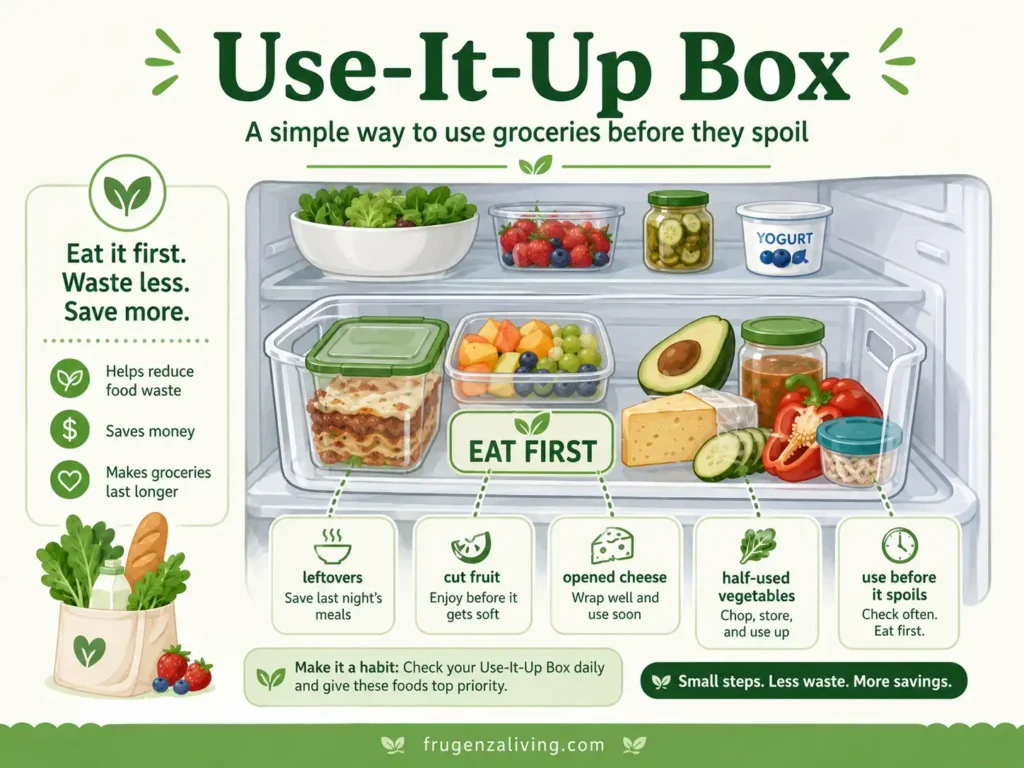
A use-it-up box is one of the simplest ways to keep groceries fresh longer.
Choose one clear box or container in your fridge and label it:
Eat First
Put foods there when they need attention soon, such as:
- leftovers
- half-used vegetables
- cut fruit
- opened cheese
- yogurt close to the date
- small portions that need to be used soon
Before cooking, shopping, or ordering food, check this box first.
This small habit can turn forgotten food into a quick lunch, omelet, soup, stir-fry, or snack plate.
When you use ingredients before they go bad, it becomes easier to make cheap meals for one person without wasting food.
How to Turn Almost-Expired Ingredients Into a Meal Without a Recipe
The use-it-up box works best when you know what to do with what is inside it.
Most food waste at this stage is not a storage problem anymore.
It is a translation problem — the gap between “I have these ingredients” and “I know what to make from them.”
A half-used zucchini, three eggs, leftover rice, and a piece of cheese look like random odds and ends. They are also a complete meal. But that connection is not obvious when you open the fridge tired at 6 PM and nothing looks like dinner.
Here is a simple way to close that gap without a recipe.
Look at what is in your use-it-up box and sort it mentally into three groups:
A protein or base — eggs, cooked rice, pasta, cooked meat, canned beans, or tofu. This is the foundation.
A vegetable or add-in — any produce that needs to be used, whether it is half an onion, wilting spinach, a leftover roasted carrot, or a handful of cherry tomatoes.
A flavor anchor — something that makes the combination taste intentional rather than accidental. This is usually something already in your fridge or pantry: soy sauce, hot sauce, cheese, butter, garlic, olive oil, or a seasoning you use regularly.
One from each group is enough to build something edible.
Scrambled eggs with leftover rice and soy sauce. A quick soup from broth, cooked chicken, and whatever vegetables need to go. A pan of roasted odds and ends tossed in olive oil and garlic. A wrap with whatever protein and vegetables are already cooked.
None of these need a recipe. They follow the same pattern: base, add-in, flavor anchor.
This approach does not require cooking skill. It requires only knowing what role each ingredient plays.
When you can look at the contents of your use-it-up box and find one item from each group, food waste drops considerably — not because your storage improved, but because the food you were already storing correctly finally has somewhere to go.
Store Produce Properly So It Lasts Longer
Produce often spoils quickly because it is stored wet, sealed wrong, or paired with the wrong foods.
If your main goal is to keep fruits and vegetables fresh, start by controlling moisture and visibility.
Keep it simple:
- Keep berries dry until you are ready to eat them.
- Store leafy greens with a dry paper towel in a container or bag.
- Keep herbs upright in water or wrapped, depending on the type.
- Store potatoes and onions separately in a cool, dry place.
- Let bananas, avocados, and some fruits ripen on the counter before refrigerating.
- Avoid sealing wet produce in airtight bags.
Some fruits release ethylene gas as they ripen, which can make nearby produce spoil faster. Keep bananas, apples, avocados, and tomatoes away from delicate greens, berries, and other produce that spoils quickly.
You do not need to memorize every fruit and vegetable rule.
You do not need expensive ingredients to eat better without spending more if you use what you already have wisely.
Start with the produce you waste most often.
These grocery storage tips work best when you use them on the foods you throw away most often.
Follow FIFO: First In, First Out
FIFO means first in, first out.
The idea is simple: older groceries go in front, newer groceries go behind.
When you buy yogurt, bread, canned goods, sauces, or freezer items, move the older ones forward. Use those first.
FIFO food storage is common in food service, but it works at home too.
It prevents the “new food hides old food” problem.
That one habit can reduce grocery waste without changing what you eat.
Use Your Freezer as a Rescue Tool
Your freezer is not only for frozen pizza and ice cream.
It can rescue groceries before they go bad.
Do not wait until food already looks questionable. Freeze it while it is still good.
You can freeze:
- bread slices
- cooked rice
- cooked meat
- chopped vegetables
- overripe fruit for smoothies
- soup or sauce
The freezer gives you more time and helps prevent food spoilage.
It also makes busy days easier because you have backup ingredients ready.
Know How Long Leftovers Last
Leftovers are useful, but food safety matters.
As a general guideline, leftovers can usually be refrigerated for 3 to 4 days or frozen for longer storage.
Perishable food should also be refrigerated within 2 hours to reduce food safety risk.
Label leftovers with the day you cooked them. A simple “Monday soup” or “Tuesday rice” label is easier than guessing later in the week.
If food smells strange, looks questionable, or was left out too long, do not try to save it just to avoid waste.
Wasting less food is helpful, but safety comes first.
How Wasting Less Food Saves Money
Saving money on groceries is not only about finding cheaper prices.
It is also about using more of what you already bought.
For example, if you waste:
- $15 of produce
- $8 of leftovers
- $7 of bread or snacks
That is $30 per week.
Over a month, that is about $120.
You do not need to eliminate food waste perfectly to save money. Even cutting that waste in half can make your grocery budget feel easier to manage.
Do a 10-Minute Grocery Reset Once a Week
A weekly grocery reset helps you catch food before it spoils.
Once a week, take 10 minutes to:
- check the eat-first box
- move older food forward
- freeze anything you will not use soon
- plan 1–2 meals around almost-expiring food
- wipe spills and remove spoiled items
This reset is small, but it makes a big difference.
It turns your fridge from a storage space into a money-saving tool.
Common Food Storage Mistakes That Waste Money
Some food waste comes from simple habits that are easy to miss.
Common mistakes include:
- hiding leftovers in the back
- washing berries too early
- storing potatoes and onions together
- forgetting to freeze bread
- buying too much fresh produce without a plan
- not labeling leftovers
- storing raw meat where it can leak
You do not have to fix all of these at once.
Start with the mistake that happens most often in your kitchen.
My Simple Rule for Making Groceries Last Longer
I stopped treating grocery waste as only a shopping problem.
I started treating it as a visibility problem.
For me, the biggest change was not buying perfect groceries. It was making sure the food I already bought did not disappear in the fridge.
The eat-first box helped. The freezer helped. A weekly grocery reset helped even more.
Reducing grocery waste became one of the habits that helped me save over $15,000 in a year.
Your numbers may look different, but wasting less food can still make your grocery budget feel easier to control.
How This Fits Into Your Save Money System
Making groceries last longer supports your bigger money-saving system.
If you often cook for yourself, saving money on groceries for one person can help you shop with less waste.
If you need simple meal ideas, cheap meals for one person can help you use basic ingredients before they spoil.
If daily spending is the bigger issue, learning how to control daily expenses effectively can help you spot food-related money leaks.
If you want a weekly system, how to save money weekly can help you protect grocery money before it disappears.
FAQ
How do I make groceries last longer?
You can make groceries last longer by storing food properly, keeping fast-spoiling items visible, using an eat-first box, following first in, first out, freezing food before it spoils, and checking your fridge weekly.
How do I keep produce fresh longer?
Keep produce fresh longer by storing leafy greens with a dry paper towel, keeping berries dry until ready to eat, separating potatoes and onions, and storing herbs properly. Focus first on the produce you waste most often.
What foods should I freeze before they go bad?
You can freeze bread slices, cooked rice, cooked meat, chopped vegetables, overripe fruit, soup, and sauce before they spoil. Freeze food while it is still good, not after it already looks questionable.
How long do leftovers last in the fridge?
Leftovers generally last about 3 to 4 days in the fridge. For longer storage, freeze them. Always use safe food handling and avoid eating food that smells strange, looks questionable, or was left out too long.
What is a use-it-up box?
A use-it-up box is a clear fridge container for foods that need to be eaten soon, such as leftovers, half-used vegetables, opened cheese, cut fruit, or yogurt close to the date. It keeps food visible so it is less likely to be forgotten.
How can I reduce food waste and save money?
Reduce food waste by planning meals around what you already have, keeping older food visible, using leftovers quickly, freezing food before it spoils, and doing a weekly fridge reset.
Should I wash fruits and vegetables before storing them?
Some produce lasts longer when kept dry until you are ready to eat it, such as berries and leafy greens. If you wash produce early, dry it well before storing to reduce moisture-related spoilage.
Final Thought: Make Groceries Easier to See and Use
You do not need a perfect meal plan to waste less food.
Start by storing groceries better.
Keep older food visible.
Use an eat-first box.
Freeze food before it spoils.
Groceries last longer when they are easier to see, easier to use, and easier to rescue.

Read about Jeffi and Frugenza Living
- Proportional Bill Split Calculator for Two Incomes - October 15, 2026
- How to Split Grocery Bills With Roommates - October 14, 2026
- First Apartment Kitchen Essentials on a Budget - October 13, 2026