A year ago, I thought saving money was mostly about discipline.
Be stricter. Spend less. Try harder.
That approach worked—for a few days.
Then I’d end up doing the same thing again. Ordering food when I was tired, buying small things I didn’t plan, telling myself it didn’t matter because it was “just a few dollars.”
What finally made a difference wasn’t discipline.
It was noticing what I was actually doing every day.
The biggest change was realizing that daily money saving habits work better when they are attached to moments that already happen.
I did not need a complicated system. I needed small money checkpoints during parts of the day where spending usually happened automatically.
That made saving feel less like a separate task. Instead of trying to “be better with money” all day, I started paying attention to a few repeat moments: before ordering food, before opening shopping apps, before leaving the house, and before ending the day.
Those small checkpoints became easier to repeat than strict budgeting rules.
Why Daily Money Saving Habits Are Harder Than They Look
Most people don’t overspend because they’re careless.
They overspend because most decisions happen automatically.
After work, you’re tired. You open an app. You order something. It feels normal.
There’s no moment where it feels like a “bad financial decision.”
That’s what makes daily spending tricky—it doesn’t feel like spending.
That felt realistic—and I stuck with it. If you’re new to this, this frugal living for beginners guide explains how small daily habits can make a big difference.
The Daily Money Rhythm
Daily spending usually follows a rhythm. It does not happen randomly as often as we think. For many people, money leaves during the same parts of the day: the morning rush, the afternoon slump, the evening tiredness, or the late-night scrolling habit.
That is why a daily money habit should match the time of day when spending usually happens. If you buy coffee because mornings feel rushed, the habit needs to happen before you leave home.
If you order food at night, the habit needs to happen before you get too tired. If you shop online while scrolling, the habit needs to happen before you open the app.
This approach is different from telling yourself to stop spending. You are not relying on motivation. You are placing a small habit in front of the moment where money usually disappears.
Start by asking: “When during the day do I usually spend without thinking?” Once you know the time, the habit becomes easier to design.
The Pattern I Didn’t Notice at First
When I finally checked my bank history properly, I expected to find one big problem.
Instead, I saw repetition.
Every Tuesday night, I ordered Pad Thai for about $9–$11 because I didn’t feel like cooking.
Every Friday, I’d add something random to my cart while browsing—usually around $8–$15.
And almost every day, I’d grab small snacks or drinks without thinking.
None of these felt significant.
But together, they explained everything.
Daily Money Saving Habits That Actually Made a Difference
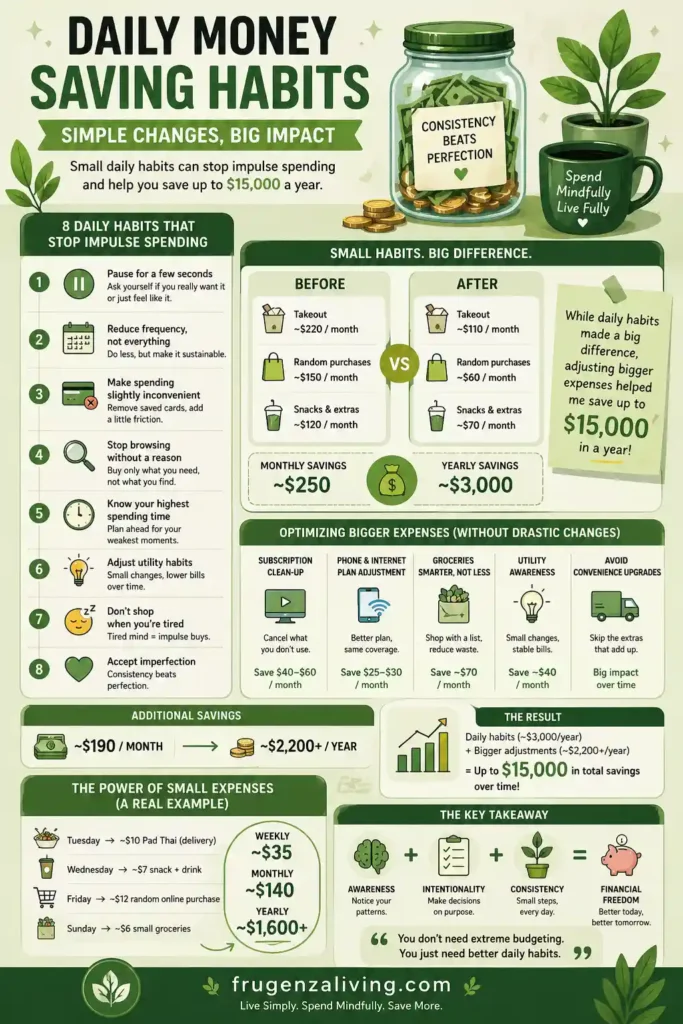
1. I Started Pausing—Even for a Few Seconds
Not a long pause. Just a moment.
Before ordering food or buying something small, I’d ask:
“Do I actually want this, or am I just tired?”
That tiny moment was surprisingly effective.
This habit become more powerful when combined with a simple budgeting for beginners.
2. I Reduced Frequency Instead of Cutting Everything
I tried going “all in” once—no takeout, no spending, nothing extra.
It lasted about a week.
Then I overcompensated.
So instead, I adjusted:
- takeout → from 4 times a week to 2
- random online purchases → once a week max
3. I Made Spending Slightly Inconvenient
This was one of the biggest shifts.
I removed my saved card from shopping apps.
Now every purchase required typing details again.
It didn’t stop me completely—but it stopped a lot of unnecessary spending.
4. I Stopped Browsing Without a Reason
I noticed something simple:
I almost never bought things I searched for intentionally.
I bought things I found while browsing.
So I stopped opening shopping apps unless I needed something specific.
That alone reduced impulse buying more than any “rule.”
5. I Paid Attention to When I Spend the Most
For me, it was evenings.
After work, when I was mentally drained.
That’s when I’d order food or buy things I didn’t need.
Once I noticed that, I started planning around it—simple meals, fewer decisions.
Over time, these routines help you reduce daily expenses without feeling restricted.
6. I Adjusted Utility Habits Without Overthinking It
This wasn’t something I expected to matter much—but it did.
I used to leave lights on in multiple rooms, run the washing machine half-full, and spend longer than necessary in the shower—especially after long days.
None of these felt expensive.
But over time, I realized they were consistent habits.
So I made small adjustments:
- turning off lights more often
- waiting until laundry was full
- slightly reducing shower time
These habits are especially helpful if you’re trying to save money on a low income.
The savings weren’t dramatic overnight.
But after a few months, my bills stopped creeping up.
7. I Stopped Shopping When I Was Tired
This alone prevented a lot of unnecessary spending.
8. I Accepted Imperfection
Trying to be perfect made everything harder.
Consistency mattered more.
These are frugal habits that actually work when practiced consistently every day.
A Realistic Daily Spending Breakdown
Here’s what my “normal” week looked like before I changed anything:
- Tuesday → ~$10 Pad Thai (delivery)
- Wednesday → ~$7 snack + drink
- Friday → ~$12 random online purchase
- Sunday → ~$6 small groceries I didn’t plan
Weekly: ~$35
Monthly: ~$140
Yearly: ~$1,600+
Before vs After Small Habit Changes
| Category | Before | After | Savings |
|---|---|---|---|
| Takeout | ~$220 | ~$110 | ~$110 |
| Random purchases | ~$150 | ~$60 | ~$90 |
| Snacks & extras | ~$120 | ~$70 | ~$50 |
👉 Monthly savings: around $250
👉 Yearly: about $3,000
No extreme budgeting.
Just fewer automatic decisions.
While these daily habits made a big difference, combining them with a few adjustments to larger expenses helped me save around $15,000 in a year.
That part didn’t happen instantly.
It came after I became more aware of how I was spending money daily. Once those smaller habits were under control, it became much easier to look at bigger areas without feeling overwhelmed.
How I Optimized Bigger Expenses (Without Making Drastic Changes)
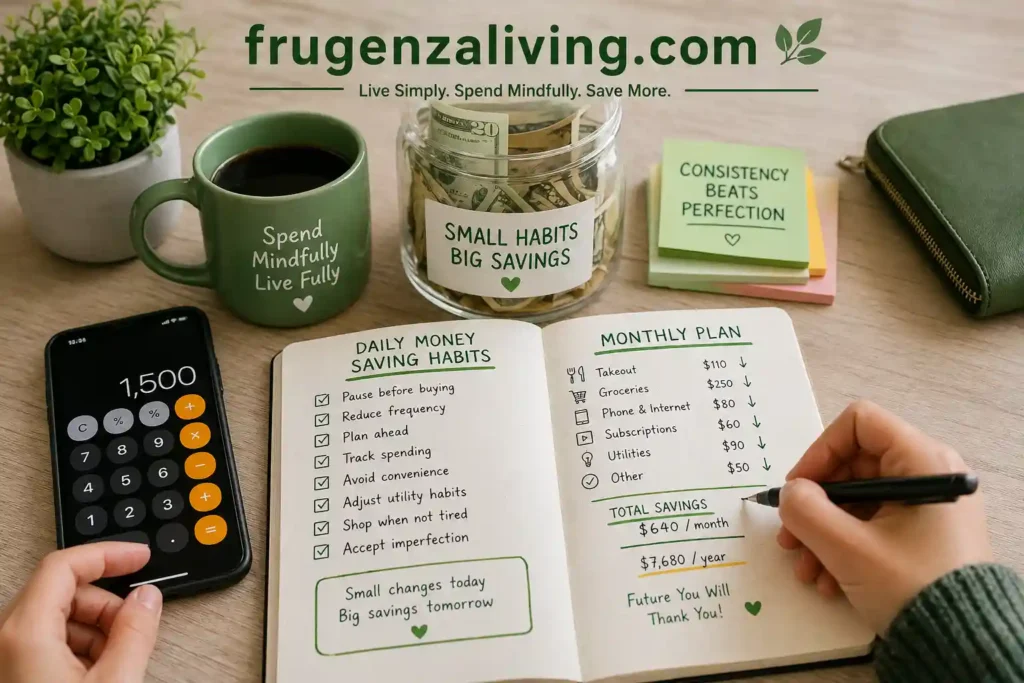
Once I became more aware of my daily spending, I started looking at bigger expenses—but in a way that still felt manageable.
I didn’t move or completely change my lifestyle. Instead, I made small adjustments that added up over time.
1. Subscription Clean-Up
I found multiple services I wasn’t really using.
Canceling them saved me around $40–$60 per month.
2. Phone & Internet Plan Adjustment
Switching plans saved about $25–$30 per month.
3. Groceries Without Overthinking
Shopping with a simple list reduced waste more than expected.
4. Utility Awareness (Not Perfection)
Small consistent changes helped stabilize bills over time.
5. Avoiding Convenience Upgrades
Skipping “just a little extra” options made a noticeable difference.
What This Added Up To
| Category | Monthly Savings |
|---|---|
| Subscriptions | ~$50 |
| Phone & Internet | ~$30 |
| Groceries | ~$70 |
| Utilities | ~$40 |
👉 Additional savings: around $190/month
👉 Yearly: ~$2,200+
Combined with daily habits, this is how the total savings grew significantly over time.
What Changed When I Focused on Daily Habits
The biggest shift wasn’t financial.
It was awareness.
Money stopped “disappearing.”
A Simple System That Worked
- reduce automatic spending
- increase intentional spending
That’s it.
If you’re trying to reduce living costs, this approach works.
And if you struggle with habits, learning how to stop wasting money at the behavioral level helps even more.
FAQ: Daily Money Saving Habits
What are the best daily money saving habits?
Small, repeatable habits like reducing impulse spending and planning ahead.
How can I save money daily without effort?
By reducing automatic spending and adding small friction.
Do small expenses matter?
Yes. Over time, they add up significantly.
What habits waste money the most?
Takeout, impulse buying, and convenience spending.
How to stay consistent?
Focus on realistic habits—not perfection.
Final Thoughts
Daily money saving habits are not about changing your entire life overnight. They are about noticing the small moments where spending becomes automatic and placing a better habit in front of them.
Start with one part of your day. Maybe it is the morning rush, the afternoon snack habit, the evening takeout decision, or the late-night scrolling routine. Choose one small anchor and repeat it until it feels normal.
The goal is not to become perfect with money. The goal is to make saving easier to repeat. When your daily rhythm supports better decisions, small habits stop feeling like effort and start becoming your default.

The ideas shared here come from real-life experience and practical habits that actually work.
→ Read more about Jeffi
- No Spend Month Challenge for Beginners: A 30-Day Plan - September 24, 2026
- Low Buy Month Challenge: Realistic Rules for 30 Days - September 23, 2026
- How to Stop Buying Groceries You Already Have - September 20, 2026