
If you’ve ever tried to “be frugal” and gave up after a week, you’re not alone. Most people start strong—cutting everything, saying no to everything—then burn out fast.
I used to think frugal living meant being super strict. No takeout, no fun spending, tracking every dollar. Honestly, it felt exhausting. And it didn’t last.
But here’s the thing: how to live frugally the easy way isn’t about doing more. It’s about doing less—just a bit smarter.
What Does It Mean to Live Frugally the Easy Way?
Living frugally the easy way means reducing unnecessary spending through simple, low-effort habits—without feeling restricted or overwhelmed.
It’s not about cutting everything you enjoy. It’s about:
- Keeping what matters
- Reducing what doesn’t
- Making your daily choices a little more intentional
Think of it as simplifying your money life, not limiting it. If you have a packed schedule, these frugal living tips for busy people can help you stay consistent.
Why Most People Overcomplicate Frugal Living
To be honest, most people overcomplicate this.
They try to:
- Track every expense
- Follow strict budgets
- Cut out all “non-essential” spending
That works for a short time… until life gets busy again.
You’ve probably experienced this—one hectic week, and suddenly it’s takeout, quick shopping, and convenience spending all over again.
The problem isn’t discipline.
It’s that the system isn’t built for real life.
The Easiest Frugal System Starts With Fewer Decisions
One reason frugal living feels hard is that people try to make too many money decisions every day. Should I cook tonight? Should I cancel this subscription? Should I track this purchase? Should I compare prices again?
That gets tiring fast.
The easier way is to create a few default choices that already save money without needing much thought. For example, you might keep the same grocery basics every week, choose two simple meals for busy nights, review subscriptions once a month, and set one small automatic savings amount.
It sounds almost too simple, but that’s the point. Easy frugal living works best when the cheaper choice becomes the normal choice.
You don’t need more willpower. You need fewer decisions.
1. Start With Your Biggest Daily Expenses
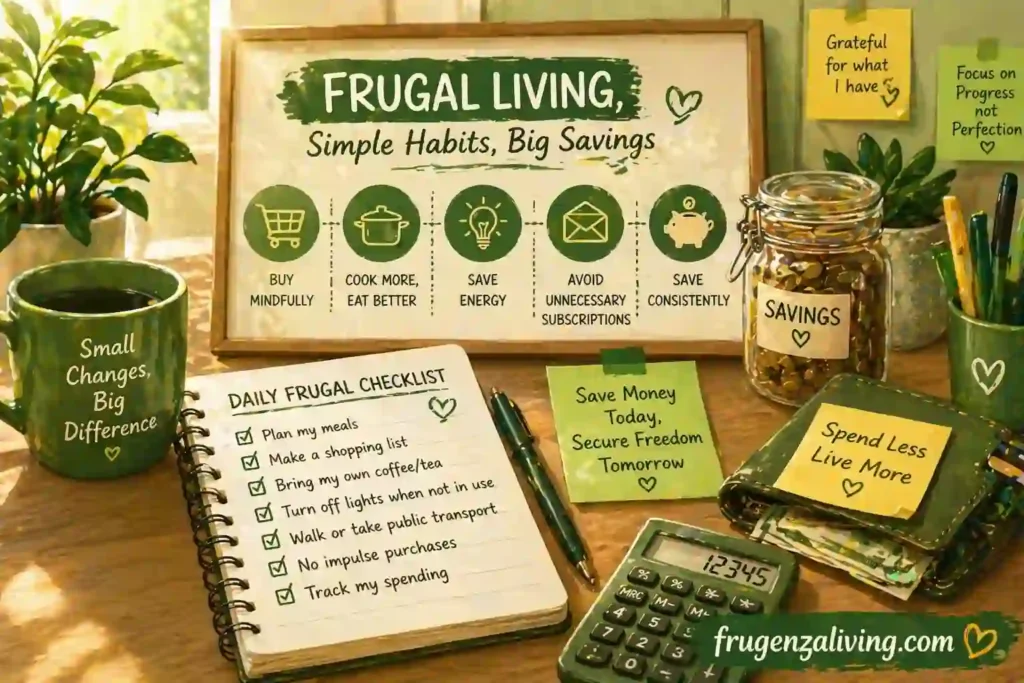
If you want to save money easily, don’t focus on tiny things first.
Look at where your money actually goes every day:
- Groceries
- Takeout and convenience food
- Subscriptions
- Utilities
These are the areas where small adjustments make a big difference.
Simple shift:
Instead of cutting everything, just adjust frequency.
- Takeout 4x/week → 2x/week
- Coffee every day → a few times a week
- Subscriptions → keep only what you use
This alone can help you cut daily expenses without feeling like you’re missing out. You can also enjoy and learn how to live cheaply and comfortably without feeling restricted.
2. Make Frugal Living Feel Effortless
Here’s something I learned the hard way: if saving money feels like work, you won’t stick with it.
So instead of trying harder, make it easier.
Try this:
- Keep simple, ready-to-cook food at home
- Stick to a few go-to meals
- Automate bills and savings
This creates a budget-friendly lifestyle where the default option is already the cheaper one.
You don’t have to think about saving money—it just happens.
If you want a step-by-step overview, check out this frugal living guide for beginners.
A good test is this: if a habit only works when you’re motivated, it probably won’t last. The best frugal habits are the ones that still work when you’re busy, tired, or not in the mood to think about money.
That’s why repeat meals, automatic savings, default grocery lists, and scheduled bill payments are so useful. They don’t feel exciting, but they quietly remove the expensive decisions that usually happen when life gets messy.
Frugal living becomes easier when your routine does some of the work for you.
3. Don’t Aim for Perfect—Aim for Consistent
Perfection is one of the biggest reasons people fail at frugal living.
You don’t need to:
- Track every dollar
- Follow a strict plan
- Eliminate all unnecessary spending
That’s not realistic for most people.
Instead, aim for:
- Small improvements
- Consistent habits
- Realistic expectations
That’s how simple money habits actually stick. The easiest way to stay consistent is by building frugal habits that actually work in your daily routine.
4. Use the “Good Enough” Mindset
Frugal living isn’t about always choosing the cheapest option.
It’s about choosing what’s good enough.
Example:
- Store-brand groceries instead of premium
- Basic subscriptions instead of multiple platforms
- Simple meals instead of expensive takeout
You still enjoy your life—but you save money easily without sacrificing comfort.
The “good enough” mindset also helps you avoid decision fatigue. You don’t need to compare every brand, every price, or every possible option.
Sometimes the store-brand item you already like is good enough. The simple meal you can cook quickly is good enough. The basic phone plan that covers your needs is good enough.
This matters because trying to optimize everything can become exhausting. And when saving money feels exhausting, most people eventually quit.
5. Pay Attention to the Small Daily Habits
This is where most people lose money.
Not on big purchases—but on small, repeated ones.
Common examples:
- Extra snacks at the store
- Quick online purchases
- Delivery fees and add-ons
I didn’t realize this at first, but these tiny habits were quietly costing me more than anything else.
Easy fix:
- Pause before buying (“Do I really need this?”)
- Stick to a simple plan when shopping
- Check your spending once a week
It doesn’t take long—but it makes a difference. For a more practical approach, check out these realistic frugal living ideas.
6. Simplify Your Food Routine
Food is one of the biggest expenses for most people.
And it’s also one of the easiest to fix.
You don’t need fancy meal plans. Just keep it simple.
Practical ideas:
- Cook in batches (one meal, multiple servings)
- Use repeat meals during busy days
- Keep easy backup options (frozen or quick meals)
This connects naturally with saving money on groceries and basic meal planning, without turning it into a full-time task.
You can also start by focusing on how to cut grocery costs, which often takes a large part of your budget.
7. Control Subscriptions Before They Control You
Subscriptions are easy to ignore—and that’s why they add up.
Streaming services, apps, memberships… they seem small, but together they can be expensive.
Quick reset:
- List everything you’re subscribed to
- Keep only what you actually use
- Cancel the rest
Example:
$10 here, $15 there…
👉 $40/month = $480/year
Not huge individually, but definitely worth fixing.
Sometimes frugal living feels hard because the method is too strict. The easier way is to build simple money habits that fit your real routine, so saving money feels more natural and less exhausting.
| Hard Frugal Living | Easy Frugal Living | Why the Easy Way Lasts Longer |
|---|---|---|
|
Too strict Tracking every dollar every day until budgeting starts to feel like another stressful task. |
Low effort Checking your spending once a week and adjusting the habits that feel off. | A weekly check still gives you awareness, but it does not make money management feel overwhelming. |
|
All or nothing Cutting all takeout, coffee, small treats, and fun spending immediately. |
Balanced Reducing the frequency and keeping a few planned things you actually enjoy. | Reducing spending is usually easier to repeat than removing everything at once. |
|
Complicated Trying new meal plans every week and buying too many ingredients for different recipes. |
Simple routine Repeating a few easy meals that are cheap, realistic, and useful on busy days. | Repeat meals reduce decision fatigue, grocery waste, and last-minute takeout spending. |
|
Over-optimized Comparing every brand, every product, and every small purchase. |
Good enough Choosing affordable options that meet your needs without overthinking everything. | The “good enough” mindset saves time and makes frugal living feel calmer. |
|
Motivation-based Relying on discipline to avoid unnecessary spending every single day. |
Default-based Building default routines like a repeat grocery list, automatic savings, and monthly subscription checks. | Frugal habits work better when the cheaper choice becomes the normal choice. |
8. A Simple Monthly Savings Scenario
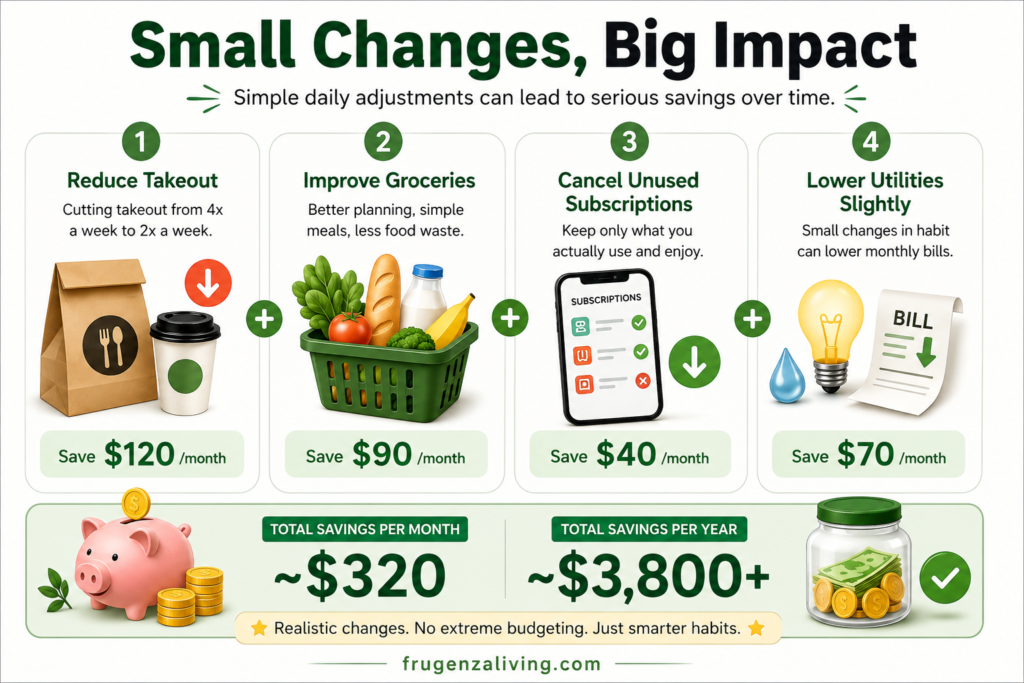
Let’s say you make a few realistic changes:
- Reduce takeout → save $120/month
- Improve grocery spending → save $90/month
- Cancel subscriptions → save $40/month
- Lower utilities slightly → save $70/month
👉 Total: ~$320/month
👉 Yearly: ~$3,800+
That’s without extreme budgeting or lifestyle changes.
Just smarter habits.
The important part isn’t the exact number. Some months you may save more, and some months you may save less. What matters is that the changes feel repeatable.
A savings plan that looks impressive but feels miserable usually doesn’t last. A smaller plan that you can repeat for six months is often more powerful than a strict plan you quit after two weeks.
This is why easy frugal living is less about big sacrifices and more about small choices you can keep making.
9. Build a System That Works for You
You don’t need a complex budgeting system.
Keep it simple and flexible.
A realistic setup:
- Weekly grocery budget
- Limit (not eliminate) takeout
- Monthly subscription check
- Small automatic savings
This is enough to help you reduce monthly bills and stay in control without stress.
10. Make Frugal Living Fit Your Life
Frugal living isn’t one-size-fits-all.
What works for someone else might not work for you.
So instead of copying everything:
- Keep what fits your lifestyle
- Adjust what doesn’t
- Ignore what feels unrealistic
That’s how you make it sustainable.
FAQ: How to Live Frugally the Easy Way
How can I start living frugally without feeling overwhelmed?
Start with one area, like groceries or takeout. Focus on small changes instead of trying to fix everything at once.
Do I need a strict budget to live frugally?
No. A simple system with a few consistent habits is usually enough to manage your money.
What’s the easiest way to save money daily?
Reduce frequency of spending—like eating out less often or cutting unnecessary subscriptions.
Can I still enjoy life while living frugally?
Yes. Frugal living is about balance, not restriction.
How much can I realistically save?
Most people can save around $200–$400 per month with simple adjustments.
Final Thoughts
If you’ve been struggling with money, it’s probably not because you’re doing everything wrong.
It’s more likely that you’re trying to do too much at once.
Frugal living doesn’t have to be complicated.
It doesn’t have to feel restrictive.
Start small. Keep it simple. Adjust as you go.
Because the easiest way to live frugally…
is the way that actually fits your life.

The ideas shared here come from real-life experience and practical habits that actually work.
→ Read more about Jeffi
- No Spend Month Challenge for Beginners: A 30-Day Plan - September 24, 2026
- Low Buy Month Challenge: Realistic Rules for 30 Days - September 23, 2026
- How to Stop Buying Groceries You Already Have - September 20, 2026