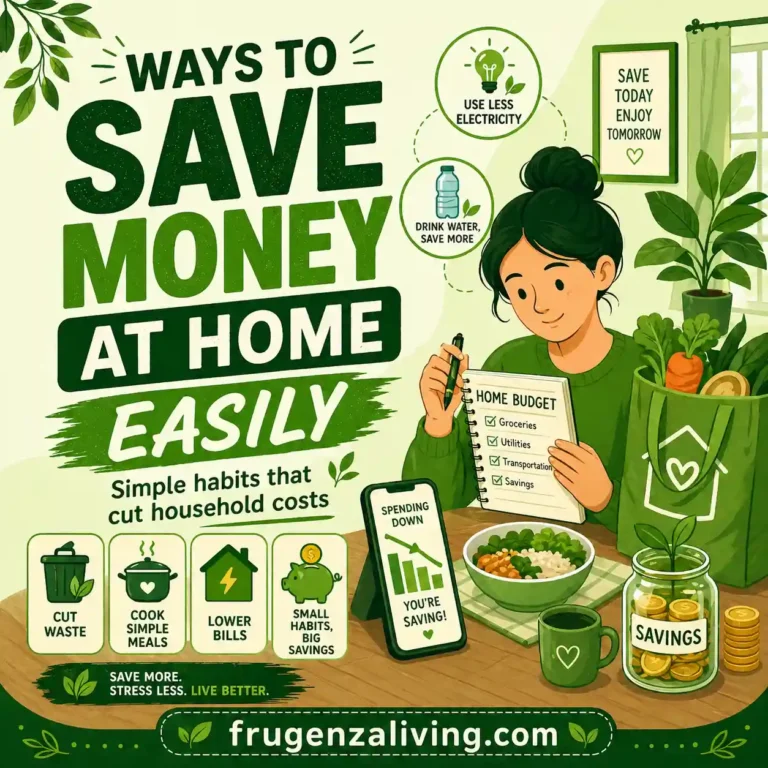
Most people think staying at home automatically saves money.
But if you’ve ever checked your spending at the end of the month, you probably noticed something strange:
You’re still spending more than expected.
Not because of big purchases.
But because of small things that repeat every day.
A snack here.
A quick online order there.
Electricity running in the background.
Individually, they feel harmless.
Together, they quietly drain your money.
If you’re looking for easy ways to reduce household expenses without changing your lifestyle completely, small habit changes at home are often the best place to start.
The good news?
Saving money at home doesn’t require extreme changes.
It’s about fixing a few small habits that happen daily.
Quick Answer: Ways to Save Money at Home Easily
The easiest ways to save money at home are to reduce daily waste, simplify routines, and build small habits that lower expenses without feeling restrictive. Instead of strict budgeting, focus on how you use food, electricity, and your time at home.
Key Takeaways
Small daily habits create the biggest savings over time
Most home expenses come from repeated behavior
Simple routines are easier to maintain than strict rules
Saving Money at Home Is About Removing Friction, Not Adding Rules
Most people try to save money by adding more rules.
Don’t buy this
Track everything
Limit everything
That sounds good, but it’s hard to sustain.
At home, the easiest way to save money is different.
It’s about removing friction.
Make good choices easier
Make bad habits harder
For example:
Keeping water nearby makes you less likely to buy drinks
Removing shopping apps reduces impulse spending
Cooking simple meals reduces effort and cost
If your income is limited, these tips can also support quick ways to save money with low income without feeling restrictive.
You’re not forcing discipline.
You’re changing your environment.
And that’s what makes it work.
Why Saving Money at Home Is Easier Than You Think
Most home spending is not intentional.
It’s automatic.
You don’t plan to waste electricity
You don’t mean to overspend on food
You don’t intend to buy unnecessary items
It just happens.
Saving money at home becomes much easier when you keep your spending consistent over time.
You don’t need to change everything.
You just need to adjust what already repeats.
The Hidden Costs of Staying at Home
Here’s where money usually slips away:
| Habit | Hidden Cost | Simple Fix |
|---|---|---|
| TV always on | Electricity waste | Turn off or switch to audio |
| Daily takeout | 2–3x food cost | Cook simple meals |
| Scrolling shopping apps | Impulse spending | Limit exposure |
| Unused subscriptions | Monthly loss | Cancel or pause |
These are not big expenses once.
They are repeated expenses and that’s why they matter.
Do a 15-Minute Home Cost Walkthrough
Generic saving tips are useful, but your biggest opportunity may be hidden inside a routine that is specific to your home. A short walkthrough can help you find it without tracking every appliance, purchase, or household expense.
Open a note on your phone and walk through the areas you use most. In each space, look for evidence—not guesses.
In the kitchen, check for food that may expire, duplicate ingredients, appliances left running, and groceries that require more effort than you realistically have. In the laundry or bathroom area, notice half-used products, unnecessary loads, leaks, or supplies you keep replacing because they are difficult to find.
In the living area, look for lights, screens, chargers, heating, cooling, and paid entertainment that continue when no one is actively using them. Finally, check the digital side of your home: subscriptions, delivery memberships, shopping notifications, automatic renewals, and saved payment methods that make spending almost effortless.
For every issue you notice, write three short answers:
What keeps repeating?
Why does it happen here?
What is the smallest change that could prevent it?
For example:
Food is being thrown away because leftovers are hidden behind new groceries. The smallest change is to create one visible “eat first” shelf.
Or:
Delivery happens on evenings when cooking feels too difficult. The smallest change is to keep two low-effort meals available.
Do not try to fix every room at once. Choose the one repeated problem that costs money most often or feels easiest to prevent. Test one change for seven days, then check whether the waste, purchase, or unnecessary usage happened less often.
This turns saving money at home into a real household experiment. Instead of following every tip you find, you identify the part of your own home that needs attention first.
How Small Habits Turn Into Real Savings
Small habits don’t feel expensive, but they add up quickly.
A $3 drink every day becomes $90 per month
A $10 impulse purchase each week becomes $40 per month
A $20 subscription becomes $240 per year
None of these feel like major spending.
But together, they can easily reach hundreds of dollars per year.
That’s why the easiest way to save money at home everyday is to focus on repeated habits, not one-time decisions.
10 Easy Ways to Save Money at Home
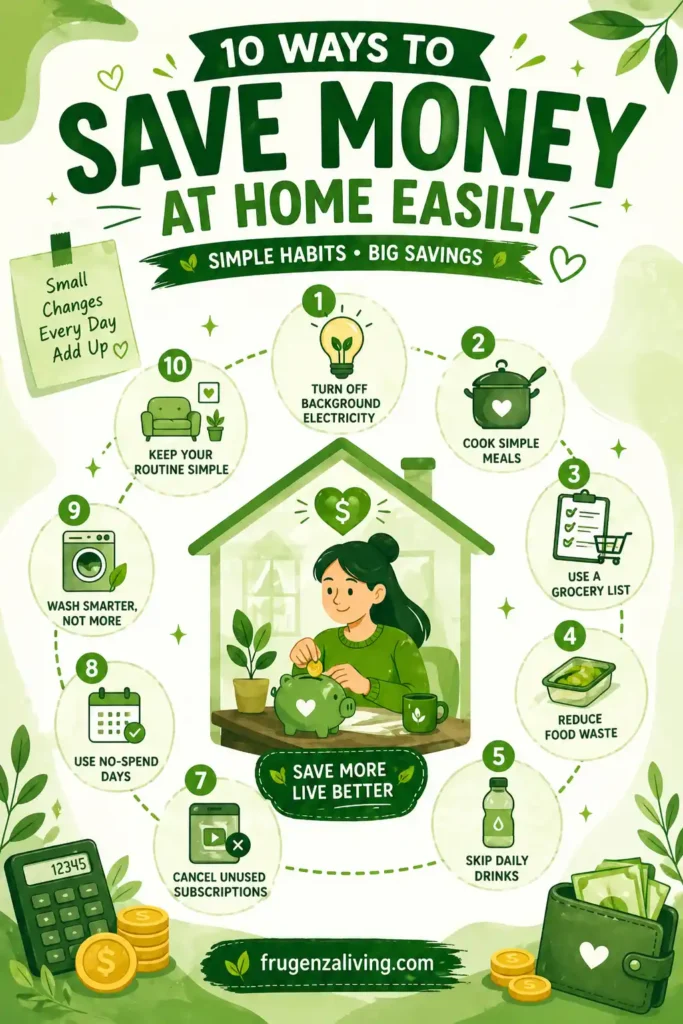
1. Turn Off Background Electricity
Most energy waste happens quietly.
Lights, chargers, and devices run without being used.
How to apply it:
Turn off lights when leaving a room
Unplug devices you are not using
This works because it removes silent, repeated costs without effort.
2. Replace Takeout with Simple Meals
You don’t need complicated cooking.
Simple meals are enough.
Takeout meals often cost $12 to $18
Simple home meals cost around $3 to $6
Even replacing a few meals per week can save $40 to $100.
This is one of the fastest ways to reduce household expenses.
3. Use a Grocery List and Stick to It
Most overspending happens inside the store.
One of the easiest ways to save at home is to follow a grocery budget for one person that fits your routine.
Without a list, decisions are based on mood.
How to apply it:
Write only essential items
Avoid browsing extra aisles
This works because it reduces impulse decisions.
4. Fix Food Waste Before Cutting Food Budget
Spending less doesn’t help if you waste food.
How to apply it:
Finish leftovers first
Cook smaller portions
Store food properly
Wasted food is money already lost.
5. Stop Buying Daily Drinks
This is a simple but powerful habit.
A $3 drink every day becomes $90 per month.
Water at home is free.
This works because it removes a repeated expense.
6. Control Online Shopping Triggers
The problem is not buying.
It’s exposure.
How to apply it:
Remove shopping apps from your home screen
Wait 24 hours before purchasing
This works because it breaks the impulse cycle.
7. Cancel or Pause Subscriptions Regularly
Subscriptions feel small but add up over time.
How to apply it:
Check your bank history
Cancel services you don’t use
Even small savings here create consistent results.
8. Use No-Spend Days and What You Already Have
Instead of strict budgeting, keep it simple.
Choose 1 or 2 days each week where you don’t spend money.
Use existing food and items.
This works because it builds awareness without pressure.
These small changes become powerful when turned into simple monthly saving habits.
9. Wash Smarter, Not More Often
Laundry uses water, electricity, and detergent.
How to apply it:
Wash full loads
Reduce frequency
Small changes here create noticeable monthly savings.
10. Keep Your Routine Simple
Complex systems don’t last.
Simple routines do.
Morning: check available food
Day: avoid unnecessary usage
Night: review spending briefly
This works because consistency is easier than perfection.
A Simple Daily Routine That Saves Money at Home
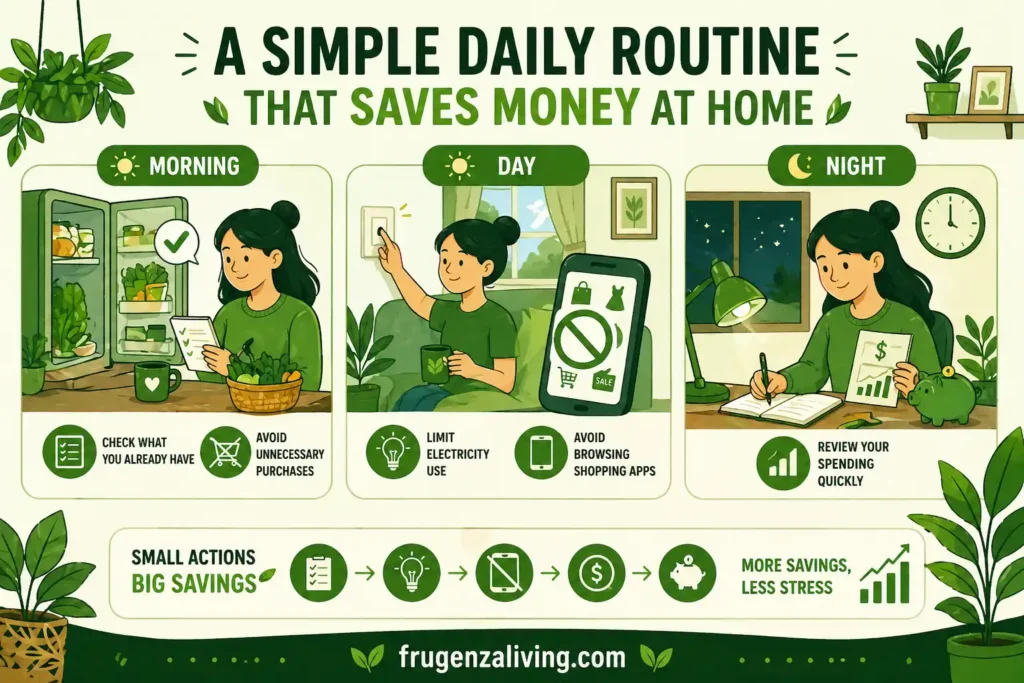
You don’t need a complicated system.
Just a simple rhythm.
Morning:
Check what you already have
Avoid unnecessary purchases
Day:
Limit electricity use
Avoid browsing shopping apps
Night:
Review your spending quickly
These small actions help you stay aware without feeling stressed.
What I Noticed After Trying This
At first, I thought saving money required discipline.
But that wasn’t the real problem.
The real issue was repetition.
I didn’t realize how much I was spending on things that felt normal.
Snacks
Online purchases
Background electricity
When I fixed just a few of those habits, something changed.
I didn’t feel restricted.
I felt more in control.
And once I felt in control, saving money became easier.
Small Changes That Save the Most Money
Not all habits have the same impact.
Focus on:
Food
Subscriptions
Repeated daily spending
Ignore:
One-time small savings
Over-optimization
Saving money at home is about what repeats, not what happens once.
Common Mistakes When Trying to Save Money at Home
Trying to change everything at once leads to burnout
Making it too strict makes it hard to maintain
Ignoring habits causes the same problems to repeat
How to Make These Habits Stick
You don’t need motivation.
You need a simple loop.
Notice
Adjust
Repeat
If consistency is difficult, learning how to stay consistent with a budget can help you maintain these habits over time.
How This Connects to Your Overall Money System
Saving money at home is the foundation.
Once you build awareness, you can:
Create a simple budget
Track your expenses
Improve your financial decisions
You can combine this with simple budgeting for beginners or use it to lower daily costs more effectively.
FAQ: Ways to Save Money at Home Easily
What are the easiest ways to save money at home?
Reduce electricity use, cook simple meals, avoid impulse buying, and build small daily habits that lower expenses without requiring strict budgeting.
How can I save money at home every day?
Focus on repeated actions like reducing food costs, limiting unnecessary usage, using what you already have, and avoiding small impulse purchases.
Does staying at home really save money?
Yes, staying at home can save money, but only if you manage your habits. Without awareness, small repeated expenses like electricity waste, food delivery, and online shopping can still add up.
How do I reduce household expenses quickly?
Focus on food, subscriptions, electricity use, and repeated spending habits. These areas usually create faster savings than one-time small cuts.
Do I need a budget to save money at home?
No, you can start with simple habits first. Budgeting becomes more helpful later once you understand where your money goes.
Ending
Saving money at home is not about big changes.
It’s about small habits repeated every day.
Turn off what you don’t use
Spend only when needed
Keep things simple
Because in the end
You don’t save money once
You save it every day.

The ideas shared here come from real-life experience and practical habits that actually work.
→ Read more about Jeffi
- No Spend Month Challenge for Beginners: A 30-Day Plan - September 24, 2026
- Low Buy Month Challenge: Realistic Rules for 30 Days - September 23, 2026
- How to Stop Buying Groceries You Already Have - September 20, 2026