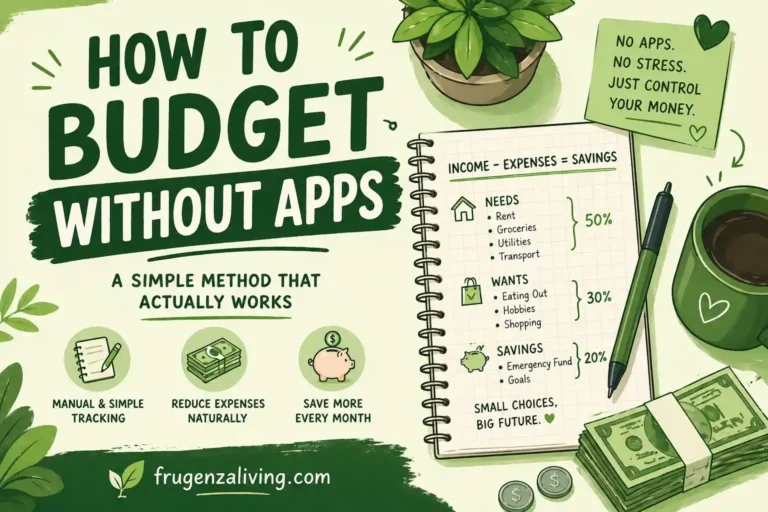
A few months ago, I tried using a budgeting app again.
At first, it felt like I finally had control. Everything was categorized, graphs looked clean, and I could see exactly where my money was going. But after a week, I started ignoring the notifications. After two weeks, I stopped opening the app entirely.
The problem wasn’t the app. It was the friction.
Every time I needed to check something, I had to open it, review categories, fix mistakes, and think too much. After a long day, that felt exhausting. Eventually, I gave up—not because I didn’t care about budgeting, but because the system felt harder than it should be.
That’s when I started figuring out how to budget without apps, and surprisingly, it worked better.
Why Budgeting Apps Don’t Work for Everyone
Budgeting apps are designed to help, but they often assume you have the time and energy to manage them consistently. In reality, most people don’t.
In my case, the biggest issue wasn’t tracking—it was maintaining the habit. Some expenses were categorized incorrectly, and fixing them felt like a chore. Even when everything worked, I still needed to check it regularly, and that created mental resistance.
Over time, I realized something important: a system that requires too much effort will eventually be ignored. That’s why many beginners abandon budgeting tools, even if they initially feel helpful.
Sometimes, simpler really is better.
What Budgeting Without Apps Actually Looks Like
When I stopped using apps, I expected things to get messy.
Instead, the opposite happened.
Without dashboards and categories, budgeting became less about tracking every detail and more about understanding patterns. I wasn’t trying to control every dollar anymore. I was simply paying attention to how I spent money day to day.
It felt less structured, but more realistic. And because it was easier to maintain, I actually stuck with it.
The Simplest Budgeting Formula You Need
At the core, nothing changes.
Income minus expenses equals savings.
Instead of calculating everything precisely, I started grouping things mentally. Rent, food, and bills were clearly needs. Everything else, like takeout or online shopping, fell into flexible spending.
This simple distinction made decisions easier without needing a complicated system.
Calculate Your True Available-to-Spend Number
Your bank balance is not always the same as the amount you can safely spend. Some of the money in your account may already belong to rent, utilities, debt payments, groceries, transportation, or savings.
Without a budgeting app, you can calculate a more useful number manually:
Current account balance − bills due before your next income − planned essentials − savings commitment = available-to-spend money
For example, imagine your account shows $1,100. You still have $500 in bills due, expect to spend $220 on groceries and transportation, and want to protect $100 for savings. Your true available-to-spend amount is $280—not the full $1,100 shown in the account.
Write this number at the top of your notebook or on a small note you can update during your weekly review. It gives you a clearer spending boundary without requiring dozens of categories.
The purpose is not to predict every purchase. It is to prevent money that already has a job from looking available.
Step-by-Step: How to Budget Without Apps
Step 1: Check Your Bank Transactions Honestly
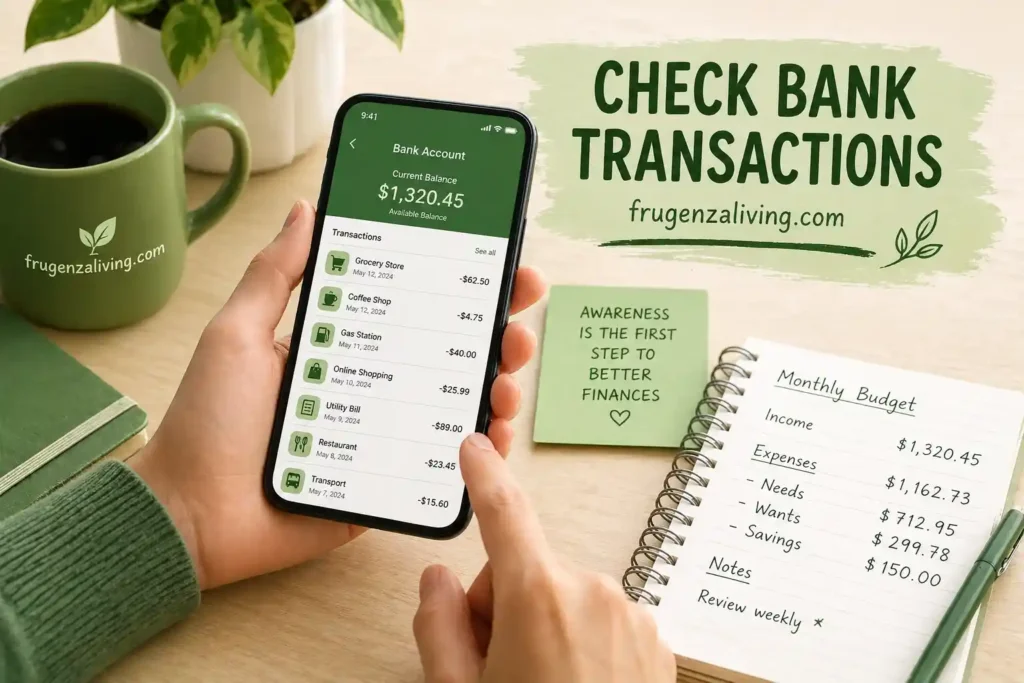
The first time I sat down and looked at my transactions without skipping anything, I was surprised.
Not because of one big purchase, but because of how often small expenses showed up. Coffee here, food delivery there, random online buys that felt insignificant at the time. In one week, those small expenses added up to more than $100.
That moment changed everything. It wasn’t about cutting everything—it was about seeing clearly.
Step 2: Write Down What Actually Matters
I didn’t start a spreadsheet. I used a simple notebook.
At the end of each day, or sometimes every few days, I wrote down the main things I spent money on. Not everything, just the ones that stood out.
For example, takeout after work, small grocery runs, or online purchases. This wasn’t about precision. It was about awareness, and writing things down made patterns easier to notice.
Over time, you’ll naturally lower daily costs with better awareness.
Step 3: Identify Patterns
After about a week, patterns became obvious.
Most of my spending wasn’t random. It happened at the same times, usually after work when I was tired, or late at night when buying something felt like a quick reward.
Once I saw that, budgeting stopped being abstract. It became something I could actually change.
This approach works best when you have a clear budgeting structure to follow each month.
Step 4: Use Soft Limits Instead of Strict Budgets
One mistake I made early on was trying to set strict limits.
It didn’t work.
What worked better was setting flexible boundaries. Instead of saying no to everything, I limited certain habits. For example, I allowed takeout twice a week instead of eliminating it completely.
This made budgeting feel realistic and sustainable.
Step 5: Review Weekly, Not Daily
Daily tracking felt exhausting when I tried it.
Weekly review worked much better.
Every weekend, I spent around 10 minutes checking my transactions and thinking about my spending. That was enough to stay aware without feeling overwhelmed.
This makes it easier to cut recurring costs that you don’t need.
Simple Ways to Track Expenses Without Apps
There’s no single correct way to do this.
Some days I used a notebook. Other times, I just checked my bank app and mentally noted patterns. Occasionally, I wrote short notes on my phone.
The method didn’t matter as much as consistency. If something is simple enough to repeat, it works.
Prove the Savings With Your Own Four-Week Baseline
The amounts above are examples, not guaranteed savings. Your results will depend on your income, location, household needs, current habits, and how much flexible spending is available to change.
To measure your own result without a budgeting app, start with a four-week baseline. Review the previous four weeks of bank transactions and total only one spending pattern you want to improve, such as takeout, convenience shopping, or small online purchases.
Then choose one realistic adjustment for the next four weeks. Do not change several categories at once. At the end of the period, compare the new total with the baseline.
For example:
- Previous four weeks of takeout: $168
- Next four weeks after setting a soft limit: $112
- Actual difference: $56
This gives you a result based on your own behavior instead of a general savings promise. It also shows whether the manual system is genuinely helping or whether the spending limit needs to be adjusted.
The most useful outcome is not always the largest number. It is finding one change you can repeat without making the budgeting process harder.
A Real Example of Budgeting Without Apps
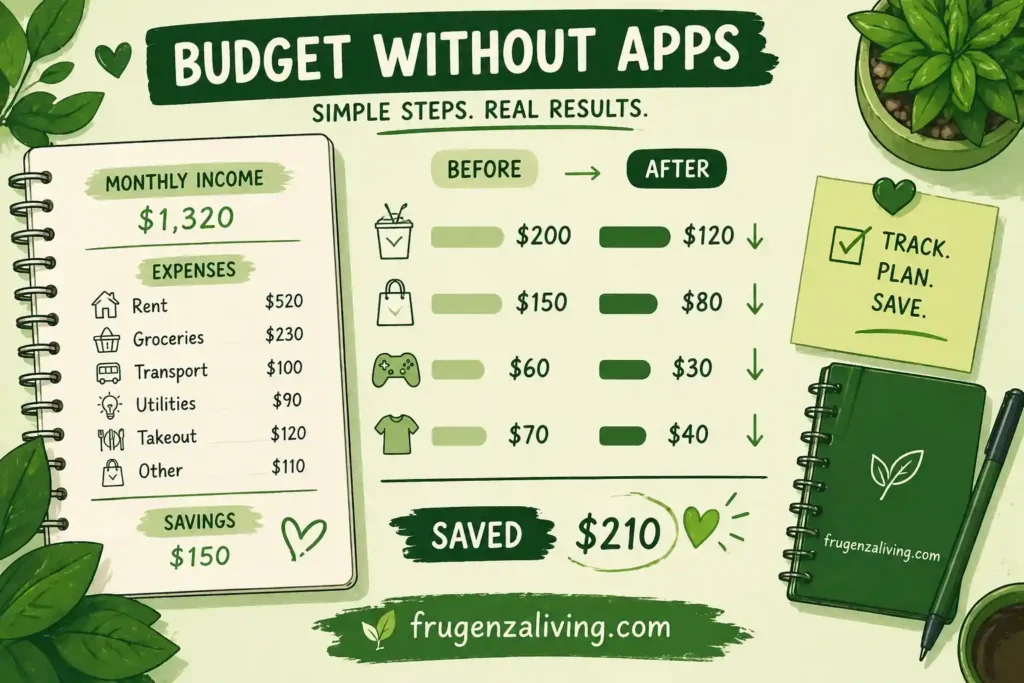
Here’s a simple monthly example based on real habits:
| Category | Amount ($) |
|---|---|
| Income | 1,320 |
| Rent | 520 |
| Groceries | 230 |
| Transportation | 100 |
| Utilities | 90 |
| Takeout | 120 |
| Other Spending | 110 |
| Savings | 150 |
This wasn’t planned perfectly. It improved gradually as habits changed.
Common Mistakes When Budgeting Without Apps
One mistake I almost made was relying too much on memory. Small expenses are easy to forget, and those are often the ones that matter most.
Another mistake is overcomplicating the process. Trying to recreate app-level detail manually usually leads to frustration.
You don’t need apps if you use practical budgeting methods that are easy to maintain.
The goal is simplicity, not perfection.
Why This Method Works Better for Some People
Looking back, the biggest advantage of budgeting without apps is reduced friction.
There are fewer steps, fewer decisions, and less resistance. Because of that, it becomes easier to stay consistent.
A simple system that you actually use will always beat a perfect system that you abandon.
Even without tools, you can use a simple expense tracking method to stay consistent.
One Simple Habit That Made the Biggest Difference
If I had to choose one habit that changed everything, it would be this.
Checking my bank account regularly without trying to fix anything.
At first, it felt too simple to matter. But over time, I became more aware of how often I spent money and when it happened. That awareness naturally influenced my decisions.
I didn’t need strict rules. I just needed visibility.
You’ll find it easier to stick with a simple frugal lifestyle.
How Much Can You Save Without Using Apps
The results weren’t instant, but they were real.
Here’s a simple estimate based on consistent habits:
| Change | Monthly Savings |
|---|---|
| Reducing takeout | $80 – $150 |
| Cutting small purchases | $50 – $120 |
| Avoiding impulse spending | $50 – $100 |
| Total Potential | $150 – $300+ |
Small changes may seem minor, but over time they make a noticeable difference.
FAQ: How to Budget Without Apps
Is budgeting without apps effective?
Yes, especially for beginners who prefer simpler systems.
What is the easiest way to budget manually?
Start by checking your bank transactions weekly and identifying patterns.
Do I need to track every expense?
No. Focus on repeated spending and patterns.
How often should I review my budget?
Once a week is enough for most people.
Can I save money without budgeting tools?
Yes. Tools help, but behavior changes matter more.
Ending
Budgeting without apps isn’t about doing less.
It’s about removing what doesn’t work.
For many people, simpler systems are easier to maintain and more effective over time.
Start small. Look at your spending this week and notice what stands out.
That’s where real change begins.

The ideas shared here come from real-life experience and practical habits that actually work.
→ Read more about Jeffi
- No Spend Month Challenge for Beginners: A 30-Day Plan - September 24, 2026
- Low Buy Month Challenge: Realistic Rules for 30 Days - September 23, 2026
- How to Stop Buying Groceries You Already Have - September 20, 2026