
Frugal living can sound boring if you only imagine it as cutting everything, never buying anything, and saying no to every small comfort.
But in real life, frugal living usually looks much more normal than that.
It might look like cooking a simple dinner instead of ordering delivery again. It might look like waiting two days before buying something online. It might look like using what you already own before replacing it.
That is why seeing frugal lifestyle examples in real life can be more helpful than another long list of tips.
Sometimes you do not need more advice.
You just need to see what frugal living actually looks like in everyday situations.
This article is not a complete beginner guide to frugal living. It is a realistic look at how frugal choices show up in normal life without feeling extreme, miserable, or impossible to maintain.
What Are Real-Life Examples of a Frugal Lifestyle?
Real-life examples of a frugal lifestyle include cooking simple meals, shopping intentionally, using what you already own, choosing low-cost fun, delaying purchases, and planning money before spending. Frugal living is not about removing joy. It is about making everyday choices less wasteful and more intentional.
What This Article Means by Real-Life Frugal Living
Real-life frugal living is not about becoming the cheapest person in every situation.
It usually means:
- making normal daily choices with more awareness
- spending with intention instead of habit
- reducing waste without removing joy
- choosing what matters instead of buying automatically
A frugal lifestyle is not one big sacrifice.
It is a pattern of small decisions that make life less wasteful and more intentional.
Frugal Living Looks Different in Real Life Than It Does Online
Online, frugal living can sometimes look extreme.
You may see people making everything from scratch, owning almost nothing, never eating out, or turning every purchase into a moral decision.
That version can feel intimidating.
Real frugal living is usually quieter.
It shows up when someone checks the fridge before shopping. It shows up when they buy one useful item instead of five random ones. It shows up when they enjoy a weekend without needing every plan to cost money.
In real life, frugal people still spend money.
They just spend more deliberately.
They ask simple questions before buying:
“Will I actually use this?”
“Do I already have something that works?”
“Am I buying this because I need it or because I’m bored?”
Those small questions can change a lot.
If you’re just starting, these ideas work well with simple frugal living at home.
Real-Life Frugal Lifestyle Examples at a Glance
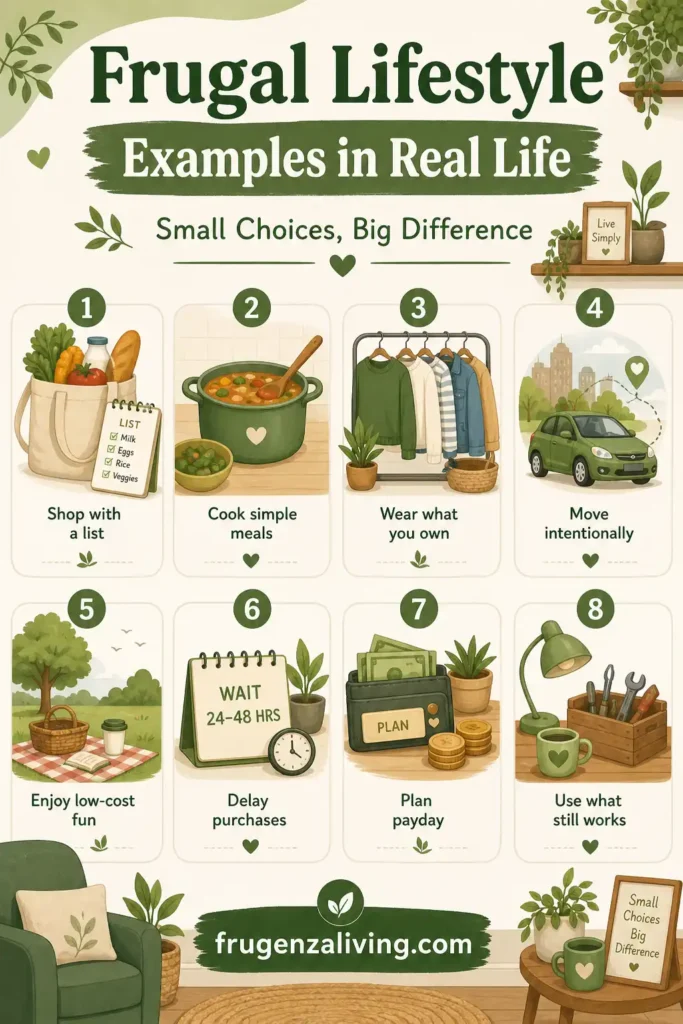
Here are simple examples of what frugal living can look like in daily life:
| Situation | Frugal Choice | What It Looks Like in Real Life |
|---|---|---|
| Grocery shopping | Buy from a short list | Check pantry first and skip random extras |
| Weeknight dinner | Use simple ingredients | Cook pasta, rice, eggs, soup, or leftovers |
| Clothing | Wear what you own more often | Repair basics and avoid boredom shopping |
| Transportation | Plan trips intentionally | Combine errands or walk short distances when practical |
| Entertainment | Choose low-cost fun | Use parks, libraries, free events, or one paid activity |
| Social life | Spend selectively | Meet for coffee instead of always doing expensive dinners |
| Home items | Use what still works | Reuse, repair, or delay replacing things |
| Payday | Give money direction | Cover bills, save a little, then spend safely |
This is the heart of a realistic frugal lifestyle.
Not perfection.
Just better default choices.
These real life frugal living examples are not about living perfectly. They are about making repeatable choices that fit normal days.
The best frugal living examples in daily life are usually simple, quiet, and easy to repeat.
Real-life examples help, but the real challenge is making frugal living without feeling restricted feel sustainable.
Example 1: Grocery Shopping Without Buying Random Extras
A real-life frugal grocery trip does not have to involve extreme couponing or buying the cheapest food possible.
One of the most realistic changes is to reduce grocery spending without changing your lifestyle too much.
It can be much simpler.
Before going to the store, you check what you already have. Maybe there is pasta, rice, frozen vegetables, canned tomatoes, eggs, or chicken in the freezer.
Then you make a short list around those items.
Instead of buying random “just in case” groceries, you buy what completes meals.
This kind of grocery shopping is frugal because it reduces waste before it starts. You are not trying to eat perfectly. You are simply buying with a plan.
Example 2: Eating Simple Meals Without Feeling Miserable
A frugal dinner does not need to be sad.
It might be rice with eggs and vegetables. Pasta with a simple sauce. Soup made from leftovers. A sandwich with fruit. Chicken, potatoes, and whatever vegetables are already in the fridge.
The point is not to make every meal fancy.
The point is to stop assuming that every busy night requires delivery.
In real life, frugal eating often looks ordinary. It is not always beautiful enough for social media, but it works.
You eat well enough, spend less, and waste less food.
That is a win. Many of these examples come from simple ways to save money at home.
Example 3: Buying Clothes Less Often but Wearing Them More
A frugal lifestyle does not mean never buying clothes.
It means buying clothes you actually wear.
In real life, this might look like checking your closet before shopping online. You may realize you already own three shirts that work, one pair of jeans that fits well, or a jacket you forgot about.
It can also mean repairing small things.
A loose button does not always mean something needs to be replaced. A pair of shoes may last longer with better care. A basic shirt may still be useful even if it is not new.
Frugal clothing choices are not about looking cheap.
They are about avoiding clutter you paid for but barely use.
Example 4: Using Transportation More Intentionally
Transportation is another area where frugal choices can be practical without being extreme.
Maybe you combine errands instead of making three separate trips. Maybe you walk a short distance when it makes sense. Maybe you use public transit for certain routes if it is convenient.
For some people, frugal transportation means driving less.
For others, it simply means planning better.
The goal is not to make life harder. It is to reduce unnecessary trips, wasted fuel, and last-minute convenience costs.
Realistic frugal living adapts to where you live.
A person in a big city and a person in a rural area will not make the same transportation choices. That is okay.
Example 5: Enjoying Weekends Without Spending Automatically
Weekends can quietly become expensive.
Coffee, lunch, shopping, movies, delivery, drinks, and small impulse purchases can pile up fast.
A frugal weekend does not mean staying home bored.
It might look like choosing one paid activity instead of three. Meeting a friend for coffee instead of dinner. Going to a park. Visiting a free local event. Hosting a simple meal at home.
Real-life version: you still meet friends, but instead of dinner, movie, and shopping all in one day, you choose coffee and a walk.
The difference is intention.
You still enjoy your weekend, but spending is no longer automatic.
That is what makes frugal living sustainable. It leaves room for fun without letting every fun moment require money.
Example 6: Delaying Purchases Instead of Saying “Never”
One of the most useful real-life frugal habits is delaying purchases.
Not banning them.
Just delaying them.
If you see something you want, put it on a buy-later list. Wait 24–48 hours. Then decide if you still want it.
This small pause can reveal a lot.
Sometimes you still buy the item, and that is fine. Other times, the urge disappears because it was never a real need.
Frugal living is not always about saying no.
Often, it is about not saying yes too quickly.
If impulse purchases are a common issue, learning how to control spending habits can support this kind of delayed decision-making.
Example 7: Making Payday Feel Less Random
A frugal lifestyle also shows up after payday.
Instead of treating income like one big pile of money, you give it direction.
Bills come first. A small amount goes to savings if possible. Some money is set aside for flexible spending. A small buffer protects you from surprises.
This does not need to become a complicated budgeting system.
To make these changes sustainable, you need to divide your income properly first.
It is simply a way to avoid spending first and wondering later.
Real-life frugality works better when your money has a plan before temptation appears.
Why Frugal Choices Get Easier the More of Them You Make
The seven examples above can look like separate habits.
But in practice, they tend to connect.
When you cook a simple dinner on a Monday night instead of ordering delivery, that decision does not just save money on that meal. It usually means there are leftovers on Tuesday, which means you do not need to buy lunch. Two decisions came from one.
When you delay a purchase and decide not to buy something you were about to order on impulse, that money stays in your account. The following week, when a small unexpected cost appears — a minor repair, a last-minute transport need, a friend’s event you want to attend — the money is already there. You do not feel squeezed. You do not have to skip it or feel guilty for going.
This is why frugal living becomes easier over time, not harder.
The first few choices feel like effort.
But as they connect, they start creating a small but real financial cushion between your income and your next decision. That cushion is what makes the next frugal choice feel less like sacrifice and more like a normal option.
It also works in reverse.
When most days are unplanned — delivery for dinner, random impulse purchases, no direction after payday — there is no cushion. Every week starts close to the edge. Every unexpected cost feels like an emergency. And because the budget is already stretched, it becomes harder to make deliberate choices even when you want to.
This is not a discipline problem.
It is a structural one.
The reason frugal living helps is not just that each choice saves a small amount. It is that connected frugal choices gradually change the structure of your finances, so that future decisions feel less pressured — and therefore easier to make well.
A Day in a Realistic Frugal Lifestyle
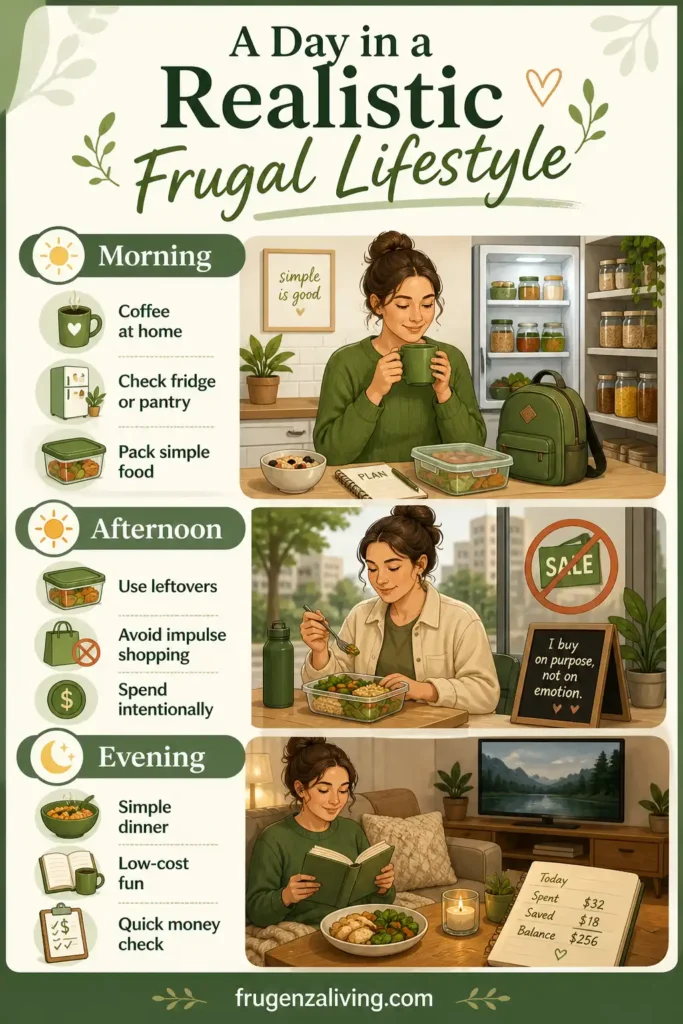
A realistic frugal day might look like this:
Morning
You make coffee or breakfast at home.
Before leaving or starting work, you check what food is available for later. Maybe there are leftovers, fruit, eggs, or something simple to pack.
Nothing dramatic happens.
You just avoid buying something because you forgot what you already had.
Afternoon
You eat a packed lunch or use leftovers.
Maybe you still buy coffee if it matters to you, but you do it intentionally, not automatically.
You avoid scrolling shopping apps when you are tired or bored because you know that is when random purchases happen.
Evening
Dinner is simple.
Maybe it is not exciting, but it is enough.
You watch something you already pay for, read, walk, call a friend, or do something low-cost.
Before bed, you do a quick mental check:
“Did I spend on purpose today?”
That is a realistic frugal lifestyle.
Not perfect.
Just intentional.
What I Noticed After Living More Frugally
When I started living more frugally, the biggest change was not that I suddenly stopped spending.
I still bought things. I still enjoyed life. I still made imperfect choices.
But I became more aware of random spending.
I noticed when I was buying because I was tired, bored, stressed, or unprepared. I noticed how often small purchases came from not planning ahead.
Over time, these small real-life frugal choices became one of the foundations that helped me save over $15,000 in a year.
The biggest change was not one dramatic cut. It was the fact that these choices were easy enough to repeat.
It was not one extreme sacrifice.
It was the repeatable pattern that made the difference.
Less waste. Fewer impulse purchases. More intentional choices.
That was what made saving feel easier.
Frugal Choices vs Cheap Choices
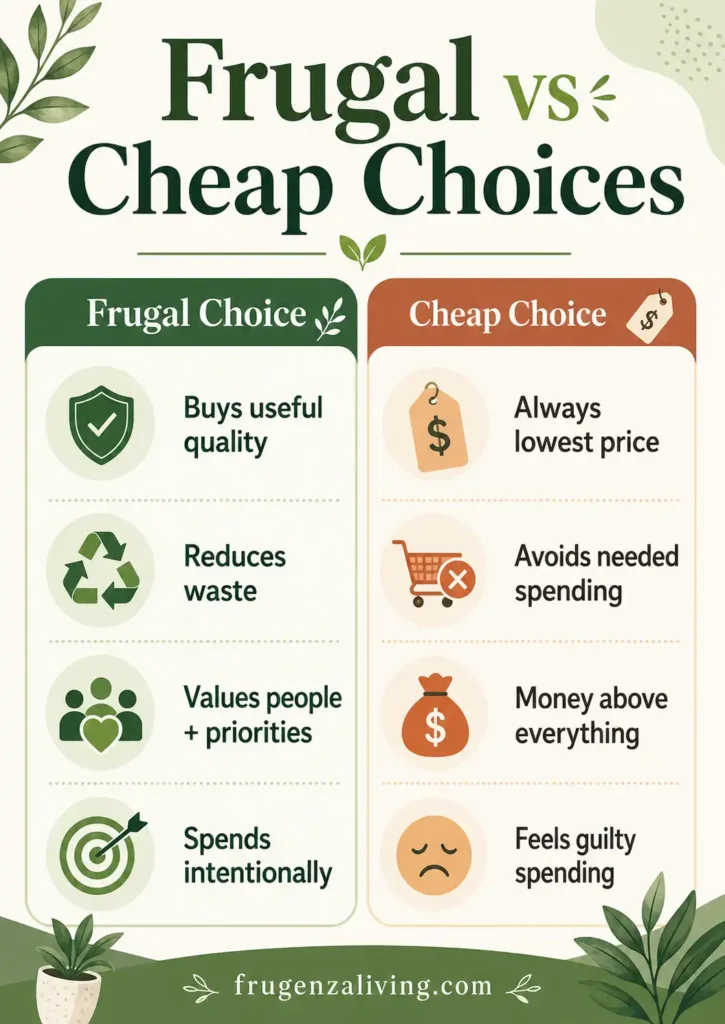
Frugal living is often confused with being cheap, but they are not the same.
Here is the difference:
| Frugal Choice | Cheap Choice |
|---|---|
| Buys useful quality when it matters | Always buys the lowest price |
| Reduces waste and avoids impulse spending | Avoids spending even when it creates problems |
| Values people, priorities, and usefulness | Makes money the only priority |
| Spends intentionally on what matters | Feels guilty about almost every purchase |
A realistic frugal lifestyle is not about being cheap.
It is about spending with awareness.
What Frugal Living Is Not
Frugal living is often misunderstood.
It is not being cheap to other people.
It is not refusing to ever have fun.
It is not always buying the lowest-quality option.
It is not feeling guilty every time you spend money.
A realistic frugal lifestyle still leaves room for comfort, generosity, and enjoyment.
The difference is that spending becomes more thoughtful.
You can spend on what matters and reduce spending on what does not.
That is very different from depriving yourself.
How to Start Your Own Real-Life Frugal Lifestyle
Start small.
Use this simple loop:
Notice → Choose → Repeat
Notice where money disappears.
Choose one realistic frugal action.
Repeat it until it feels normal.
Then add another.
For example, you might start by checking your fridge before grocery shopping. Next week, you might delay online purchases. After that, you might plan one low-cost weekend.
Small choices become a lifestyle when they are repeated.
That is how frugal living becomes realistic instead of overwhelming.
How This Fits Into Your Frugal Living System
This article shows what frugal living looks like in real life.
If you need the bigger foundation, start with frugal living for beginners.
If you want practical home changes, frugal living tips for beginners at home can help you focus room by room.
If you want more action steps, realistic frugal living tips can give you simple habits to try.
If your main challenge is spending automatically, how to control spending habits can help you build better pauses before buying.
This article is the example layer.
The others help you turn examples into a system.
FAQ
What are examples of a frugal lifestyle in real life?
Examples of a frugal lifestyle in real life include cooking simple meals, checking groceries before shopping, wearing clothes you already own, delaying purchases, choosing low-cost weekend plans, and giving money a plan after payday. These choices are realistic and do not require extreme sacrifice.
What does a frugal person do every day?
A frugal person usually makes small intentional choices every day. They may use leftovers, avoid impulse purchases, plan simple meals, choose low-cost entertainment, and think before spending. They do not avoid all spending; they try to spend on purpose.
Can frugal living still be enjoyable?
Frugal living can still be enjoyable because it does not mean removing everything fun. It means choosing enjoyment more intentionally. You can still eat out, buy things, and socialize, but you avoid spending automatically or wasting money on things that do not matter.
Is frugal living the same as being cheap?
Frugal living is not the same as being cheap. Being cheap often means avoiding spending at any cost, even when it affects quality or other people. Frugal living means spending thoughtfully, reducing waste, and choosing value over impulse.
How do I start living frugally in real life?
Start living frugally in real life by noticing one area where money disappears, then choosing one small change. You might check your pantry before shopping, delay online purchases, cook one simple meal, or plan one low-cost weekend activity. Repeat before adding more.
Conclusion
A frugal lifestyle is not built from one dramatic decision.
It is built through small choices that repeat.
You do not need to become extreme. You do not need to remove joy from your life. You do not need to copy someone else’s version of frugality.
Start with one real-life example.
Cook one simple meal. Delay one purchase. Use one thing you already own. Plan one weekend more intentionally.
Then repeat.
A frugal lifestyle is not about making life smaller.
It is about making your choices more intentional.

The ideas shared here come from real-life experience and practical habits that actually work.
→ Read more about Jeffi
- No Spend Month Challenge for Beginners: A 30-Day Plan - September 24, 2026
- Low Buy Month Challenge: Realistic Rules for 30 Days - September 23, 2026
- How to Stop Buying Groceries You Already Have - September 20, 2026