
If your monthly bills keep creeping up even when you’re mostly staying at home, you’re definitely not alone. Groceries cost more than they used to, energy bills fluctuate, and somehow there’s always another subscription you forgot you signed up for.
That’s why learning how to reduce daily expenses at home matters. Not in a strict, stressful way—but in a practical, real-life way that actually fits your routine.
To be honest, most people don’t need a full budget overhaul. They just need to fix a few small habits that quietly drain money every day.
In this guide, you’ll learn how to reduce daily expenses at home without using extreme budgeting or cutting every small comfort from your life.
The goal is not to make your life feel smaller. The goal is to find the daily money leaks that quietly drain your budget and replace them with simple habits that are easier to repeat.
Most daily expenses do not feel expensive in the moment. A small grocery extra, one delivery fee, a forgotten subscription, or a quick impulse purchase may not seem like a big problem. But when those habits happen every week, they can quietly turn into hundreds of dollars per month.
What Does It Mean to Reduce Daily Expenses at Home?
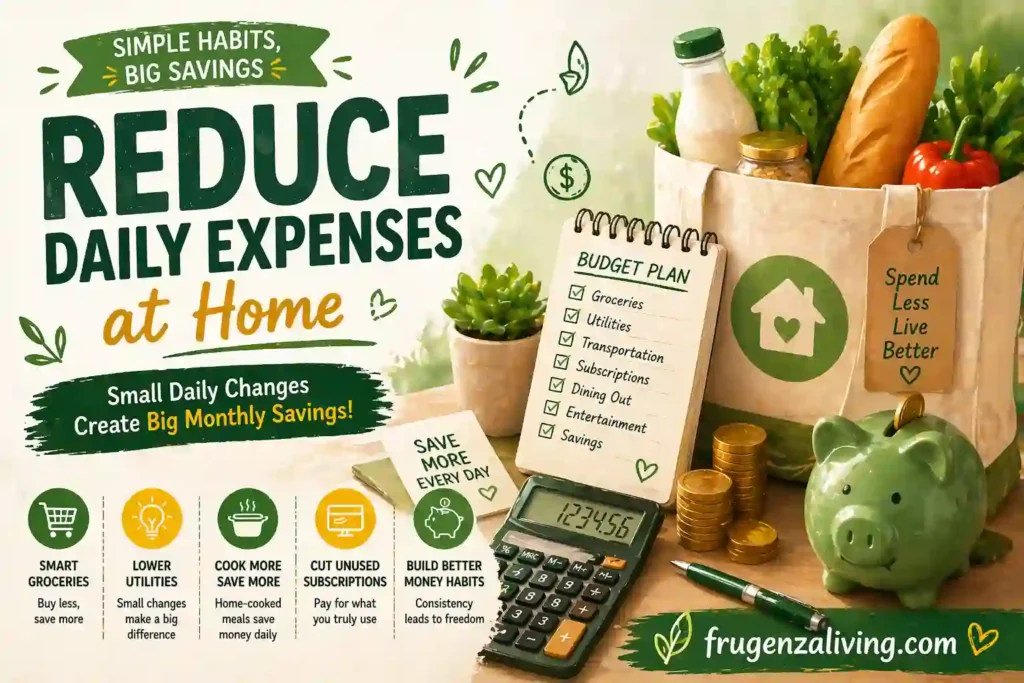
Reducing daily expenses at home means cutting or optimizing small, recurring costs—like food, utilities, and subscriptions—using simple, repeatable habits.
It’s not about cutting everything out. It’s about being a bit more intentional with what you already do.
Daily Expense Leak Map
Where Is Your Money Quietly Leaking?
Reducing daily expenses becomes easier when you know which small habits are costing you money repeatedly. Start with the leak that happens most often in your home.
Food Leaks
Takeout, delivery fees, snacks, wasted groceries, and last-minute meals can quietly become one of the biggest daily spending problems.
Home Leaks
Energy waste, water use, unused lights, appliances left plugged in, and small household purchases can add up over time.
Digital Leaks
Forgotten subscriptions, apps, free trials, cloud storage, and streaming services can keep charging you even when you barely use them.
Shopping Leaks
Impulse buys, sale items you did not need, convenience upgrades, and small online purchases often feel harmless until they repeat.
| Daily Expense Leak | Simple Fix | Possible Monthly Impact |
|---|---|---|
| Takeout too often | Keep 2 emergency meals at home | $80–$160 |
| Unused subscriptions | Cancel 1–2 services you rarely use | $10–$40 |
| Impulse purchases | Use a 24-hour waiting rule | $40–$100 |
| Grocery waste | Plan 3 repeat meals before shopping | $40–$100 |
| Utility waste | Cold wash, full loads, turn off unused lights | Varies by household |
| Total realistic savings | Small habits repeated weekly | $170–$400+ |
Before you try to reduce daily expenses, it helps to know where money usually leaks first. Most people do not overspend because of one huge purchase. They overspend because of repeated small expenses that feel harmless at the time.
Food leaks often come from takeout, delivery fees, snacks, wasted groceries, and last-minute meals. Home leaks usually come from energy waste, water use, unused appliances, and small household purchases.
Digital leaks come from subscriptions, apps, storage plans, and free trials that turn into monthly charges. Shopping leaks often come from impulse buys, convenience upgrades, and buying things because they are on sale.
The easiest way to reduce daily expenses is not to cut everything at once. Start with the leak that happens most often in your home.
If takeout is your biggest leak, fix meals first. If subscriptions are the problem, start there. If impulse purchases are the issue, focus on spending rules before anything else.
Why Home Spending Feels Hard to Control
The tricky part is that most daily expenses don’t feel “big.”
- An extra grocery item here
- A food delivery after a long day
- A subscription you barely use
You’ve probably experienced this—you don’t remember spending much, but somehow your account says otherwise.
From my own experience, the hardest expenses to control were not always the big bills. The biggest problem was the spending I barely noticed: extra grocery items, quick food orders during busy days, and small purchases that felt too minor to track.
Once I started paying attention to those repeated leaks, saving money felt easier than trying to follow a strict budget every single day.
That is why reducing daily expenses works best when it feels simple. You do not need to become perfect with money overnight.
You only need to notice which small habits repeat often and slowly replace them with better defaults.
I’ve noticed this adds up quickly, especially during busy weeks when you’re not paying attention.
1. Fix Grocery Spending First (It Adds Up Fast)
If there’s one place to start, it’s groceries. One of the quickest wins is to save money on groceries by planning ahead.
In many developed countries, grocery prices have been rising steadily. And when you’re busy, it’s easy to grab extra things “just in case.”
Simple ways to save money at home:
- Shop with a short list (3–5 meals max)
- Stick to store brands instead of premium labels
- Avoid shopping when hungry
- Repeat meals during busy weeks
Quick calculation:
Spending just $10 extra per grocery trip, twice a week:
$80/month → nearly $1,000/year
You do not need a perfect meal plan to reduce food expenses. A simple repeat meal system is often enough.
Choose a few low-effort meals you can make even when you are tired, such as rice bowls, pasta, eggs, soup, sandwiches, frozen vegetables, or simple sheet-pan meals.
The goal is to make eating at home easier than ordering delivery. If your cheapest option takes too much energy, you probably will not choose it on a busy day.
Keep two or three emergency meals at home so you always have a backup before spending money on takeout.
That’s why saving money on groceries and basic meal planning for beginners can have such a big impact.
You should also learn how to reduce unnecessary spending that often goes unnoticed.
2. Cut Takeout—But Keep It Realistic
You don’t have to eliminate takeout completely.
Let’s be real—after a long day, cooking isn’t always happening.
These ideas are part of a bigger strategy to eat well on a budget.
But frequency matters more than anything.
Try this instead:
- Limit takeout to once or twice a week
- Keep “lazy meals” at home (frozen food, quick ingredients)
- Cook slightly larger portions
Real comparison:
- Takeout: $15–$25
- Home meal: $5–$8
Cutting just 2 takeout meals per week:
👉 Save ~$120–$160/month
That’s a big win without feeling restricted. They become even more important when you’re learning to manage money on a low income.
To keep your spending consistent, it helps to use a simple budgeting for beginners.
3. Audit Your Subscriptions (The Hidden Drain)
Subscriptions are one of those things you forget… until you check your bank statement.
Streaming platforms, apps, memberships—they’re everywhere.
Quick reset:
- List all active subscriptions
- Ask: “Do I actually use this weekly?”
- Cancel anything you don’t notice
Example:
3 subscriptions at $12 each:
👉 $36/month → $432/year
Not dramatic, but definitely worth fixing.
If you’re looking for a bigger picture, this beginner-friendly frugal living guide explains how these small changes fit into a complete system.
4. Reduce Utility Costs Without Overthinking It
Utility bills can feel fixed, but there’s usually room to improve.
Especially in advanced economies, energy costs can be unpredictable.
Easy habits that work:
- Turn off unused lights and devices
- Wash clothes in cold water
- Run full loads only
- Adjust heating/cooling slightly
Simple estimate:
Saving $2–$4 per day:
👉 $60–$120/month
You won’t feel it daily, but you’ll see it on your bill.
Utility savings do not always come from one big change. They often come from small habits repeated every day. Washing clothes in cold water, running full loads, turning off unused lights, unplugging devices, using natural light during the day, and adjusting the thermostat slightly can help reduce waste without changing your lifestyle completely.
The key is to focus on habits that are easy to repeat. If a utility-saving habit feels too annoying, you probably will not keep doing it. Start with the changes that do not affect your comfort much, then build from there.
5. Watch the “Small Daily Leaks”
This is where a lot of money disappears.
Not big purchases—just small, repeated ones.
Common examples:
- Extra snacks or drinks
- Random online purchases
- Convenience upgrades (faster delivery, add-ons)
To be honest, these are easy to ignore because they don’t feel significant.
Simple fix:
- Pause before buying (“Do I really need this?”)
- Set a rough daily spending limit
- Do a quick weekly check
This helps improve your daily spending habits without needing strict rules.
You can also look at ways to cut your monthly expenses to see bigger results.
6. Use a Simple Budgeting System (Nothing Complicated)
You don’t need a detailed spreadsheet to manage your money.
Keep it simple and flexible.
A basic system:
- Weekly grocery budget
- Monthly subscription check
- Small automatic savings
That’s enough for simple budgeting at home and keeping things under control.
This becomes easier when you learn how to live on less money step by step.
7. A Realistic Monthly Savings Scenario
Let’s put everything together.
Small changes can add up like this:
- Groceries optimization → $100 saved
- Reduced takeout → $140 saved
- Subscription cleanup → $35 saved
- Lower utilities → $80 saved
👉 Total: ~$355/month
👉 Yearly: ~$4,200+
And none of this requires extreme effort. This works best when combined with daily saving habits.
8. Focus on Progress, Not Perfection
Trying to fix everything at once usually doesn’t work.
Instead:
- Start with one habit
- Stick with it for a couple of weeks
- Then add another
This is how real, lasting money-saving habits are built. This is easier when you focus on how to avoid wasting money daily.
Quick Wins to Reduce Daily Expenses This Week
If you want to start quickly, choose one small action this week instead of trying to fix everything at once.
In 5 minutes, cancel one subscription you no longer use. In 10 minutes, review your last five transactions and look for one repeated spending habit.
In 15 minutes, plan three simple meals you can repeat during the week. In 20 minutes, compare one recurring bill or check whether you are paying for a service you barely use. In 30 minutes, create a simple weekly spending limit for groceries, takeout, or personal purchases.
These small actions may look simple, but they work because they reduce the expenses that happen repeatedly. A one-time saving is helpful, but a repeated habit can protect your budget every month.
FAQ: Reduce Daily Expenses at Home
How can I reduce daily expenses at home without feeling restricted?
Focus on small changes like cooking more often, reducing subscriptions, and being mindful of groceries. You don’t need to cut everything—just adjust your habits.
What is the easiest expense to reduce first?
Groceries and takeout are usually the easiest because small changes can lead to quick savings.
How much can I realistically save each month?
Most people can save around $150–$350 per month by improving daily spending habits.
Do I need a strict budget to reduce expenses?
No. A simple system and awareness of your spending is often enough.
Are small savings really worth it?
Yes. Small daily savings add up over time and can become thousands per year.
Final Thoughts: Start With the Small Leaks
Reducing daily expenses does not mean cutting every enjoyable part of your life. It means paying attention to the small money leaks that happen again and again. Groceries, takeout, subscriptions, utilities, impulse purchases, and last-minute spending can quietly drain your budget if you never review them.
Start with one area this week. Cancel one unused subscription, plan three simple meals, check your last few transactions, or create one small spending rule. You do not need to fix everything at once.
The best money habits are the ones you can repeat. When you reduce small daily leaks consistently, your budget starts to feel easier to manage without making your life feel restricted.

Read about Jeffi and Frugenza Living
- Proportional Bill Split Calculator for Two Incomes - October 15, 2026
- How to Split Grocery Bills With Roommates - October 14, 2026
- First Apartment Kitchen Essentials on a Budget - October 13, 2026