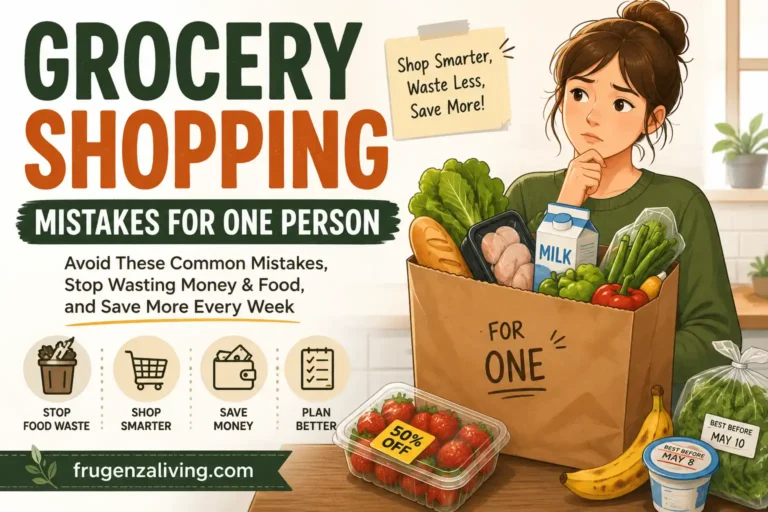
You buy groceries on Sunday and feel like you finally have things under control.
Then Thursday comes.
The greens are wilting. The fresh ingredients for that “easy” recipe are still untouched. The snacks are disappearing faster than the actual meals. You open the fridge, see food, and still feel like ordering takeout because nothing feels simple enough to eat.
That is why grocery shopping mistakes for one person are not always price mistakes. For one person, a grocery mistake is often food with no timing, no backup plan, or no realistic moment to be eaten.
The real problem is not that you are bad at budgeting. The problem is that your cart may be built for Sunday motivation, while your meals have to survive Thursday energy.
The Sunday Cart vs. Thursday Energy Problem
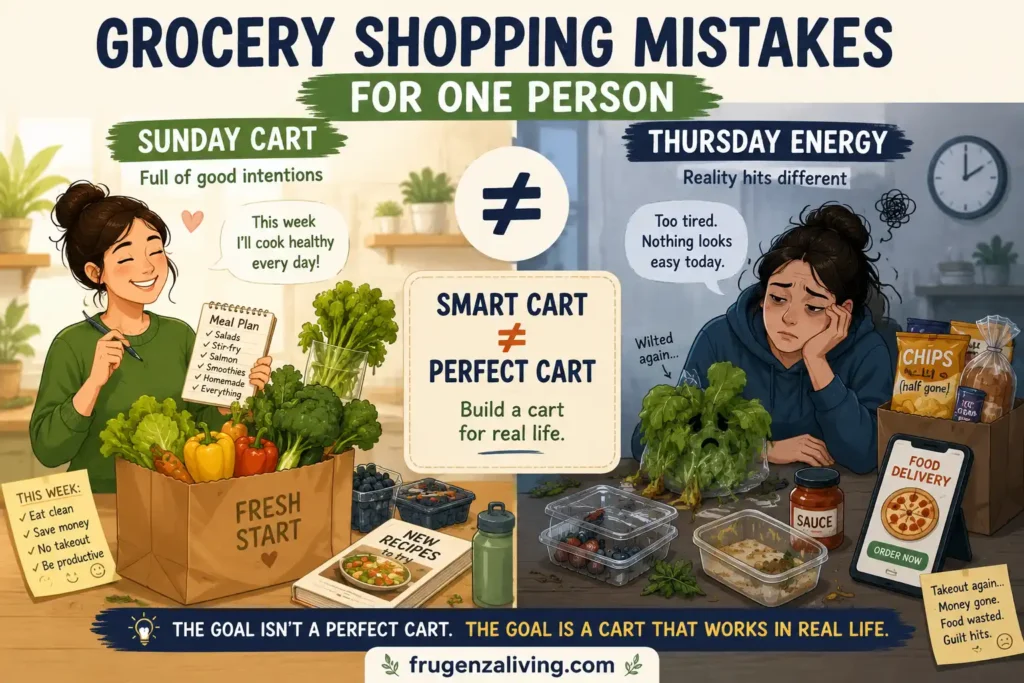
Most grocery spending problems do not start at checkout. They start with the version of yourself you imagine while shopping.
On Sunday, you may feel motivated enough to:
- cook several fresh meals
- chop vegetables
- try new recipes
- eat every leftover
- avoid convenience food
- use every ingredient perfectly
But later in the week, life may look different.
You may work late. You may feel tired. You may not want a full meal. Plans may change. Your appetite may shift. Your fridge may be full, but not full of food that feels easy.
That mismatch creates many grocery shopping mistakes when living alone. You do not just need cheaper food. You need food that matches your storage space, cooking energy, appetite, and schedule.
A grocery cart for one person should answer one simple question:
Will I still want to eat this when I am tired, busy, or not in the mood to cook?
If the answer is no, the item may become waste even if it looked like a smart purchase in the store.
Do These Grocery Mistakes Sound Familiar?
Use this quick self-check before reading the full list.
- You buy groceries but still order takeout.
- You throw away the same fresh food every week.
- You buy ingredients for recipes you never make.
- You go to the store for one item and leave with five.
- You buy bulk food because it is cheaper per unit, then waste part of it.
- You buy “healthy” foods that do not match your actual routine.
- Your grocery bill feels high because household supplies are mixed in.
- You forget to buy an easy meal for tired nights.
If you checked 1–2, fix one small leak this week.
If you checked 3–4, your grocery cart probably needs a simpler structure.
If you checked 5 or more, start with fewer fresh items, fewer extra trips, and one backup meal before changing your whole food budget.
This is not about being perfect. It is about finding the grocery pattern that keeps repeating.
A simple one-person grocery list can prevent you from buying ingredients that do not fit your meals.
Use the checklist below to find the grocery mistake that is costing you the most money right now. You do not need to fix everything at once. Start with the leak that repeats most often.
Grocery Mistake Self-Check
What Is Your Biggest Grocery Shopping Mistake?
Check the patterns that happen most often when you grocery shop for one person. Then use the result below to choose what to fix first.
This quick checklist helps you spot common grocery shopping mistakes for one person, including food waste, bulk buying traps, impulse trips, and tired-night takeout.
Do not fix every grocery mistake at once. Choose one repeating leak, repair it this week, and review what changed before your next grocery trip.
Once you know your biggest leak, the next step is not to create a perfect grocery system. The next step is to repair the one mistake that keeps repeating.
Avoiding mistakes is only one part of learning how to save money on groceries for one person consistently.
9 Grocery Shopping Mistakes for One Person
1. Buying Too Much Fresh Food at Once
Why it happens: Fresh food feels responsible. A cart full of vegetables, fruit, and fresh protein can make you feel like you are making a smart choice.
Why it wastes money: One person may not finish everything before it spoils. Salad greens, berries, herbs, and fresh vegetables often have a short window.
Repair move: Buy one or two fresh items for the early part of the week. Use frozen vegetables, potatoes, carrots, cabbage, or pantry staples for later meals. If you waste spinach every week, stop buying the large container and buy a smaller fresh item plus one frozen vegetable.
2. Treating Bulk Deals Like Automatic Savings
Why it happens: Bulk deals look cheaper because the price per ounce is lower.
Why it wastes money: Bulk only saves money if you can finish, freeze, or store the item before it goes bad or before you get tired of eating it.
Repair move: Ask, “Can I finish or freeze this before I get bored of it?” Bulk rice, oats, pasta, and frozen vegetables may work well. Bulk salad greens, fresh berries, bread, and large dairy containers can become expensive waste for one person.
3. Buying Ingredients for a Version of Yourself Who Cooks More
Why it happens: You see a recipe, imagine a productive cooking week, and buy everything it requires.
Why it wastes money: Aspirational groceries often sit unused. A sauce, herb, spice, or fresh ingredient may work for one recipe but not for meals you already make.
Repair move: If a recipe needs six new ingredients, skip it unless at least three can be reused in meals you already eat. For example, tortillas, eggs, rice, salsa, and frozen vegetables can work across several meals. A specialty sauce used once may not be worth it.
4. Shopping Without a Tired-Night Meal
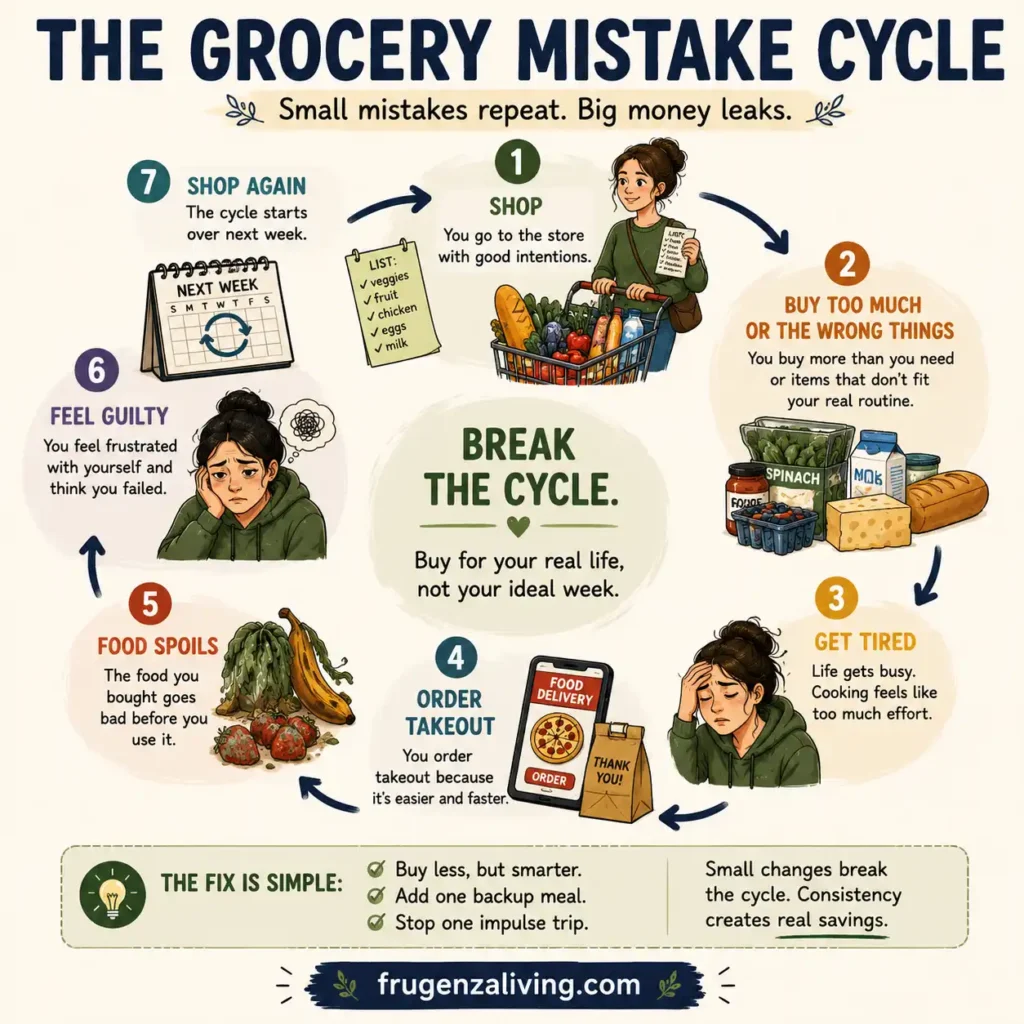
Why it happens: Your grocery cart may look healthy but still lack low-effort food.
Why it wastes money: When cooking feels too hard, takeout becomes the backup. This is one of the most common grocery shopping mistakes for singles because a full fridge does not always mean an easy meal.
Repair move: Always buy one emergency meal. Good options include canned soup, eggs and toast, pasta and sauce, a frozen meal, rice and beans, or a simple wrap. This is not failure food. It is protection against tired-night spending.
A Mid-Cart Checkpoint
The first four mistakes usually create waste. The next five usually create repeat spending.
Before adding anything else to your cart, make sure you have:
- one fresh item you will use early
- one flexible staple
- one planned snack
- one tired-night meal
That small checkpoint fixes several grocery shopping mistakes that waste money because it gives your cart structure before impulse items take over.
A budget-friendly grocery list can help you save money on groceries without making every meal feel repetitive.
5. Making Every Meal Too Different
Why it happens: Variety feels exciting. You may want different breakfasts, lunches, dinners, and snacks.
Why it wastes money: Too many unique meals require too many separate ingredients. This creates half-used sauces, leftover herbs, and random items you forget.
Repair move: Choose overlap ingredients. Rice can work with beans, eggs, tuna, vegetables, or salsa. Tortillas can become wraps, quesadillas, breakfast tacos, or quick pizzas. One flexible ingredient should help at least two meals.
The Two Mistake Combinations That Cost More Than Either Mistake Alone
Most grocery mistakes are described one at a time.
In practice, they tend to arrive in pairs.
When two mistakes happen in the same trip, they do not just add up. They compound each other — and the result is usually more expensive than fixing one while leaving the other in place.
Combination 1: Buying too much fresh food + taking too many extra trips.
This is the most common and most expensive grocery mistake combination for one person.
The first trip has too many fresh items. By Wednesday, not everything has been used. The greens are starting to wilt. There are still three items from Sunday that needed to be cooked by now.
Then Thursday brings a “quick” trip for one missing thing. The fresh produce from Sunday is still in the fridge — which the Thursday version of you does not fully account for — and the Thursday cart adds more fresh items on top.
Now there are two overlapping fresh windows competing against each other and one set of groceries almost certainly becoming waste.
The interaction makes both mistakes worse. The extra trip would have been harmless if Sunday’s cart were smaller. Sunday’s fresh food would have been manageable if there were no Thursday trip adding to it. Together, they create waste that neither would produce on its own.
The repair for this combination is not just “buy less” or “skip the extra trip.” It is to connect them: before any additional trip, check what fresh items are still in the fridge from the last trip. If something is still there and was supposed to be eaten already, that item becomes the next meal — not something new.
Combination 2: Buying aspirational ingredients + shopping without a tired-night meal.
This combination produces the most consistent takeout spending for one person.
Aspirational ingredients require energy, planning, and motivation to turn into meals. Tired nights produce none of those things. When they arrive together in the same fridge, the aspirational ingredients sit untouched and the tired-night meal does not exist.
The result is not just one takeout order — it is the pattern where takeout replaces the dinner that the aspirational ingredients were supposed to become, while those ingredients continue waiting in the fridge until they are thrown away. One mistake drives spending. The other drives waste. Together, they do both.
The repair for this combination requires a specific order of priority: the tired-night backup meal gets added to the cart before any aspirational ingredient. If there is room in the budget for one specialty item, it comes after the emergency fallback is already secured, not before.
If the cart does not yet have canned soup, eggs and bread, or a simple frozen meal, it does not have room for a new recipe ingredient yet.
6. Letting Snacks Be Random Instead of Planned
Why it happens: Snacks often get added while walking through the store.
Why it wastes money: Random snacks inflate the bill quickly. They also compete with the food you already bought for meals.
Repair move: Choose one sweet snack and one filling snack before shopping. For example, popcorn plus yogurt, fruit plus peanut butter toast, or crackers plus cheese. Planned snacks reduce aisle decisions and make impulse snacks less tempting.
7. Taking Too Many “Quick” Grocery Trips
Why it happens: A small trip feels harmless. You only need one thing.
Why it wastes money: Quick trips often turn into impulse spending. A drink, snack, bakery item, or “just in case” purchase can sneak into the basket.
Repair move: Use one main grocery trip and, if needed, one mini fresh-food trip. For mini trips, use a two-item rule: one fresh item and one missing staple, nothing else. Avoid browsing trips when you are bored, tired, or hungry.
8. Counting Household Supplies as Food Spending
Why it happens: Grocery receipts often include more than food.
Why it wastes money: Paper towels, detergent, shampoo, pet food, and cleaning products can make your grocery spending look much higher than your actual food spending.
Repair move: Separate food-only groceries from household items. If your grocery bill feels too high, first check what is actually food. This guide on how much a single person should spend on groceries can help you compare food spending more clearly.
9. Ignoring the Food You Throw Away Every Week
Why it happens: Food waste is easy to ignore. You throw something away and move on.
Why it wastes money: Waste repeats when you do not notice the pattern. My repeat waste used to be the same kinds of items: greens I planned to use, extra fresh ingredients for one recipe, and snacks I bought because I walked into the store tired.
Repair move: Write down the top three items you waste most often. Then buy less, buy frozen, choose smaller packs, or stop buying that item until you have a realistic plan.
For more help with storage and food waste, read this guide on how to make groceries last longer.
The 3-Question Cart Test
Before checkout, pause for a quick cart test.
Ask:
- When will I eat this?
- What else can I use it with?
- Can I freeze it or keep it long enough?
If you cannot answer at least one of these questions, pause before buying. This test prevents most budget grocery shopping mistakes because it forces each item to have a real job.
A Simple Reset After a Bad Grocery Week
A bad grocery week does not mean you failed. It means your system needs one small repair.
Do a 10-minute grocery reset:
- What did I throw away?
- What did I buy but not use?
- Which trip caused impulse spending?
- Which meal was too much effort?
- What backup meal would have helped?
- What should I buy less of next week?
The goal is not to shame yourself. The goal is to find the repeat leak.
Maybe you need less fresh food. Maybe you need one frozen meal. Maybe you need fewer snacks. Maybe you need a smaller grocery list. Small repairs can save more money than trying to rebuild your entire food routine overnight.
The Grocery Mistake That Changed How I Shop
I used to buy fresh vegetables for several “healthy” meals.
At checkout, that looked responsible. Later in the week, it looked different. The food was still there, but it did not feel easy. I would open the fridge, see ingredients that required effort, and still want convenience food.
That was when I realized something important:
A cart is not cheap if it still pushes you toward takeout.
The repair was simple. I bought fewer fresh items, chose more flexible staples, kept frozen backups, and made sure there was always one tired-night meal.
That became my grocery rule:
A cheap grocery cart is only cheap if it becomes food you actually eat.
Final Thoughts: Fix the Pattern, Not Just the Receipt
The biggest grocery shopping mistakes for one person usually come from mismatch.
You buy too much fresh food. You trust bulk deals too easily. You buy ingredients for a version of yourself who cooks more. You forget the tired-night meal. You take too many small trips. You throw away the same foods again and again.
You do not need to fix everything at once.
Choose one or two mistakes to repair this week. Buy less fresh food. Add one backup meal. Stop one impulse trip. Track one item you keep wasting.
For a full shopping system, read this guide on how to grocery shop for one person on a budget.
The goal is not a perfect grocery trip. The goal is a cart that still makes sense when normal life happens.
Questions People Ask Before Their Next Grocery Trip
What are the biggest grocery shopping mistakes for one person?
The biggest grocery shopping mistakes for one person include buying too much fresh food, trusting bulk deals too easily, buying ingredients for a cooking routine you do not actually follow, skipping backup meals, taking too many extra trips, and not tracking food waste.
Why do groceries go to waste when you live alone?
Groceries often go to waste when you live alone because package sizes are too large, fresh food spoils before you finish it, and cooking motivation changes during the week. One person also uses ingredients more slowly than a household with multiple people.
Is buying in bulk a mistake for one person?
Buying in bulk is not always a mistake, but it can become one if you cannot finish, freeze, or store the food before it goes bad. Bulk works better for shelf-stable staples like rice, oats, pasta, beans, or frozen vegetables.
How can one person grocery shop without wasting food?
One person can grocery shop without wasting food by buying fewer fresh items, choosing flexible staples, using frozen foods, keeping one emergency meal, and reviewing what gets thrown away each week.
What should one person avoid buying too much of?
One person should be careful with giant salad containers, fresh herbs, bulk snacks, large bread packs, large dairy containers, berries without a plan, and ingredients that only work for one recipe.
How can I stop spending too much on groceries when living alone?
Start by finding your repeat leak: the food you waste, the trip that causes impulse buys, or the night you usually order takeout. Then repair one pattern at a time instead of cutting your entire grocery budget at once.

The ideas shared here come from real-life experience and practical habits that actually work.
→ Read more about Jeffi
- No Spend Month Challenge for Beginners: A 30-Day Plan - September 24, 2026
- Low Buy Month Challenge: Realistic Rules for 30 Days - September 23, 2026
- How to Stop Buying Groceries You Already Have - September 20, 2026