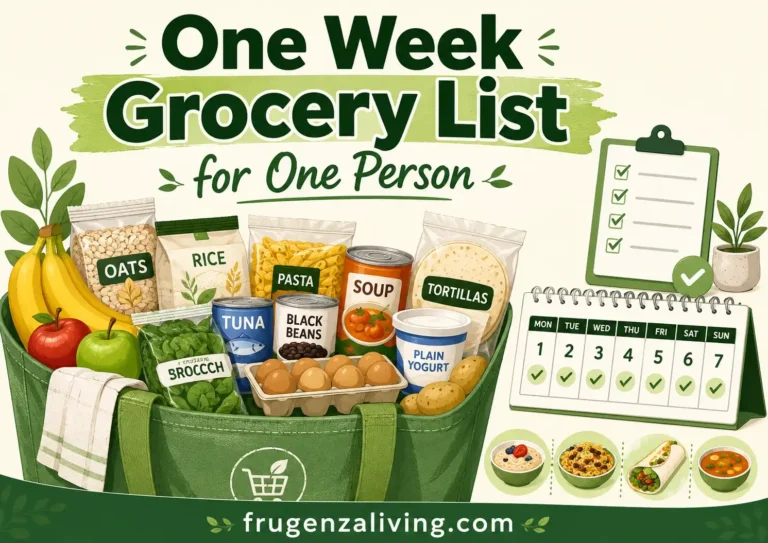
This one week grocery list for one person includes starting quantities, meal ideas, and a printable shopping checklist. It uses eggs, beans, tuna, oats, rice, pasta, bread, vegetables, and fruit, with several ingredients shared across meals.
The example below allocates food to seven breakfasts, seven lunches, and seven dinners. Treat those as planning slots, not a guarantee that the portions fit your needs.
Adjust for your appetite, dietary requirements, and meals away from home. Check what you already have before buying full packages.
Copy This 1-Week Grocery List
Start with this basket, then subtract what is already in your kitchen. The package sizes are examples, not a rule to buy larger amounts. A smaller package can be the better purchase if it costs less overall and still covers your planned meals.
One-Person Weekly Shopping Checklist
Cross off food you already have. Quantities below match the example meals, but your portions and package sizes may differ. Basic cooking oil, salt, pepper, water, and seasonings are assumed to be available; add them if needed.
| Food | Buy if needed | Planned use |
|---|---|---|
| Eggs | 12 large eggs | 6 for breakfasts; 6 for three egg-based dinners. |
| Canned tuna | 2 cans, about 5 oz (140 g) each | Two sandwich lunches. Drain before using. |
| Canned beans | 3 cans, about 15 oz (425 g) each | One can for two lunches; one for two pasta dinners; one for two rice dinners. Can weights include liquid. |
| Plain yogurt | 32 oz (about 900 g) | 16 oz across four oat breakfasts; the other 16 oz for snacks. |
| Rolled oats | One 18 oz (about 510 g) container | Use 2 dry cups across four breakfasts; keep the remainder for another week. |
| Dry rice | One 1 lb (about 450 g) bag | Use 2 dry cups across four rice bowls; check your package for yield. |
| Dry pasta | One 16 oz (about 450 g) package | Use 6 oz (about 170 g) across two dinners; keep the rest dry. |
| Bread | One loaf with at least 16 usable slices | 6 slices for egg breakfasts, 4 for tuna sandwiches, 4 for peanut butter toast, and 2 with soup. |
| Potatoes | 2 lb (about 900 g) | Use 1.5 lb across two dinners and the remaining 0.5 lb with an omelet. |
| Fresh spinach | One 5 oz (about 140 g) bag | Split between two pasta dinners soon after shopping. |
| Carrots | 1 lb (about 450 g) | 8 oz with tuna lunches, 4 oz in lunch rice bowls, and 4 oz with the omelet. |
| Frozen vegetables | Two 12 oz (about 340 g) bags | One bag for two egg-and-potato dinners; one for two rice dinners. |
| Bananas | 7 | 4 for oat breakfasts, 2 for peanut butter toast lunches, and 1 extra. |
| Apples | 4 | Fruit to add to meals or snacks. |
| Peanut butter | One 16 oz (about 450 g) jar, if needed | Use about 12 tablespoons across the oat breakfasts and toast lunches; keep the rest. |
| Tomato pasta sauce | One 24 oz (about 680 g) jar, if needed | Use about 1 cup across the pasta dinners and 1 cup across the dinner rice bowls. Follow the label for the opened remainder. |
| Shelf-stable soup | One 18–19 oz (about 510–540 g) can | One quick lunch with toast; check the label and your usual portion. |
Already have: ___________________________________
Portion changes or substitutions: _____________________
Meals away from home: ______________________________
The button opens your browser’s print dialog. Choose Save as PDF if your device provides it. The checklist may use more than one page.
The list assumes access to a refrigerator, a freezer, and basic cooking equipment. Several dry staples will remain after the week. Keep usable food for later; finishing every package is not the goal. If you need larger meals, increase portions before shopping rather than treating these amounts as a limit.
For help choosing package sizes and avoiding unnecessary purchases, see how to grocery shop for one person on a budget.
What This Grocery List Can Make
The quantities above can be organized into seven breakfasts, seven lunches, and seven dinners. The table shows the ingredients for one meal; repeat that meal the number of times listed. Adjust portions to your needs and arrange the meals around your schedule.
Rice, oats, and pasta are measured dry. Potato and vegetable weights are before cooking. For each 15 oz can of beans, drain it and divide the beans equally between the two meals that use it.
| Meal | Number of meals | Ingredients per meal |
|---|---|---|
| Breakfast | 4 | Oats with banana, peanut butter, and yogurt: ½ cup dry oats, 1 banana, 2 tbsp peanut butter, and 4 oz yogurt. |
| Breakfast | 3 | Eggs on toast: 2 eggs and 2 bread slices. |
| Lunch | 2 | Tuna sandwich with carrots: 1 tuna can, drained, 2 bread slices, and 4 oz carrots. For a creamy filling, use a little yogurt from the amount reserved for snacks. |
| Lunch | 2 | Peanut butter and banana toast: 2 bread slices, 2 tbsp peanut butter, and 1 banana. |
| Lunch | 2 | Bean-and-rice bowl with carrots: half the beans from one can, ½ cup dry rice, and 2 oz carrots. |
| Lunch | 1 | Soup with toast: 1 soup can and 2 bread slices. This quick meal is already included in the seven lunches. |
| Dinner | 2 | Bean-and-spinach pasta: 3 oz dry pasta, half the beans from one can, 2.5 oz spinach, and about ½ cup tomato sauce. |
| Dinner | 2 | Eggs, potatoes, and vegetables: 2 eggs, 12 oz potatoes, and 6 oz frozen vegetables. |
| Dinner | 2 | Bean-and-rice bowl with vegetables: half the beans from one can, ½ cup dry rice, 6 oz frozen vegetables, and about ½ cup tomato sauce. |
| Dinner | 1 | Omelet with potatoes and carrots: 2 eggs, 8 oz potatoes, and 4 oz carrots. |
Four apples, one banana, and about 16 oz of yogurt remain for snacks or additions to meals, before any yogurt used in the tuna filling. Some oats, rice, pasta, peanut butter, and possibly bread will also remain. Use more if these example portions are smaller than you normally eat.
Schedule the spinach meals soon after shopping. Cook smaller batches or freeze later portions promptly, following the storage guidance below. Planning seven days of meals does not mean keeping all seven days of cooked food in the refrigerator.
Need help turning meal ideas into a daily schedule? This weekly meal plan for one on a budget offers a separate seven-day example. Its ingredients differ from this basket, so choose your meals and adjust the shopping list before combining the two.
How to Estimate the Cost of This Grocery List
Your checkout total depends on local prices, package sizes, and the food already in your kitchen. Add the prices of the packages you actually need, including any missing cooking oil, seasonings, or substitutions.
Keep the checkout total separate from the cost of the food used this week. As a calculation example, suppose the 16 oz pasta package costs $2. You pay $2 at checkout, while the 6 oz used in the two pasta dinners accounts for $0.75 of that purchase. The remaining 10 oz accounts for $1.25 and stays in your pantry for later. These are illustrative prices, not a verified store quote.
Food you already own reduces what you need to buy today, but it was not necessarily free. Check both your available cash and the supplies you will need to replace later. If the basket exceeds your budget, remove duplicate purchases and ingredients for meals you will eat elsewhere, then compare suitable substitutions.
For a broader spending benchmark, see how much a single person should spend on groceries. For practical ways to lower future bills, read the guide to saving money on groceries for one person.
The F.F.B. Rule: Fresh First, Frozen Later, Backup Always
Use F.F.B. as a planning reminder, not a fixed shelf-life rule. Give the most perishable ingredients an early meal, keep frozen food available for later, and choose one quick meal for your busiest day.
- Fresh first: in this example, schedule the spinach pasta soon after shopping. Follow storage instructions and assess the food’s condition; no weekday guarantees that produce will remain usable.
- Frozen later: frozen vegetables let you take out only what you need. You can use them on day one too; they do not have to wait until the second half of the week.
- Backup always: soup and toast provide the quick meal already counted in the list. If plans change, choose another safe, available meal and update the food you still need to use.
For more low-cost substitutions, compare the options in this cheap grocery list for one person, then bring only the replacements you need into your weekly list.
Shop Close to When You Will Use Fresh Food
There is no single best shopping day for everyone. Choose a trip that fits your schedule and lets you refrigerate groceries promptly. Count the time between buying a perishable item and using it, rather than assuming weekend shopping makes it last longer.
If you need spinach for Thursday dinner, buying it on Wednesday puts less time between purchase and use than buying it the previous Sunday, assuming comparable freshness and storage. Package instructions, the food’s condition, and handling still matter.
Before leaving, count the breakfasts, lunches, and dinners you will eat at home. If two lunches are provided at work, remove those meals from the allocation before reducing quantities. Keep ingredients that another planned meal still uses.
Adjust the List Without Rebuilding It
Change a meal first, then update every ingredient it uses. That is more reliable than adding extra foods to an unchanged basket.
- Two fewer lunches at home: if you remove the two tuna lunches, remove the two tuna cans and reallocate the four bread slices and 8 oz of carrots. Buy smaller packs only when they still cover the remaining meals and make sense at checkout.
- No tuna: replace the two tuna lunches with a bean-based sandwich filling you already like. Add the ingredients needed for that filling and remove the tuna; do not buy both automatically.
- Different appetite: increase the rice, pasta, potatoes, protein, produce, or other foods you actually need. Use the extra dry ingredients already in the basket before adding another unrelated recipe.
- No freezer: replace frozen vegetables with shelf-stable or fresh options that suit your meals and storage. Buy bread in an amount you can use, and cook smaller batches instead of relying on frozen portions.
- Different dietary requirements: replace the relevant meals and check the quantities again. A swap may change the cost, ingredients, and portion sizes; it is not automatically nutritionally equivalent.
What Not to Buy Too Much of for One Week
Before checkout, give each fresh item a meal and each larger package a storage plan. Review extra salad greens, herbs for one recipe, large dairy containers, and bread you cannot finish or freeze.
For a new ingredient, ask whether a second planned meal uses it or whether it stores well for later. If neither applies, choose a smaller amount or a recipe that uses food already on your list. The aim is to avoid waste without cutting meals below what you need.
For more examples of purchases that create avoidable waste, see these grocery shopping mistakes for one person.
How to Store Food for the Rest of the Week
Freeze bread you will not use soon, keep dry staples sealed, and follow package instructions for yogurt, opened sauce, and other refrigerated foods. Prioritize perishable produce, but do not assume that fresh food is safe for a fixed number of days simply because it appears in a weekly list.
For cooked meals, USDA food-safety guidance recommends refrigerating promptly in shallow containers, within two hours, or within one hour above 90°F (32°C). Keep the refrigerator at 40°F (4°C) or below, use most cooked leftovers within three to four days, and freeze portions needed later. Reheat leftovers to 165°F (74°C), checking with a food thermometer.
Label cooked portions with the preparation date. A meal planned for day seven should be freshly prepared or appropriately frozen and reheated, not simply kept in the refrigerator since day one.
Check the List Before You Shop
Count your meals at home, cross off usable food you already own, and check the quantities against the meals you plan to cook. Then add the actual package prices and make sure perishable food has a timely use. Print the checklist above and change the amounts to fit your week.
FAQ
What should be on a one week grocery list for one person?
Start with foods that share ingredients across your meals. The example above uses eggs, tuna, beans, yogurt, oats, rice, pasta, bread, potatoes, vegetables, fruit, peanut butter, tomato sauce, and one soup meal. Check the quantities and remove items you already have.
How much food should one person buy for a week?
Count the meals you will eat at home and multiply your usual portions by the number of times you plan to eat them. In this example, three breakfasts and three dinners each use two eggs, for a total of twelve eggs. Change the meal allocation before changing the shopping quantity.
Do I need to buy every item again next week?
No. Dry oats, rice, pasta, peanut butter, and other usable food may carry over. Check what remains and subtract it from your next list. Buy a full package again only when the available amount is insufficient for the new plan.
Can I prepare all seven days of food at once?
You can plan the week in one session, but do not assume all cooked food can stay refrigerated for seven days. Cook smaller batches or freeze later portions promptly, following the storage guidance above.
This article is for general financial education and practical grocery planning only. Food prices, dietary needs, and store access vary by location.

Read about Jeffi and Frugenza Living
- Shop Your Closet Challenge: A Week of Wearable Outfits - October 5, 2026
- 7 Cheap Things to Do Alone on a Weekend - October 4, 2026
- 8 Cheap Girls’ Night Ideas at Home Without a Big Shopping List - October 4, 2026
Am excited to start taking my grocery money habits more seriously use this!! Thank you for the easy to print template and food ideas.
That’s so exciting to hear! Taking grocery spending seriously is one of the best first steps you can take — small changes there really do add up over time. So glad the template and food ideas are helpful. Wishing you all the best on your frugal living journey!