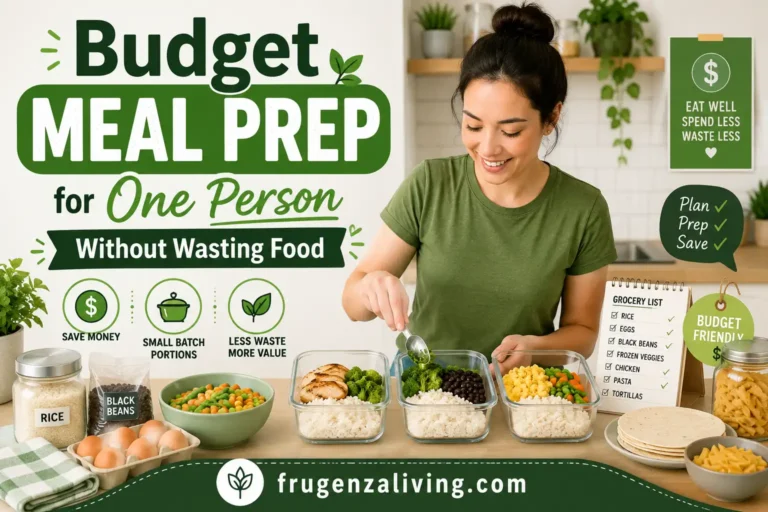
Meal prep for one sounds smart until it turns into five identical containers, boredom by Wednesday, forgotten leftovers, and takeout anyway.
That is why budget meal prep for one person needs to be different from family meal prep or fitness-style bulk cooking.
The goal is not to prep a full week of the same meal.
The goal is to prep small parts that make cheap meals easier: a base, a protein, a few vegetables, one sauce, and a backup meal for tired nights.
Done this way, meal prep can help you waste less food, spend less on takeout, and make cooking for one feel less exhausting.
What Is Budget Meal Prep for One Person?
Budget meal prep for one person is a small-batch system that helps one person prepare affordable food ahead of time without making too much.
Instead of cooking seven full meals at once, you prep 2–3 days of flexible ingredients. That might mean cooked rice, boiled eggs, beans, chopped vegetables, a simple sauce, or one freezer backup meal.
This works better because one person usually needs flexibility.
A good meal prep system should help you:
- avoid takeout
- use cheap ingredients
- reduce food waste
- eat leftovers safely
- keep meals interesting enough to repeat
The goal is not perfect meal prep. It is having enough ready food to make the cheaper choice easier.
One reason meal prep works so well is that it helps you reduce grocery spending before food gets wasted.
Why Meal Prep for One Person Is Different
Most meal prep advice feels designed for families, bodybuilders, or people who enjoy eating the same meal every day.
But when you are cooking for one, too much prep can backfire.
You may get bored quickly. Full batches create too many leftovers. Fresh ingredients can spoil before you use them. And if the food does not look appealing after two days, takeout starts to feel better again.
That is why meal prepping for one person should be smaller and more flexible.
The solution is not bigger prep.
The solution is smarter prep.
Instead of preparing seven identical containers, focus on components you can mix in different ways.
The 2-2-1 Solo Meal Prep System
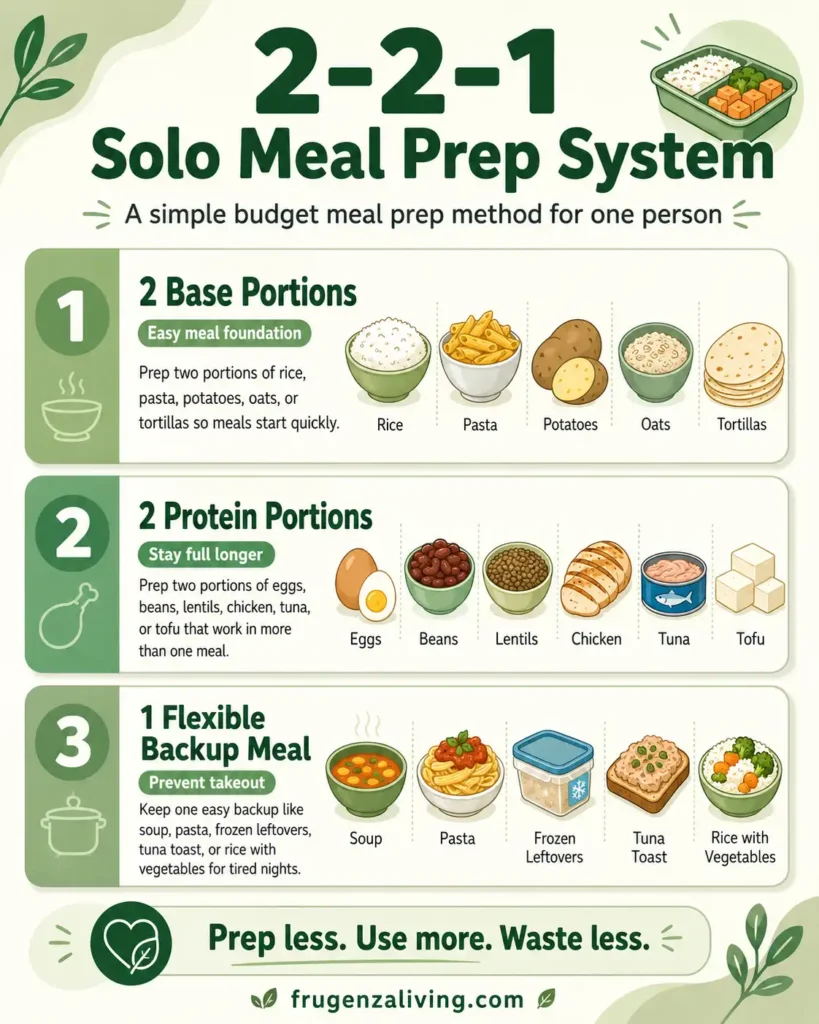
Use this simple system:
2 base portions + 2 protein portions + 1 flexible backup meal
This system gives you structure without locking you into the same meal every day.
You prep just enough to make cooking easier, but not so much that your fridge becomes full of food you no longer want.
Keeping one or two prepared meals in the refrigerator or freezer can make it easier to avoid ordering takeout after a long day.
When to Meal Prep for One Person (And Why Timing Matters More Than You Think)
Most meal prep advice tells you what to cook.
Almost none of it tells you when to cook it — and for one person, that gap is significant.
For a family, one person can prep while another handles something else. For one person, prep requires your full attention, your energy, and the right amount of information about what the coming week actually needs. When any of those three are missing, prep either does not happen or produces food that does not get used.
There are two timing mistakes that repeat consistently for solo meal preppers.
The first is prepping on Sunday morning before you know what the week looks like.
Sunday morning feels logical because the week has not started yet. But if you do not know what days will be busy, what ingredients you have left, or whether you will be eating at home every night, you end up prepping for a week that does not match what actually happens. You make five portions of something and then have three social dinners and two late nights, and the containers sit untouched.
The second is prepping on a weekday evening when energy is already depleted.
Weekday prep tends to happen out of guilt rather than readiness. You realize you have nothing for tomorrow, so you cook when you least want to. The result is usually rushed, minimal, and not satisfying enough to repeat next week.
The timing that tends to work better for one person is a short prep session after the first grocery trip of the week, whenever that happens — not tied to a specific day, but tied to a specific trigger.
The logic is simple: you already have the ingredients in front of you, you already made one decision about what to buy, and the activation energy to do a small prep is at its lowest point because you are already in the kitchen.
That session does not need to be long. Twenty to thirty minutes is enough to cook rice, prepare a protein, and set aside one backup meal. The 2-2-1 system is specifically sized for this window — not a full Sunday cook-up, just enough to make the next two to three days easier.
If you find yourself consistently skipping prep, the most useful question is not “why am I not motivated?” It is “am I trying to prep at the wrong moment in my week?”
Changing the trigger — from a specific day to immediately after grocery shopping — removes the decision of when prep happens, which is usually where the habit breaks.
Prep Components, Not Seven Identical Meals
One person often does better with component prep than full meal prep.
Component prep means preparing parts of meals instead of complete containers.
You might prep:
- cooked rice
- roasted vegetables
- boiled eggs
- beans or lentils
- chopped vegetables
- a simple sauce
- cooked chicken or tofu
Those parts can become different meals.
Rice can become a rice bowl, fried rice, soup, or a wrap filling.
Beans can go into bowls, tortillas, soups, or pasta.
Cooked vegetables can work with eggs, rice, noodles, or soup.
This keeps budget meal prep flexible. You are not forcing yourself to eat the same meal four times. You are giving yourself easy building blocks.
Meal prep works best when it starts with meal planning for one person instead of random cooking.
Use the 2–3 Day Fridge Rule
For one person, 2–3 days of fridge meal prep is usually more realistic than prepping for a full week.
Food may still be safe longer depending on the item, but interest often drops before safety becomes the issue. By day four, even a good meal can start to feel boring.
As a general rule, leftovers can usually be refrigerated for 3–4 days, but they should be cooled, stored, and reheated properly. If you know you will not eat something within that window, freeze it early.
This is also where meal prep freezer meals for one can help, especially when you cook more than you can eat in three days.
Do not wait until food already looks questionable.
The freezer is more useful when you use it before the food becomes a problem.
Meal prep only saves money if you know how to store meal prep food properly and avoid waste.
Cheap Ingredients That Work Well for Meal Prep
Budget-friendly meal prep works best with cheap ingredients that can do more than one job.
Bases:
- rice
- pasta
- oats
- potatoes
- tortillas
Proteins:
- eggs
- beans
- lentils
- tuna
- chicken or tofu
Vegetables:
- frozen vegetables
- carrots
- spinach
- cabbage
- onions
Flavor:
- canned tomatoes
- soy sauce
- salsa
- basic sauces
- spices
Start with what you already eat.
A cheap ingredient is only useful if you know how to turn it into a meal.
For safety, it also helps to follow basic food storage guidelines so your meal prep stays fresh and safe longer
A Simple Budget Meal Prep Example
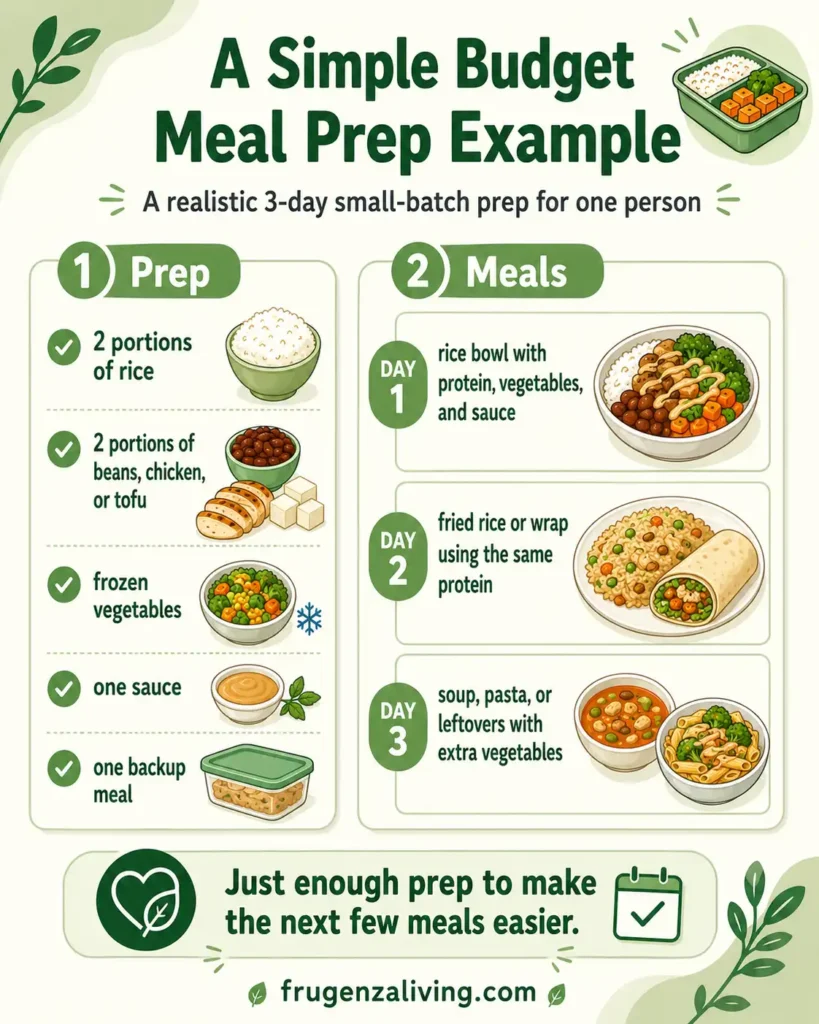
Here is a realistic small-batch prep for one person.
Prep:
- 2 portions of rice
- 2 portions of beans, chicken, or tofu
- frozen vegetables
- one sauce
- one backup meal
Meals:
- Day 1: rice bowl with protein, vegetables, and sauce
- Day 2: fried rice or wrap using the same protein
- Day 3: soup, pasta, or leftovers with extra vegetables
This is not complicated meal prep.
It is just enough prep to make the next few meals easier.
That is usually what prevents expensive last-minute food decisions.
You can keep meal prep affordable by building your meals around budget pantry staples.
How to Avoid Getting Bored With Meal Prep
Boredom is one of the biggest reasons meal prep fails for one person.
Use the remix rule: keep the same base, but change the format, sauce, or topping before you decide you are bored.
For example:
- rice bowl with salsa
- fried rice with egg
- wrap with beans
- soup with leftover vegetables
- pasta with tomato sauce
The ingredients can overlap, but the meals should not feel identical.
Sauces help a lot here. Salsa, soy sauce, tomato sauce, yogurt sauce, hot sauce, or simple seasoning can make the same base feel different.
You do not need ten recipes.
You need a few ways to remix the same ingredients.
This is what makes meal prep for one without getting bored much easier to repeat.
How Budget Meal Prep Saves Money
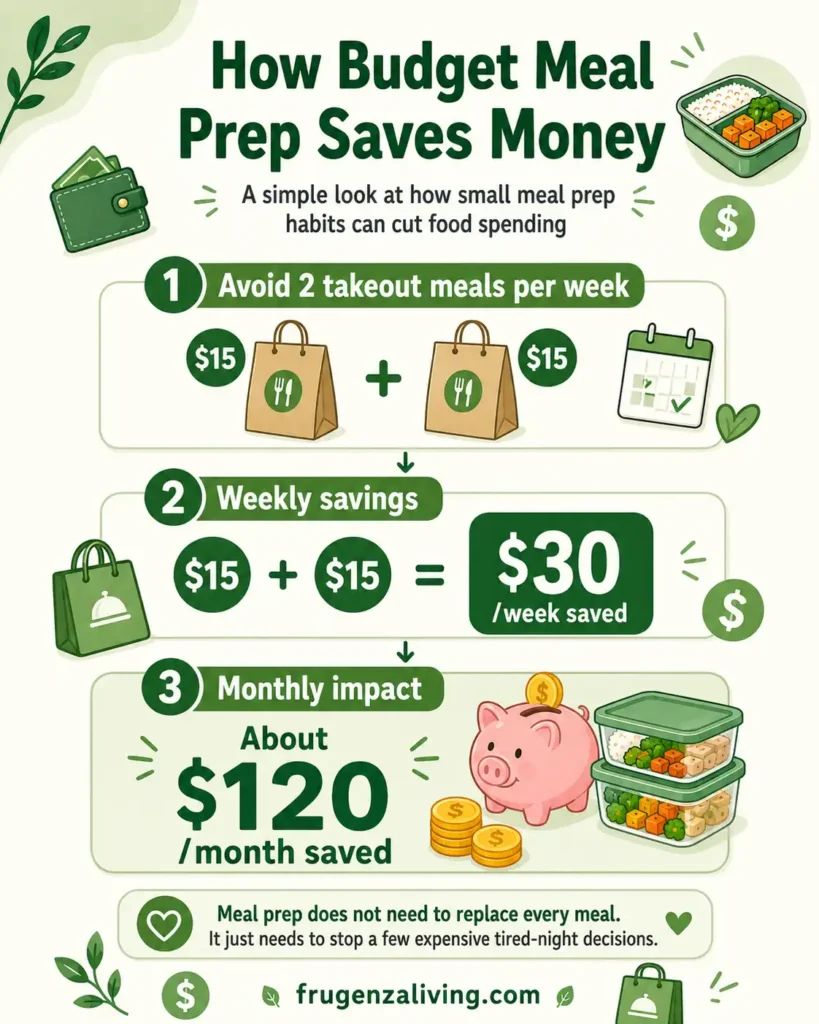
Budget meal prep does not need to replace every meal to save money.
It only needs to stop a few expensive tired-night decisions.
For example, if meal prep prevents two $15 takeout meals per week, that saves $30 per week.
Over a month, that is about $120.
That does not include delivery fees, tips, drinks, or impulse add-ons.
The point is not that takeout is always bad. The point is that having food ready gives you another option when you are tired, hungry, and close to spending more than planned.
Common Meal Prep Mistakes for One Person
Meal prep should make life easier, not fill your fridge with guilt.
Common mistakes include:
- prepping too many identical meals
- cooking family-size portions without a freezer plan
- buying too many fresh ingredients
- not labeling leftovers
- forgetting sauces
- skipping backup meals
- forcing meals you do not enjoy
The biggest mistake is trying to meal prep like someone else.
Your system should match your appetite, schedule, fridge space, and tolerance for leftovers.
If you hate eating the same thing three days in a row, do not build a system that depends on it.
My Simple Rule for Budget Meal Prep for One
I stopped meal prepping like I was feeding a family.
I started prepping small parts I could mix during the week.
That changed everything.
Instead of making five full containers, I made rice, eggs or beans, frozen vegetables, and one easy backup option. Some days it became a bowl. Some days it became fried rice. Some days it became a wrap or soup.
It felt less strict, so I actually used the food.
Small-batch meal prep, reducing takeout, and wasting less food became some of the habits that helped me save over $15,000 in a year.
Your numbers may look different, but a simple meal prep system can still make food spending easier to control.
How This Fits Into Your Save Money System
Budget meal prep works best when it connects with the rest of your food routine.
If you want the bigger weekly structure, a weekly meal plan for one on a budget can help you decide what to eat.
If you need ingredients that make prep easier, cheap pantry staples for one person can help you keep useful basics at home.
If you want more simple ideas, cheap meals for one person can give you low-cost meals to rotate.
If leftovers keep getting wasted, how to make groceries last longer can help you store food better after cooking.
FAQ
How do I meal prep for one person on a budget?
Meal prep for one person on a budget by preparing small batches of flexible ingredients. Start with 2 base portions, 2 protein portions, and 1 backup meal. Use affordable ingredients like rice, eggs, beans, lentils, tuna, pasta, frozen vegetables, and basic sauces.
What are cheap meal prep ideas for one person?
Cheap meal prep ideas for one person include rice bowls, fried rice, pasta with tomato sauce, bean wraps, tuna toast, soup with vegetables, oats with peanut butter, and ramen with egg and frozen vegetables.
How many days should I meal prep for one person?
For one person, 2–3 days of fridge meal prep is usually more realistic than a full week. If you will not eat something within 3–4 days, freeze it early to reduce waste.
How do I meal prep without wasting food?
Meal prep without wasting food by preparing smaller portions, labeling leftovers, freezing food early, using ingredients in multiple meals, and avoiding large batches unless you have a freezer plan.
What ingredients are best for budget meal prep?
Good budget meal prep ingredients include rice, pasta, oats, potatoes, tortillas, eggs, beans, lentils, tuna, chicken or tofu, frozen vegetables, carrots, spinach, canned tomatoes, soy sauce, salsa, and basic spices.
How do I avoid getting bored with meal prep?
Avoid boredom by using the remix rule: keep the same base, then change the format, sauce, or topping. Turn rice into bowls, fried rice, wraps, or soup so the same ingredients feel like different meals.
Can meal prep really save money for one person?
Yes, meal prep can save money for one person if it prevents takeout, reduces food waste, and makes cheap ingredients easier to use. Even avoiding two $15 takeout meals per week can save about $120 per month.
Final Thought: Prep Less, Use More
Budget meal prep for one person does not need to mean seven identical containers.
Start with 2 base portions, 2 protein portions, and 1 backup meal.
Prep less than you think.
Use more of what you make.
Keep your meals flexible enough to repeat.
That is how meal prep becomes realistic for one person.

Read about Jeffi and Frugenza Living
- Proportional Bill Split Calculator for Two Incomes - October 15, 2026
- How to Split Grocery Bills With Roommates - October 14, 2026
- First Apartment Kitchen Essentials on a Budget - October 13, 2026