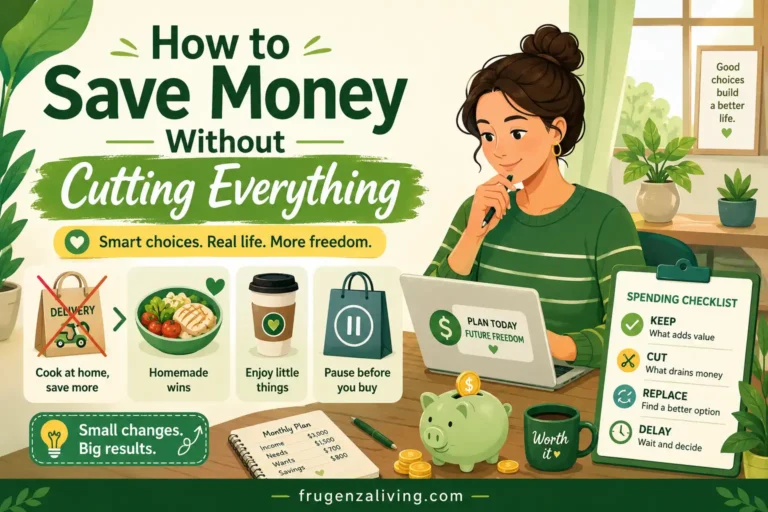
Saving money can sound like you have to remove every enjoyable thing from your life.
No more eating out. No more small treats. No more hobbies. No more comfort. No more fun until your bank account looks better.
That kind of advice might sound disciplined, but it is also why many people quit.
When saving money feels like constant punishment, it becomes hard to repeat. You may cut too much at once, feel restricted, then rebound spend later because the plan feels miserable.
Learning how to save money without cutting everything is different.
It is not about cutting more.
It is about cutting better.
You protect the spending that genuinely matters, reduce low-value spending first, replace expensive habits with cheaper versions, and delay purchases before making emotional decisions.
The goal is not to make your life feel empty.
The goal is to make your spending more intentional.
How Can You Save Money Without Cutting Everything?
You can save money without cutting everything by identifying low-value spending, protecting what truly matters, automating small savings, replacing expensive habits with cheaper alternatives, using simple spending rules, and reducing gradually. The goal is not to remove everything you enjoy, but to save money without feeling restricted.
What “Without Cutting Everything” Really Means
Saving money without cutting everything does not mean you keep every expense.
It means:
- you still spend on what genuinely matters
- you reduce spending that gives little value
- you avoid all-or-nothing rules
- you build savings without constant guilt
If you want to save money without giving up everything, start by separating meaningful spending from low-value spending.
This approach works because it is more realistic.
Most people do not need a life with zero fun.
They need a system that stops money from leaking into things they do not care about.
Cutting Everything Usually Backfires
Cutting everything can feel productive at first.
You cancel plans. You stop buying treats. You avoid every paid activity. You tell yourself you should not spend money on anything unless it is absolutely necessary.
For a few days, it may feel like control.
But after a while, it can create pressure.
You start feeling like saving money means your life is shrinking. That feeling can lead to frustration, guilt, and eventually rebound spending.
You may think, “I have been so good. I deserve something.”
Then one purchase becomes several.
This is why extreme cutting often fails.
Saving money works better when you cut low-value spending first and protect the spending that genuinely improves your life.
You are not trying to remove joy.
You are trying to remove waste.
A less stressful approach is to save money weekly through small changes instead of making one big sacrifice.
The Keep, Cut, Replace, Delay Framework
Use this simple framework when deciding what to do with your spending:
| Action | What It Means | Example |
|---|---|---|
| Keep | Protect what genuinely matters | Keep one meaningful comfort or hobby |
| Cut | Remove low-value spending | Cancel unused subscriptions |
| Replace | Use a cheaper version that still feels good | Replace delivery with easy comfort meals |
| Delay | Wait before buying non-essential items | Use a 24–48 hour waiting rule |
This keeps saving money practical.
You do not have to ask, “What else can I cut?”
You ask, “Should I keep, cut, replace, or delay this?”
You can make progress by building sustainable saving habits instead of relying on strict rules.
Step 1: Keep the Spending That Actually Matters
Before cutting expenses, decide what is worth keeping.
This may sound backwards, but it helps.
If you cut everything enjoyable, your plan may feel too strict. If you keep a few meaningful things, saving becomes easier to maintain.
Choose 1–3 expenses that genuinely improve your life.
For example:
- a gym membership you actually use
- coffee with a close friend
- hobby supplies that help you relax
- one streaming service your family enjoys
- a simple weekend activity that feels meaningful
This is not permission for careless spending.
It is permission to be honest.
Some spending gives you real value. Some spending only fills time, boredom, stress, or impulse.
Keep the first type.
Start cutting the second.
How to Tell If Something Is Worth Keeping (Or Just Familiar)
The hardest part of Step 1 is not choosing what to keep.
It is being honest about why you want to keep it.
Some spending genuinely improves your life. It gives you energy, connection, health, comfort that is real, or a resource you actually use. When you remove it, the absence is noticeable in a way that matters.
Other spending only feels important because it has been there a long time.
A subscription you have had for three years. A habit that started as a treat and became automatic. A premium version of something you would not choose again if you were buying it for the first time today.
This is what behavioral economists call the endowment effect — the tendency to overvalue things simply because you already have them. The longer a spending habit has been part of your life, the harder it feels to remove, regardless of how much value it actually provides.
There is a simple way to tell the difference.
Ask this one question about each expense you are considering keeping:
“If I did not have this right now, would I choose to start it today?”
Not “would I miss it” — because familiarity always feels like loss when something is removed.
Not “is it a reasonable expense” — because almost anything can sound reasonable when you are defending it.
Specifically: would you choose to start it today, knowing what you know, at the current price, given everything else in your life right now?
If yes, it probably belongs in the Keep column.
If the honest answer is no — or “probably not” — it belongs in the Cut or Replace column, even if removing it feels uncomfortable.
The discomfort of removing a familiar expense is real. But discomfort is not the same as value. The two feel almost identical in the moment, which is why this distinction is so easy to skip.
Running this question across two or three expenses before deciding what to keep takes about ten minutes. It does not require a full budget review. It only requires a brief moment of honesty about whether the spending is serving your life or just occupying space in it.
Step 2: Cut Low-Value Spending First
Low-value spending is money you spend but barely miss once it is gone.
This is the best place to start because it does not feel like a major sacrifice.
Examples include:
- unused subscriptions
- duplicate purchases
- random convenience fees
- apps or services you forgot about
- things bought from boredom
- small recurring charges you no longer value
- delivery fees that happen because of poor planning
These expenses are easier to reduce because they do not support your life in a meaningful way.
A simple example:
Canceling a $12 subscription you do not use = $144 saved per year.
That is real money without giving up something important.
The question is not, “Can I cut this?”
The better question is, “Would I miss this if it disappeared?”
If the answer is no, it is probably a good place to save.
You do not need extreme rules, but you do need to stop overspending without feeling restricted.
Step 3: Replace Expensive Habits With Cheaper Versions
Sometimes cutting an expense completely creates an empty space.
That empty space is where rebound spending can happen.
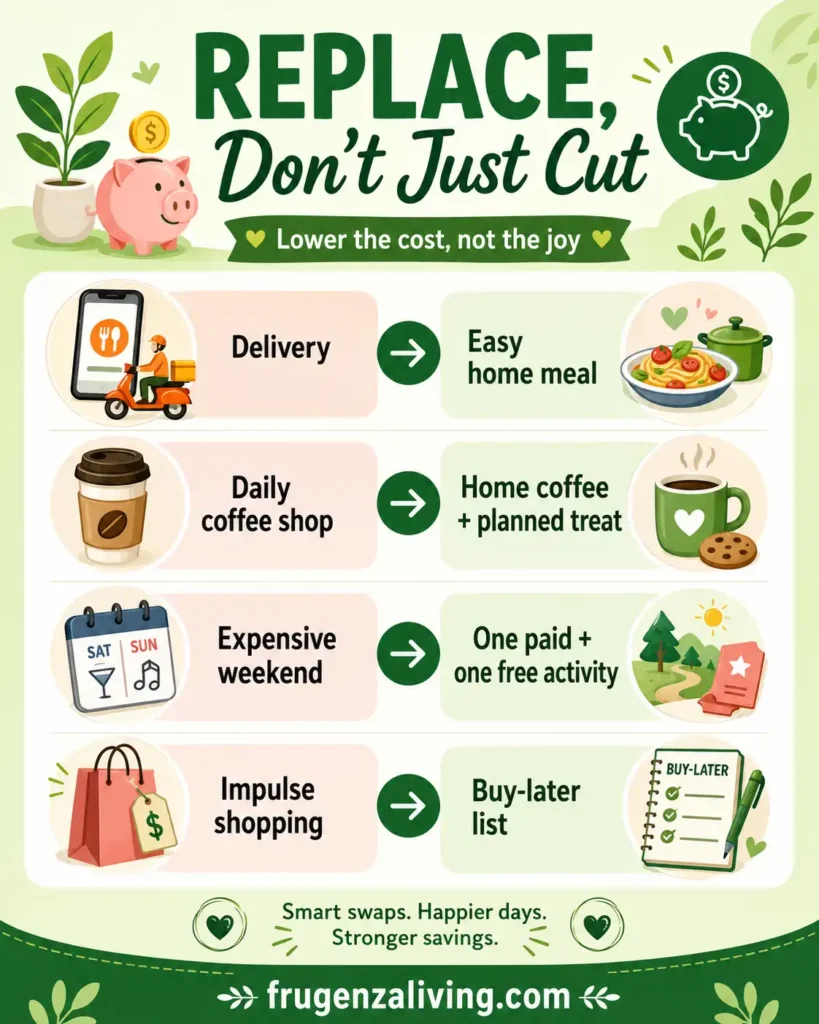
So instead of only removing, replace.
You are not trying to stop enjoying life. You are trying to enjoy life in a less expensive way.
| Instead of Cutting | Try Replacing With |
|---|---|
| Never ordering delivery | Keep easy comfort meals at home |
| No weekend fun | Choose one paid activity and one free activity |
| No coffee shop ever | Make coffee at home most days and plan one coffee out |
| No shopping at all | Use a buy-later list and shop intentionally |
This makes saving money feel less restrictive.
You are not deleting every enjoyable habit.
The real win is finding monthly saving strategies that still let you enjoy your life.
You are lowering the cost of the habit.
That small shift can make the plan much easier to repeat.
Step 4: Delay Purchases Before Saying No
You do not always need to say no immediately.
Sometimes you only need to wait.
A 24–48 hour delay can prevent many impulse purchases. When you want something non-essential, write it down instead of buying it right away.
Use a buy-later list.
After a day or two, ask:
- Do I still want this?
- Will I actually use it?
- Do I already own something similar?
- Is this a need, or just a mood?
Many wants fade once the emotion passes.
This helps you save money without feeling restricted because you are not banning purchases. You are giving yourself time to decide calmly.
If impulse buying is the main issue, how to control spending habits can help you build stronger pauses before spending.
Step 5: Automate Savings So You Do Not Need Willpower
One of the easiest ways to save money without cutting everything is to save before you start spending.
Move a small amount to savings when income arrives.
This could be $10, $25, $50, or whatever fits your situation.
The amount does not need to be impressive. It needs to be realistic.
Automation helps because you do not have to make the decision again and again. The money moves before daily spending absorbs it.
This also makes the rest of your spending feel clearer.
You know something has already been saved, so you can use the remaining money with less guilt.
Just be careful not to automate too much.
If the amount makes your week too tight, you may end up pulling the money back out. Start with an amount you can actually leave alone.
If you want a simple system for this, how to save money weekly can help you build a weekly saving habit.
A Simple Example: Save $150 Without Cutting Everything
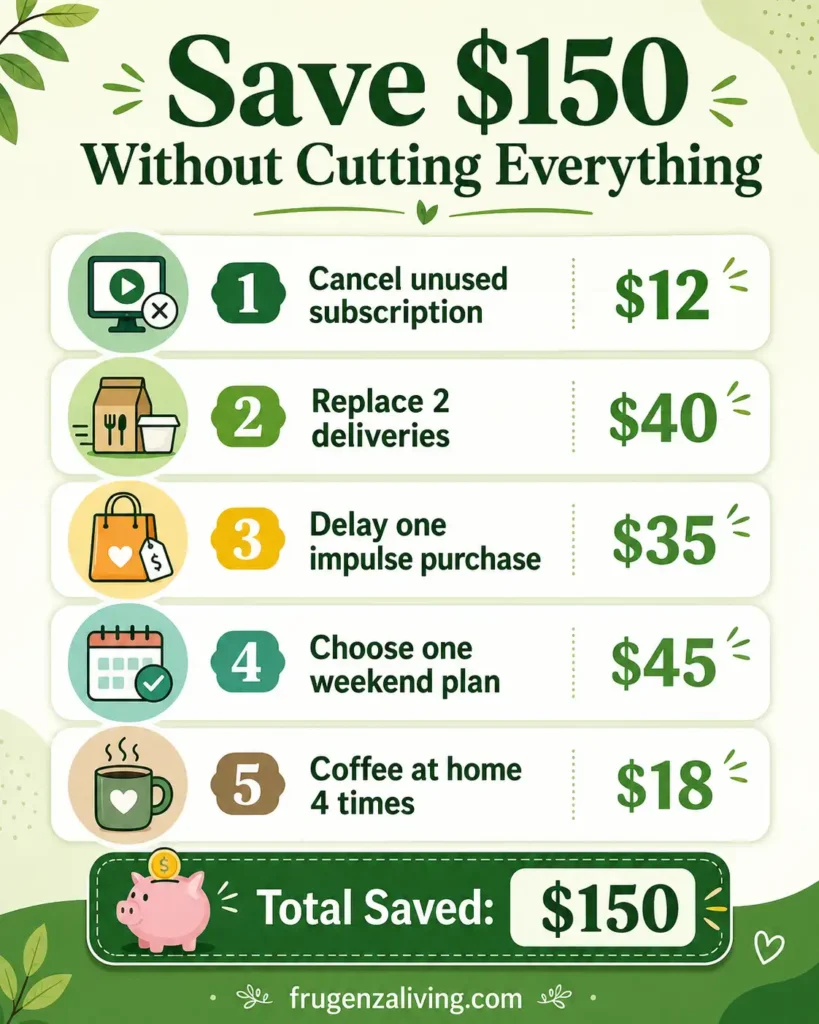
Here is what selective saving can look like in real life:
| Action | Example | Estimated Savings |
|---|---|---|
| Cut | Cancel unused subscription | $12 |
| Replace | Replace 2 deliveries with simple meals | $40 |
| Delay | Skip one impulse purchase after waiting | $35 |
| Choose | One paid weekend plan instead of several | $45 |
| Replace | Make coffee at home 4 times | $18 |
| Total | Selective cuts, not total restriction | $150 |
This is not about removing all fun.
You still keep some comfort, food, and weekend enjoyment.
You simply stop money from leaking into things that do not matter much.
That is the power of selective cutting.
Spending You Should Think Twice Before Cutting
Some expenses may be worth keeping, even if you are trying to save money.
Think carefully before cutting:
- health basics
- safe transportation
- meaningful social connection
- tools that help you work
- food that supports your well-being
- useful memberships you actually use
- small comforts that keep your plan sustainable
This does not mean every expense in these areas is automatically good.
It means you should not cut them blindly.
For example, canceling a gym membership you never use may be smart. Canceling one you use three times a week and genuinely benefit from may not be.
Saving money is not only about spending less.
It is about spending better.
What I Noticed After Cutting Selectively
When I tried to cut too much, saving felt harder.
I became more aware of every little thing I could not have. That made the plan feel heavy, even when it technically saved money.
Cutting selectively worked better.
I kept a few things that mattered. I reduced spending I barely cared about. I replaced expensive habits instead of removing every comfort.
That made the plan easier to repeat.
Over time, this selective approach became one of the foundations that helped me save over $15,000 in a year.
The biggest difference was that the plan felt repeatable, not perfect.
It was not about cutting everything.
It was about cutting the spending I barely valued and protecting what kept the plan sustainable.
Common Mistakes When Trying to Save Money Without Cutting Everything
Protecting Too Many Wants
Keeping what matters is helpful.
Keeping every want is not.
Choose a few meaningful expenses, not every comfort purchase.
Cutting the Wrong Things
Do not cut expenses that support your health, safety, work, or important relationships before cutting waste.
Start with low-value spending first.
Replacing Nothing After Cutting
If you remove every enjoyable habit without replacing it, the plan can feel empty.
Replace expensive habits with cheaper versions.
Setting Automatic Savings Too High
Automation helps, but only if the amount is realistic.
If you constantly move money back, lower the amount and build consistency first.
Ignoring Small Recurring Charges
Small subscriptions and fees can quietly drain money.
Review them regularly.
Quitting After One Expensive Week
One expensive week does not mean you failed.
Reset, choose one better cut, and continue.
How to Start Today
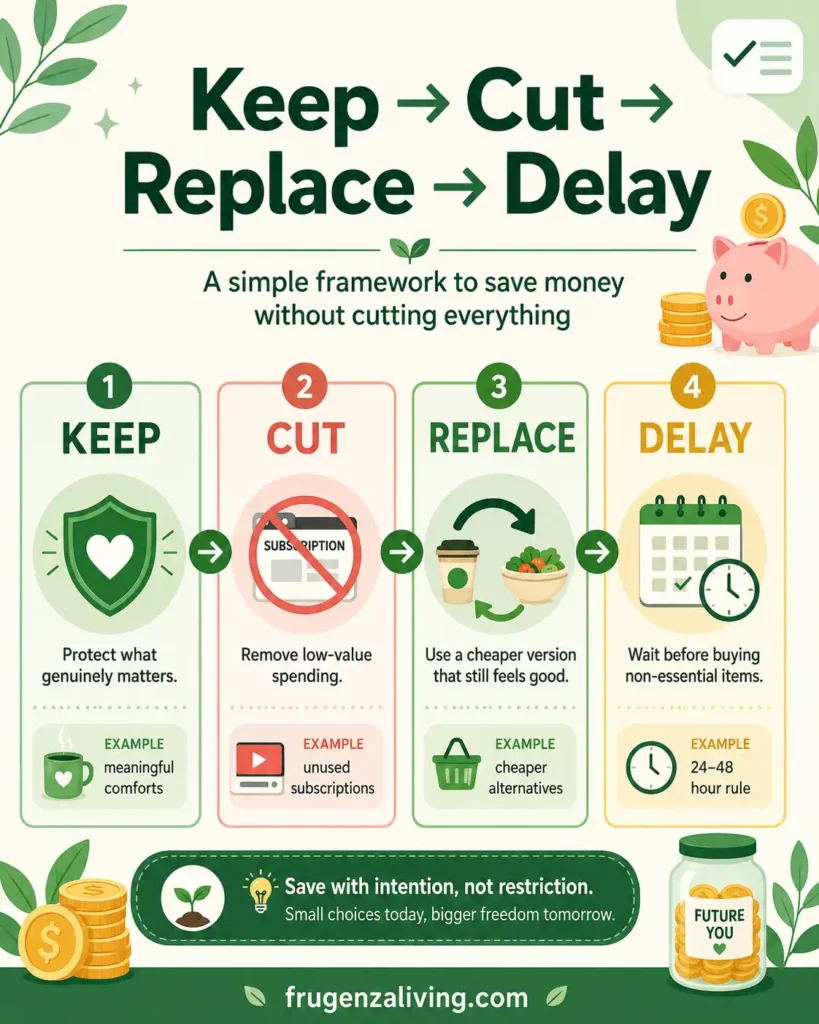
Use this simple loop:
Keep → Cut → Replace → Delay
Keep one thing that genuinely matters.
Cut one low-value expense.
Replace one expensive habit with a cheaper version.
Delay one non-essential purchase.
That is enough to start.
You do not need to fix everything today.
You only need to make one spending decision more intentional.
If you want more repeatable ideas, frugal habits that actually save money can help you choose practical cuts that work over time.
How This Fits Into Your Money-Saving System
This article focuses on saving money through selective cuts.
If you want a weekly saving system, learning how to save money weekly can help you protect money before the week disappears.
If you want bigger-picture goals, realistic ways to save money every month can help you connect these small cuts to monthly progress.
If frugality feels emotionally hard, how to live frugally without feeling deprived can help you keep your plan sustainable.
If impulse buying is the main problem, how to control spending habits can help you build better spending pauses.
Selective cutting is the strategy.
Habits, weekly saving, and spending control help support it.
FAQ
How can I save money without cutting everything?
You can save money without cutting everything by protecting what matters, cutting low-value spending first, replacing expensive habits with cheaper versions, delaying impulse purchases, and automating small savings. The goal is to reduce waste, not remove every enjoyable part of life.
What should I cut first to save money?
Cut low-value spending first. Start with unused subscriptions, duplicate purchases, convenience fees, forgotten recurring charges, and things you buy from boredom. These are easier to reduce because you are less likely to miss them.
Can I save money and still enjoy life?
Yes, you can save money and still enjoy life. The key is to keep a few meaningful expenses and reduce spending that does not add much value. Saving works better when your plan feels realistic enough to repeat.
How do I stop overspending without feeling restricted?
Stop overspending without feeling restricted by using a waiting rule, replacing expensive habits, and setting small spending boundaries. You do not need to ban all purchases. You need to pause, choose intentionally, and reduce low-value spending first.
What should I avoid cutting from my budget?
Avoid cutting things that support your health, safety, work, important relationships, or long-term consistency without thinking carefully. Some expenses are worth keeping if they genuinely improve your life or help you maintain your money-saving plan.
Conclusion
Saving money does not require cutting everything.
Protect what matters.
Cut low-value spending first.
Replace expensive habits with cheaper versions.
Delay impulse purchases before deciding.
One intentional change is enough to begin.
You do not need to cut your whole life smaller.
You need to make your spending more intentional.

Read about Jeffi and Frugenza Living
- Proportional Bill Split Calculator for Two Incomes - October 15, 2026
- How to Split Grocery Bills With Roommates - October 14, 2026
- First Apartment Kitchen Essentials on a Budget - October 13, 2026