
Frugal living can sound uncomfortable at first.
A lot of people imagine it means saying no to everything: no eating out, no small treats, no hobbies, no fun, no comfort, and no room to enjoy life.
That is also why many people quit.
They try to cut too much too quickly, feel restricted, then eventually spend more because the whole lifestyle feels like punishment.
But learning how to live frugally without feeling deprived is not about removing every enjoyable thing from your life. It is about choosing what matters, reducing what does not, and building a lifestyle you can actually repeat.
The goal is not to make life feel smaller.
The goal is to spend less while still feeling like you have choices.
How Can You Live Frugally Without Feeling Deprived?
You can live frugally without feeling deprived by protecting what matters, cutting low-value spending first, keeping small comforts, and using flexible rules instead of all-or-nothing restrictions.
Sustainable frugal living works best when you reduce waste without removing every source of joy from your life.
Sometimes it helps to see real frugal lifestyle examples so frugal living feels less like a theory and more like something you can actually do.
The Simple Rule
Protect what matters. Reduce what doesn’t. Replace what feels empty. Repeat what feels sustainable.
That simple rule keeps frugal living from turning into punishment.
Instead of asking, “What else can I cut?” ask, “What can I protect, reduce, replace, and repeat?”
That shift makes frugality feel more human.
What “Without Feeling Deprived” Really Means
Living frugally without feeling deprived does not mean you buy anything you want.
It means:
- you still enjoy life in simple ways
- you stop wasting money on things that do not matter
- you make intentional trade-offs
- you avoid strict rules that cause burnout
Frugal living without deprivation is not about having no fun.
It is about spending more carefully so your money supports the things you actually value.
Deprivation Happens When You Cut Without Choosing
Deprivation usually starts when you cut randomly.
You cancel everything. You stop eating out completely. You avoid all small purchases. You tell yourself you should never spend money on fun.
At first, it feels disciplined.
But after a while, it can create resentment.
You start thinking, “I work hard, but I can’t enjoy anything.”
That is where rebound spending often begins. You restrict too much, then later overspend because you feel like you have been missing out.
If you are wondering how to be frugal without being miserable, the answer is usually not stricter rules. It is better trade-offs.
Sustainable frugality works differently.
Instead of cutting everything, you choose what to protect and what to reduce.
You protect the spending that genuinely improves your life.
You reduce the spending you barely care about.
That is the difference between feeling punished and feeling intentional.
The Joy-Protected Frugal Living Framework
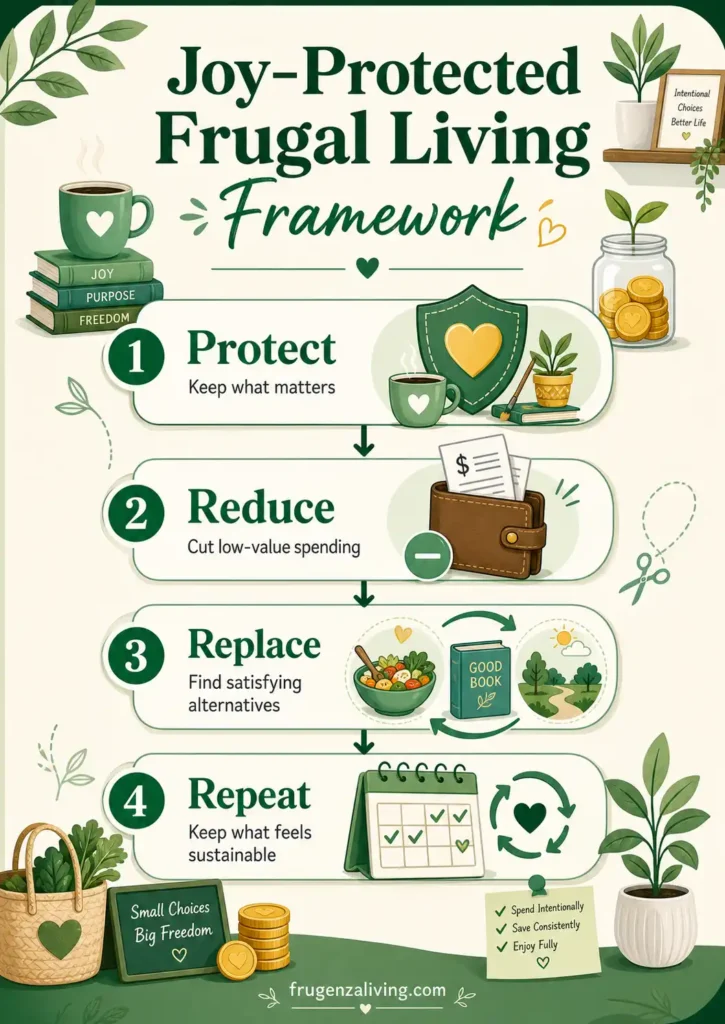
Here is a simple framework for frugal living without feeling restricted:
| Step | What It Means | Real-Life Example |
|---|---|---|
| Protect | Keep what genuinely matters | Keep one hobby, coffee date, or small weekend treat |
| Reduce | Cut low-value spending first | Cancel unused subscriptions or stop duplicate purchases |
| Replace | Find satisfying alternatives | Cook an easy comfort meal instead of ordering delivery |
| Repeat | Keep what feels sustainable | Repeat the habit weekly until it feels normal |
This framework matters because frugal living works better when it protects joy instead of removing it completely.
It helps you spend less without feeling deprived because the goal is not to empty your life. The goal is to remove what does not matter so you have more room for what does.
Start by Protecting What You Actually Enjoy
Before cutting expenses, ask one honest question:
“What spending actually makes my life better?”
For one person, that might be coffee with a friend once a week. For another, it might be one streaming service, gym access, hobby supplies, or a small weekend treat.
You do not need to protect everything.
Choose 1–3 small comforts that genuinely matter to you.
This kind of spending is not failure. It can actually help you stay consistent because you no longer feel like frugal living means losing all enjoyment.
The goal is not careless spending.
The goal is guilt-free spending on things you truly value.
A good starting point is trying simple frugal living at home before making bigger lifestyle changes.
Cut the Spending You Barely Care About First
Frugal living feels easier when you focus on money-saving frugal habits that actually fit your daily life.
The easiest spending to reduce is the spending you barely miss.
This might include:
- unused subscriptions
- impulse purchases
- duplicate household items
- convenience spending from being unprepared
- random online browsing
- food you buy but do not actually eat
These are good places to start because they do not feel like major sacrifice.
For example, canceling a subscription you forgot about does not feel the same as giving up your favorite hobby. Eating food you already have does not feel the same as never enjoying a meal out again.
Low-value spending is where frugal living becomes easier.
You are not cutting joy.
You are cutting waste.
Use Trade-Offs Instead of Strict Rules
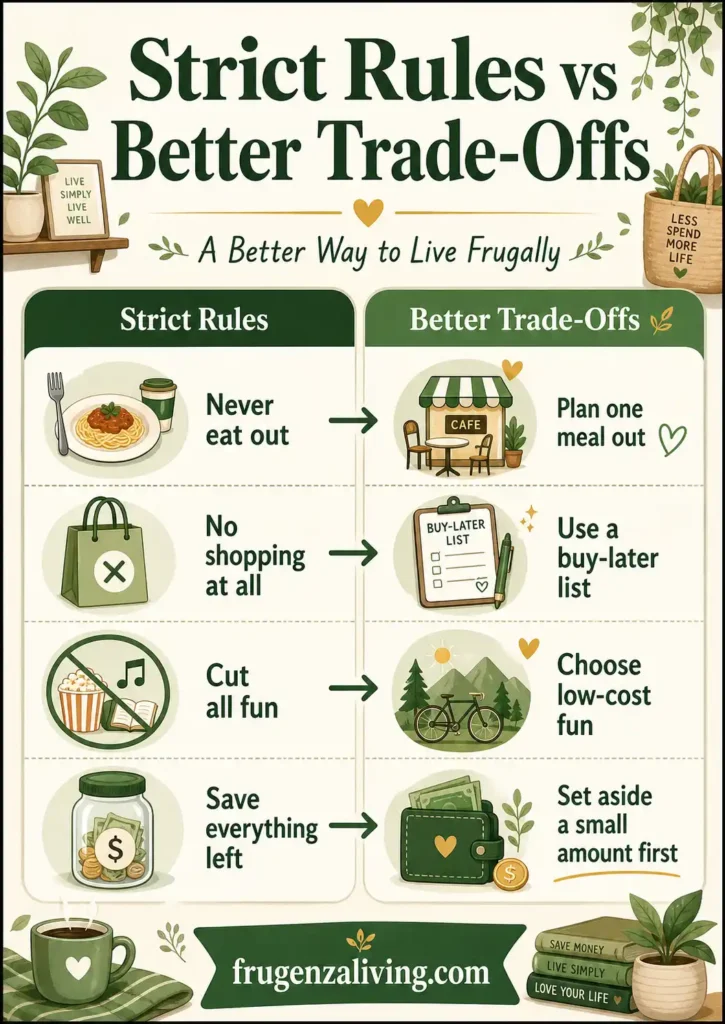
Strict rules often sound strong, but they can be hard to maintain.
A better approach is using trade-offs.
| Strict Rule | Better Trade-Off |
|---|---|
| Never eat out | Plan one meal out and cook simple meals the rest of the week |
| No shopping at all | Use a buy-later list and wait 24–48 hours |
| Cut all fun | Choose low-cost fun most weeks and paid fun sometimes |
| Save everything left | Set aside a small amount first, even if it is not perfect |
Trade-offs help you live frugally and still enjoy life.
They give you structure without making your life feel locked down.
This is what makes a frugal lifestyle without feeling restricted more sustainable than one built on constant self-denial.
Build a Small “No-Guilt” Spending Category
A no-guilt spending category is a small amount of money you can use without feeling bad.
It does not need to be large.
Even $10, $20, or $30 can matter psychologically.
This money might be for coffee, a snack, a small hobby item, a thrift find, or something that makes the week feel lighter.
Why does this help?
Because one of the fastest ways to burn out from frugal living is feeling like you can never have anything.
A small no-guilt category reminds you that budgeting and frugality are not punishments.
They are tools.
Frugal living feels less restrictive when you slowly create healthier money habits instead of forcing sudden changes.
Replace, Don’t Just Remove
Removing expenses without replacing them can create an empty feeling.
That is when frugal living starts to feel like deprivation.
Instead of only asking, “What can I cut?” ask:
“What can I do instead?”
Replace takeout with easy comfort meals you actually like.
Replace shopping scrolls with a walk, reading, a hobby, or calling a friend.
Replace an expensive weekend with one paid activity and one free activity.
Replace boredom spending with something that gives you a real break.
This is important because people do not only spend because they need things.
They often spend because they are tired, bored, stressed, or looking for comfort.
If you remove the spending but ignore the emotional need, the habit usually comes back.
Living frugally does not require avoiding your social life, but it does help to learn how to maintain friendships on a budget.
Make Frugality Feel Normal, Not Like a Punishment
Frugal living becomes easier when it becomes part of your normal routine.
You can do this by creating simple defaults.
Repeat a few meals you like.
Keep basic groceries at home.
Set a simple spending boundary before the weekend.
Automate a small savings amount if possible.
Keep one low-cost comfort ready for stressful days.
These small routines reduce decision fatigue. You do not have to rely on motivation every time.
The easier your frugal choices feel, the more likely you are to repeat them.
That is the real secret behind sustainable frugal living.
What I Noticed After Making Frugality Less Strict
When I first tried to be more frugal, I thought stricter meant better.
But when I made everything too tight, I wanted to rebel.
I would avoid spending for a while, then eventually make random purchases because I felt tired of saying no.
Flexible frugality worked better.
Frugal living feels less restrictive when you create a daily frugal routine without stress.
Once I stopped treating frugal living like punishment and started protecting what mattered, the habit became easier to repeat.
I kept small comforts. I cut spending I barely cared about. I stopped feeling guilty over every normal purchase.
That sustainable approach became one of the foundations that helped me save over $15,000 in a year.
The difference was not that I never spent money. It was that I stopped spending in ways that made me feel regret later.
It was not one extreme sacrifice.
It was a system I could actually live with.
A Simple Week of Frugal Living Without Deprivation
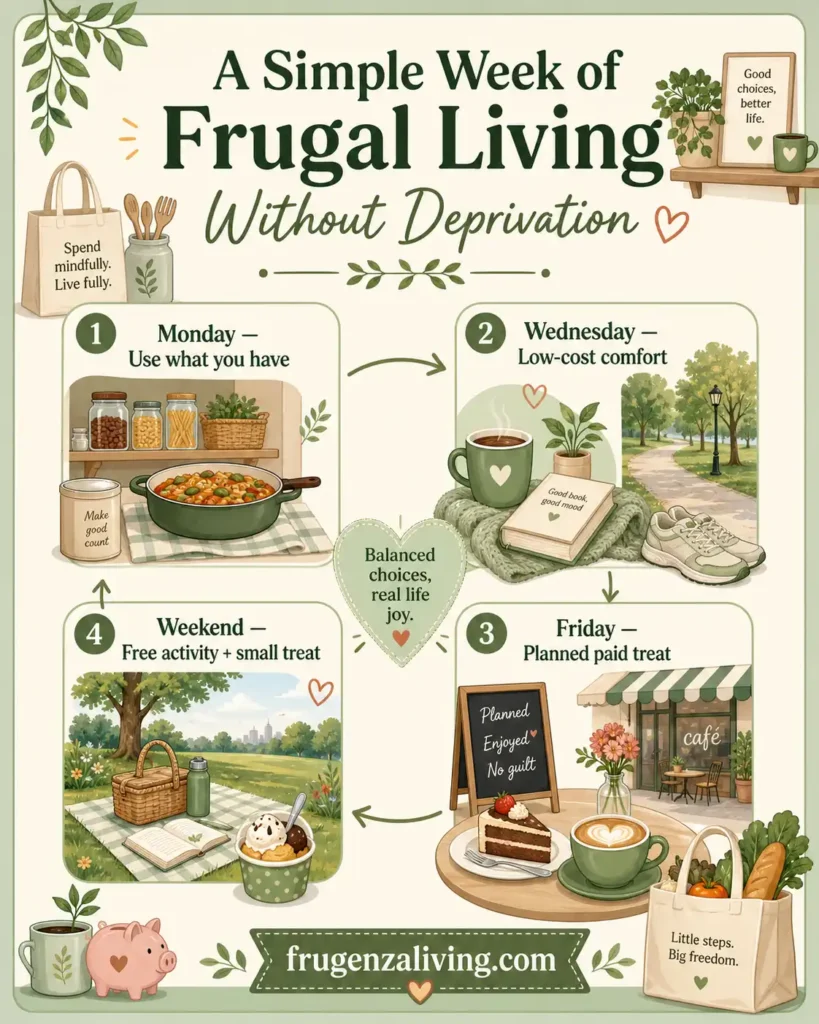
Here is what a realistic week can look like:
Monday: Use what you already have for one meal instead of buying more food.
Wednesday: Choose one low-cost comfort, like coffee at home, a walk, a library book, or a simple movie night.
Friday: Plan one paid thing intentionally instead of spending randomly all weekend.
Weekend: Mix one free activity with one enjoyable treat.
This is not extreme.
It is balanced.
You are not removing joy. You are choosing it more carefully.
Signs Your Frugal Lifestyle Is Too Strict
Your frugal lifestyle may be too strict if:
- you feel resentful all the time
- you binge spend after restriction
- you avoid every form of fun
- you feel guilty for normal purchases
- you quit after a few weeks
- you feel like your life is only about saving money
These signs matter.
Frugal living should make your money feel clearer, not make your life feel smaller.
If the plan makes you miserable, it probably needs adjustment.
How to Start Today Without Overcorrecting
Use this simple loop:
Choose → Protect → Reduce → Adjust
Choose what matters most.
Protect one small comfort.
Reduce one low-value expense.
Adjust next week.
For example, you might protect one coffee date with a friend, reduce random delivery orders, and replace one shopping scroll with a walk.
That is enough to start.
You do not need to redesign your whole life in one weekend.
Small, repeatable changes are stronger than dramatic rules you cannot maintain.
How This Fits Into Your Frugal Living System
This article focuses on frugal living without deprivation.
If you need the bigger foundation, start with frugal living for beginners.
If you want to see what frugality looks like in daily life, reading frugal lifestyle examples in real life can help.
If you want more action steps, realistic frugal living tips can give you practical habits to try.
If impulse buying is the main issue, how to control spending habits can help you build better pauses before spending.
And if waste at home is your biggest problem, ways to save money at home easily can help you start there.
This article is about emotional sustainability.
The others can help you build the practical system around it.
FAQ
How can I live frugally without feeling deprived?
You can live frugally without feeling deprived by protecting what matters, reducing low-value spending first, and keeping small comforts in your life. Avoid cutting everything at once. Sustainable frugal living works best when you make intentional trade-offs instead of strict rules.
Why does frugal living feel restrictive?
Frugal living often feels restrictive when you cut randomly without choosing what matters. If you remove every comfort, fun activity, or small treat, frugality can feel like punishment. A better approach is to protect meaningful spending and reduce waste first.
Can I still spend money while living frugally?
Yes, you can still spend money while living frugally. The goal is not to stop spending completely. The goal is to spend more intentionally, keep room for small joys, and reduce purchases that do not add much value to your life.
What should I not cut when trying to be frugal?
You should not cut everything that supports your well-being, relationships, or consistency. Small comforts, useful tools, healthy food, meaningful hobbies, and important social connections may be worth protecting. Cut low-value spending before cutting things that make life feel balanced.
How do I avoid burnout from frugal living?
You can avoid frugal living burnout by using flexible rules, keeping a no-guilt spending category, and making small changes instead of extreme cuts. If you feel resentful or deprived all the time, your frugal plan may be too strict and needs adjusting.
Conclusion
Frugal living does not need to feel like punishment.
You do not need to cut everything.
You do not need to remove joy.
You need to protect what matters and reduce what does not.
Start with one trade-off. Keep one small comfort. Cut one low-value expense. Adjust as you go.
That is how frugal living becomes sustainable.
Frugal living should not make your life feel smaller.
It should help your choices feel clearer.

The ideas shared here come from real-life experience and practical habits that actually work.
→ Read more about Jeffi
- No Spend Month Challenge for Beginners: A 30-Day Plan - September 24, 2026
- Low Buy Month Challenge: Realistic Rules for 30 Days - September 23, 2026
- How to Stop Buying Groceries You Already Have - September 20, 2026