I tried doing everything “right” once.
No-spend month. Cooking every meal. Tracking every expense.
It lasted less than a week.
Not because the advice was wrong—but because it didn’t match how real life works.
Busy days, low energy, unexpected situations… those are the moments when most spending decisions actually happen.
And that’s when everything breaks.
What finally worked wasn’t trying harder.
It was understanding how those decisions happen—and changing the system around them.
That is what makes realistic frugal living different from extreme frugal living. It is not about adding more rules to your day.
It is about making the better choice easier before the difficult moment arrives.
When frugal living feels hard, the problem is often not the goal. The problem is the setup. If the cheaper option takes more effort than the expensive option, convenience will usually win.
But if you make the frugal option easier to reach, the habit becomes more realistic.
Why Most Frugal Living Advice Stops Working
Most advice assumes one thing:
that you’ll make good decisions consistently
But real life doesn’t work like that.
There are days when you have energy—and days when you don’t.
Moments when cooking feels easy—and moments when ordering food feels like the only option.
That’s where most spending happens.
Not because you don’t know what to do.
But because the decision happens at the wrong time.
The Real Problem: Decision Timing
One of the biggest shifts comes from understanding this:
Most expensive decisions happen when your energy is low
Late evenings. After work. When you’re tired.
Research in behavioral economics has shown that decision fatigue reduces self-control. When that happens, convenience usually wins.
That’s why a takeout order can feel completely reasonable—even when you planned not to spend.
It’s not about discipline.
It’s about timing.
A Better Approach: Reduce Decisions, Not Just Spending
Instead of focusing on “spending less,” focus on making fewer decisions in difficult moments.
That means:
- Preparing simple options in advance
- Limiting choices when energy is low
- Making small decisions earlier in the day
You’re not trying to be perfect.
You’re trying to make things easier. These changes only work long-term if they turn into consistent money habits you can repeat daily.
The Frugal Friction Lab
Realistic frugal living becomes easier when you design your environment around better choices. Open each section below and check which small friction changes could make saving money feel less forced.
1. Make Expensive Choices Less Automatic Spend Slower
The goal is not to ban spending. The goal is to add a small pause before money leaves your account.
- Remove saved cards from shopping apps.
- Move delivery apps away from your home screen.
- Use a wishlist before buying non-essential items.
- Turn off sale notifications that create fake urgency.
2. Make Frugal Choices Easier to Reach Save Easier
A frugal option works better when it is easy enough to choose during a busy or low-energy moment.
- Keep one simple backup meal at home.
- Put your grocery list somewhere easy to open.
- Keep reusable items visible, not hidden in drawers.
- Prepare one low-cost weekend idea before the weekend starts.
3. Add Planned Exceptions Avoid Burnout
Realistic frugal living should include space for real life. Planned exceptions prevent one imperfect decision from turning into a full reset.
- Plan takeout instead of ordering randomly.
- Keep one small treat in the budget.
- Choose one convenience expense that truly helps your week.
- Allow flexibility during unusually busy weeks.
4. Measure Repeatability Make It Last
A frugal tip is only useful if you can repeat it without making life harder.
- Can I do this on a busy week?
- Does this save money without creating stress?
- Does this solve the real problem?
- Would I still do this next month?
Quick Frugal Friction Check
The Frugal Friction Audit
A frugal friction audit means looking at which choices are too easy and which choices are too hard. Many people overspend because the expensive option has almost no friction.
One-click payments, saved cards, delivery apps, late-night browsing, and impulse-friendly stores make spending feel effortless.
At the same time, the frugal option often has too much friction. Cooking feels harder than ordering food.
Checking your budget feels harder than ignoring it. Using what you already own feels harder than buying a new version.
To make frugal living more realistic, reverse the friction. Add small friction to spending and remove friction from saving.
Delete saved payment details. Move shopping apps off your home screen. Keep simple meals visible. Put your grocery list somewhere easy to open. Prepare one low-effort option before the week gets busy.
This does not require perfect discipline. It simply changes which choice feels easier when your energy is low.
What Frugal Living Actually Looks Like in Practice
Once you stop thinking in extremes, frugal living becomes more manageable.
It’s not:
- Never ordering food
- Tracking every dollar
- Eliminating everything enjoyable
It’s more like:
- Ordering less often, not never
- Keeping simple meals available
- Reducing what doesn’t matter
If you’re just getting started, it helps to begin with more basic frugal living habits before applying these kinds of strategies.
Behavior-Based Frugal Living Strategies
Instead of a long list of tips, focus on a few systems that actually influence behavior.
1. Design Your “Low-Energy Environment”
Most overspending happens when you’re tired.
So don’t rely on willpower—change the environment.
Examples:
- Keep quick, low-effort meals ready
- Remove saved payment methods from apps
- Avoid browsing shopping apps late at night
These small changes reduce the number of decisions you need to make when energy is low.
2. Shift from “Eliminate” to “Reduce Frequency”
Cutting something completely feels efficient—but rarely lasts.
Reducing frequency works better.
Instead of:
- Takeout → never
Try:
- Takeout → once or twice a week
This keeps your lifestyle flexible while still lowering overall spending.
Over time, this naturally helps you manage everyday expenses without strict rules.
3. Track Patterns, Not Perfection
Strict tracking often fails because it feels overwhelming.
A simpler approach:
- Check your spending every few days
- Look for patterns, not exact numbers
- Notice when and why you spend
Awareness creates change faster than control.
4. Build Systems That Work on Your Worst Days
Most advice focuses on your best days.
But real progress comes from your worst ones.
Ask yourself:
“What do I do when I’m tired, stressed, or unmotivated?”
Then design around that.
For example:
- Keep backup meals ready
- Set simple limits (not strict rules)
- Reduce friction for good decisions
This is where small, consistent money habits become more powerful than extreme changes.
Once you start applying frugal habits, you can also try simple frugal activities at home that do not require extra spending.
Use Planned Exceptions
Realistic frugal living works better when it includes planned exceptions. If your plan only works when everything goes perfectly, it will break the first time life gets busy, stressful, or unpredictable.
A planned exception is a small allowance for real life. For example, you might decide that takeout is allowed once a week, coffee out is allowed on Fridays, or a low-cost treat is allowed after a long workday.
The point is not to spend carelessly. The point is to prevent one imperfect decision from turning into a full reset.
This matters because many frugal plans fail after one mistake. A planned exception keeps the habit flexible. You are not quitting the system. You are making space for life inside the system.
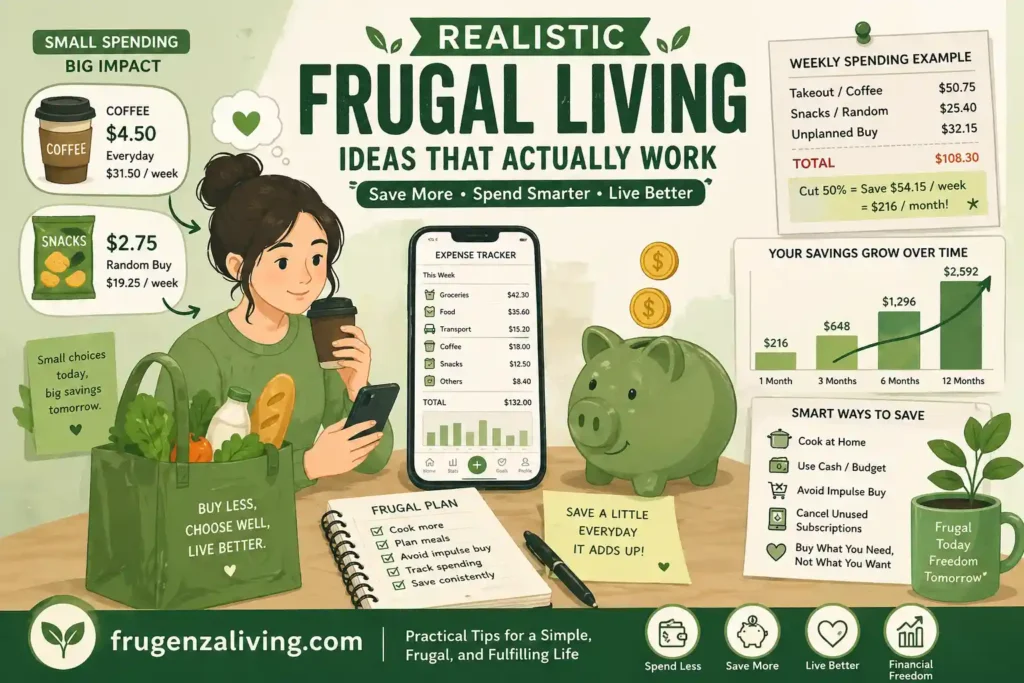
A Real Example of How Small Decisions Add Up
At one point, spending didn’t feel like a problem.
Nothing extreme.
Just:
- $9–$12 takeout
- $5–$7 snacks
- occasional small purchases
Individually, they felt harmless.
But together:
~$30–$40 per week
~$150 per month
$1,800+ per year
The biggest surprise wasn’t the amount.
It was how easy it was to ignore.
Over time, this helps you reduce your daily expenses without relying on strict rules.
Measure Repeatability, Not Just Savings
A frugal idea is not automatically good just because it saves money once. The better question is whether you can repeat it without creating stress, resentment, or extra work you cannot maintain.
After trying a frugal change, ask yourself: Did this make my life easier or harder? Could I repeat this on a busy week?
Did it reduce spending without making me feel restricted? Did it solve the real problem, or did it only look good for a few days?
This helps you choose frugal ideas that actually fit your life. A small habit you repeat every week is usually more powerful than a strict rule you abandon after three days. Realistic frugal living is built on repeatability, not perfection.
The Hidden Cost Most People Miss: Decision Patterns
Most people focus on:
what they spend
But rarely on:
how they decide
The pattern matters more than the number.
Once you see the pattern, you don’t need extreme changes.
You just adjust the system.
When Basic Frugal Living Isn’t Enough
Simple tips are a good starting point.
But over time, they stop being enough.
That’s when:
- habits matter more than tips
- systems matter more than motivation
- structure matters more than discipline
If you want a simpler starting point, you can explore realistic frugal living tips before building a more structured approach like this.
FAQ: Behavior-Based Frugal Living
What is the biggest mistake in frugal living?
Trying to change everything at once instead of focusing on patterns.
Do I need strict budgeting for this to work?
No. Awareness and small systems are often more effective.
How much can I realistically save?
Many people reduce spending by $150–$400/month by adjusting behavior patterns.
Is this approach better than traditional budgeting?
It’s not better—it’s more sustainable for many people.
Final Thoughts
Frugal living isn’t about doing everything right.
It’s about making fewer decisions at the wrong time.
Noticing patterns.
Adjusting systems.
Making things easier.
Start small.
Change one pattern.
Because in the end, it’s not the biggest decisions that matter—
it’s the ones you repeat every day.

The ideas shared here come from real-life experience and practical habits that actually work.
→ Read more about Jeffi
- No Spend Month Challenge for Beginners: A 30-Day Plan - September 24, 2026
- Low Buy Month Challenge: Realistic Rules for 30 Days - September 23, 2026
- How to Stop Buying Groceries You Already Have - September 20, 2026