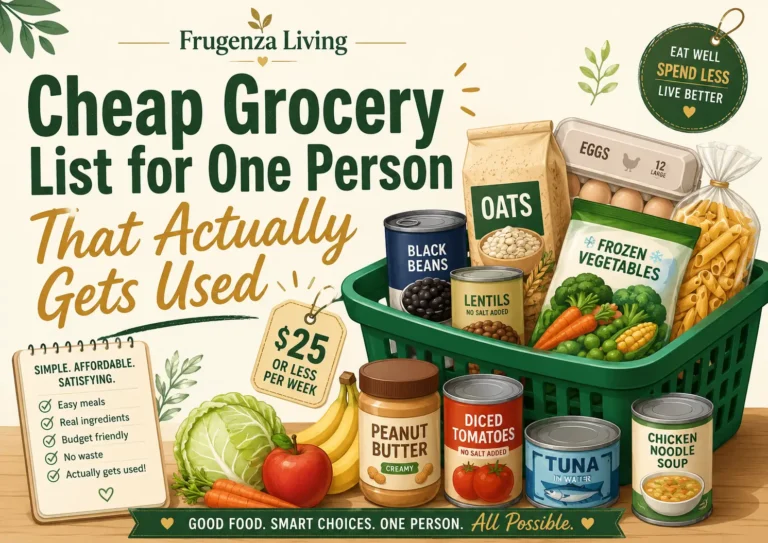
A cheap grocery list for one person should do more than make the receipt look small. It should help you finish the food, avoid waste, and keep enough easy meals on hand so takeout is not the backup plan.
This is a starter shopping basket, not a full pantry stock-up or a strict seven-day meal plan. It also works as a simple budget grocery list for one person when you want a small cart instead of a complicated meal plan. The goal is to buy a flexible set of foods for your next few meals: one breakfast anchor, one main protein, one filling carb, one fresh produce item, one freezer or pantry backup, and one flavor item that makes cheap meals less repetitive.
For solo shoppers, the cheapest list is usually the one you can actually use.
Why Cheap Grocery Lists Fail for One Person
Many budget grocery lists are built around low prices per item. That can be misleading for one person.
A large container of greens may look cheap per ounce, but it is not cheap if half of it wilts. A big bag of bread is useful if you freeze it, but wasteful if it turns stale. A special sauce for one recipe may sit untouched after one meal.
A better goal is low used-food cost.
Used-food cost = groceries you actually eat + groceries that prevent takeout
For example, a smaller frozen vegetable bag may cost more per ounce than a huge fresh salad tub. But if you finish the frozen vegetables and throw away half the salad, the frozen option may be the better buy.
USDA’s budget-shopping guidance recommends planning before shopping and making a grocery list of what and how much to buy. For one person, “how much” matters as much as “what.”
If you need a broader routine, use this with a guide to build a simple grocery shopping routine for one person.
The One-Person Starter Basket
The point is to cover meal roles, not to buy one ingredient from every aisle.
A useful low-cost grocery list for one person should cover six jobs:
- Breakfast anchor: something easy enough to repeat.
- Main protein: one flexible protein for several meals.
- Filling carb: rice, pasta, potatoes, bread, tortillas, or oats.
- Low-waste produce: one fresh item and one frozen or canned option.
- Flavor bridge: one sauce or seasoning that changes the taste.
- Tired-night backup: one meal that is still cheaper than ordering food.
Core 10 Cheap Grocery List for One Person
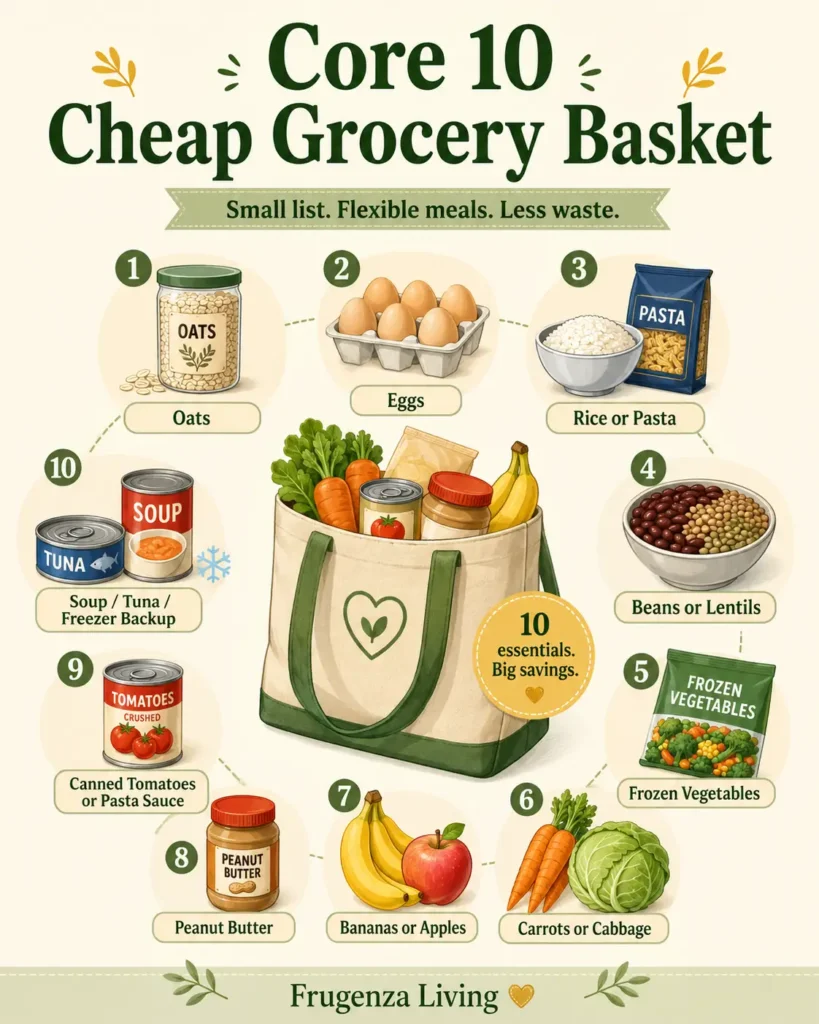
Use this as a starter basket for a small grocery trip. Prices vary by store and location, so treat it as a low-cost framework, not a guaranteed dollar amount.
1. Oats
Buy: 1 small container or store-brand tub.
Why: cheap breakfast base.
2. Eggs
Buy: 6 to 12 eggs.
Why: breakfast, bowls, sandwiches, and quick dinners.
3. Rice or pasta
Buy: 1 lb bag of rice or 1 box of pasta.
Why: filling base for simple meals.
4. Beans or lentils
Buy: 2 cans or 1 small dry bag.
Why: low-cost protein and fiber.
5. Frozen vegetables
Buy: 1 standard freezer bag.
Why: low-waste side, soup filler, or rice bowl add-in.
6. Carrots or cabbage
Buy: 1 small bag of carrots or 1 small head of cabbage.
Why: lasts longer than delicate greens.
7. Bananas or apples
Buy: 3 to 5 pieces.
Why: easy fruit you can finish.
8. Peanut butter
Buy: 1 jar if you do not already have one.
Why: breakfast, snacks, and backup calories.
9. Canned tomatoes or pasta sauce
Buy: 1 can of tomatoes or 1 jar of sauce.
Why: turns staples into meals.
10. Soup, tuna, or freezer backup
Buy: 1 to 2 shelf-stable or freezer backup meals.
Why: prevents takeout on tired nights.
Copy this cheap grocery list for one person: oats, eggs, rice or pasta, beans or lentils, frozen vegetables, carrots or cabbage, bananas or apples, peanut butter, canned tomatoes or pasta sauce, and one soup, tuna, or frozen backup meal.
A cheap list works better when it is based on a realistic grocery budget for one person, not just the lowest possible total.
Choose a Basket Style
Lowest-cost version: oats, eggs, rice, beans, frozen vegetables, carrots, bananas, canned tomatoes, peanut butter, and soup. This version usually stays cheaper because most items are store-brand friendly, shelf-stable, or useful in more than one meal.
Low-cook version: tortillas, tuna, eggs, yogurt, frozen vegetables, microwave rice, soup, apples, peanut butter, and one sauce. This may cost more per serving than cooking from scratch, but it can still be cheaper than wasting ingredients you are too tired to cook.
Higher-protein version: eggs, Greek yogurt, tuna, beans, tofu or chicken, frozen vegetables, rice, potatoes, fruit, and salsa. Use this when meals feel too light or you snack because you did not buy enough filling food.
Optional 8 Add-Ons
Add these only if they fit your meals, budget, and storage space:
- Tortillas or bread
- Potatoes
- Yogurt or cottage cheese
- Chicken thighs, tofu, or ground turkey
- Onions
- Spinach or another quick-use green
- Salsa, soy sauce, or hot sauce
- Cheese
Do not buy all eight automatically. If you already have rice and pasta at home, skip extra carbs and buy protein, produce, or a backup meal.
One-Person Cheap Grocery Checklist
Before adding extras, make sure your basket covers each basic role. Copy your chosen items into your phone notes before shopping.
Solo shopper rule: a small list you finish is cheaper than a large list that spoils.
Adjust the List to Your Real Life
If you cook very little, choose eggs, tortillas, tuna, yogurt, soup, frozen vegetables, microwave rice, and one sauce. This may not be the absolute cheapest per serving, but it can still lower your grocery spending if it keeps you from ordering food.
If you have time to cook, choose dry rice, dry beans or lentils, oats, potatoes, frozen vegetables, onions, canned tomatoes, and chicken or tofu. This version creates more servings from fewer items.
If produce waste is your biggest issue, limit fresh produce to one or two items. Use frozen vegetables, canned tomatoes, carrots, cabbage, potatoes, and onions for the rest.
If you need more protein, add one option that fits your habits: eggs, Greek yogurt, tuna, beans, lentils, cottage cheese, tofu, or frozen chicken.
If your list includes oats, eggs, bread, yogurt, or peanut butter, you can use those items for several affordable breakfast ideas throughout the week.
Use Fresh Food Before Pantry Food
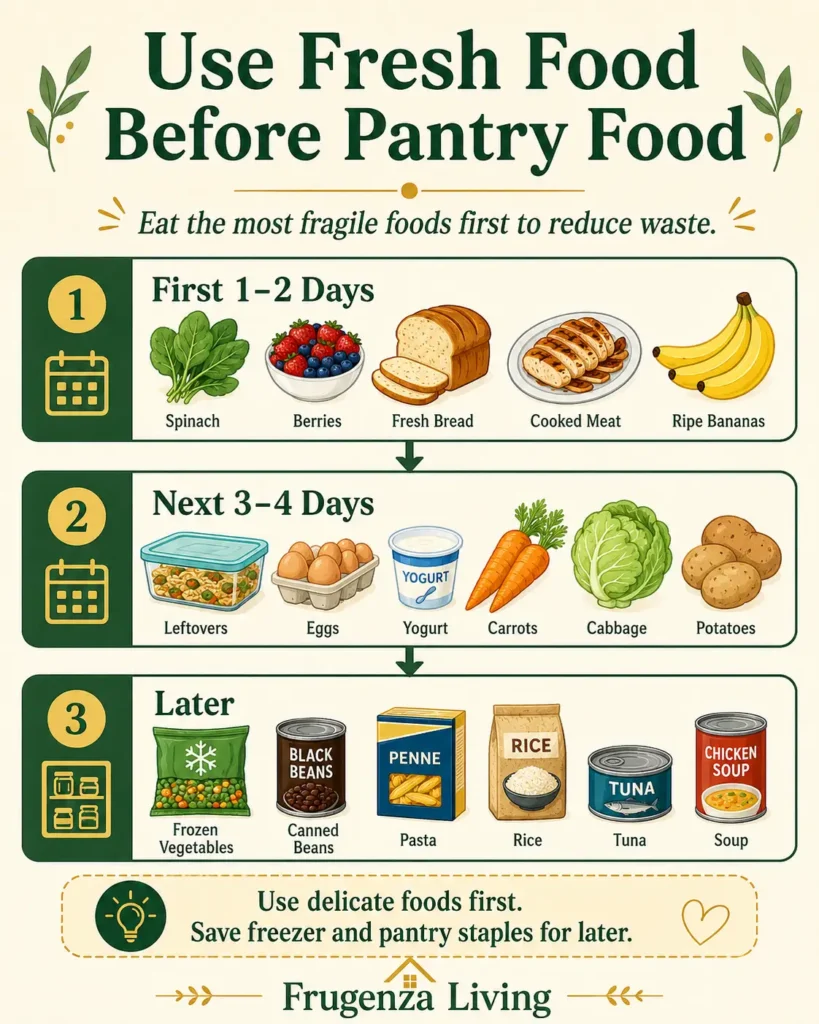
A cheap grocery list for one person works best when you eat the fragile food first.
Use fresh greens, berries, fresh bread, opened yogurt, and cooked meat early. Save sturdier items such as carrots, cabbage, potatoes, canned goods, dry pasta, rice, and frozen vegetables for later.
USDA FSIS guidance on leftovers and food safety says leftovers can generally be kept in the refrigerator for 3 to 4 days or frozen for 3 to 4 months. That matters for solo shoppers because a large batch only saves money if you can safely eat or freeze it in time.
Try this order:
First 1–2 days: spinach, berries, fresh bread, cooked meat, ripe bananas.
Next 3–4 days: leftovers, eggs, yogurt, carrots, cabbage, potatoes.
Later: frozen vegetables, canned beans, pasta, rice, tuna, soup.
Simple Meals From the Core List and Add-Ons
These are meal combinations, not a schedule.
Oats + banana + peanut butter
A low-cost breakfast that uses shelf-stable ingredients.
Eggs + toast or tortillas + fruit
Fast enough for mornings or tired dinners.
Rice + beans + frozen vegetables + salsa
A filling bowl that can change with different sauces.
Pasta + canned tomatoes + spinach or frozen vegetables
Easy, warm, and flexible.
Tuna + tortilla + carrots
A no-cook meal when you need something quick.
Potatoes + eggs + onions or cabbage
A cheap dinner using longer-lasting ingredients.
Soup or tuna + fruit or carrots
A backup meal for nights when cooking feels unrealistic.
For a structured schedule, use a full one-week grocery list for one person instead of turning this starter basket into a strict meal plan.
What Not to Buy When Shopping for One
Some foods are not bad. They are just risky for a solo budget.
Be careful with family-size snacks, large salad tubs, fresh herbs for one recipe, bulk bread you cannot freeze, delicate fruit with no plan, large meat packs you will not portion, and specialty ingredients you have never used.
Before adding something, ask:
Will I finish this before it spoils, or will it force another purchase?
If the answer is unclear, buy a smaller amount or choose a frozen, canned, or longer-lasting substitute. If waste keeps happening, avoid common grocery shopping mistakes for one person before your next trip.
Build the List From What You Already Own
Before shopping, write three short notes:
- What do I already have?
- What will spoil first?
- What meal will stop me from ordering takeout?
If you already have rice, do not buy more rice. If you have pasta but no sauce, buy sauce and vegetables. If you have frozen chicken but no easy carb, buy potatoes, tortillas, or rice.
The best cheap grocery list for one person is not the longest list. It is the smallest list that covers your next few meals, gives you one tired-night backup, and helps you finish what you already bought.
You do not need a perfect cart. You need a realistic basket you can actually use.

Read about Jeffi and Frugenza Living
- How to Budget a 10-Month Salary Over 12 Months - October 16, 2026
- Pet Adoption Budget Checklist: What You Still Need to Pay - October 16, 2026
- Proportional Bill Split Calculator for Two Incomes - October 15, 2026