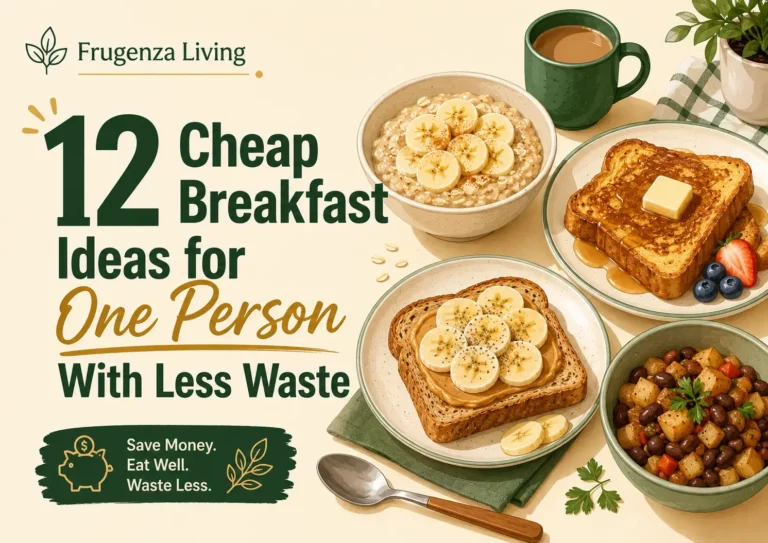
Breakfast for one is rarely expensive because of a single egg or half cup of oats. The hidden cost is what remains: bread that dries out, yogurt that loses its appeal, or tortillas opened for one recipe and forgotten.
These cheap breakfast ideas for one person are built as single servings or intentionally small batches. Each includes an estimated cost for one breakfast, practical cooking directions, and a clear next use for the package you opened. The list relies on ordinary ingredients rather than specialty powders, premium granola, or a different topping for every recipe.
You do not need to make all twelve. Start with the ingredient that needs attention, then choose a breakfast that fits your time and equipment.
How the Price Estimates Work
These costs are comparison estimates, not national averages. Sample prices were checked online on July 17, 2026, using regular store-brand listings from one major U.S. retailer. Prices, inventory, and package sizes vary by location and can change without notice.
The calculation divides the package price by the amount used in one breakfast. Based on the sampled store-brand oats, a half-cup serving cost about $0.15. A six-ounce portion from the sampled 32-ounce yogurt tub cost about $0.52. Oil, salt, pepper, cinnamon, and basic seasonings are treated as pantry items.
Breakfast is easier to control when it becomes part of a weekly meal plan for one on a budget.
Use-It-Up Breakfast Matrix
Start with the ingredient that is already open or will not wait much longer.
| What needs using | Make this | Cost for one breakfast | Next action |
|---|---|---|---|
| One ripe banana | Small banana oat pancakes | About $0.50–$0.80 | Use the whole banana in one batch |
| Two drying bread slices | French toast for one | About $0.30–$0.55 | Freeze the remaining loaf in pairs |
| Open can of beans | Bean breakfast toast | About $0.45–$0.80 | Portion the rest for lunch or freeze it |
| Cooked rice | Egg and vegetable rice bowl | About $0.45–$0.85 | Use the leftover before cooking more rice |
| Open yogurt tub | Apple yogurt oat bowl | About $0.70–$1.10 | Measure tomorrow’s overnight oats now |
| One soft potato | Potato and bean hash | About $0.60–$1.00 | Use the whole potato and portion the extra beans |
Five-Minute Breakfasts for Busy Mornings
1. Banana Peanut Butter Toast
Estimated cost for one breakfast: $0.35–$0.65 | Active time: 3 minutes
Toast two bread slices if you have a toaster, spread them with 1 tablespoon peanut butter, and add one sliced banana. Untoasted bread also works.
Using the whole banana avoids leaving a darkening half in the refrigerator. If you rarely finish a loaf, freeze the remaining slices in two-slice portions while they are still fresh.
2. Apple Yogurt Oat Bowl
Estimated cost for one breakfast: $0.70–$1.10 | Active time: 3 minutes
Combine 3/4 cup plain yogurt, 1/4 cup oats, and half a diced apple. Let the bowl stand for five minutes if you prefer softer oats. Cinnamon or a teaspoon of peanut butter can change the flavor without requiring granola.
Dice the other half of the apple into tomorrow’s oatmeal. Before closing the yogurt tub, measure the portion needed for overnight oats.
3. Basic Banana Oatmeal
Estimated cost for one breakfast: $0.30–$0.60 | Active time: 5 minutes
Cook 1/2 cup rolled or quick oats with 3/4 cup water over medium-low heat, stirring until thickened. For a microwave version, use a large microwave-safe bowl and follow the package timing. Stir in one sliced or mashed banana.
The banana adds sweetness without a separate syrup. Add 1 tablespoon peanut butter when you want a more substantial bowl.
Warm Breakfasts With One Pan or Pot
4. Egg and Potato Skillet
Estimated cost for one breakfast: $0.55–$0.95 | Active time: 11 minutes
Cut one small potato into 1/2-inch cubes. Add it to a skillet with 1 teaspoon oil and 2 tablespoons water. Cover and cook over medium heat for six to eight minutes, stirring once. Uncover, brown the edges, then add one beaten egg and cook until firm.
Small cubes keep the timing realistic. Add 1/3 cup frozen vegetables during the final three minutes when available.
5. Savory Egg and Vegetable Oats
Estimated cost for one breakfast: $0.50–$0.90 | Active time: 8 minutes
Cook 1/2 cup oats with 3/4 cup water and a pinch of salt. Stir in 1/3 cup frozen vegetables during the final two minutes. Top with one egg cooked until the white and yolk are firm.
The FDA’s egg-safety guidance recommends cooking shell eggs until both the white and yolk are firm. Pasteurized eggs are the safer choice when preparing a softer egg.
Pepper, salsa, or soy sauce can move the bowl away from sweet oatmeal without adding another breakfast base.
6. Potato and Bean Hash
Estimated cost for one breakfast: $0.60–$1.00 | Active time: 10 minutes
Dice one small cooked potato and brown it in a lightly oiled skillet over medium heat. Add 1/3 cup drained black beans and a seasoning you already use. Cook until the beans are hot and the potato edges are crisp.
This is an egg-free breakfast and a practical second use for an opened can. Move the remaining beans into lunch or dinner instead of forcing another breakfast.
Breakfasts That Rescue an Open Ingredient
7. French Toast for One
Estimated cost for one breakfast: $0.30–$0.55 | Active time: 8 minutes
Beat one egg with 2 tablespoons milk or water and a pinch of cinnamon. Let each of two bread slices absorb the mixture for about 20–30 seconds per side. Cook in a lightly oiled skillet over medium heat for two to three minutes per side, until the center is set.
French toast is most economical when it rescues ordinary bread. Buying special bread, syrup, berries, and powdered sugar solely for this meal removes much of the saving.
8. Bean Breakfast Toast
Estimated cost for one breakfast: $0.45–$0.80 | Active time: 6 minutes
Heat 1/3 cup drained black beans with 1 tablespoon water. Mash them lightly with pepper, cumin, or salsa, then spoon the mixture over two toast slices.
This avoids buying tortillas only for one recipe. Refrigerate the remaining beans promptly in a covered container and give them a specific next use, such as soup, rice, or a lunch wrap.
9. Leftover Rice and Egg Bowl
Estimated cost for one breakfast: $0.45–$0.85 | Active time: 7 minutes
Heat 3/4 cup cooked rice with 1/3 cup frozen vegetables and a spoonful of water. Add one beaten egg and stir until fully set. Season with soy sauce, pepper, or hot sauce already in the refrigerator.
Use this when rice is already available rather than cooking a separate batch. Refrigerate cooked rice promptly and reheat the finished leftovers to 165°F.
Small Batches That Do Not Take Over the Week
10. Two-Jar Overnight Oats
Estimated cost per breakfast: $0.55–$0.95 | Yield: two breakfasts
Into each of two jars, add 1/2 cup oats, 1/2 cup water or milk, and 1/4 cup yogurt. Flavor one with half a banana and the other with diced apple or peanut butter. Cover and refrigerate overnight.
If the oats are thicker than you prefer, stir in 1–2 tablespoons more liquid in the morning. Two jars offer convenience without creating five identical breakfasts.
11. Small Banana Oat Pancakes
Estimated cost for one breakfast: $0.50–$0.80 | Active time: 12 minutes
Mash one ripe banana, then mix in one egg and 1/2 cup quick or rolled oats. Let the mixture rest for five minutes. Use about 2 tablespoons of batter per pancake and cook over medium-low heat.
Flip when the edges look set and the underside releases easily, then cook until the center is firm. Keeping the pancakes small makes them easier to turn. If the batter spreads immediately, add 1 tablespoon more oats. Blending the oats first is optional for a smoother texture.
12. Small-Pan Banana Baked Oatmeal
Estimated cost per breakfast: $0.45–$0.75 | Yield: two breakfasts
Heat the oven to 350°F. Mix one mashed banana, 1 cup oats, one egg, 3/4 cup water or milk, cinnamon, and optional sugar. Pour into a greased 8 × 4-inch loaf pan or a small oven-safe dish with similar capacity.
Bake for 22–28 minutes. The center should no longer look wet, and a knife inserted near the middle should come out without liquid batter. Cool, divide into two portions, and refrigerate or freeze the second.
A cheap breakfast is a great start, but planning budget lunch ideas for one can help you avoid spending money later in the day.
How to Use Five Breakfast Basics in the Right Order
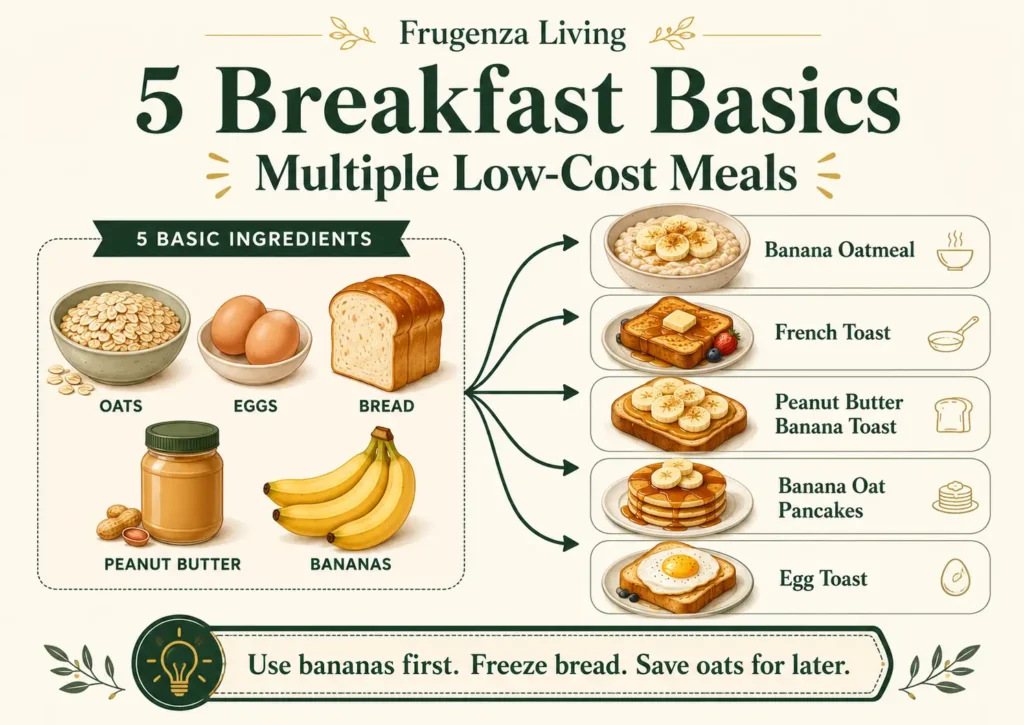
Oats, eggs, bread, peanut butter, and a few bananas can support oatmeal, egg toast, French toast, peanut butter banana toast, and banana oat pancakes. The order matters more than creating a complicated plan.
Use the bananas first because their texture changes quickly. Freeze bread before it dries out. Keep oats and peanut butter for later because they are less urgent. Eggs can move into breakfast or another meal.
This is not a complete grocery list. It is a way to stop every breakfast idea from generating its own shopping trip. For a broader foundation, see these cheap pantry staples for one person.
When a Larger Yogurt Tub Stops Being Cheaper
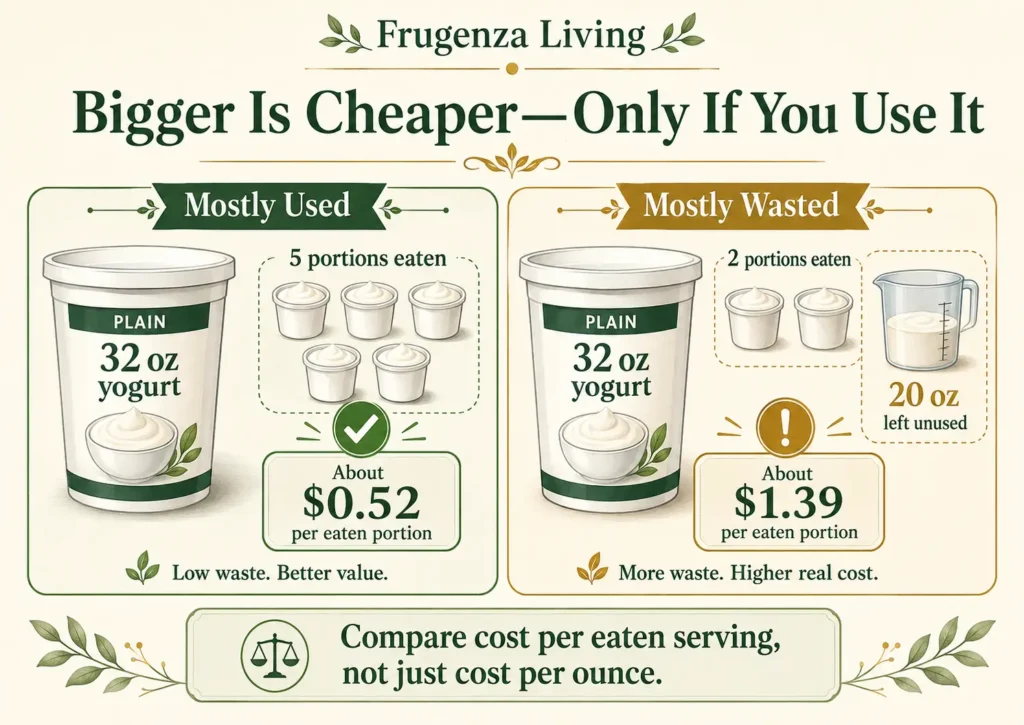
At a sample price of about $2.77 for 32 ounces, a six-ounce yogurt portion costs roughly $0.52. Five six-ounce portions use 30 of the 32 ounces, keeping the effective cost close to that amount.
If you eat only two six-ounce portions and discard the remaining 20 ounces, the package effectively costs about $1.39 for each portion you consumed. Smaller cups may then cost more per ounce but less overall.
That is why cost per eaten serving matters. Package size creates savings only when it matches your routine. Broader storage systems belong in how to make groceries last longer, rather than inside every breakfast recipe.
Quick Adjustments Without Buying Special Replacements
Without eggs: Choose banana oatmeal, peanut butter toast, bean toast, potato and bean hash, or overnight oats.
Without a stove: Use the yogurt bowl, overnight oats, or peanut butter banana bread.
Without dairy: Prepare oats with water and rely on beans, eggs, or peanut butter rather than buying a replacement solely for one recipe.
With five minutes: Choose toast, oatmeal, or the yogurt bowl.
For quantities beyond breakfast, use this cheap grocery list for one person.
Food-Safety Note
Refrigerate yogurt, cooked rice, beans, and egg-based leftovers promptly. The USDA’s leftovers guidance recommends reheating leftovers to 165°F and generally using refrigerated cooked leftovers within three to four days.
The FDA recommends cooking shell eggs until both the white and yolk are firm and cooking dishes containing eggs to 160°F.
Frequently Asked Questions
What Is the Cheapest Breakfast to Make for One Person?
Plain oatmeal made with water has one of the lowest base costs in this comparison. French toast can also be inexpensive when it uses bread already on hand. The cheapest practical option uses an open package without requiring several new toppings.
What Are Cheap Breakfast Ideas for One Person Without Eggs?
Try banana oatmeal, peanut butter banana toast, bean breakfast toast, potato and bean hash, an apple yogurt oat bowl, or overnight oats. For a breakfast without eggs or dairy, choose water-based oatmeal, peanut butter toast, or beans with potatoes.
How Do I Keep Breakfast Ingredients From Going to Waste?
Choose fewer perishable ingredients, freeze bread early, and decide the next use before returning an open package to the refrigerator. Two-portion batches are often more realistic than preparing the same breakfast for an entire week.
The Three Best Places to Begin
For the lowest base cost, begin with oatmeal. To rescue bread, make French toast before the loaf becomes unusable. For an egg-free savory option, use beans with toast or potatoes.
The strongest cheap breakfast ideas for one person do not depend on owning every ingredient in this guide. They turn a small amount of food into one practical breakfast, provide a clear plan for what remains, and are simple enough to repeat.

Read about Jeffi and Frugenza Living
- How to Budget a 10-Month Salary Over 12 Months - October 16, 2026
- Pet Adoption Budget Checklist: What You Still Need to Pay - October 16, 2026
- Proportional Bill Split Calculator for Two Incomes - October 15, 2026