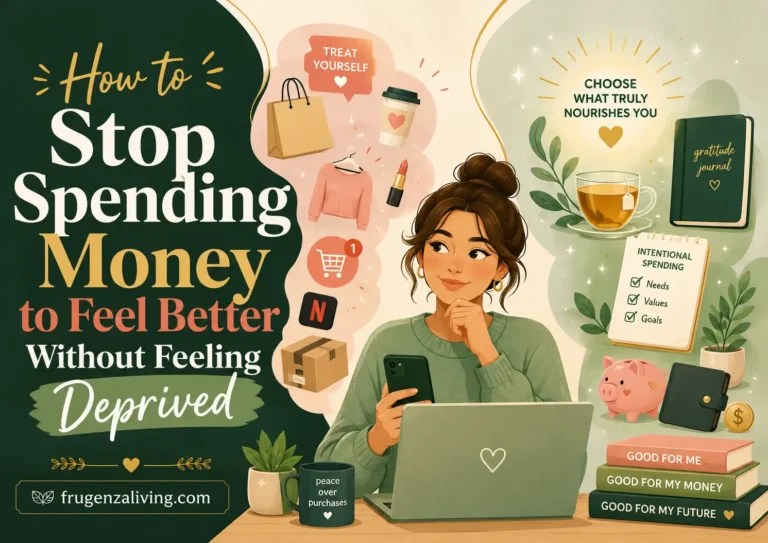
It is 9:40 p.m. after a draining day. You planned to buy nothing, yet takeout, a new shirt, or an app upgrade suddenly feels reasonable. The purchase seems to promise more than the item itself: relief, reward, novelty, control, or a better ending to the day.
Learning how to stop spending money to feel better begins by separating two questions: “What would help me emotionally right now?” and “Is this purchase worth making?” Answer the first before deciding the second.
Emotional spending means using a purchase or paid experience mainly to change, escape, soften, celebrate, or reward a feeling rather than meet a planned need. It may involve clothing, delivery food, beauty appointments, mobile-game purchases, hobby supplies, subscription upgrades, courses, or paid experiences.
This article uses practical reflection prompts, not a clinical screening or diagnostic method.
How Do You Stop Spending Money to Feel Better?
To stop emotional spending, identify what the purchase appears to promise, pause outside the sales environment, and meet the immediate need before returning to the product decision. You may need rest rather than takeout, novelty rather than another parcel, or reassurance rather than a new outfit.
Once the urgency eases, evaluate the purchase using clear criteria: usefulness, duplication, available money, and expected use. The goal is not to remove spontaneous pleasure, but to stop a temporary mood from deciding what future money must cover.
What Are You Really Trying to Buy?
Sometimes you genuinely want or need the product. Your shoes are worn out, the replacement was planned, and the price fits your budget. That is different from opening a clothing site after a discouraging day because a new outfit seems to offer confidence.
The same distinction applies beyond physical shopping. Delivery may promise relief from decision fatigue, while a beauty appointment may feel like regained control. A new course may make progress feel closer even when you have not used what you own.
Emotional spending does not always begin with sadness. Excitement, payday relief, a promotion, or the thought “I deserve something” can also make an unplanned expense easy to justify. Enjoy the positive moment first, then evaluate the purchase separately.
Cleveland Clinic explains that shopping can temporarily improve mood, create distraction, and provide a sense of control. That does not make every enjoyable purchase a problem. It means the expected feeling can become part of what you are paying for.
Ask:
Do I want the thing itself, or mainly the state I imagine it will create?
This differs from learning to control broader spending habits, which may involve weak planning, lifestyle inflation, convenience, or recurring expenses. Emotional spending is tied specifically to changing or extending a feeling.
Notice the Emotional Spending Pattern
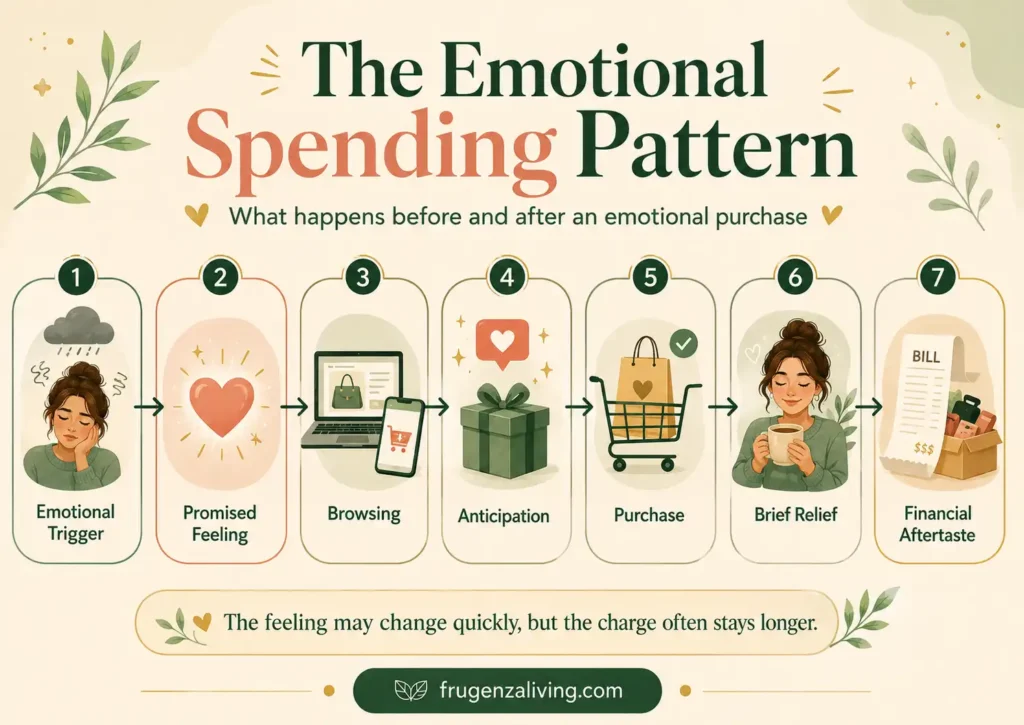
A mood-driven purchase may follow this sequence:
Trigger → Promised Feeling → Browsing → Anticipation → Purchase → Brief Relief → Financial Aftertaste
This is a reflection pattern, not a clinical model.
Imagine finishing a difficult meeting feeling overlooked. You browse desk accessories because a redesigned workspace promises competence and a fresh start. Searching creates anticipation; checkout brings completion. Two days later, the package adds clutter and balance anxiety, while the need to feel capable remains.
The “financial aftertaste” may be guilt, a tighter grocery budget, or the realization that the mood changed but the charge remained.
A 2022 study of Chinese university students during the COVID-19 pandemic found associations between impulse buying and anxiety, depression, and intolerance of uncertainty. Its specific population and period mean it cannot explain every purchase, but it supports the limited point that emotions and buying decisions can be connected.
A budget still matters, but a number alone may not answer the need that created the cart. Pair money boundaries with a response to the trigger.
What Is the Purchase Promising?
Use these prompts to identify the job you are asking the purchase to do.
Tired or overwhelmed
The promise: Relief and convenience.
Try first: Remove one task and use the easiest available meal.
Ask: Do I want this purchase, or fewer demands tonight?
Sad or discouraged
The promise: Comfort and care.
Try first: Use a familiar comfort or contact someone you trust.
Ask: Will this still feel caring when the charge appears?
Bored or restless
The promise: Novelty and anticipation.
Try first: Change location or try one unfamiliar activity.
Ask: Am I buying an object, or buying anticipation?
Out of control
The promise: Completion and control.
Try first: Finish one small task with a visible result.
Ask: What part of today actually feels unfinished?
Lonely or disconnected
The promise: Belonging and connection.
Try first: Send an invitation, voice note, or check-in.
Ask: Can this transaction provide the connection I need?
Excited or celebratory
The promise: A bigger or more memorable moment.
Try first: Mark the occasion before choosing what to spend.
Ask: Am I celebrating, or trying to prove the moment matters?
Choose a response that serves the need the purchase was promising.
Use the Feel-Better Reset Before You Buy
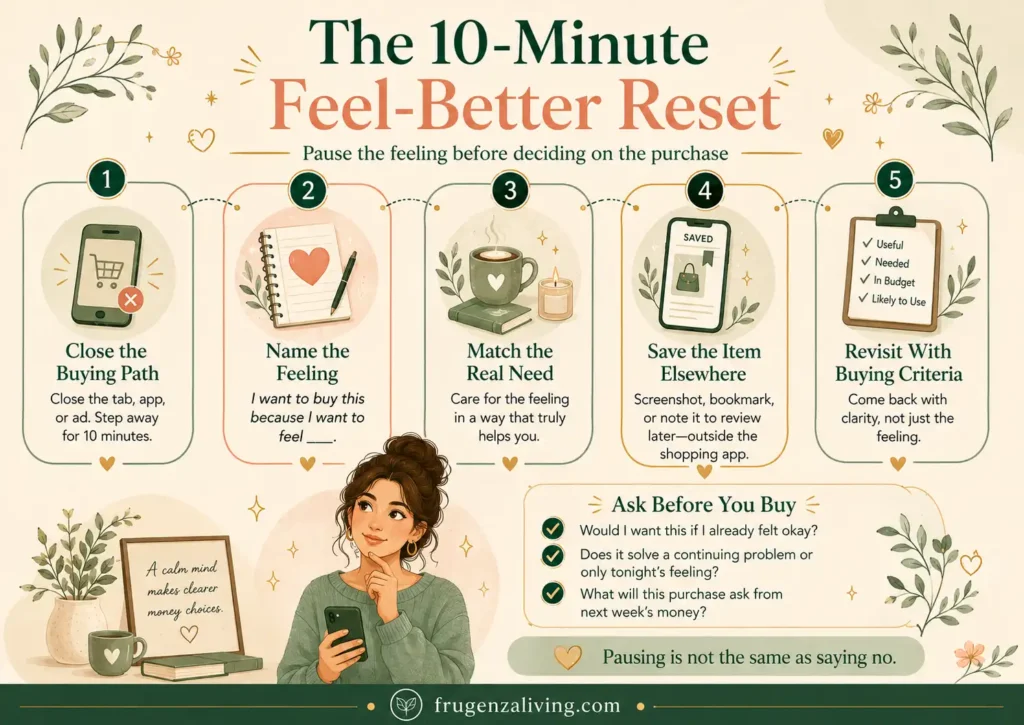
The Feel-Better Reset is a practical pause for nonessential purchases, not an immediate “never.”
1. Close the Buying Path
Leave the aisle, close the app, or exit checkout while you identify what is happening.
2. Name the Promised Feeling
Complete this sentence:
“I want to buy this because I want to feel ___.”
Possible answers include relieved, rewarded, attractive, included, entertained, prepared, successful, or in control.
3. Match the Real Need
Choose a response with the same function. If takeout represents relief, simplify dinner and drop one chore. If clothing promises confidence, wear something you feel good in and take one confidence-building action. If browsing supplies novelty, try these free things to do instead of shopping.
4. Preserve the Option Without Staying in the Store
Save the product name or screenshot outside the retailer’s app. This keeps the option open without leaving you inside the sales environment.
5. Revisit It With Buying Criteria
Return later and ask whether it solves an ongoing problem, duplicates something you own, fits your discretionary money, and is likely to be used. If the purchase still makes sense after the pause, buying it may be a reasonable choice.
The 10-Minute Feel-Better Reset
Use this checklist when the urge feels urgent but the purchase is not essential.
- Close the app, tab, cart, or store page.
- Write: “I want to buy this because I want to feel ___.”
- Choose one action that matches that feeling.
- Save the product name or screenshot outside the shopping app.
- Revisit it tomorrow using your normal buying rules.
- Would I want this if I already felt okay?
- Does it solve a continuing problem or only tonight’s feeling?
- What will this purchase ask from next week’s money?
Choose the Amount of Friction You Need
An occasional urge may respond to an overnight delay. A stronger pattern may require logging out, removing saved payment details, blocking specific sites, separating discretionary money, or asking a trusted person to review larger nonessential purchases.
Use enough friction to create a pause, not a punishment. For detailed safeguards, see how to make online checkout less automatic.
Keep Joy in the Plan
Eliminating every treat can make a spending plan feel punitive. For some people, strict restriction may encourage rebound spending justified as overdue relief.
Give enjoyment a defined place instead. A small joy budget can cover things you genuinely value. Keep a short “comfort already owned” note with options such as an easy meal, a saved movie, or a routine from these frugal self-care ideas.
Planned joy is chosen while relatively calm, fits the available money, and still seems worthwhile afterward. Emotional rescue spending feels urgent because it is expected to change the moment.
In my own spending review, the useful discovery was not one dramatic purchase. It was seeing how easily a difficult day made a small expense feel justified. Tracking the moment before buying helped me distinguish genuine value from an attempt to change my mood.
What to Do After an Emotional Purchase
If you already bought something, check the cancellation or return window, and cancel an unwanted subscription before renewal.
Record what happened before the purchase, the promised feeling, time, platform, category, and amount. Then repair one weak point: block late-night shopping, prepare an easy meal, or move retailer emails out of your inbox.
Avoid responding with an extreme no-spend punishment. Shame can make it harder to look honestly at the bank balance, return the item, or ask for help.
A regret purchase is data, not a reason to punish your future self.
Resume with the next decision rather than waiting for a perfect Monday.
Run a Seven-Day Emotional Spending Audit
For seven days, record only unplanned purchases and meaningful urges—not utility bills or planned groceries.
Note:
- The time and place
- What happened immediately before
- Your emotion and energy level
- The product or service category
- The amount
- The feeling the purchase promised
- Whether you still wanted it the next day
Look for one or two repeated conditions. Perhaps most urges occur after 9 p.m., after difficult workdays, and involve inexpensive novelty. Turn that into one rule:
“After 9 p.m., I may save products, but I buy nothing until the following afternoon.”
For delivery spending after exhausting days, the rule could be:
“Before opening a delivery app, I eat or prepare the easiest food already available. I can order afterward if I still choose to.”
A rule based on observed behavior supports a realistic frugal living foundation without turning every emotion into a budgeting exercise.
When Extra Support May Be More Helpful
Consider a qualified therapist, healthcare professional, or nonprofit financial counselor if purchases feel difficult to control, you hide transactions, repeatedly add debt, experience relationship conflict, or use spending as your main response to distress.
Cleveland Clinic recommends taking the pattern seriously when shopping feels out of control, causes financial problems, interferes with responsibilities, or leads to hidden purchases. These signs go beyond occasionally regretting a purchase, and a qualified professional is better placed to assess an individual situation.
Seek support when repeated attempts to stop have failed or spending occurs alongside persistent distress or loss of control.
This article provides general frugal living and financial education. It is not mental health treatment, diagnosis, or individualized financial advice.
Stop Asking Money to Change the Moment
You do not have to eliminate desire, paid enjoyment, or every spontaneous purchase. Create a reliable gap between the feeling and the transaction.
Respond to the need first. Then let the product or service compete for your money on usefulness and value, not on a promise to rescue or enlarge the moment.
Learning how to stop spending money to feel better can begin with one sentence:
“I want to buy this because I want to feel ______.”
Complete it, use the Feel-Better Reset, and return to the purchase decision later.
Frequently Asked Questions
Why Do I Spend Money to Make Myself Feel Better?
Spending can provide anticipation, distraction, comfort, celebration, or a symbol of change. It may briefly shift your mood after stress, boredom, sadness, excitement, or feeling powerless. The pattern becomes harmful when buying repeatedly replaces a more suitable response or creates additional financial distress.
How Can I Stop Emotional Spending Without Feeling Deprived?
Keep room for planned enjoyment. Choose a realistic joy budget while calm, prepare comforting options you already own, and delay rather than permanently reject an item during an emotional urge. This preserves choice while preventing a temporary mood from controlling the transaction.
What Can I Do Instead of Shopping When I Feel Stressed?
Identify what “better” means in that moment. For relief, reduce one demand. For comfort, use a familiar routine or contact someone you trust. For control, complete one visible task. The best alternative serves the same function the purchase appeared to promise.
When Does Emotional Spending Become a Serious Problem?
It deserves attention when spending feels difficult to control, creates repeated debt, is hidden from others, interferes with work or relationships, or becomes your main coping method. A qualified counselor, therapist, or healthcare professional can help assess the pattern and appropriate support.

Read about Jeffi and Frugenza Living
- Proportional Bill Split Calculator for Two Incomes - October 15, 2026
- How to Split Grocery Bills With Roommates - October 14, 2026
- First Apartment Kitchen Essentials on a Budget - October 13, 2026