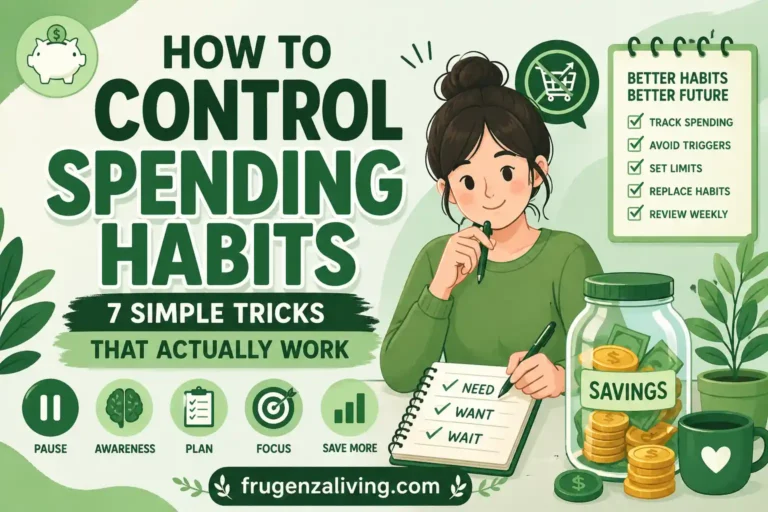
If you’ve ever checked your bank balance and thought, “Wait… where did my money go?” — you’re not alone.
I used to feel the same way.
Not because I was making big purchases, but because of small, constant spending. Coffee here, snacks there, random online buys that didn’t feel like much in the moment — until they quietly drained my money.
I tried fixing it the “serious” way.
Budget apps. Strict rules. Cutting everything.
It worked… for about three days.
Then I went right back to old habits.
That’s when I realized something important:
The problem wasn’t my budget.
It was my behavior.
Once I stopped trying to control money and started controlling habits, everything changed. In fact, this simple shift is exactly how I managed to cut unnecessary spending consistently and keep more of my money without feeling restricted.
Key Takeaways
- Awareness beats restriction
- Small habits control big spending
- Consistency matters more than discipline
Why Controlling Spending Feels So Hard
Most people think overspending is a discipline issue.
It’s not.
It’s a pattern.
One that runs quietly in the background.
First, there’s emotional spending. You don’t always buy things because you need them. Sometimes you’re bored, stressed, or just looking for a quick reward after a long day.
Then there’s instant gratification. Spending feels good immediately, while saving or holding back doesn’t. Your brain naturally chooses the faster reward.
Another reason is lack of awareness. Small purchases feel harmless. But repeated daily, they slowly eat away at your money without you noticing.
And then there’s invisible spending. Subscriptions, auto-payments, and digital transactions make money feel less real. You don’t physically see it leave, so it’s easier to ignore.
This is why controlling spending isn’t about being stricter.
It’s about becoming aware of what’s actually happening.
What Controlling Spending Habits Actually Means
Controlling spending habits means becoming aware of why you spend and making small, consistent behavior changes that reduce unnecessary spending over time.
It’s not about cutting everything.
It’s about:
- pausing before reacting
- recognizing patterns
- making slightly better decisions consistently
That’s where real control comes from.
The Simplest Way to Start Controlling Your Spending
If you want something that works immediately, start here:
Don’t try to stop spending.
Start by delaying spending.
That small shift changes everything.
Instead of saying, “I can’t buy this,” say, “I’ll wait before deciding.”
For example, if you see something online, give yourself 24 hours before buying it.
Most of the time, the urge fades.
Another simple trick is pausing before checkout. Take a few seconds and ask yourself if you would still want the item tomorrow.
These ideas work better when you manage your money effectively in real-life situations.
This works because you’re not fighting your behavior.
You’re slowing it down.
And that’s often enough.
Use a Spending Interrupt Script
Sometimes the hardest part of controlling spending is not knowing what to do. It is remembering what to do in the exact moment you want to spend.
A spending interrupt script is a short sentence you repeat before making an unplanned purchase. It gives your brain a small pause and turns the decision from automatic into intentional.
Use this simple script:
“I can buy this later if I still want it, but I do not need to decide right now.”
That sentence works because it does not create pressure. You are not saying “no forever.” You are only moving the decision away from the emotional moment.
After saying the script, take one small action: close the checkout page, put the item on a wishlist, leave the store aisle, or wait until the next day. If the purchase still feels useful later and fits your budget, you can decide with a clearer mind.
You can also create different scripts for different habits:
- For online shopping: “I will save this first, not buy it now.”
- For takeout: “I will eat something small before deciding.”
- For sale items: “A discount is not savings if I was not planning to buy it.”
- For stress spending: “I need relief, but this purchase may not be the relief I need.”
This makes spending control more practical because you are not relying only on willpower. You are giving yourself a repeatable response for the moment when the habit usually takes over.
7 Simple Ways to Control Spending Habits
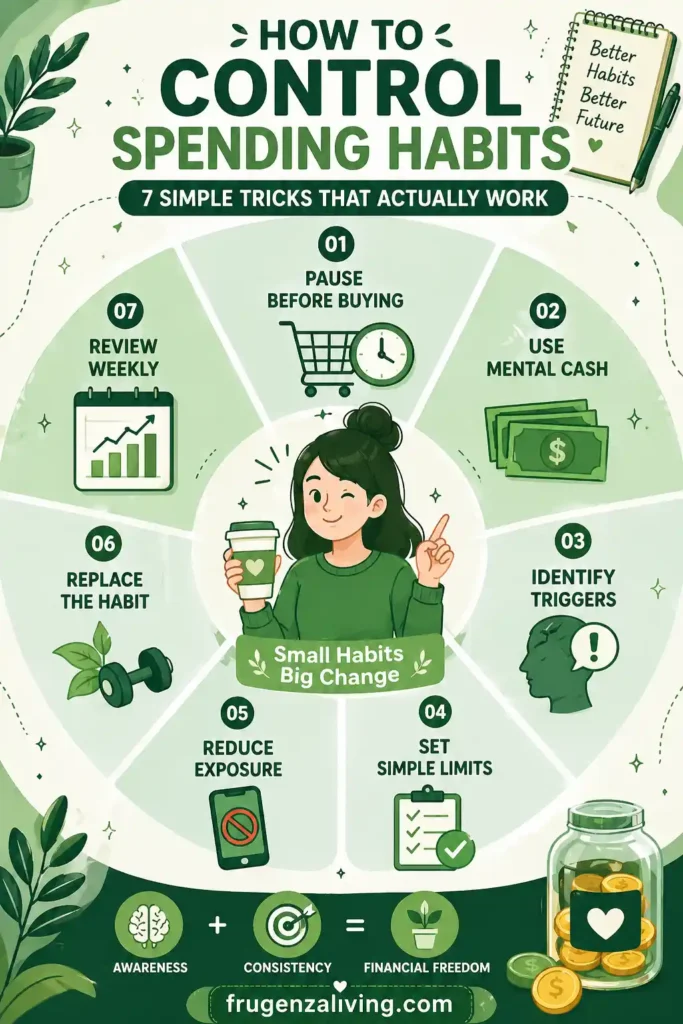
1. Pause Before Buying
Impulse is responsible for most unnecessary spending.
For example, you see a flash sale. Instead of buying immediately, you wait one day.
That pause removes urgency.
It works because time reduces emotional decisions.
2. Use Mental Cash
Even if you pay digitally, imagine handing over cash.
If you’re about to spend $15, picture giving it physically.
This creates awareness.
It works because spending feels more real.
It becomes easier when you understand your spending patterns and stay aware of your habits.
3. Identify Your Spending Triggers
Every habit starts with a trigger.
You might shop when bored or order food when tired.
Once you recognize this, you can interrupt the pattern.
It works because you’re addressing the root cause.
4. Set Simple Limits
You don’t need strict systems.
You just need boundaries.
For example, limit takeout to twice a week.
This feels manageable.
It works because flexibility increases consistency.
You can improve results by choosing simple budgeting methods that fit your routine.
5. Reduce Exposure
The more you see, the more you want.
Avoid browsing shopping apps without purpose. Unfollow accounts that constantly promote products.
It works because fewer triggers mean fewer decisions.
6. Replace the Habit
You can’t just remove a habit—you replace it.
If you usually spend when bored, try walking or doing something quick and engaging instead.
It works because your brain still gets a response.
The real change happens when you build money habits that you can repeat every day.
7. Review Your Spending Weekly
Once a week, review your behavior.
Ask:
Where did I overspend?
What triggered it?
This builds awareness.
If you’re not sure where your money is going, learning how to track expenses easily can make this step much clearer and faster.
A Real-Life Example of Controlling Spending Habits
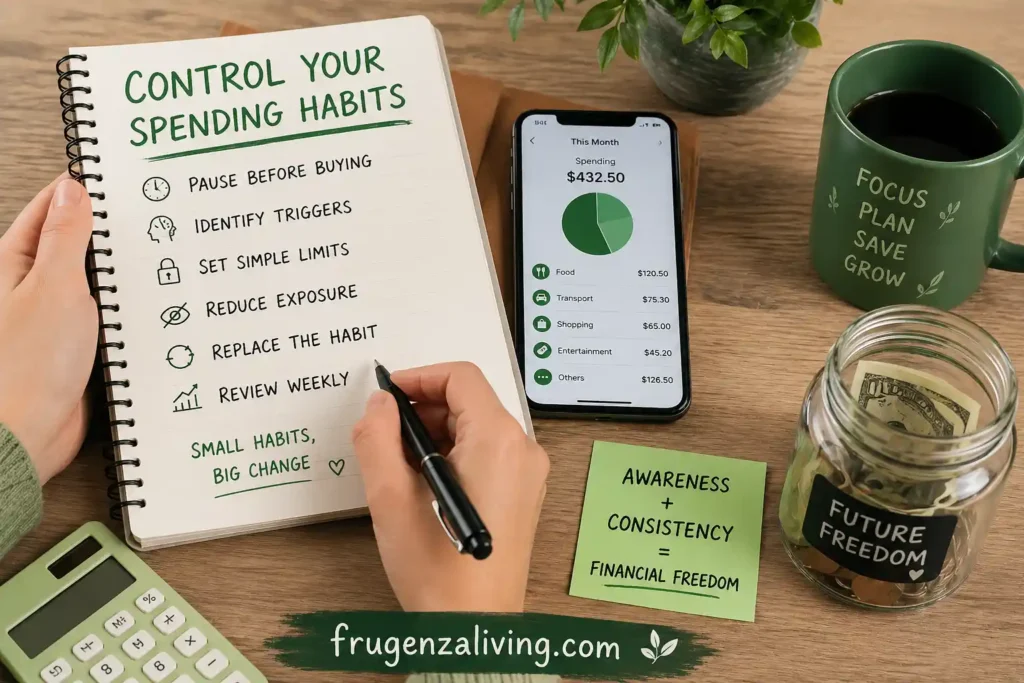
Here’s how a simple week might look:
| Day | Spending Trigger | Action Taken | Result |
|---|---|---|---|
| Monday | Bored at night | Did not open shopping app | No spending |
| Tuesday | Tired after work | Ate at home | Saved money |
| Wednesday | Flash sale | Waited 24 hours | Did not buy |
| Thursday | Stress | Took a short walk | No impulse spending |
| Friday | Social influence | Set spending limit | Controlled spending |
There’s no complicated system here.
Just small, intentional decisions.
What I Noticed After Fixing My Spending Habits
This is where things became real.
After focusing on behavior instead of strict rules, I started noticing clear changes.
I spent less on things I didn’t actually need. Not because I forced myself, but because I paused more often.
Impulse purchases dropped significantly. Many things I thought I wanted… I simply forgot about after a day.
I also felt more in control. Instead of reacting automatically, I was choosing when to spend.
And the biggest shift?
Spending no longer felt random.
It became intentional.
Why Most People Fail to Control Spending (Even If They Know What To Do)
Here’s something most advice ignores:
Knowing what to do is not the same as doing it.
Most people already know they should spend less.
But they still overspend.
Why?
Because spending is emotional, not logical.
You don’t fail because you lack information.
You fail because:
- habits are automatic
- triggers are unnoticed
- decisions happen too fast
Real change happens when you slow things down and become aware.
Not when you learn more rules.
Best Tools to Help Control Spending Habits
You don’t need complicated tools.
You need tools you’ll actually use.
Notes apps like Apple Notes or Google Keep are perfect for quickly writing down spending triggers or behaviors.
Notion works well if you prefer a simple habit tracker or weekly reflection system.
Google Sheets can help you log patterns over time in a clear way.
Banking apps already show your spending, making them useful for reviewing behavior.
Some people prefer apps like PocketGuard or YNAB, but only use them if they don’t add complexity.
The simpler the tool, the better the habit.
Common Mistakes That Make Overspending Worse
Relying on willpower alone is one of the biggest mistakes. It fades quickly.
Being too strict is another. When you restrict everything, you eventually bounce back and overspend.
Ignoring triggers keeps the cycle going.
And tracking without reflection doesn’t lead to change.
You don’t need more control.
You need better awareness.
How to Build Better Spending Habits
You don’t need discipline.
You need systems that feel easy.
Habit stacking works well. Attach new behaviors to existing routines, like reviewing spending after dinner.
Keep everything low effort. If it feels like work, you won’t continue.
And stay realistic. You will slip sometimes. What matters is continuing.
How Controlling Spending Improves Your Budget
Once your spending habits improve, budgeting becomes much easier.
You understand where your money goes. You see patterns clearly. You make more intentional decisions.
Before trying anything advanced, it helps to understand the budgeting fundamentals that keep things simple.
This naturally connects with topics like how to track expenses easily and simple budgeting for beginners.
And if you’re working with limited income, learning how to manage money on a low income becomes far more effective when your spending is under control.
Without controlling spending habits first, even the best budget won’t work.
FAQ
How do I stop impulse spending?
Start by creating a delay before buying. A simple 24-hour rule is very effective. It reduces emotional decisions and allows time for rational thinking, which often removes the urge to buy.
Why do I spend money so easily?
Spending is often driven by emotions like boredom or stress. These triggers create automatic habits. Once you identify them, it becomes easier to control your reactions.
How can I control daily spending?
Focus on awareness and small changes. Limit exposure to temptations, set simple boundaries, and pause before buying. These small actions make a big difference over time.
How do I build better money habits?
Start small and stay consistent. Replace spending habits with better alternatives and avoid making drastic changes. Over time, these small improvements become automatic.
What is the easiest way to reduce spending?
Reduce exposure to things that trigger spending. Avoid unnecessary browsing and delay purchases. The less temptation you face, the easier it becomes to control your habits.
Conclusion
You don’t need a perfect system to control your spending.
You don’t need strict rules or complicated methods.
You just need awareness.
Pause before you spend.
Understand your triggers.
Make small, better decisions.
Because controlling your money…
starts with controlling your habits.

The ideas shared here come from real-life experience and practical habits that actually work.
→ Read more about Jeffi
- No Spend Month Challenge for Beginners: A 30-Day Plan - September 24, 2026
- Low Buy Month Challenge: Realistic Rules for 30 Days - September 23, 2026
- How to Stop Buying Groceries You Already Have - September 20, 2026