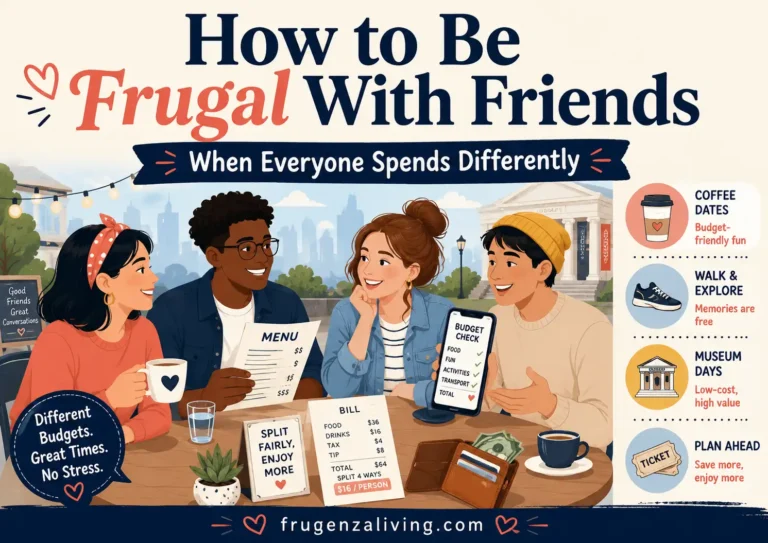
A dinner invitation may look affordable until transportation, drinks, service charges, shared food, and an extra stop enlarge the bill. The same pattern appears around birthdays, concerts, trips, and group gifts. Once the group books something, backing out can feel harder than paying.
Learning how to be frugal with friends is about seeing the likely total early enough to choose well. A sustainable social life on a budget needs a spending limit, a realistic estimate, and a response that protects both your money and the relationship.
Direct answer: Set a social-spending limit before invitations arrive, calculate the planned total rather than looking only at the advertised price, and choose one of three responses: yes, yes with a limit, or not this time with another way to connect. Clear boundaries work better than an automatic yes followed by stress, resentment, or a last-minute cancellation.
This guide covers discretionary social spending. Taxes, tipping customs, service charges, refunds, and cancellation rules vary by location and provider, so check the actual bill or booking terms before committing.
The Expensive Part Is Often the Unpriced Plan
A social plan becomes harder to decline when the group starts deciding before anyone prices it.
Someone suggests a restaurant. Another person chooses Friday. A reservation appears in the group chat. Only then do you think about transport, drinks, tax, tip, service charges, shared appetizers, and what may happen afterward.
This guide uses the term group momentum for the point where a flexible suggestion starts to feel like a commitment because the group has already chosen the details.
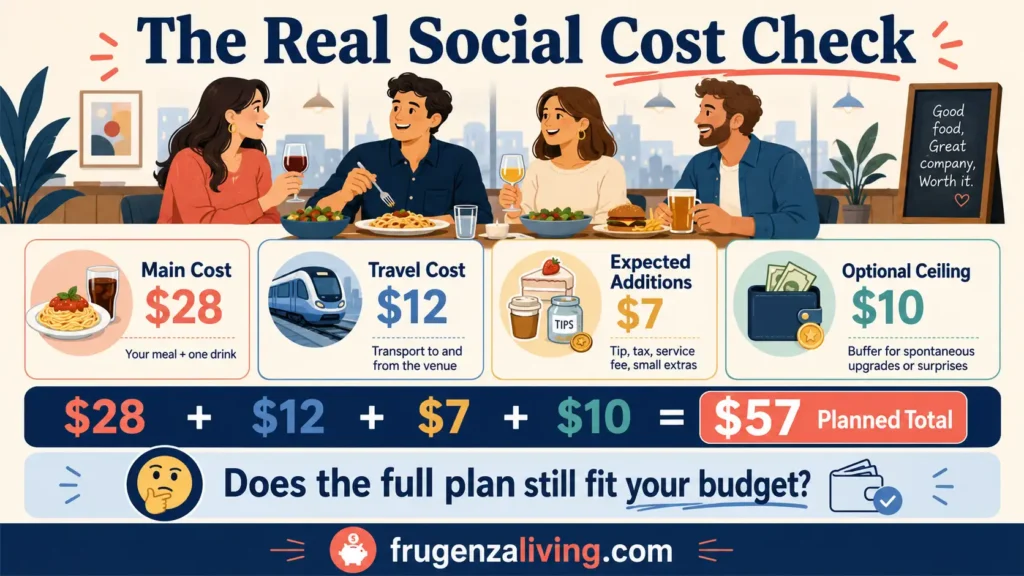
The planned total should include the main cost, travel, additions that apply, and the optional amount you are willing to spend. Drinks and upgrades are not unavoidable because others choose them.
Price the version you are genuinely considering.
Transport to the event and the planned trip home.
Applicable tax, booking fees, customary tip, or a service charge not already included.
Your limit for drinks, upgrades, shared extras, or another venue.
For example, a $28 meal becomes a planned $57 evening after $12 in transport, $7 in applicable additions, and a $10 ceiling for extras. You may spend less, but you know the maximum you agreed to fund. These figures are illustrative.
Set the Social Limit Before the Invitation Arrives
A social budget is easier to use before a menu or group-chat poll appears.
Choose a monthly amount or per-paycheck range that fits after essential expenses, minimum debt payments, and the savings commitments you have chosen to protect. There is no universal percentage. Treat the amount as a ceiling rather than a target.
Suppose someone has $120 for social spending. They might reserve $60 for a birthday, use $30 for smaller meetups, and keep $30 unassigned. The amount is illustrative; preserving choice is the useful part.
Rank plans by meaning, not by who asked first. One important birthday may matter more than several routine dinners.
For help organizing the wider spending plan first, use this guide to build a simple budget before setting a social-spending limit.
The goal is not to stop seeing your friends, but to be frugal without missing out on the relationships and experiences that matter.
Three Honest Responses Are Better Than an Automatic Yes
Most invitations fit into one of three responses.
A full yes works when the plan matters and fits your available social budget. A limited yes works when you want to participate without joining every part. A clear no works when the cost is wrong for you, especially when you offer another specific way to connect.
Change the Cost Without Canceling the Connection
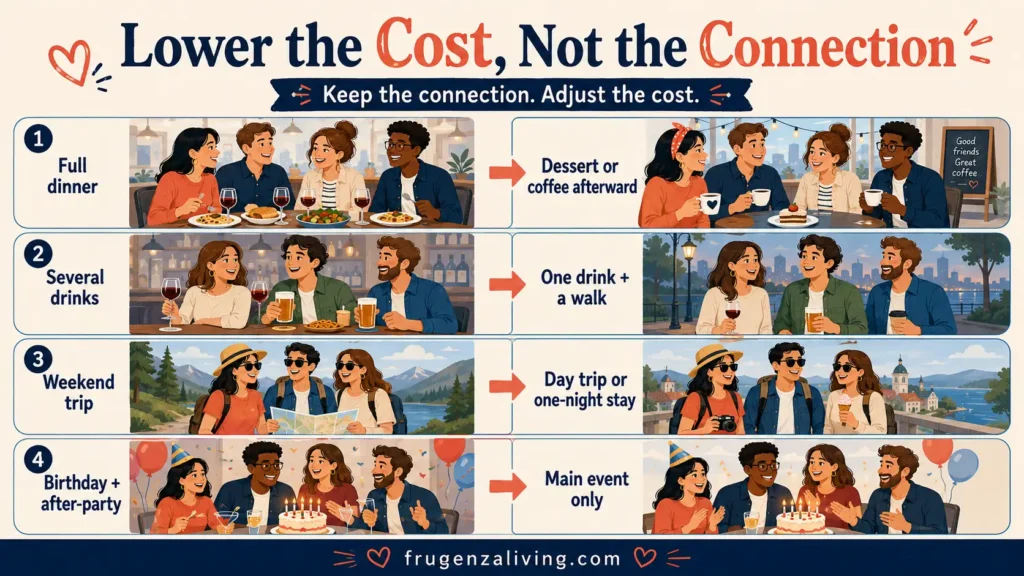
A cheaper version can preserve the social part that matters.
Join dinner only for dessert afterward. Replace several drinks with one drink and a walk. Turn a weekend trip into a day trip, eat before a concert, or attend the main birthday event but skip the after-party.
Ask: Which part is the reason I want to go?
That question helps you save money while going out with friends without turning every invitation into a refusal.
Proactive planning helps too. Instead of waiting for the most expensive suggestion to gain support, offer two clear options:
“I’m free Saturday. Would you prefer the free museum afternoon or dinner at the casual place near the station?”
You are proposing a plan, not presenting a financial report.
A walk, game night, library visit, or shared cooking session can become an enjoyable free activities with friends.
What to Say When the Plan Costs Too Much
You do not need to explain your salary, debt, savings goal, or account balance. A useful response is brief, specific, and early.
Expensive Restaurant
“That place is outside what I’m spending on dinner right now. I can do the café nearby, or meet everyone afterward.”
Last-Minute Drinks or Another Round
“I’m staying for one, then I’m heading home. I’m not joining the next round.”
These replies state the decision while preserving a way to participate.
Group Trip
“My total limit for the trip is $___, including transportation and food. Can we separate shared essentials from optional upgrades before we book?”
Before paying a deposit, confirm whether it is refundable and who covers the difference if someone drops out.
Group Gift
“I can contribute $___ to the gift. If the group chooses something more expensive, please go ahead without increasing my share.”
Unequal Restaurant Bill
“I’m going to pay for my order plus my fair share of any tax, tip, service charge, and genuinely shared dishes rather than splitting the total evenly.”
Ask before the bill is divided. Check whether a service charge is already included before adding an extra tip, and adapt to local customs.
If someone keeps pushing, repeat the boundary without turning it into a financial speech:
“I’m still not joining that part, but I’d like to see you another time.”
Specific language is easier to answer than “maybe,” silence, or a late cancellation.
Instead of automatically choosing an expensive restaurant or event, suggest a few frugal weekend ideas that everyone can enjoy.
When Your Friends Have Different Incomes
Friends can care about each other while having different disposable incomes.
Make payment expectations explicit rather than inferring them from income. A higher earner is not automatically offering to pay, and a lower earner may not always want the cheapest option.
Offer two cost levels, such as dinner only or dinner plus the show. On trips, separate shared essentials from optional upgrades. People can then choose without forcing the group into one spending level.
“That is not in my budget this month” is enough. A boundary can reflect priority, not only inability.
Measure participation by the effort someone chooses to give, not only by the amount spent.
Equal enthusiasm does not require equal spending.
Four Situations That Quietly Break a Social Budget
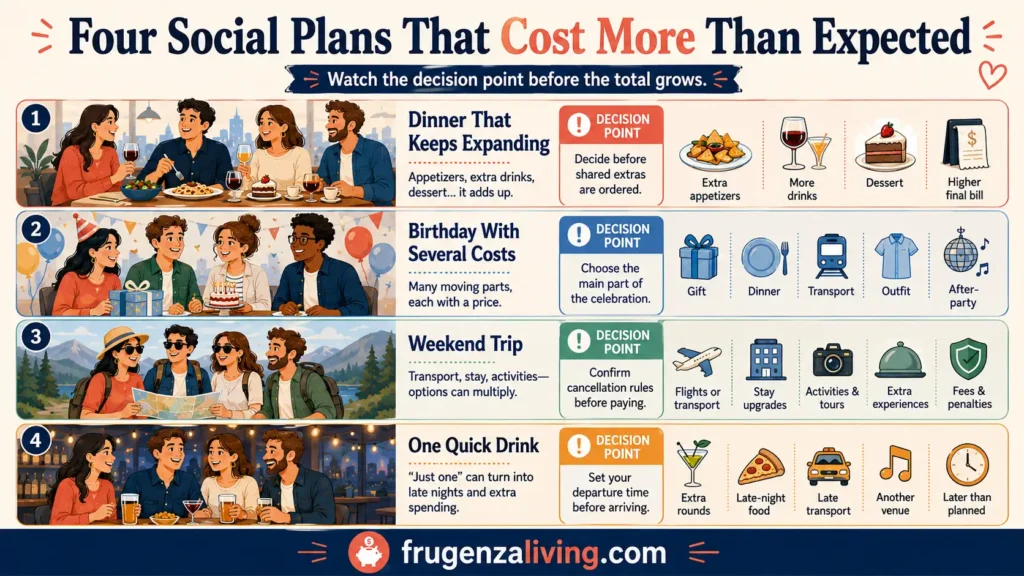
Dinner That Keeps Expanding
The first decision point is often shared extras. Decide before appetizers, drinks, or dessert are ordered. When orders differ materially, separate bills or itemized payment is usually fairer than an automatic equal split.
A Birthday With Several Separate Costs
Ask which part is the actual celebration. Set a gift limit, wear something you own, and choose the main event rather than funding every surrounding expense.
A Weekend Trip With Optional Upgrades
Confirm refundable amounts, required shared costs, optional activities, and cancellation rules before paying. Decide whether people who skip an activity contribute to it and what happens if the group size changes.
The Spontaneous “One Quick Drink”
Set a mini timeline: arrival, one drink, departure, transport home. A clear exit keeps the plan from turning into a second venue, late food, and a more expensive ride home.
If going out every time you meet is getting expensive, try a few cheap things to do with friends at home instead.
Keep Friendship From Becoming a Budget Meeting
Money boundaries should not dominate the friendship.
Alternate between paid and lower-cost plans. Suggest ideas early; two concrete choices work better than “we should do something cheaper.”
Neutral public spaces help when no one wants to host. Even “free” plans may involve transport, parking, food, childcare, or accessibility costs.
For occasional lower-cost plans, these no-spend weekend ideas can help without turning the friendship into a permanent challenge.
What to Do After You Overspend With Friends
One expensive night does not require punishment or social withdrawal.
Record the real total, then identify what raised it: transport, shared extras, an uneven split, upgrades, or staying longer than planned.
Protect groceries, housing, medication, and other essentials. Adjust the next invitation with a limited yes, firmer exit time, or lower-cost plan.
The total shows where the next boundary needs to be clearer.
Friendship Should Not Require Matching Budgets
Knowing how to be frugal with friends does not mean rejecting every restaurant, trip, celebration, or spontaneous plan. It means seeing the planned total before agreeing and choosing a response that matches both the relationship and your available money.
Clear limits create less resentment than automatic yeses followed by stress.
Before your next reply in the group chat, price the full plan and choose your yes, limited yes, or lower-cost alternative.
For a broader approach to enjoying life while protecting your priorities, read how to save money without cutting everything.
Frequently Asked Questions
How Can I Be Frugal When My Friends Like Expensive Activities?
Price the full plan, decide your limit before agreeing, and choose whether to join fully, join one part, or suggest a lower-cost version. Focus on the part that matters most.
How Do I Tell Friends I Cannot Afford a Plan?
Say, “That is outside my budget this month, but I can do ___ instead.” A clear alternative shows interest without requiring private financial details.
What if My Friends Earn More Money Than I Do?
Avoid matching their spending by default. Separate shared essentials from optional upgrades, choose the parts that fit your priorities, and make payment expectations explicit.
How Should Friends Split a Restaurant Bill Fairly?
An equal split works when orders are similar. When they differ materially, each person can pay for individual items plus a fair share of applicable tax, tip, service charges, and genuinely shared dishes. Agree before payment.
If you also share a home, this guide to separating shared groceries from personal purchases can help you agree on who should pay for each item.
How Can I Avoid FOMO While Saving Money?
Protect money for the plans that matter most, and use a limited yes when the full version is too expensive. Skipping one extra is not the same as leaving the friendship.
Should I Stop Seeing Friends Who Pressure Me to Spend?
Different preferences are normal. Repeatedly mocking or ignoring a stated boundary is not. Restate the limit, offer another plan, and create distance if the pressure continues.

Read about Jeffi and Frugenza Living
- Pet Adoption Budget Checklist: What You Still Need to Pay - October 16, 2026
- Proportional Bill Split Calculator for Two Incomes - October 15, 2026
- How to Split Grocery Bills With Roommates - October 14, 2026