
You can own a coffee maker, brew before work, and still open a café app or turn into the same drive-thru. The purchase may be attached to your commute, the iced drink you actually want, an afternoon break, or the feeling that the workday has officially begun.
Learning how to stop buying coffee every day does not require quitting coffee or promising never to visit a café again. The practical task is to reconstruct the coffee run, identify what the stop provides, make a credible alternative available before the decision point, and keep selected coffee-shop visits on purpose.
This guide addresses a spending routine. It does not provide medical advice about changing caffeine intake.
Decide Which Coffee Purchases You Want to Change
Making coffee at home does not automatically replace every reason you get it somewhere else. A home brewer can cover caffeine while leaving convenience, an iced format, a work transition, social contact, or a useful place to sit unresolved.
Define the change precisely. You might replace the automatic drink bought on the way to work, stop the afternoon mobile order you rarely plan, or reduce five weekly café visits to one social coffee and one favorite weekend drink.
This is narrower than trying to control every small expense at once. For a broader system covering multiple recurring purchases, see how to control daily expenses effectively.
A clear target also makes the result measurable. “Never buy coffee again” is difficult to evaluate fairly. “Replace four weekday purchases while keeping Friday coffee with a coworker” gives you a routine to prepare for and a number to enter in the calculator.
Reconstruct One Typical Coffee Run
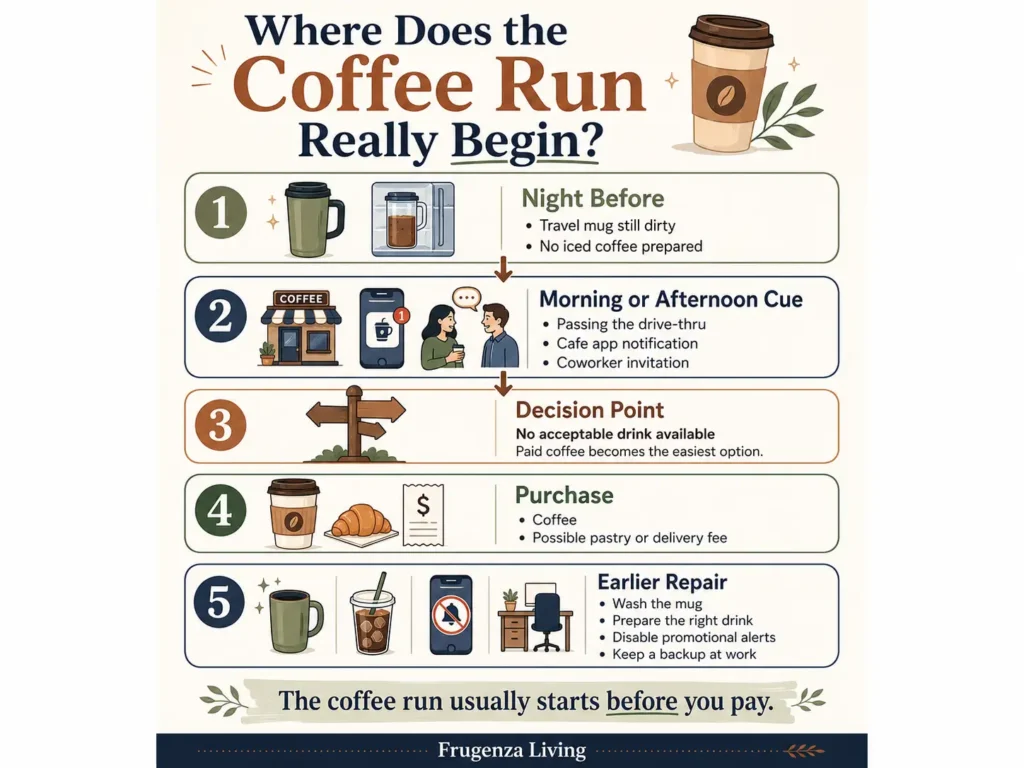
Choose the purchase that repeats most often and rebuild its sequence from the beginning. Do not start at the register. Start ten or twenty minutes earlier.
Write down five details:
- What happened before you left or opened the app? The mug may have been dirty, you may have woken late, or the drink at home may have been the wrong format.
- Where did buying become likely? It could be a familiar drive-thru, the campus café, a saved mobile order, or a coworker invitation.
- What did you actually want? Plain hot coffee is not an equivalent replacement for a cold, sweet, milk-based drink.
- What else did the stop provide? Perhaps it created a transition into work, a five-minute break, a meeting place, or somewhere quiet to sit.
- Did coffee start another purchase? A pastry, delivery fee, or bottled drink may have entered the transaction only after the coffee decision.
Suppose a recurring $6 iced coffee is ordered at 2:30 p.m. The sequence may begin at lunch, when no cold drink is put in the office refrigerator. At 2:20, a rewards notification appears. Ten minutes later, the app is open and the paid option requires fewer steps than making anything else.
The useful repair happens before 2:30: prepare the cold drink, silence the alert, and preserve the afternoon pause. That is more specific than asking yourself to have more willpower.
Calculate the Savings You Can Actually Keep
Use your real frequency instead of multiplying one café price by 365.
Savings per avoided purchase = paid drink price − replacement cost
Weekly savings = avoided purchases per week × savings per avoided purchase
First-year net change = weekly savings × 52 − one-time equipment cost
Illustrative example: you buy five $5 coffees each week, plan to keep one café visit, and spend $0.75 on each home or office replacement. Four purchases are avoided, producing a $4.25 difference per drink and approximately $17 in weekly savings. With no new equipment, the first-year estimate is $884.
Those are example inputs, not national averages. Estimate your replacement cost by measuring what one drink uses. Divide each package price by its usable quantity, then calculate the coffee, milk, creamer, or syrup poured into one serving.
Daily Coffee Purchase Gap Calculator
Replace the example values with your own. Results are estimates based only on the values entered. The first-year result subtracts one-time equipment cost but excludes maintenance, repairs, and future price changes.
Build a Replacement That Matches the Actual Order
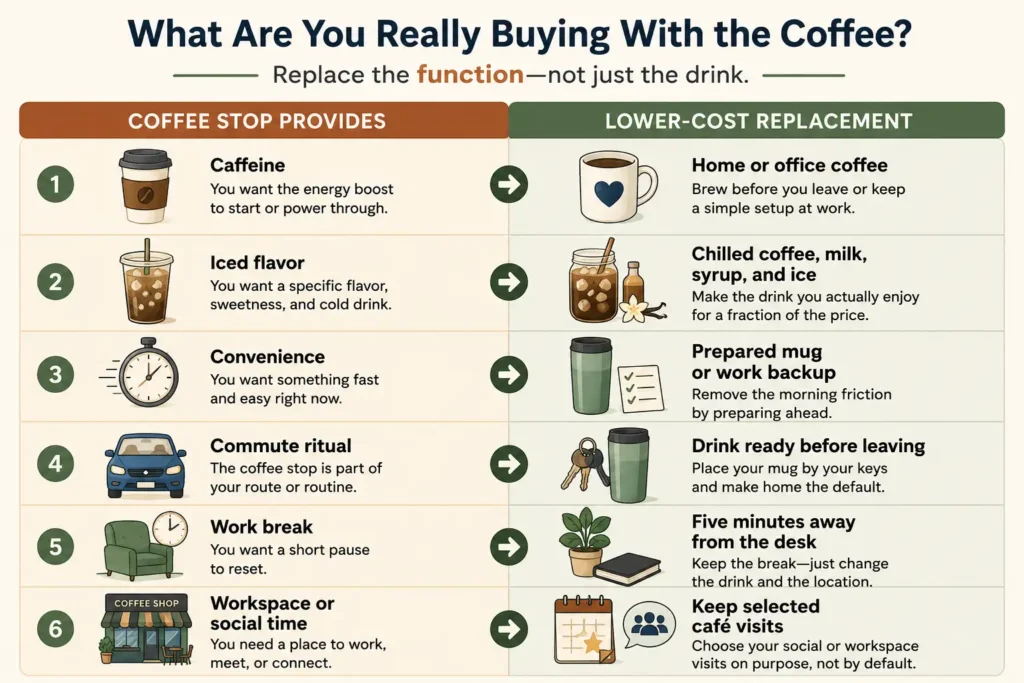
Match the Caffeine Need
Prepare coffee before leaving and keep a simple office backup. When caffeine and speed are the only functions you need, office coffee or an instant option may be sufficient.
Match Hot Versus Iced
A flavored iced drink is unlikely to be replaced by plain hot coffee. Match the temperature, sweetness, milk or creamer, strength, and approximate size that make the order appealing.
For the recurring $6 iced vanilla coffee, a closer alternative might be chilled coffee concentrate, milk, measured vanilla syrup, ice, and the same five-minute break away from the desk. The objective is not a café-perfect recipe. It is an acceptable drink you can prepare repeatedly.
Match the Commute
If you are trying to stop buying coffee on the way to work, place the mug beside your keys and reduce the morning steps.
If carrying a full cup on a bus or train is awkward, keep an empty leak-resistant mug and suitable coffee supplies at work. The alternative does not have to travel from your kitchen. It only needs to be ready before the café becomes the easiest option.
Keep the Break
Removing the purchase should not remove the pause. Drink your replacement away from the desk, sit in a break area, step outside, or take a short walk.
Recognize When the Café Is Providing a Place
Sometimes the purchase includes a workspace, Wi-Fi, a meeting location, air conditioning, or useful time away from home.
Compare that visit with its real alternative, not only the ingredient cost of the drink. A deliberately purchased coffee may be reasonable when the setting provides several productive or restorative hours.
You do not have to stop buying coffee entirely; learning how to enjoy coffee shops for less can still create meaningful monthly savings.
Make the Lower-Cost Option Available Earlier
The replacement must exist before you pass the café, reach work without a drink, or open the ordering app.
Prepare what matters the night before:
- Wash the travel mug.
- Measure the grounds.
- Check filters, ice, milk, or creamer.
- Refrigerate cold coffee or concentrate appropriately.
- Pack a shelf-stable backup.
- Move the café app off the home screen.
- Disable promotional alerts that begin an unplanned order.
You do not need to delete every payment method, choose an impractical route, or buy expensive equipment. Add enough friction to create a decision while making the replacement faster.
When home coffee repeatedly disappoints you, change one important variable first: format, temperature, sweetness, strength, or creamer. Buying several gadgets before identifying the missing feature can delay the savings.
Keep a Backup for the Morning That Fails
Some mornings will break the primary routine. Home coffee may be the first option. Supplies at work or properly refrigerated concentrate can be the second. An instant packet, tea you enjoy, shelf-stable creamer, or an empty reusable mug can provide an emergency option.
Keep the backup where the failure happens: a desk, locker, or work bag. Do not leave dairy or other perishable products in a warm car.
The emergency drink needs to be acceptable, quick, and available—not café quality. Buying coffee can remain the final option when every backup fails or when you consciously decide the convenience is worth its price.
Keep Selected Café Visits
Choose what paid coffee will remain: a social visit, Friday specialty drink, workspace session, or weekly café allowance.
Make the choice before opening the app. A coffee decision also does not have to become a pastry decision. When the same stop regularly adds food you did not plan to buy, learn how to stop adding an automatic snack.
Rewards and reusable-cup discounts can lower the cost of a visit already selected. They do not necessarily reduce frequency. If a points reminder starts the buying sequence, check rewards only after deciding the visit belongs in your plan.
An allowance is a ceiling, not a target. You do not need to use an unspent café visit before the week ends.
Move the Difference Before It Becomes Other Spending
Avoided coffee spending does not automatically appear in a savings account. It can quietly become groceries, entertainment, or another convenience purchase.
Use the calculator as an estimate, then transfer an amount based on purchases you actually avoided. A weekly transfer is easier to verify than moving a full annual projection in advance. Give the money one job, such as an emergency fund, debt payment, sinking fund, or another specific goal.
A broader system can help you turn avoided coffee purchases into weekly savings without treating the calculator estimate as guaranteed money.
Repair the Sequence After an Unplanned Coffee
One unplanned purchase does not require a restart next Monday. Reconstruct what happened.
Was the mug dirty? Did the weather make hot coffee unappealing? Was carrying a drink inconvenient? Did a meeting change your route? Did a notification appear during a difficult task?
Repair the earliest missing step before the next opportunity. Do not compensate by skipping food, cutting necessities, or buying equipment in frustration.
Also check whether the purchase was actually outside your plan. Coffee selected for a useful workspace session or social meeting may not need repairing.
Frequently Asked Questions
How Do I Stop Buying Coffee Every Morning?
Reconstruct the repeated sequence and change its earliest weak point. Prepare the drink format you enjoy, put the mug where you will see it, and keep a backup at work. Keep selected café occasions so the routine does not depend on an all-or-nothing ban.
Why Do I Buy Coffee When I Already Make It at Home?
The paid stop may provide something the home drink does not: an iced format, specific flavor, convenient commute option, break, workspace, social contact, or reward. Identify the missing function and replace that part instead of assuming caffeine alone explains the purchase.
How Much Can I Save by Making Coffee at Home?
Subtract the replacement cost from the paid drink price, then multiply the difference by the weekly purchases you will actually avoid. Subtract new equipment from the first-year result. Use your prices and planned café visits rather than a generic daily-coffee estimate.
Keep the Coffee, Change the Default
To learn how to stop buying coffee every day, reconstruct the coffee run before payment happens. Match the drink and the function that made the stop useful, prepare the alternative before the route or app becomes persuasive, and keep a backup for the morning that goes wrong.
Café coffee can remain a deliberate purchase. The meaningful change is making it one available option rather than the automatic ending to the same sequence.

Read about Jeffi and Frugenza Living
- How to Budget a 10-Month Salary Over 12 Months - October 16, 2026
- Pet Adoption Budget Checklist: What You Still Need to Pay - October 16, 2026
- Proportional Bill Split Calculator for Two Incomes - October 15, 2026