
Everyone agrees to stay in because it should be cheaper. Then somebody suggests delivery, someone wants a new game, and another person proposes a craft that requires a supply run. Suddenly, a simple night at home is not especially cheap.
The best cheap things to do with friends at home need one easy activity, a low participation cost, and enough room to talk, laugh, or make something together.
A cheap hangout works when the activity is easy to join—not when the host spends money making “staying home” look impressive.
Pick one anchor activity first. Let food, drinks, and extras stay secondary.
Quick picks: For catching up, try a playlist swap or camera-roll stories. For laughing, use cards, charades, or homemade trivia. For a creative night, cook one simple dish or build a shared playlist. If everyone is tired, rewatch a comfort movie or try a one-slide presentation night with deliberately silly topics.
The Cheapest Hangout Is the One You Don’t Have to Shop For
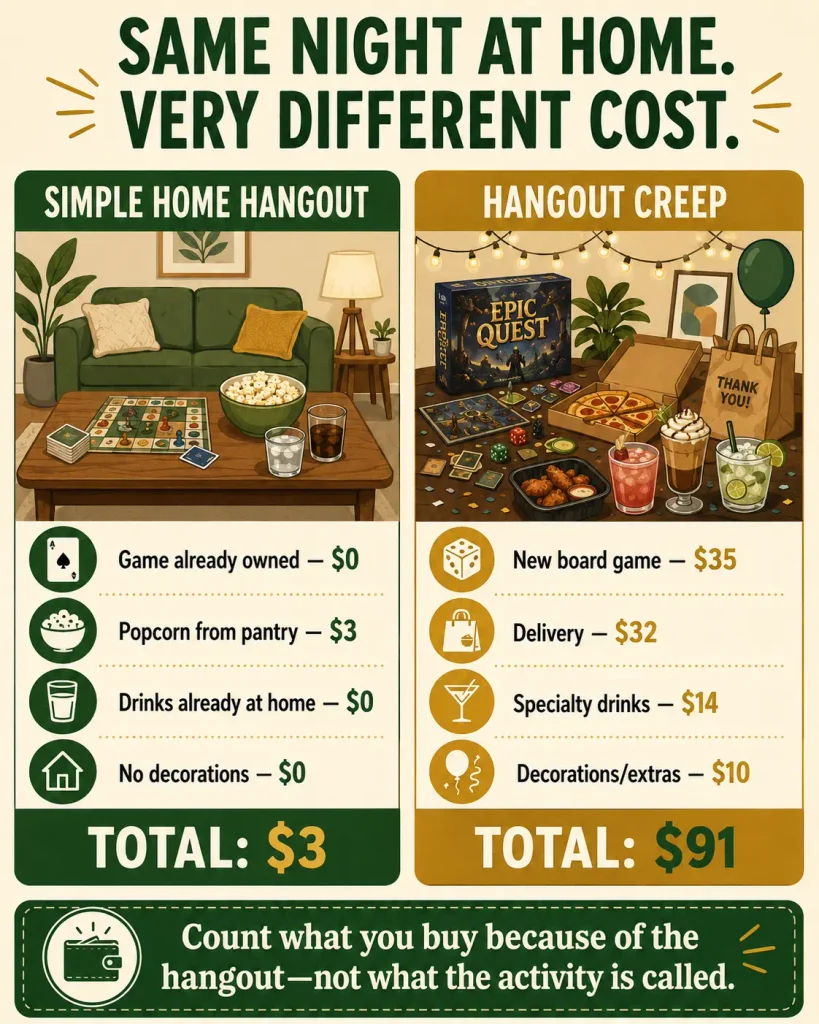
A movie night can cost $0 if someone already has access to the movie. It can also become a $45 delivery order plus specialty snacks. A craft night sounds inexpensive until everyone buys a kit. A game night stops being cheap when somebody orders a new $40 game just for that evening.
Count what you need to buy because of the hangout, not what the activity is called.
There is also a participation cost. If the host buys $18 in snacks and four guests each spend $8 on ingredients, drinks, or supplies, the group has actually spent $50, not $18.
Nobody needs to track friends’ receipts. A low-cost plan simply should not require everyone to shop before participating.
Cheap does not have to mean strictly free. Spending a few dollars on something everyone will use can be reasonable. The better test is whether the spending improves the actual time together or merely makes the night look more “hosted.” A $6 bowl of popcorn can fit a cheap plan; six separate purchases that nobody needed probably do not.
If the bigger challenge is restaurants, group trips, different budgets, or expensive invitations, this guide to being frugal with friends covers those money boundaries in more detail.
Pick Tonight’s Cheap Friend Hangout
Use the selector below when everyone wants to meet up but nobody wants to spend twenty minutes debating what to do. Choose the group size, social energy, spending limit, and setup tolerance. The tool only returns activities that fit the selected budget and prep constraints.
Frugenza Living Hangout Picker
Pick Tonight’s Cheap Friend Hangout
Match the activity to your group instead of shopping for a whole event.
Try increasing the spending limit or prep tolerance. Your budget and prep settings have not been ignored.
Homemade Trivia Night
Everyone contributes questions, so the entertainment comes from the group rather than something you need to buy.
Keep it cheap: skip prizes or a paid trivia app—paper and phone notes work.
Simple rule: One anchor activity is enough. You do not need to turn a hangout into an event production.
If You Mostly Want to Talk
1. Playlist Swap Night
Each person plays two or three recent favorites and shares why they picked them. It can stay at $0 with music everyone already has access to.
2. Bring-One-Snack Catch-Up
Make the conversation the activity, not the food. If people want snacks, keep it to one simple contribution each rather than turning the evening into a full potluck where everyone feels responsible for a dish.
3. Camera-Roll Story Night
Pick a month, trip, old screenshot, or random photo and tell its story. It requires no supplies and gives conversation somewhere to start.
4. Homemade Question Jar
Write prompts on scrap paper and take turns drawing them. Keep questions light enough for the group: a favorite recent discovery, something you would learn for free, or the funniest thing that happened this month.
For broader inexpensive activities at home that are not specifically friend hangouts, see these frugal things to do at home.
If You Want to Play and Laugh
5. Play a Game Someone Already Owns
Ask what people already have before buying anything. One familiar board game often works better than spending $40 on something nobody knows how to play yet.
6. Homemade Trivia Night
Everyone writes a few questions around themes such as music, school memories, movies, local knowledge, or random facts. Split into teams for a larger group and keep score on paper or a phone.
7. Card Tournament
One ordinary deck can support several games. Keep the prize symbolic: playlist control, first choice of movie, or bragging rights.
8. Charades or Drawing Telephone
Use homemade prompts and scrap paper. They work especially well for larger groups because nobody needs special equipment.
9. Indoor Photo Scavenger Challenge
Create prompts such as “something older than you” or “the strangest kitchen object.” Use phones people already own and compare results afterward.
Game nights, potlucks, movie marathons, and DIY evenings can easily become affordable birthday celebrations without needing an expensive venue.
If You Want to Make Something Together
10. Cook One Use-What-We-Have Dish
Choose one simple recipe around ingredients already available. Before buying anything missing, decide whether it is actually necessary.
11. Pantry Snack Challenge
Put a few ordinary ingredients on the counter and see what combinations the group can make. The challenge only stays cheap if nobody shops for special ingredients first.
12. Build a Shared Playlist
Choose a theme—road-trip songs, high-school favorites, productivity music, or “songs everyone should hear once.” Everyone contributes tracks, so the finished playlist remains useful after the night ends.
13. Create a Shared Digital Photo Album
Collect earlier photos into one shared album and add captions or dates. Keep it digital instead of buying printing or scrapbook supplies.
14. Make a Use-What-You-Have Collage
Use old magazines, packaging, scrap paper, pens, or materials already in the house. Skip the idea entirely if participation requires everyone to buy a $15 craft kit.
If cooking, art, photography, or games become something you want to practice regularly, these frugal hobbies at home are a better fit for the long-term hobby side.
If Everyone Is Tired
15. Comfort-Movie Rewatch
Choose something people already know. Use access somebody already has instead of renting something only because everyone is together.
16. One-Slide Presentation Night
Each person makes one simple slide on a funny topic: snack rankings, worst fashion eras, an old photo, or a random discovery. Use free tools and keep it to one slide so preparation does not become homework.
17. Puzzle + Conversation
Use a puzzle already sitting in somebody’s closet. It gives everyone’s hands something to do while conversation stays relaxed and unforced.
18. Tea, Coffee, and a No-Phone Hour
Make whatever drinks are already available, put phones face-down, and spend an hour catching up. Specialty drinks should stay optional rather than turning the evening into a café order.
If your plans involve having everyone over, knowing how to host friends without overspending can keep food, drinks, and extras from turning a cheap activity into an expensive night.
How to Keep a Cheap Home Hangout Cheap
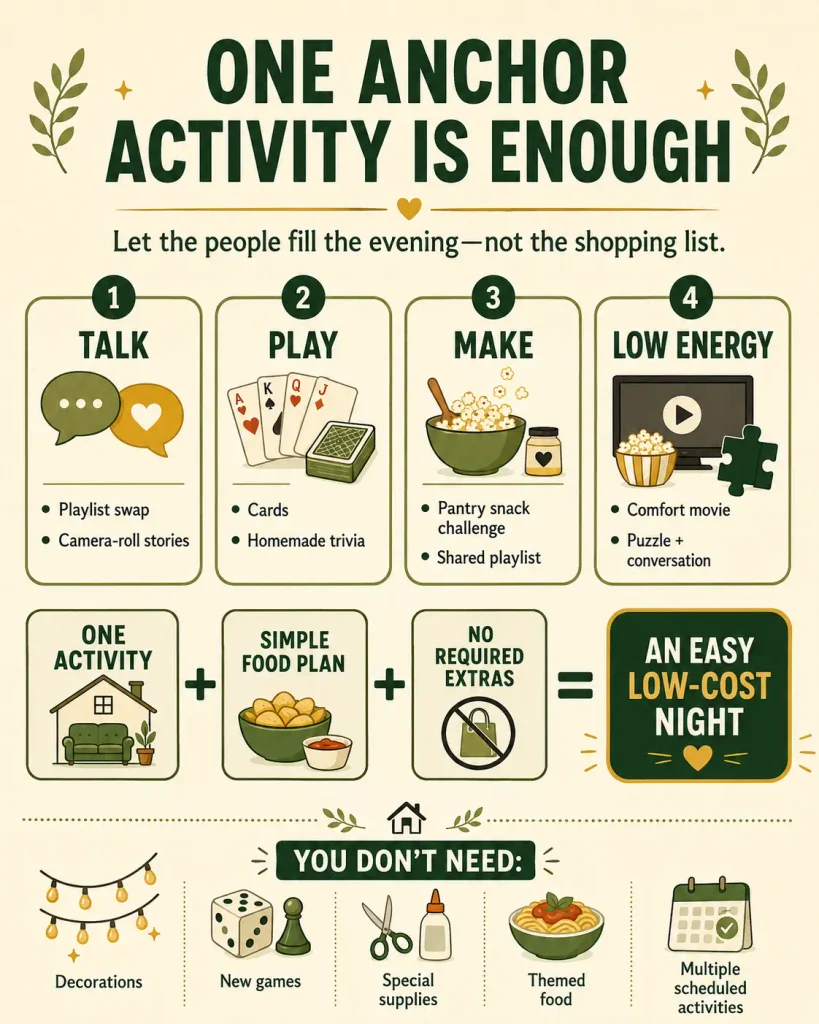
Pick one anchor activity. Cards plus conversation is already a complete plan. You do not need a game, movie, themed dinner, decorations, and craft station on the same night.
Use what’s already owned. Check games, streaming access, speakers, ingredients, cards, art supplies, and puzzles before anyone shops.
Decide food before people arrive. Meeting after dinner can remove the biggest spending temptation. Another option is one shared snack or a deliberately small contribution. A potluck is not automatically cheap if the host quietly buys the main food, drinks, and all the extras.
Skip aesthetic hosting. The room does not need decorations, matching dishes, printed menus, or a Pinterest-ready snack board.
Keep the participation floor low. Avoid plans where each guest needs a ticket, kit, ingredient list, subscription, or special purchase merely to join.
If you want the entire Friday-to-Sunday stretch to stay at $0 rather than merely keeping one gathering inexpensive, these no-spend weekend ideas are the better fit.
A home hangout is cheap because the plan is simple—not because one person quietly absorbs all the cost.
Make the Invitation About the Fun, Not the Budget
You do not have to introduce the plan as a financial restriction.
“Want to come over Saturday? I was thinking cards, popcorn, and catching up.”
Or:
“Come over after dinner—bring a game if you have one.”
A concrete activity makes staying home sound like the plan rather than the backup plan.
The U.S. Department of Health and Human Services’ Social Connection resource highlights social connection as an important part of health and well-being. The useful part is the connection—not how much the group spends creating it.
Frequently Asked Questions
What are cheap things to do with friends at home at night?
Try cards, homemade trivia, a playlist swap, a movie you already have access to, a question jar, tea and conversation, or a one-slide presentation night. Pick one activity based on the group’s energy rather than planning an entire event.
What can two friends do at home for cheap?
Two friends can cook one simple dish, swap playlists, go through old photos, play cards, work on a puzzle, rewatch a favorite movie, or make coffee and catch up without phones.
What can a group of friends do at home without spending money?
Charades, homemade trivia, drawing games, card games, shared playlists, photo challenges, camera-roll stories, and games already owned can stay at $0 when the required items are already available.
How do you make hanging out at home feel fun instead of boring?
Give the evening one anchor. “Come over” can feel vague; “come over for homemade trivia and popcorn” gives the group something to start with while leaving plenty of space for conversation.
Pick the Activity Before the Shopping List
You do not need to recreate a restaurant, bar, craft studio, or party venue at home.
You need one easy thing to do, something friends can join without buying gear, and enough space for the people to become the entertainment.
Pick the activity first. Let the hangout grow from the people—not from the shopping list.

Read about Jeffi and Frugenza Living
- Proportional Bill Split Calculator for Two Incomes - October 15, 2026
- How to Split Grocery Bills With Roommates - October 14, 2026
- First Apartment Kitchen Essentials on a Budget - October 13, 2026