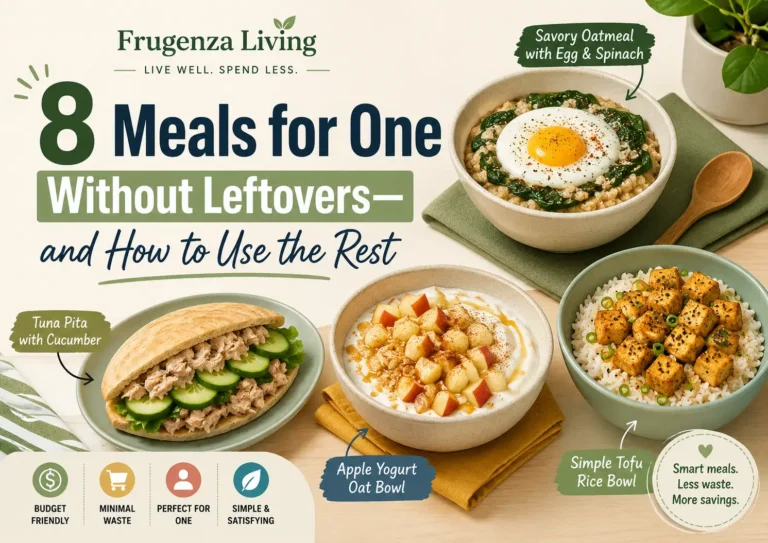
A recipe can end with one plate and still leave half a can, an open tofu package, or produce with no next purpose. Large-batch cooking creates the opposite problem: finished food that must be reheated for several days.
These meals for one without leftovers stop at one cooked serving. When a package contains more than one meal needs, you measure the remainder before cooking and give it a different job. The eight ideas below include four stand-alone meals and two ingredient routes. There is no weekly meal-prep schedule and no requirement to repeat the same finished dish.
For broader options where affordability matters more than avoiding cooked leftovers, explore these inexpensive meals for one.
Not Every Remainder Needs the Same Solution
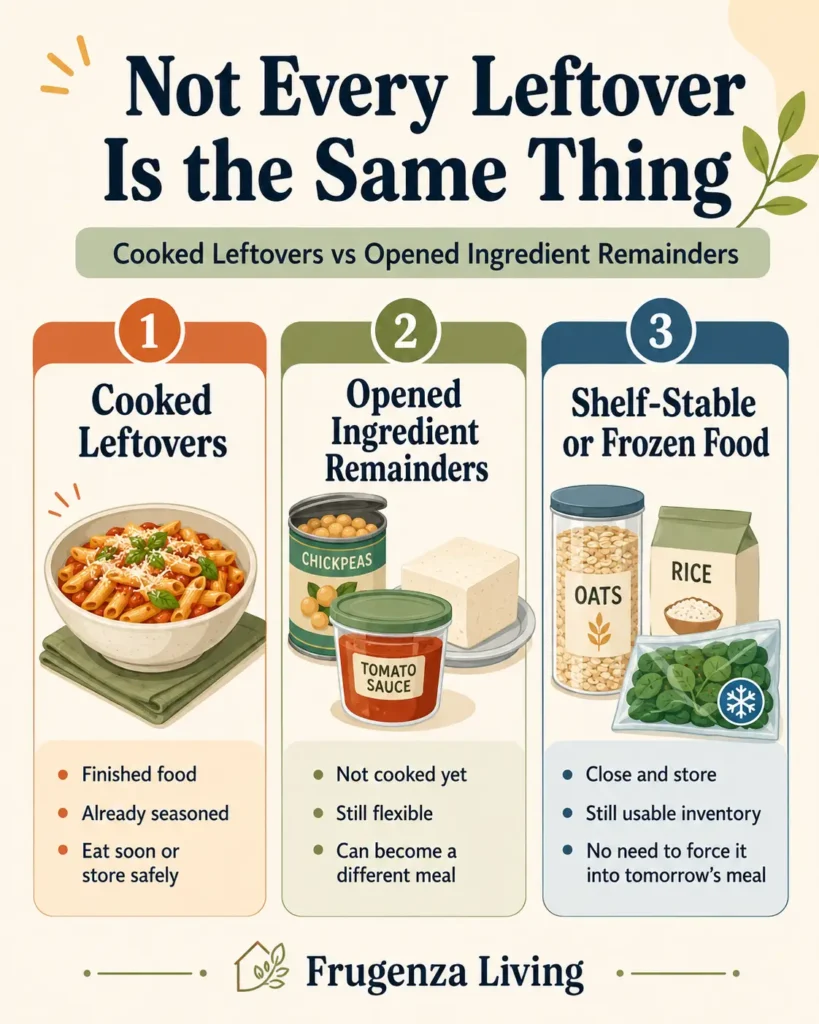
Cooked leftovers are finished food remaining after a meal. Preventing them usually means measuring the dry grain, counting the bread, and portioning the protein before heat is applied.
An opened ingredient remainder has not become a meal yet. Half a can of chickpeas or an unseasoned tofu portion can move in a different direction when it is separated before cooking.
Shelf-stable and frozen foods need less urgency. Close the oats, return the vegetables to the freezer, and treat them as inventory rather than forcing them into tomorrow’s plate. A recipe can “serve one” and still be inefficient when it opens several perishable packages for tiny amounts.
The amounts below are practical one-person portions. Appetite and product size differ, so keep the cooked serving modest and adjust only when you already know you need more.
Four Meals That End at One Plate
These meals use clear portion boundaries and do not depend on cooking tomorrow’s serving at the same time.
If you want to adapt a family recipe instead, this guide to reducing a recipe to one serving helps you work out the quantities before cooking.
1. Savory Oatmeal With Egg and Spinach
Combine 1/2 cup rolled oats, 1 cup water, a pinch of salt, and 1/3 cup frozen chopped spinach in a 1- to 1 1/2-quart saucepan. Simmer until the oats are tender. If the spinach releases extra water, cook uncovered for another minute.
Transfer the oatmeal to a bowl. Add 1 teaspoon oil to the same pan and cook one egg until the yolk and white are firm, then place it over the oats. Add pepper or a small splash of soy sauce.
FoodSafety.gov recommends cooking raw eggs until both the yolk and white are firm.
The meal creates no cooked second portion. The oats and spinach return to storage, while the remaining eggs stay intact in their carton.
2. Tuna and Cucumber Pita Plate
Mix one 2.6-ounce tuna pouch with 1 tablespoon mayonnaise, yogurt, or another creamy condiment that is already open. Add pepper and half of one diced snack-size cucumber, about 3 ounces.
Fill one 6-inch pita with the tuna mixture. Place the remaining cucumber on the same plate. Use two mini pitas instead when that matches the bread you already bought.
A pouch avoids an opened tuna can, although it may cost more per ounce. This is designed as a light lunch; adjust the bread portion to your appetite rather than increasing the filling.
Do not buy a full container of yogurt or mayonnaise solely for the tablespoon used here.
3. Cabbage and Two-Egg Toast Skillet
Warm two bread slices in a dry 8- to 10-inch skillet, then transfer them to a plate. Add 1 teaspoon oil and 1 cup shredded cabbage. Cook until the cabbage softens and develops a few browned edges.
Push it to one side, add two eggs, and scramble until completely set. Fold the cabbage through the eggs and serve the mixture over the toast. Paprika, garlic powder, or pepper changes the flavor without opening another perishable package.
This formula ends at one plate and avoids duplicating the larger potato-and-cabbage skillets commonly designed as multi-serving dinners. Return the uncooked cabbage to the refrigerator for a different meal.
4. Apple Peanut Butter Yogurt Oat Bowl
Stir together one 5.3-ounce yogurt cup, 1/4 cup rolled oats, and 1 tablespoon peanut butter. Dice one small apple and fold all of it into the bowl with cinnamon.
The whole apple is used, and the yogurt cup establishes a natural stopping point. A larger yogurt tub may cost less per ounce, but it is useful only when its remainder already has another purpose.
When package size is the recurring problem, a smaller grocery list for one person can reduce the number of specialty ingredients opened for a single meal.
Shared Ingredients, Two Different Meals
Measure and reserve each portion before either meal is cooked.
Chickpeas and Tomato Sauce
- Divide first
- Use roughly 60% of the chickpeas for the skillet and 40% for the couscous bowl. Split one 8-ounce tomato-sauce can evenly.
- Meal one
- Chickpea tomato egg skillet.
- Meal two
- Smaller tomato chickpea couscous bowl.
Eight Ounces of Tofu
- Divide first
- Measure 8 ounces of extra-firm tofu and separate it into two 4-ounce portions.
- Meal one
- Smoky tofu and carrot toast.
- Meal two
- Ginger-soy tofu rice bowl.
Learning to buy groceries for one without overbuying can prevent extra ingredients from becoming waste later.
Share Ingredients, Not Cooked Leftovers
Choose a route only when both meals sound useful. Divide the shared ingredient while it is still neutral, then prepare the meals on different days if that suits your schedule.
The second dish should change the base, texture, or flavor—not merely reheat the first one.
Route A: Chickpeas and Tomato Sauce
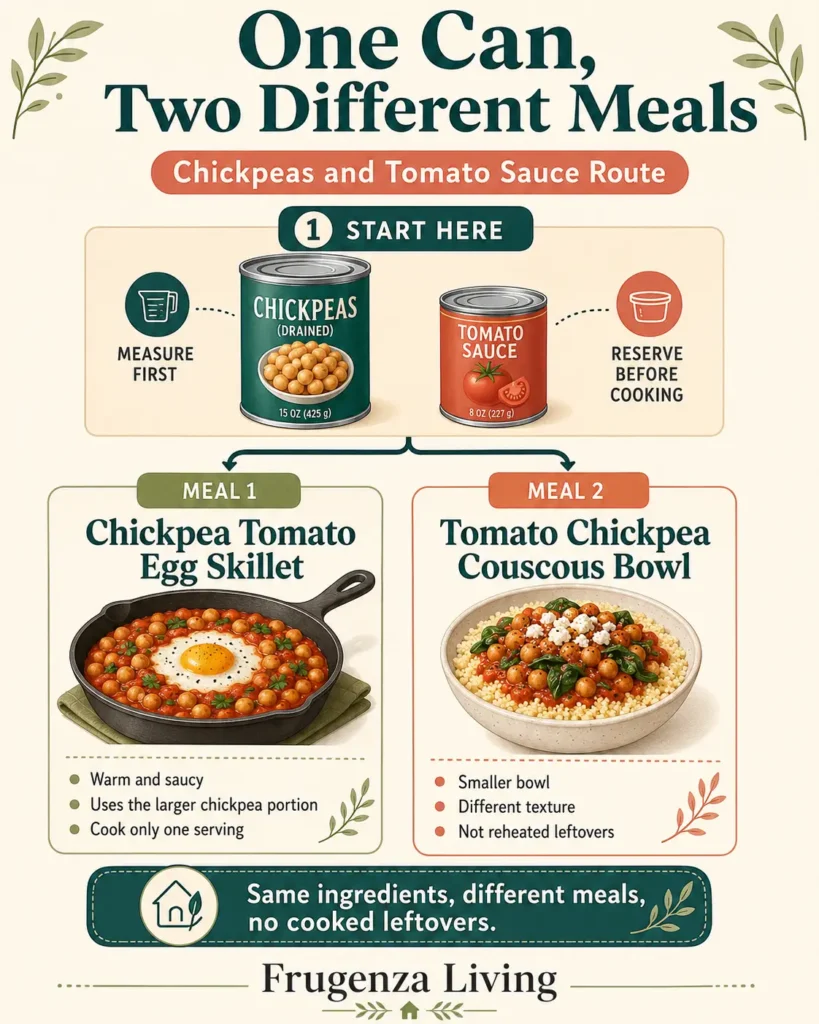
Drain one 15-ounce can of chickpeas and measure the result. Reserve roughly 60% for the egg skillet and 40% for the couscous bowl.
If the can yields approximately 1 1/4 cups after draining, that is about 3/4 cup for the skillet and 1/2 cup for the bowl. Preserve the same general ratio when your actual yield differs. A small additional spoonful can go into the skillet without substantially changing its size.
Open one 8-ounce can of plain tomato sauce and divide it evenly between two covered containers before cooking either meal.
5. Chickpea Tomato Egg Skillet
Warm the larger chickpea portion with half the tomato sauce in an 8-inch skillet. Add cumin and paprika for a smoky direction, or Italian seasoning for a milder one.
Mash several chickpeas against the pan and simmer uncovered until the sauce thickens. Make a well in the center, crack in one egg, and cover the skillet. Cook gently until the yolk and white are firm.
The dish ends as one saucy skillet with no required bread. Refrigerate the untouched chickpeas and tomato sauce promptly for the second meal.
6. Tomato Chickpea Couscous Bowl
Put 3 tablespoons dry couscous in a heat-safe bowl. Add the amount of boiling water specified for that quantity on the package, cover, and let it stand until tender.
Warm the smaller chickpea portion with the remaining tomato sauce and 1/3 cup frozen spinach. Spoon the mixture over the couscous and season with pepper, vinegar, lemon juice, or garlic powder.
The reduced couscous quantity and smaller chickpea portion keep the final bowl controlled. Its soft grain base and brighter seasoning also distinguish it from the thicker egg skillet.
Route B: Eight Ounces of Tofu, Two Flavor Directions
Use one 8-ounce package of extra-firm tofu when available. If your store carries only larger blocks, weigh out 8 ounces only when the remaining raw tofu already has a safe, specific use.
Drain the measured tofu and divide it into two 4-ounce portions before seasoning. Keep the reserved portion covered and refrigerated according to the package directions.
7. Smoky Tofu and Carrot Toast
Pat one 4-ounce tofu portion dry and crumble it into an 8-inch skillet. Add 1 teaspoon oil, smoked paprika, garlic powder, and pepper. Cook until several edges begin to brown.
Grate half of one small carrot into the skillet and cook for another minute. Spoon the mixture over two toast slices. Place the remaining half-carrot on the same plate as a crunchy side, or grate all of it into the pan when the carrot is very small.
This meal is warm, smoky, and toast-based. The second tofu portion remains unseasoned for a completely different bowl.
8. Ginger-Soy Tofu Rice Bowl
Cook 1/4 cup dry long-grain rice using the water and method listed on its package. While it cooks, cube the reserved 4-ounce tofu portion.
Brown the tofu in a small skillet with 1 teaspoon oil. Add 1/2 cup frozen vegetables, 1 teaspoon soy sauce, and ground ginger. Continue cooking until the vegetables are hot and excess moisture has evaporated.
Serve the tofu mixture over the rice. The different base, vegetables, seasoning, and texture keep it from feeling like the toast meal rearranged in a bowl.
Store the Reserved Portion Safely
Refrigerate opened ingredients and prepared perishable food within two hours, or within one hour when the surrounding temperature is above 90°F.
Move opened canned ingredients to covered containers, and follow the product directions for tofu, yogurt, tuna, and other refrigerated foods. The purpose is to keep the reserved ingredient neutral and safe—not to let it wait indefinitely.
For more detailed storage guidance, see how to make opened groceries last longer.
When Single-Serving Packaging Costs More
A tuna pouch or individual yogurt cup creates a clear portion boundary, but smaller packages may cost more per ounce and use more packaging.
A larger container is the better value when you can name a realistic second use and store the remainder safely. A smaller one can still be practical when the larger size repeatedly spoils or encourages you to cook more than you want.
Compare likely use, not package size alone.
Four Questions Before Opening a New Package
- How much will this meal actually use? Measure that amount before cooking.
- What will remain? A frozen bag, an open can, and a raw tofu portion require different handling.
- Can I name one genuinely different second meal? “I will use it somehow” is not a plan.
- Would a smaller package prevent likely waste? Paying more per ounce can be reasonable when the alternative is routinely discarded.
Frequently Asked Questions
How Do I Cook for One Without Leftovers?
Measure the meal before applying heat. Portion dry grains, bread, vegetables, and protein for one plate. When a package contains more, reserve the remainder before seasoning and assign it to a specific second recipe instead of cooking everything automatically.
What Can I Cook When I Hate Eating Leftovers?
Choose meals with clear portion boundaries, such as savory oatmeal, a tuna pita, cabbage-and-egg toast, or a yogurt oat bowl. Ingredient routes also work because the reserved food stays uncooked and later becomes a meal with a different base, texture, and seasoning.
Are Single-Serving Packages Cheaper for One Person?
Not necessarily. Their unit price may be higher, but they can prevent likely waste. Larger packages make more financial sense when the remainder has a safe storage plan and a second meal you genuinely want.
Finish One Meal and Redirect the Rest
For the easiest no-cook option, choose the apple peanut butter yogurt bowl. When an open can is the problem, the chickpea route turns it into an egg skillet and a smaller couscous bowl. Eight measured ounces of tofu can move from smoky toast to a ginger-soy rice bowl.
Useful meals for one without leftovers finish at one cooked serving. The remaining ingredient stays neutral, safely stored, and ready for a clearly different next job.

Read about Jeffi and Frugenza Living
- How to Budget a 10-Month Salary Over 12 Months - October 16, 2026
- Pet Adoption Budget Checklist: What You Still Need to Pay - October 16, 2026
- Proportional Bill Split Calculator for Two Incomes - October 15, 2026