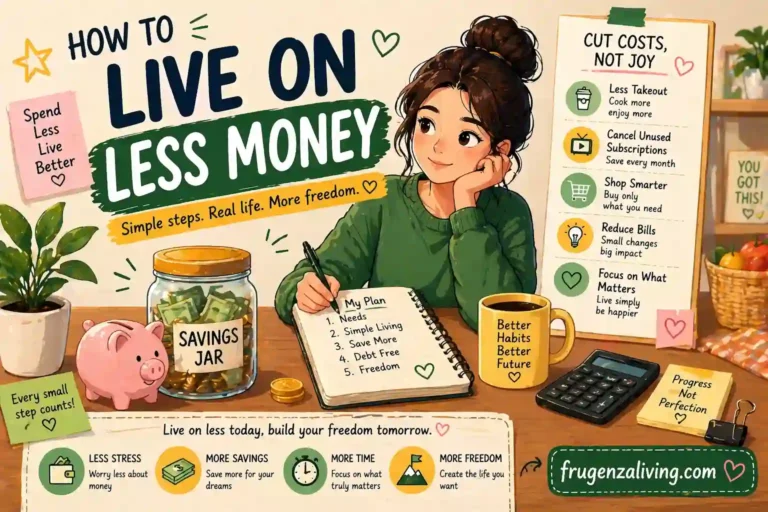
I used to feel like my money disappeared too fast. Like, I’d get paid, handle a few bills, and somehow… it was gone before I really understood where it went.
And the advice I kept seeing? Track everything. Cut everything. Be disciplined.
I tried that. It didn’t stick.
If you’re here trying to figure out how to live on less money, I’m guessing you don’t need a perfect system. You just want something that works in real life—especially on busy, tiring days when you don’t have the energy to think about every dollar.
So let’s keep this simple. Not extreme. Just practical.
Living on less money does not mean forcing yourself into a life that feels smaller, stressful, or joyless.
It means learning how to spend with more intention, protect the things that matter, and reduce the expenses that do not give enough value back.
The goal is not to cut everything at once. The goal is to make your everyday spending easier to control, so your money lasts longer without making your life feel restricted.
In this guide, you’ll learn how to live on less money by reducing quiet spending leaks, simplifying daily choices, keeping realistic comforts, and building habits that still work during busy weeks.
What Does It Actually Mean to Live on Less Money?
Living on less money means adjusting your daily habits and spending choices so you can spend less without feeling restricted or stressed.
It’s not about suffering.
It’s not about cutting everything you enjoy.
It’s more like:
- Spending with intention
- Keeping what matters
- Letting go of what quietly drains your money
You’re not trying to be perfect. You’re just trying to be a bit more aware.
If you’re just starting out, this frugal living guide for beginners will help you build a solid foundation.
The Live-on-Less Money Framework
Live on Less Money Decision Map
Living on less money becomes easier when you know what to keep, what to reduce, and what to remove. Use this simple map to cut spending without making your life feel smaller or more stressful.
Keep
Keep expenses that protect your health, work, safety, relationships, peace of mind, or basic stability.
Reduce
Reduce expenses you enjoy but buy too often, such as takeout, snacks, coffee, convenience items, or online shopping.
Remove
Remove expenses you barely use, forgot about, or only keep out of habit, such as unused subscriptions or random fees.
What to Fix First
If you want to live on less money without stress, you need a simple order of priorities. Cutting random expenses can help for a few days, but a clear system helps you stay consistent.
First, protect your essentials. This includes housing, basic food, utilities, transportation, medication, insurance, and minimum debt payments.
These are the expenses that keep your life stable. Second, reduce spending leaks.
These are the small expenses that repeat often but do not add much value, such as unused subscriptions, delivery fees, impulse purchases, and convenience spending that happens automatically.
Third, simplify your routines. The fewer daily money decisions you have to make, the easier it becomes to spend less.
Repeat meals, simple grocery lists, spending limits, and weekly money checks can reduce decision fatigue. Finally, keep a few intentional comforts.
Living on less money works better when it still leaves room for the things that genuinely support your life.
This framework matters because the goal is not to spend nothing. The goal is to spend less on what does not matter so you can protect what does.
Why Living on Less Money Feels So Hard
To be honest, it’s not just about money.
It’s about habits, convenience, and how life actually works.
A few reasons it feels difficult:
- Rising costs — groceries, bills, everything feels more expensive
- Busy lifestyle — convenience spending becomes the default
- Mental fatigue — you don’t want to think about money all the time
I remember thinking, “I’ll just cook more and stop ordering food.” Sounds easy. Until you’re exhausted after work and cooking feels like too much.
That’s where most advice falls apart—it ignores real life.
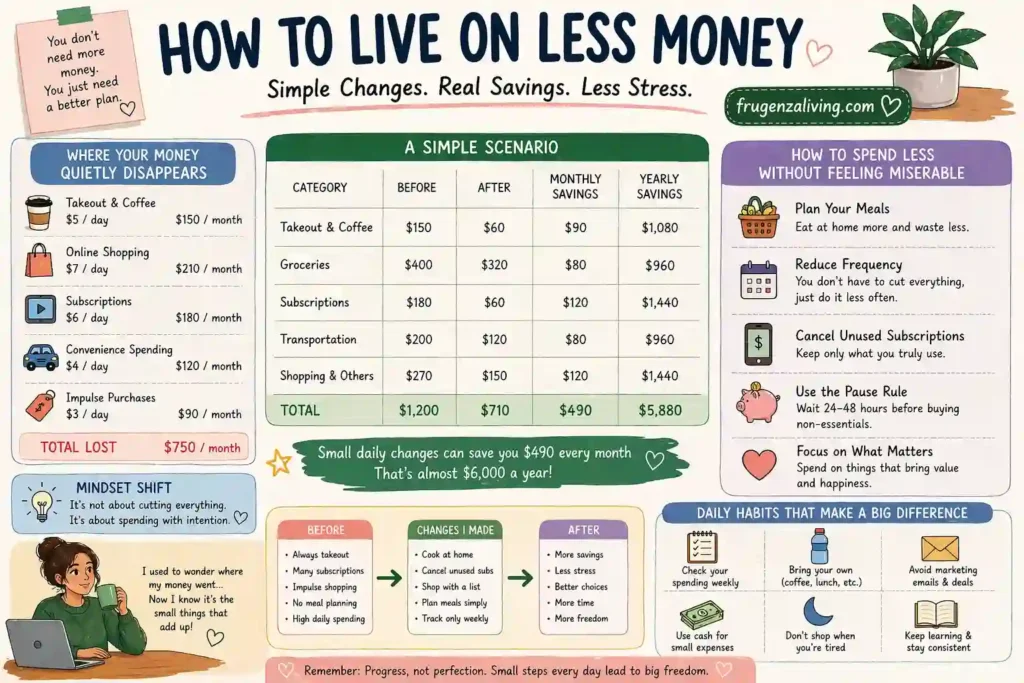
Where Your Money Quietly Disappears
Most people don’t overspend on big things.
It’s the small, repeated stuff.
You’ve probably experienced this at the end of the month:
“I didn’t buy anything big… so where did my money go?”
Common spending leaks:
- Takeout or delivery on busy days
- Subscriptions you barely notice
- Extra items in your cart “just in case”
- Random small purchases online
None of these feel serious.
But together? They can easily cost hundreds per month.
I used to ignore this completely. Turns out, that’s where most of my money was going.
It becomes easier when you actively work to cut unnecessary expenses in your daily life.
How to Live on Less Money Without Feeling Miserable
This is the part most people get wrong.
They try to cut everything.
That’s why it doesn’t last.
Instead, think in terms of adjusting, not eliminating.
A realistic approach is to divide your spending into three groups: keep, reduce, and remove.
Keep the expenses that genuinely improve your life, support your health, help you work, or protect your peace of mind.
Reduce the expenses you enjoy but buy too often, such as takeout, coffee, snacks, convenience items, or small online purchases.
Remove the expenses you barely use, forgot about, or only keep out of habit, such as unused subscriptions, duplicate services, random fees, or purchases triggered by boredom.
This makes living on less money feel more balanced.
You are not saying no to everything. You are deciding which expenses deserve space in your life and which ones are quietly draining your budget.
Here are some realistic strategies that actually work:
- Reduce frequency, not enjoyment
Still order takeout—but maybe 2 times a week instead of 4 - Simplify your lifestyle
Fewer decisions = fewer chances to spend - Control small spending leaks
Those “$5 here and there” purchases matter more than you think - Use the pause rule
Wait before buying something non-essential - Keep “good enough” options
You don’t need the best version of everything - Be okay with imperfection
Some days you’ll spend more. That’s normal
To be honest, most people make this harder than it needs to be.
You don’t need a new life. Just a few better habits.
It’s easier to stay consistent when you learn how to do easy frugal living approach instead of making drastic changes.
A Simple Monthly Scenario (Real Numbers)
Let’s make this more real.
Say you make a few small changes:
- Reduce takeout → save $100/month
- Adjust groceries → save $80/month
- Cancel unused subscriptions → save $40/month
- Cut random small purchases → save $60/month
👉 Total: ~$280/month
👉 In a year: over $3,300
This is only an example, not a guaranteed result. Your actual savings will depend on your income, location, household size, food prices, bills, debt, and current spending habits.
Some people may only save $50–$100 per month at first, and that still counts as real progress. Others may save more if they have several repeated spending leaks.
The point is not to chase a perfect number. The point is to reduce the expenses that happen again and again without giving enough value back.
When you lower those repeated leaks, your money starts to last longer without requiring extreme sacrifice.
This becomes easier when you follow realistic money-saving strategies.
That’s not from strict budgeting.
That’s just from being a little more intentional.
These strategies are especially helpful if you’re trying to manage money with limited income.
Daily Habits That Make Living on Less Easier
This is where things actually stick.
Not big changes—small daily habits.
Try these:
- Check your spending once a week
Not daily. Just enough to stay aware - Plan your meals loosely
You don’t need a perfect meal plan - Limit “browsing” time
Most spending starts with scrolling - Create a simple routine
Same groceries, same meals, less decision-making - Ask yourself one question before buying:
“Do I actually need this?”
I’ve noticed this adds up quickly. Not just financially—but mentally. Things feel more controlled.
A great starting point is to lower your daily spending without sacrificing your needs.
The Mindset Shift That Changes Everything
This part took me a while to understand.
Living on less money isn’t just about cutting expenses.
It’s about changing how you think about spending.
Instead of:
“Can I afford this?”
Try:
“Is this worth it for me?”
That one question changes everything.
You stop spending automatically.
You start choosing.
What Not to Cut When Living on Less Money
Living on less money should not mean cutting the things that keep you safe, healthy, or able to function.
Be careful about cutting medication, basic groceries, transportation to work, essential utilities, insurance, or anything that protects your health and stability.
It is usually better to reduce waste before reducing essentials. Start with unused subscriptions, food waste, delivery fees, impulse purchases, forgotten charges, and convenience spending that no longer feels worth it.
These areas are safer to review before touching necessary expenses.
A good frugal lifestyle should make your life more stable, not more stressful. The goal is to spend less in a way that supports your real life, not in a way that makes everything harder.
Common Mistakes That Make It Harder
I made most of these at some point.
1. Trying to Be Too Extreme
Cutting everything sounds good… until you burn out.
2. Changing Everything at Once
Too many changes = too much pressure.
3. Giving Up Too Fast
One bad week doesn’t mean failure.
4. Ignoring Small Spending
This is usually the biggest problem.
5. Comparing Your Situation to Others
Your life is different. Your system should be too.
How This Connects to Bigger Money Habits
Once you start living on less, other things get easier too.
You’ll naturally improve:
- Saving money on groceries (by buying simpler, less wasteful food)
- Meal planning basics (without overcomplicating it)
- Reducing monthly bills (by noticing what you don’t need)
- Beginner budgeting habits (without strict systems)
It all connects. You don’t need to master everything. Just start somewhere.
FAQ: How to Live on Less Money
What is the easiest way to live on less money?
Start by reducing small daily expenses like takeout and subscriptions instead of trying to cut everything at once.
Do I need a strict budget to live on less money?
No. A simple and flexible approach works better for most people.
How much money can I realistically save?
Many people can save around $200–$400 per month with small, consistent changes.
Is living on less money stressful?
It can feel stressful at first, but it becomes easier once you simplify your habits.
Can I still enjoy life while spending less?
Yes. It’s about balance—not restriction.
Final Thoughts
If you want to live on less money, you do not need to create a perfect budget or change your entire life overnight.
You need a simple system that helps your money last longer without making your life feel smaller.
Start with one spending leak. Reduce one habit that repeats too often. Cancel one thing you barely use. Plan one simple meal.
Pause one purchase before buying it. These small decisions may not look dramatic, but they can create real breathing room when you repeat them consistently.
Living on less money is not about restriction. It is about choosing better, reducing waste, and protecting the parts of your life that matter most.

The ideas shared here come from real-life experience and practical habits that actually work.
→ Read more about Jeffi
- No Spend Month Challenge for Beginners: A 30-Day Plan - September 24, 2026
- Low Buy Month Challenge: Realistic Rules for 30 Days - September 23, 2026
- How to Stop Buying Groceries You Already Have - September 20, 2026