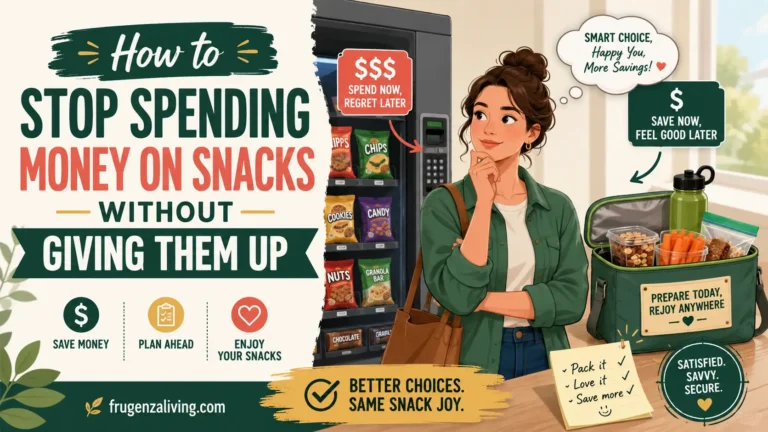
A $3.50 vending-machine snack at work, a $2.75 item at the gas station, and a drink added at checkout can all feel too small to matter. The cost grows because the transactions repeat in places where the snacks you already bought are unavailable.
Learning how to stop spending money on snacks is not the same as trying to stop eating snacks. This article focuses on reducing unplanned purchases, not ignoring hunger or removing every treat. The practical problem is often simple: the food is at home, while the spending happens at your desk, during a commute, or beside a cash register.
How Do You Stop Spending Money on Snacks?
Review your last five unplanned snack purchases and look for the location, time, and situation that repeat. Then place one snack you genuinely like where that spending usually happens, create a simple restocking cue, and decide how many paid snack occasions still fit your budget.
A snack in your kitchen cannot compete with a vending machine at 3 p.m. when you are at work. The goal is to make a practical, lower-cost option available before the expensive option becomes the easiest one.
To break a daily spending habit, notice when and where you usually buy snacks before trying to change the purchase itself.
Treat It as a Purchasing Problem, Not an Eating Problem
Wanting a snack and buying one unexpectedly are not the same financial behavior.
You may be hungry, want a break, or simply enjoy a treat. None of those automatically creates a money problem. The expense usually appears when the only convenient choice is sold in a vending machine, café, convenience store, delivery app, or checkout lane.
It helps to separate four situations:
- You planned to buy a favorite snack and included it in your budget.
- You needed food but had nothing practical with you.
- You owned a suitable snack, but it was somewhere else.
- You added an item mainly because it appeared while you were paying.
The last three suggest a problem with access, preparation, or the purchasing environment. Planned enjoyment does not need to be treated like a mistake.
Review Your Last Five Unplanned Purchases
Do not begin with a perfect monthly spreadsheet. Start with the last five snack transactions you did not plan.
Look through card statements, mobile-wallet history, receipts, or recent memory. For each purchase, note where and when it happened, what you bought, the price, whether a suitable snack was available where you were, and what would have made the purchase unnecessary.
Five recent transactions can reveal more than a vague monthly estimate. You may discover that most purchases happen after work or come from the same vending machine.
Where Is Your Snack Money Going?
Screenshot this receipt-style review or copy the prompts into your notes.
Purchase 1
Purchase 2
Purchase 3
Purchase 4
Purchase 5
Total of the five purchases: $________
Most repeated location and time: ________
Purchases caused by having nothing suitable there: ________
One change to test next week: ________
Average Unplanned Purchase × Weekly Frequency × 4.33 = Estimated Monthly Snack Spending
The 4.33 figure is the average number of weeks in a month. Use recent transactions, not what you think you usually spend.
Using illustrative numbers, a $3.25 unplanned snack bought three times per week comes to about $42 per month:
$3.25 × 3 × 4.33 = approximately $42
This is not an estimate for every reader. The calculation simply turns your own purchase frequency into a monthly figure you can compare with other priorities.
Fix the Place Where the Purchase Happens
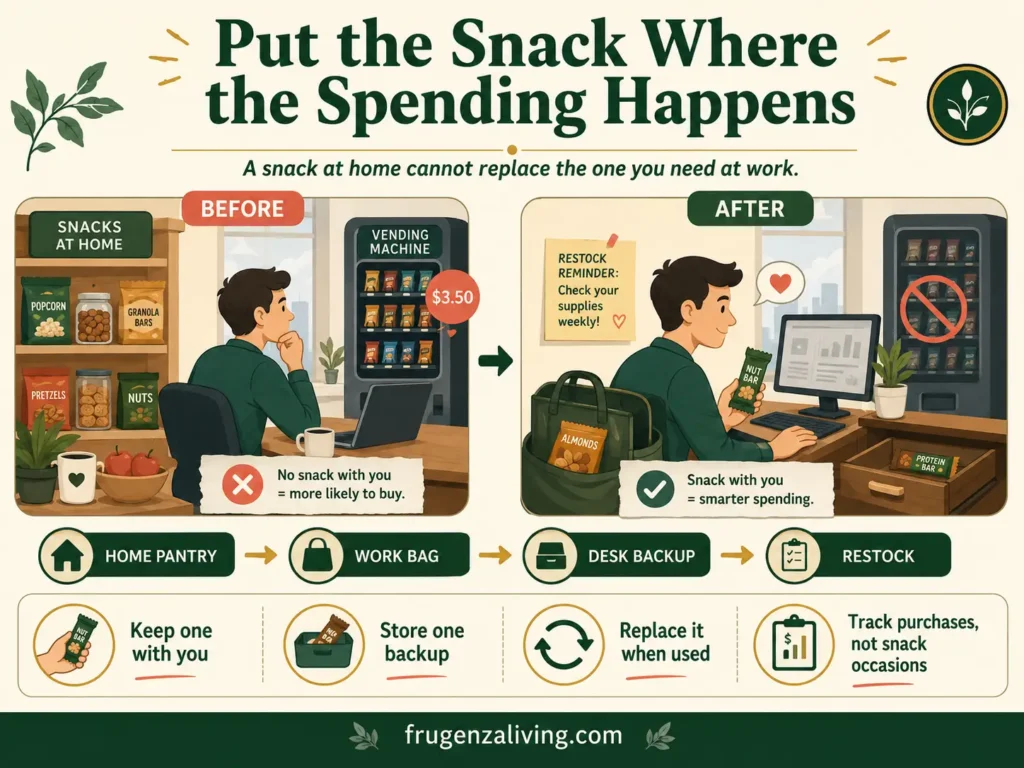
The most useful replacement belongs where the spending occurs.
Suppose three of your last five purchases came from the work vending machine around 3 p.m. You already owned snacks, but they stayed at home. Place two portions of a preferred option in your work bag, keep one backup in a desk or locker, and add the item to your shopping list as soon as the backup is used.
After a week, compare the number of vending transactions—not the number of times you ate a snack. Success means fewer convenience purchases, not fewer snack occasions.
The same principle applies elsewhere: keep a portable option in your commuting bag or a suitable backup where you regularly need it. Add a replacement cue as well. Restock on a chosen day, use a recurring reminder, or add the item to your list when you take the last portion.
A snack at home cannot compete with a snack beside the cash register when you are somewhere else.
For perishable snacks, follow USDA guidance for packed food and bag lunches. Use appropriate refrigeration or an insulated bag with cold sources when needed, and do not treat a warm car as safe food storage.
Buy for the Situation You Actually Have
The cheapest snack is not a saving if you do not want to eat it.
Imagine that you often buy crackers at work but keep packing a snack you rarely enjoy. The packed item stays untouched, and you still use the vending machine. A preferred grocery-store option may cost slightly more per portion than the aspirational choice, yet still cost much less than repeated single-serve purchases.
Practicality matters. Consider whether the snack:
- is something you genuinely like;
- travels without leaking or melting;
- requires preparation you will consistently do;
- fits the storage available;
- comes in a portion you can grab quickly.
You are not shopping for an ideal version of yourself. You are building an option that can compete with the purchase you currently make.
The Cheapest Package Is Not Always the Lowest-Cost Solution
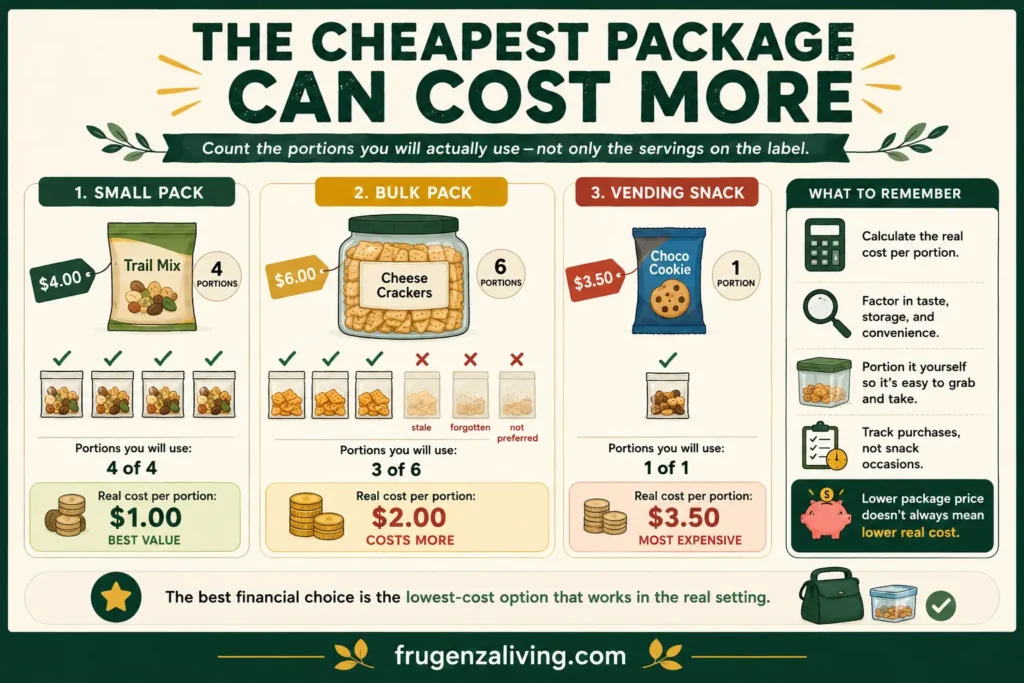
A larger package often has a lower listed price per portion, but bulk buying only saves money when the food is used.
To find the practical cost per portion, divide the package price by the number of portions you are likely to use—not merely the serving count printed on the package.
If a $6 package contains six portions and you use all six, the cost is $1 per portion. If half becomes stale or forgotten, the practical cost rises to $2 per used portion.
A smaller package may be better for someone who snacks infrequently. A larger one may work when divided into portable portions immediately. The cheapest option can also cost more when it leaks, cannot be stored where needed, or leads you to buy a second snack because you disliked the first.
The best financial choice is the lowest-cost option that works in the real setting.
Limit Paid Snack Occasions Instead of Banning Them
For some people, a total ban can make an intentional treat feel like a failure. A clearer boundary gives you permission and a limit.
Choose one approach:
- one paid snack away from home each week;
- a maximum amount per unplanned purchase;
- a small monthly snack allowance;
- a fixed snack balance in cash or a separate spending category.
For example:
“I can buy one snack away from home each week, up to $5. Other snack occasions come from what I have already bought.”
The $5 is a ceiling, not a target. This preserves the difference between a favorite treat chosen intentionally and a mediocre snack bought because it was nearby.
When tap-to-pay makes purchases feel invisible, add one small payment barrier. Remove a vending app from your home screen, turn off automatic reloads, or use a fixed snack balance. The aim is not to leave yourself without access to money. It is to make the purchase visible before it becomes automatic.
A weekly meal plan can include snacks as well as meals, making it easier to avoid buying something whenever hunger appears.
Remove Snack Add-Ons From Other Purchases
Some snack spending hides inside transactions that began for another reason:
- candy near a checkout lane;
- a pastry added to coffee;
- chips bought while paying for gas;
- a snack added to a takeout order;
- a drink purchased automatically with the snack;
- a multipack added only because it is promoted.
Ask:
“Did I come here for this, or did this appear while I was paying for something else?”
If the snack is worth buying, choose it intentionally. If it is only basket filler, remove it. The same question can help you remove low-value add-ons from takeout orders.
When Money May Not Be the Main Issue
This article is a financial tool, not medical or nutritional guidance. If buying or eating snacks is tied to bingeing, severe restriction, shame, fear around food, or significant distress, a qualified healthcare professional or registered dietitian is better placed to help.
When the purchases are mainly about reward or mood rather than access, it may help to look separately at buying food mainly to change your mood.
Make the Practical Option Easier to Reach
The goal is not to win a daily willpower battle. It is to make a practical option available before the expensive option becomes the easiest one.
Review your last five unplanned transactions. Find the most repeated location and time, then place one preferred option there before the next week begins. Add a simple cue for replacing it when the supply runs out.
That is how to stop spending money on snacks without treating hunger, enjoyment, or every paid treat as a problem. Change the point of access first, and the spending decision becomes easier before it reaches the register.

Read about Jeffi and Frugenza Living
- Proportional Bill Split Calculator for Two Incomes - October 15, 2026
- How to Split Grocery Bills With Roommates - October 14, 2026
- First Apartment Kitchen Essentials on a Budget - October 13, 2026