
I used to think frugal living meant cutting everything fun. No takeout, no small treats, no room for mistakes. I tried it once… and honestly, it didn’t last long.
I went right back to old habits—overspending, impulse buying, and wondering where my money went.
If that sounds familiar, you’re not the problem. The approach is.
Frugal living doesn’t work when it feels extreme. It only works when it fits your real life.
The key is to make frugal living fit your real life, not an imaginary perfect version of it. If a habit only works when you have unlimited time, energy, and motivation,
it probably will not last. Realistic frugal living is about choosing small changes that are easy enough to repeat on normal days, busy days, and even messy weeks.
In this guide, you will learn how to reduce spending without cutting everything, how to spot daily money leaks, how to keep the parts of life that matter to you, and how to build frugal habits that feel sustainable instead of restrictive.
What Are Realistic Frugal Living Tips?
Realistic frugal living tips are simple, flexible ways to spend less without feeling restricted or overwhelmed.
It’s not about being perfect.
It’s about being intentional.
Think of it as:
- Spending a little more consciously
- Keeping what actually matters
- Letting go of what doesn’t
If you’re just starting out, this is about making small changes—not building a perfect system. A good place to start is learning how to live frugally the easy way without putting too much pressure on yourself.
The Realistic Frugal Living Filter
Before adding any frugal habit to your life, ask yourself three simple questions: Can I repeat this habit when I am busy?
Does it save money without making my life harder? Does it support the kind of life I actually want?
If the answer is yes, the habit is probably realistic. If the answer is no, it may be too strict, too complicated, or too dependent on motivation.
For example, cooking every single meal from scratch may save money on paper, but it may not work if your schedule is full.
A more realistic habit might be cooking simple meals four nights a week and keeping two easy backup meals at home.
This filter helps you avoid the biggest mistake in frugal living: choosing habits that look impressive but are impossible to maintain.
The best frugal habit is not always the one that saves the most money immediately. It is the one you can keep doing long enough to create real results.
Why Most People Struggle With Frugal Living
Most people don’t fail because they lack discipline.
They fail because they try to change too much at once.
Cut everything. Track everything. Be perfect.
That’s exhausting.
A more realistic approach is to make things slightly better—not completely different.
1. Make Small Adjustments (Not Big Changes)
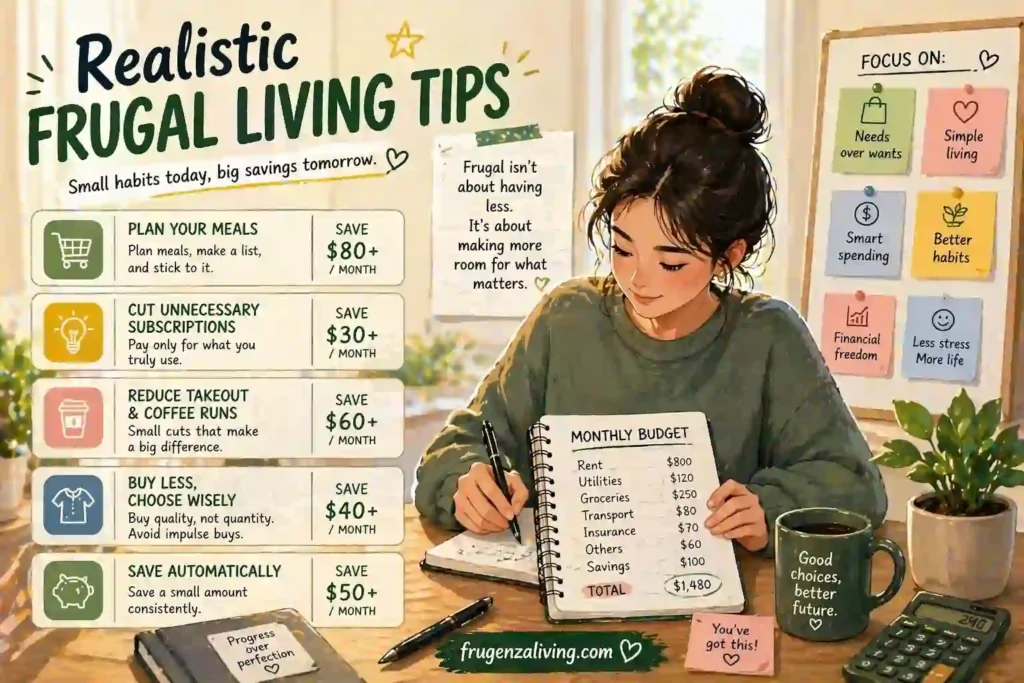
Instead of trying to cut all spending, focus on small shifts.
For example:
- Eating out a little less often
- Buying fewer “extra” items
- Waiting before making a purchase
These changes don’t feel dramatic—but they add up over time.
And more importantly, they’re easier to stick with.
A good place to start is learning how to live frugally the easy way without overcomplicating things.
What to Keep, Reduce, and Remove
A realistic frugal lifestyle does not require you to cut everything. A better approach is to divide your spending into three groups: keep, reduce, and remove.
Keep the things that genuinely improve your life, fit your values, or support your health, relationships, work, or peace of mind.
Reduce the things you enjoy but buy too often, such as takeout, coffee, snacks, convenience items, or online shopping.
Remove the things you barely use, forgot about, or only keep out of habit, such as unused subscriptions, random fees, duplicate services, or purchases triggered by boredom.
This approach works because it protects balance. You are not saying no to everything. You are simply deciding which expenses deserve space in your life and which ones are quietly taking money without giving enough value back.
2. Keep Things “Simple Enough”
Frugal living gets harder when life gets complicated.
Too many decisions → more spending
Too many options → more impulse buying
Simplifying your routine helps more than strict rules.
That might mean:
- Sticking to a few go-to meals
- Reducing unnecessary subscriptions
- Avoiding browsing shopping apps out of habit
It doesn’t need to be perfect. Just manageable. Over time, this becomes much easier when you build consistent frugal habits that fit your daily routine.
3. Build Awareness Before You Build a System
Before you try any structured method, just notice where your money goes.
That alone can change a lot.
Most people don’t overspend on big things—they overspend on small, repeated decisions.
Once you become aware of those patterns, it becomes easier to adjust naturally.
Over time, this leads to building simple money habits that actually stick.
4. Accept That Convenience Has a Cost
A lot of modern spending is about convenience.
- Food delivery
- Subscriptions
- Pre-made products
None of these are “bad.”
But being aware of them helps you make better decisions.
You don’t have to remove convenience completely—just reduce how often you rely on it.
5. Focus on Consistency, Not Perfection
This is where most people get stuck.
They try to do everything right… then give up when they slip.
But real progress looks like:
- Some good weeks
- Some messy weeks
- Still moving forward
You don’t need to be perfect. You just need to stay consistent.
Once you’re comfortable with the basics, you can move on to more structured frugal strategies that give you better control.
6. Keep Your Approach Flexible
What works for someone else might not work for you.
Your schedule, income, and habits are different.
So instead of copying a system exactly, adjust things to fit your lifestyle.
That’s what makes frugal living sustainable.
7. Think “Good Enough,” Not “Best”
You don’t always need:
- The cheapest option
- The perfect deal
- The most optimized plan
You just need something that works.
Choosing “good enough” reduces stress—and often saves money without overthinking.
8. Let Frugal Living Fit Your Life
Frugal living isn’t about restriction.
It’s about alignment.
Keeping what matters
Reducing what doesn’t
Making things easier—not harder
That’s what makes it realistic.
Frugal Living That Fails vs Frugal Living That Lasts
Frugal living usually fails when it depends on guilt, perfection, or rules that do not fit your life. If your plan makes you feel punished, isolated, or constantly behind, it will probably not last. Extreme rules may work for a short time, but they often lead to burnout.
Frugal living lasts when it feels flexible. You save money most of the time, but you still allow room for real life.
You plan simple meals, but you do not panic if you buy takeout once. You reduce shopping, but you still buy things that truly matter.
You build habits that support your life instead of making your life feel smaller.
That is the difference between strict frugality and realistic frugal living. One tries to control every decision. The other helps you make better decisions more often.
When You’re Ready to Go Further
Once these small changes feel natural, you can explore more structured approaches to saving and managing money.
That’s where more detailed strategies come in—when you actually need them.
FAQ: Realistic Frugal Living Tips
What are realistic frugal living tips?
Simple, flexible ways to reduce spending without making life feel restrictive.
Do I need a strict budget to start?
No. Starting with awareness and small changes is often more effective.
How much can I realistically save?
Many people save a few hundred dollars a month by making small, consistent adjustments.
Is frugal living about cutting everything?
No. It’s about balance—not restriction.
Final Thoughts
If you’ve been trying to spend less without feeling miserable, you’re not alone.
Most people don’t need more discipline.
They just need a simpler approach.
Start small.
Keep it realistic.
And don’t overthink it.
Because the best frugal lifestyle isn’t the strictest one—
it’s the one you can actually stick with.

The ideas shared here come from real-life experience and practical habits that actually work.
→ Read more about Jeffi
- No Spend Month Challenge for Beginners: A 30-Day Plan - September 24, 2026
- Low Buy Month Challenge: Realistic Rules for 30 Days - September 23, 2026
- How to Stop Buying Groceries You Already Have - September 20, 2026